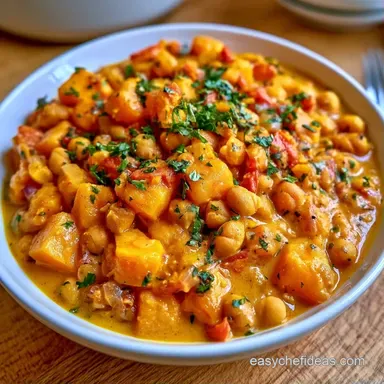
Butternut Squash Curry with Coconut Milk

- Prep/Cook: 10 min active + 20 min cooking
- Profile: Velvety sauce paired with tender chunks of squash
- Best for: A comforting vegan meal on a busy evening
Nothing beats the smell of garlic and ginger sizzling in coconut oil. That pungent, inviting scent immediately transforms my kitchen into a traditional Indian eatery. The butternut squash is the real hero here; it's the essential structure that holds the entire recipe together.
While various squashes exist, the rich, buttery consistency of butternut is what makes this curry stand out. Other types often turn out too fibrous or watery. By cutting the pieces uniformly, they soak up the curry paste without breaking down.
This dish delivers the depth of a slow cooked stew in just 30 minutes. The secret is building flavor in stages, beginning with the aromatics and finishing with a squeeze of fresh lime for a bright, zesty lift.
What Makes This So Good
The Dicing Size: Cutting the squash into ¾-inch cubes ensures they cook through in 15 minutes while keeping a firm center. Larger chunks stay raw, and smaller ones turn into mash.
The Spice Bloom: Sautéing the curry paste and dry spices in oil for 2 minutes wakes up the fat soluble flavors. This removes the raw taste of the turmeric and cumin.
The Finishing Acid: Lime juice cuts through the heavy fat of the coconut milk. It balances the sweetness of the squash and prevents the dish from feeling too heavy.
| Ingredient State | Prep Time | Texture | Best For |
|---|---|---|---|
| Fresh Squash | 10 mins | Tender/Firm | Texture focused meals |
| Frozen Cubes | 2 mins | Softer | Ultra fast weeknights |
Essential Kitchen Gear
Simple tools are all you need. A Dutch oven or a large pot is best to provide enough room to stir the squash without it feeling crowded. A sharp chef's knife is crucial here, since peeling and cubing butternut squash is quite a struggle with a dull blade.
I typically reach for a microplane for the garlic and ginger to create a paste that blends into the sauce more smoothly than coarse chops. Keep a handheld blender nearby, but only use it if you're aiming for a soup.
Shopping List Breakdown
This Butternut Squash Curry begins with a yellow onion sautéed in coconut oil. The onion establishes a savory base, while the oil allows the spices to toast properly. Fresh garlic and ginger are crucial here, as they provide a vibrant punch that pre-made jars simply cannot match.
Butternut squash provides the main body and a natural sweetness. I add canned chickpeas to introduce a nutty texture and additional protein. For the liquid components, low sodium vegetable broth manages the salt content, and full fat coconut milk gives the curry its rich, creamy consistency.
The flavor profile is built from red curry paste, turmeric, cumin, and cayenne. The red curry paste contributes a complex heat, while the dry spices enhance the deep golden color. A final squeeze of fresh lime is the key ingredient that brings the whole Butternut Squash Curry together.
Recipe Specs
Ingredients
- 1 tbsp coconut oilWhy this? Resists burning at high heat and pairs well with coconut milk
- 1 medium (110g) yellow onion, finely dicedWhy this? Provides a fundamental savory foundation
- 3 cloves (9g) garlic, mincedWhy this? Adds a sharp, aromatic intensity
- 1 tbsp (15g) fresh ginger, gratedWhy this? Brings a bright, spicy heat
- 1 lb (450g) butternut squash, peeled and cut into ¾-inch cubesWhy this? Adds innate sweetness and a velvety texture
- 1 can (15 oz / 425g) chickpeas, drained and rinsedWhy this? Provides satisfying protein and substance
- 2 cups (480ml) vegetable broth, low sodiumWhy this? Adds volume while keeping sodium levels low
- 1 can (13.5 oz / 400ml) full fat coconut milkWhy this? Crucial for creating a luscious, creamy sauce
- 2 tbsp (30g) red curry pasteWhy this? Delivers intense spice and a bold taste
- 1 tsp (2g) ground turmericWhy this? Contributes a woody flavor and vibrant yellow color
- 1 tsp (2g) ground cuminWhy this? Adds a toasted, aromatic quality
- ½ tsp (1g) cayenne pepperWhy this? Provides a customizable level of heat
- 1 tsp (5g) sea saltWhy this? Brings out the best in every ingredient
- 1 tbsp (15ml) lime juice, freshly squeezedWhy this? Adds a zesty lift and balances the richness
Substitutions
| Original Ingredient | Substitute | Why It Works |
|---|---|---|
| Coconut Oil | Avocado Oil | A neutral oil that handles high temperatures well |
| Vegetable Broth | Water | Acceptable, though less flavorful than broth |
| Red Curry Paste | Yellow Curry Powder (2 tbsp) | Less spicy and more focused on turmeric |
| Chickpeas | Red Lentils | Creates a thicker, stew like consistency |
| Lime Juice | Lemon Juice | Comparable tartness with a slightly different taste |
The Cooking Process

- Warm the coconut oil in a heavy pot over a medium flame. Toss in the diced onion and sauté for 3-5 minutes until soft and translucent.
- Stir in the minced garlic and grated ginger. Cook for 60 seconds until fragrant.
- Mix in the red curry paste, turmeric, cumin, and cayenne. Stir constantly for 2 minutes until the spices smell toasted and nutty.
- Add the butternut squash cubes, stirring well until the red spice paste coats every piece.
- Pour in the vegetable broth. Bring to a boil, then reduce heat to low, cover, and simmer for 12-15 minutes until the squash is tender but holds its shape.
- Stir in the full fat coconut milk and chickpeas. Simmer uncovered for 5 minutes until the sauce thickens and looks glossy.
- Remove from heat and stir in the lime juice.
Chef Note: For a slightly charred flavor, you can oven roast the cubes at 200°C for 15 minutes before adding them to the pot in step 4.
Common Mistakes & Troubleshooting
Fixing Watery Sauce
This usually happens if the lid was on too tight during the final stage or if you added extra broth. To fix it, simmer the Butternut Squash Curry uncovered for another 5-8 minutes. The coconut milk will reduce and thicken naturally as the water evaporates.
Preventing Mushy Squash
If your squash is dissolving, you likely cut the cubes too small or simmered them too long. Next time, stick to the ¾-inch rule. For the current pot, stop simmering immediately and stir gently.
If you prefer a thicker sauce, you can actually mash a few of those soft pieces against the side of the pot to thicken the liquid.
Balancing Flat Flavors
A "flat" tasting curry usually lacks acidity or salt. If the Butternut Squash Curry tastes bland, add another teaspoon of lime juice or a pinch more sea salt. This wakes up the spices and makes the coconut milk taste less like "plain cream" and more like a sauce.
Freezing and Reheating Guide
This meal remains fresh for 4 days when chilled. I recommend glass containers for storage, as turmeric can stain plastic. To reheat, use the stovetop over medium low heat, stirring in a bit of coconut milk or water if the sauce has thickened.
When frozen, this Butternut Squash Curry will last 3 months. I suggest freezing it in individual portions. Since the squash may soften further upon thawing, undercook it by 2 minutes if you plan to freeze the entire batch.
To reduce waste, keep your squash peels. Roast them with oil and salt at 200°C for 10 minutes to make "squash chips," which are a great snack while the main pot simmers.
Dietary Adaptations
For those looking for a lower carb option, I suggest serving this over cauliflower rice instead of traditional basmati. The nuttiness of the cauliflower pairs well with the creaminess of the coconut.
If you want to add more greens, stir in two handfuls of fresh spinach or kale during the last 2 minutes of simmering. The heat of the Butternut Squash Curry will wilt the greens perfectly without overcooking them.
If you're missing the chickpeas, you can use cannellini beans or even fried tofu cubes. Tofu works best if you sear it separately first to give it a bit of a crust. For a different take on squash, check out my butternut squash pasta sauce for something a bit more Western.
| Goal | Adjustment | Result |
|---|---|---|
| Spicier | Add ½ tsp cayenne | Bolder heat |
| Creamier | Add 2 tbsp cashew butter | Richer, velvety finish |
| Lighter | Use light coconut milk | Less fat, thinner sauce |
Serving Suggestions
I always serve this Butternut Squash Curry with a side of steamed basmati rice or warm naan bread. The rice absorbs the golden sauce, while the naan is perfect for scooping up the last few chickpeas.
For a fresh contrast, top the bowl with a handful of fresh cilantro and some sliced red chilies. A dollop of vegan yogurt or a sprinkle of toasted pumpkin seeds adds a nice crunch that offsets the softness of the squash.
For a full meal, pair this with a light salad of cucumber and red onion dressed in rice vinegar. The crispness of the salad cleanses the palate between bites of the rich curry.
Kitchen Myths
Some people think you have to simmer a curry for hours to get a deep flavor. That's not true. By blooming the spices in oil first, you get most of that depth in just a few minutes. The long simmer is only necessary for tough cuts of meat, not for squash.
Another myth is that you need an expensive "curry pot" to make this. Any heavy bottomed pot will work. The key is the heat distribution, not the brand of the pot.
For the best results, always use full fat coconut milk. Some people try to use the "lite" version to save calories, but you lose the emulsion that makes the sauce cling to the squash. The result is often a separated, watery mess rather than a cohesive sauce.
Recipe FAQs
Is it true butternut squash is too sweet for savory curry?
Actually, no. Its natural sweetness balances the heat of the red curry paste and cayenne.
Tip: add an extra squeeze of lime juice if you prefer a tangier profile.
How to prep butternut squash for this curry?
Peel the skin and slice the flesh into 3/4 inch cubes.
Tip: keep the cubes uniform in size so they all soften at the same time.
Which ingredients complement the squash in this dish?
Chickpeas and full fat coconut milk add essential protein and creaminess. If you enjoyed balancing these rich textures, see how we manage hearty vegetable bases in our eggplant parmesan.
Tip: rinse the chickpeas thoroughly to remove excess sodium.
What flavors pair well with butternut squash?
Fresh ginger and lime juice provide a bright contrast to the earthy turmeric and cumin.
Tip: grate the ginger finely to ensure it distributes evenly through the sauce.
Should you believe that pre-boiling the squash is necessary?
False. Simmering the cubes in vegetable broth for 12 15 minutes ensures they stay intact.
Tip: avoid overstirring once the squash is tender to prevent the cubes from breaking.
Butternut Squash Curry