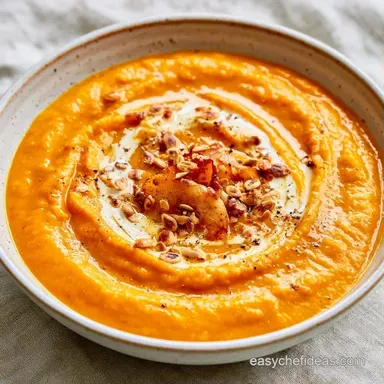
Roasted Butternut Squash Potage with Apple

- Time: 10 minutes prep + 35 minutes total cook time
- Sensory Profile: Rich roasted sweetness with a silky-smooth finish
- Perfect for: Chilly weeknights or advance meal prep
Roasted Butternut Squash Potage
That smell of roasting squash hitting the oven air is the actual start of autumn. For a long time, I just boiled my squash in water to save a few minutes. The result was always the same: a pale, watery liquid that tasted like baby food and lacked any real punch. It was boring and felt like a chore to eat.
I eventually realized that the heat of the oven does the heavy lifting here. When the edges of the squash turn dark brown, the sugars concentrate and the flavor deepens. This is how you get a Butternut Squash Potage that actually tastes like something you'd pay for at a bistro.
This recipe keeps things simple with minimal tools. You just need a sheet pan, a pot, and a blender. We're using coconut milk to keep it plant based, which gives it a lush weight without the heaviness of cream.
Why Roasting Changes Everything
- High Heat: Roasting at 400°F caramelizes the natural sugars in the apple and squash, creating a nutty depth that you won't get from boiling.
- Acid Balance: Stirring in some lemon juice right before serving cuts through the richness and highlights the earthy notes of the Butternut Squash Potage.
- Plant Based Fat: Coconut milk adds a luxurious, creamy texture, blending the roasted vegetable puree into a smooth and cohesive soup.
The Building Blocks
Before we get into the list, it's worth noting why we use specific items. The Granny Smith apple is a must because its tartness prevents the soup from becoming too sweet.
| Component | Purpose | Substitute Notes |
|---|---|---|
| Butternut Squash | Main body and sweetness | Kabocha squash: denser and nuttier |
| Granny Smith Apple | Tart contrast | Honeycrisp: sweeter, less zing |
| Coconut Milk | Creaminess and fat | Cashew cream: neutral flavor, very thick |
| Vegetable Broth | Liquid base and salt | Water + bouillon: check sodium levels |
Choosing the right squash is half the battle. I always look for ones with a matte skin and a heavy feel for their size, which usually means more flesh and less water.
Ingredients and Swaps
- 3 lbs butternut squash, peeled and cubed Note: Creates the sweet, velvety base
- 2 tbsp extra virgin olive oil Note: Suited for roasting at high heat
- 1 tsp kosher salt
- ½ tsp cracked black pepper
- 1 medium Granny Smith apple, peeled and cubed Note: Provides a needed touch of acidity
- 1 tbsp olive oil
- 1 medium yellow onion, diced
- 3 cloves garlic, minced
- 1 tsp dried thyme
- 4 cups low sodium vegetable broth Note: Enhances depth while limiting sodium
- ½ cup full fat coconut milk Note: Adds a rich, vegan creaminess
- 1 tbsp fresh lemon juice Note: Freshens up the overall taste
Chef: If fresh thyme is unavailable, a dash of ground nutmeg works perfectly to highlight those seasonal autumn notes.
Recipe Specs
For those who like a quick reference, here is how this Butternut Squash Potage stacks up against a traditional boiled version.
| Feature | Fast/Boiled Method | This Roasted Method |
|---|---|---|
| Flavor | Mild, watery | Deep, caramelized |
| Texture | Thin/Grainy | Silky and thick |
| Effort | Very low | Low (oven does work) |
This method takes 45 minutes total. While the roasting takes a bit longer than boiling, the taste is a total upgrade.
Equipment Needed

Standard kitchen gear is all you'll need.
- Large rimmed baking sheet
- Heavy bottomed pot or Dutch oven
- Immersion blender (or a standard countertop blender)
- Sharp chef's knife and cutting board
If you use a standard blender, exercise caution with hot liquids. Vent the lid slightly to prevent steam from blowing the top off.
The Cooking Process
Phase 1: The over High heat Roast
Bring the oven temperature to 400°F (200°C). On a baking sheet, combine the cubed butternut squash and apple with 2 tablespoons of olive oil, salt, and pepper.
Spread them in a single layer and roast for 25–30 minutes, tossing halfway through—until edges are mahogany colored and tender.
Phase 2: Building the Aromatics
While the squash roasts, sauté the diced onion in 1 tablespoon of olive oil in a heavy-bottomed pot over medium heat for about 5 minutes until translucent and fragrant.
Phase 3: The Scent and Spice
Mix in the minced garlic and dried thyme. Cook for an additional 60 seconds until the garlic smells nutty but hasn't turned brown.
Phase 4: The Simmer
Transfer the roasted squash and apple into the pot. Stir in the vegetable broth and simmer gently for 10 minutes, allowing the roasted flavors to meld with the aromatics.
Phase 5: The Puree
Take the pot off the heat. Blend the mixture with an immersion blender until it reaches a smooth, consistent texture.
Phase 6: The Final Touch
Stir in the coconut milk and lemon juice to complete the Butternut Squash Potage. Taste it and add a pinch more salt if it feels flat.
Pro Tips & Pitfalls
Even basic recipes can run into trouble. I've had this soup turn out too watery or taste a bit flat because I missed the acid.
Fixing Watery Consistency
If the soup remains too thin after blending, return it to the heat. Simmer it uncovered for another 5 to 10 minutes. This allows some water to evaporate, which thickens the Butternut Squash Potage naturally.
Rescuing Bland Flavor
Sometimes the squash isn't as sweet as expected. If the flavor is flat, stir in another teaspoon of lemon juice or a pinch of salt. According to USDA FoodData Central, natural sugars in squash vary by season, so tasting as you go is essential.
Avoiding Grainy Texture
If you aren't using a high-powered blender, you might notice tiny bits of onion. To resolve this, pour the soup through a fine mesh sieve. It takes two extra minutes but makes the texture truly smooth.
| Problem | Fix |
|---|---|
| Too thin | Simmer uncovered 10 mins |
| Tastes flat | Add more lemon juice |
| Grainy texture | Pass through a sieve |
Preservation and Scraps
Save those squash seeds. Clean them, coat them with a bit of oil and salt, and roast at 350°F for 10 minutes. They make a wonderful garnish for the Butternut Squash Potage.
Keep the soup in glass jars in the refrigerator for 4 days. It often tastes even more flavorful the following day after the ingredients meld. For longer storage, use freezer-safe bags or containers for up to 3 months.
Reheat the soup on the stove over medium low heat. Should the consistency be too thick after chilling, stir in some water or stock to thin it out.
Serving Suggestions
This soup is a star on its own, but a few toppings make it feel like a meal. I love a swirl of coconut cream on top and a sprinkle of those roasted squash seeds.
For a full autumn spread, this pairs well with a crusty sourdough loaf or a crisp green salad. If you're looking for another way to use your squash, my Butternut Squash Pasta Sauce is a great companion for a themed dinner.
Keep the temperature hot. This Butternut Squash Potage loses its magic when it's lukewarm. Serve it in warmed bowls for that extra bit of comfort.
Dietary Adaptations
You can easily tweak this recipe to fit your mood or diet.
For a Zesty Ginger Twist
Add a tablespoon of freshly grated ginger when you sauté the garlic. This gives the Butternut Squash Potage a spicy kick that's great for fighting a cold.
For a Hearty Protein Boost
Stir in some cooked chickpeas or white beans before blending. It adds fiber and makes the soup feel more like a main course.
For an Instant Pot Version
Sauté the onions and garlic in the pot, then add the squash, apple, and broth. Cook on high pressure for 8 minutes. Note that you'll miss the mahogany roast flavor, so I suggest searing the squash in a pan first if you have time.
If you're craving something sweet to go with your meal, a Pumpkin Spice Latte is the ideal drink to sip on while the soup simmers.
Goal Based Changes
| Goal | What to change |
|---|---|
| More Tartness | Add 1/2 apple more |
| Thicker Base | Use 3.5 lbs squash |
| Lower Fat | Use light coconut milk |
This Butternut Squash Potage is all about balance. Whether you keep it simple or add the ginger twist, the roasting step is the one thing you shouldn't skip. It's the difference between a basic soup and something that feels like a real treat. Trust me on the roasting, and you'll never go back to the boiling method.
Recipe FAQs
What makes butternut squash soup taste better?
Roasting the squash and apple at 400°F caramelizes the natural sugars for a deeper flavor.
Tip: let the edges turn mahogany-colored to maximize the nutty notes.
Which core ingredients define this potage?
Butternut squash, Granny Smith apple, and coconut milk provide the essential base.
Tip: use full-fat coconut milk to achieve a lush, bistro-style weight.
Is it true that boiling squash is the fastest way to get great flavor?
False. Roasting creates a complex sweetness that boiling simply cannot replicate.
Tip: spread the cubes in a single layer on the pan to ensure they roast instead of steam.
How to achieve a velvety smooth texture?
Puree the simmered mixture with an immersion blender until no lumps remain.
Tip: if you enjoyed mastering this blending technique, see how the same principle works in our creamy green sauce.
Why does my squash soup taste bland?
You likely missed the acidic balance provided by the fresh lemon juice.
Tip: stir the juice in at the very end to keep the flavor bright and punchy.
Do side dishes change the experience?
Fresh sourdough bread or a crisp autumn salad perfectly complement the richness.
Tip: add a swirl of coconut milk on top for a professional presentation.
Does butternut squash only work in savory dishes?
This one's false: its natural sweetness makes it excellent for cakes or custards.
Tip: pair the squash with warm spices like cinnamon in dessert versions.
Can you prep the squash in advance?
Cut the squash and store it in a bowl of water in the fridge.
Tip: pat the cubes completely dry before roasting to ensure they brown properly.
Butternut Squash Potage with Apple