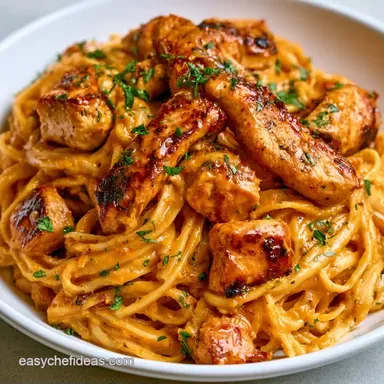
Roasted Butternut Squash Pasta with Garlic Chicken

- Time: 15 min active + 35 min cooking
- Flavor/Texture Hook: Glossy, mahogany colored sauce with golden chicken
- Perfect for: A cozy weeknight dinner for four
Ever wonder why some squash recipes taste like bland baby food while others feel like professional bistro fare? I used to struggle with this. Boiling and blending the veg typically resulted in a pale, watery sauce that lacked any real depth.
The breakthrough came when I stopped treating the squash like a potato and started treating it like a roast. The aroma of the edges caramelizing in the oven is where the transformation happens, turning a simple vegetable into something savory and complex.
If you've been intimidated by the tough skin or the prep, don't worry. Handling butternut squash is actually quite simple once you find your rhythm. This pasta is my favorite for chilly nights when you want something deeply comforting that doesn't take all evening to prepare.
Quick Specs for Butternut Squash Pasta
Right then, let's look at the timeline. This is a "plan based" meal, meaning we do the roasting first, then handle the protein and pasta while the oven does the heavy lifting.
For the best result, I recommend a "prep flow." Chop your squash and get it in the oven first. While that's roasting for 30 minutes, you can slice your chicken, mince your garlic, and get your pasta water boiling. This way, everything hits the plate at the same time, hot and fresh.
Since we're aiming for a wholesome transformation of a standard pasta night, I like to focus on the contrast. You have the natural sweetness of the squash, the salty hit from the Parmesan, and the savory char from the chicken. It's a balanced plate that feels veggie filled without sacrificing the protein.
Why This Dish Actually Works
High Heat Roasting: Baking at 400°F browns the natural sugars in the squash. This creates a savory depth that boiling just can't touch.
Fat Emulsion: Combining the blended squash with butter and Parmesan creates a stable, glossy sauce. The fats bind the vegetable puree to the pasta noodles so it doesn't slide off.
Aromatic Timing: Adding garlic at the very end of the chicken sear prevents it from burning. This keeps the garlic flavor sweet and punchy rather than bitter.
| Feature | Fresh Squash | Pre Cut Cubes | Impact |
|---|---|---|---|
| Prep Time | 10-15 mins | 2 mins | Fresh takes longer to peel/cube |
| Flavor | Peak sweetness | Slightly muted | Fresh has a more vibrant taste |
| Cost | Cheaper | More expensive | Pre cut is a convenience tax |
Ingredient Deep Dive
Before we start cooking, let's examine the key elements. In my experience, the choice of cheese and the quality of the broth significantly impact the overall character of the sauce.
| Component | Purpose | Substitute Notes |
|---|---|---|
| Butternut Squash | Core flavor and body | Pumpkin: Comparable texture, more earthy |
| Vegetable Broth | Controls sauce thickness | Salted water: Lacks complexity |
| Parmesan Cheese | Provides salt and "grip" | Pecorino: Sharper and saltier |
| Unsalted Butter | Contributes sheen and richness | Olive oil: Lighter, less creamy |
Choosing Your Ingredients
When selecting a squash, look for a matte skin and a dense weight. If you're Cooking with Butternut Squash for the first time, opting for a smaller size makes the chopping process much easier.
I use chicken breast strips for a fast sear. For a juicier result, chicken thighs are a great alternative, though they require an additional 2-3 minutes in the pan. Just ensure they are sliced thin so they align with the garlic's cooking time.
Ingredients List:
- 1 lb butternut squash, peeled and cubed into 1 inch piecesWhy this? Consistent sizing ensures they roast evenly.
- 3 tbsp olive oilWhy this? A high smoke point is ideal for roasting and searing.
- 1/2 tsp kosher salt
- 1/4 tsp black pepper
- 1/4 cup vegetable brothWhy this? Thins the puree without diluting the flavor.
- 1 lb chicken breast, sliced into thin strips
- 3 cloves garlic, minced
- 1/2 tsp paprika
- 12 oz rigatoni or penne pastaWhy this? The ridges help the thick sauce cling to the pasta.
- 1/2 cup grated Parmesan cheese
- 2 tbsp unsalted butter
Essential Kitchen Gear
A rimmed baking sheet is an absolute must. Avoid using a flat cookie sheet, as the oil and squash juices can easily spill over the edges and smoke up your oven.
I generally use an immersion blender for the sauce, but a high-powered stand blender like a Vitamix is ideal for achieving a perfectly glossy finish. If you lack a blender, a food processor works well, though you may need to scrape the sides a couple of times to ensure smoothness.
Lastly, use a large skillet for the chicken. Having enough surface area allows the meat to sear rather than steam; overcrowding the pan will cause moisture to build up, costing you that golden-brown crust.
Key Steps for the Perfect Pasta

Let's dive in. Follow these directions to keep your timing precise and your sauce silky.
- Set your oven to 400°F (200°C). On a rimmed baking sheet, combine the butternut squash cubes with salt, pepper, and 2 tablespoons of olive oil.
- Spread the squash in one layer. Bake for 25-30 minutes, giving them a toss midway, until edges are mahogany colored. Note: Avoid overcrowding the pan to prevent steaming instead of browning.
- Coat the chicken strips in paprika, salt, and pepper.
- Warm 1 tablespoon of olive oil in a large frying pan over medium-high heat. Brown the chicken until golden brown and cooked through (about 5-7 minutes).
- Stir in the minced garlic during the last 60 seconds of cooking until it smells fragrant.
- Move the chicken and garlic to a plate and set them aside.
- Place the roasted squash cubes into a blender. Add the unsalted butter and vegetable broth.
- Puree at full speed until the result is entirely smooth and glossy.
- Cook your pasta in salted boiling water. Save a bit of the pasta water before draining.
- Combine the pasta with the squash puree and the seared garlic chicken. Mix in the Parmesan cheese until melted and emulsified.
Common Mistakes & Troubleshooting
One thing I learned the hard way is that the sauce can sometimes turn out too thick. If it looks more like mashed potatoes than a pasta sauce, don't panic. Just stir in a tablespoon of that reserved pasta water. The starch in the water helps the sauce loosen up while keeping it clinging to the noodles.
Another common issue is the garlic. If you add it too early with the chicken, it burns. Burnt garlic tastes acrid and will ruin the sweetness of the squash. Always wait until the chicken is nearly done before letting the garlic hit the oil.
If you're looking for more veggie forward ideas, you might like my Butternut Squash Pasta Sauce recipe which uses a similar base but focuses on a different flavor profile.
Fixing a Grainy Sauce
This usually happens if the blender didn't run long enough or the squash wasn't roasted until tender. If it's grainy, blend for another 60 seconds or pass it through a fine mesh sieve.
Preventing Watery Pasta
Make sure you drain the pasta well, but don't rinse it. Rinsing removes the starch that helps the squash puree stick to the rigatoni.
Managing Overcooked Chicken
Chicken breast dries out fast. Pull the strips off the heat the second they are no longer pink in the middle. They will continue to cook slightly while resting on the plate.
| Problem | Root Cause | Solution |
|---|---|---|
| Sauce is too thick | Not enough liquid | Stir in 1-2 tbsp pasta water |
| Squash is pale | Oven temp too low | Ensure oven is 400°F and don't crowd pan |
| Bitter taste | Burnt garlic | Add garlic only in the last 60 seconds |
| Sauce separates | Cheese added to boiling heat | Stir cheese in over low heat or off heat |
Mix It Up
Using butternut squash allows you to explore a variety of unique flavor profiles. This recipe is highly adaptable if you are looking for an alternative to chicken.
To make a plant-based version, substitute the chicken with smoked tofu or chickpeas. Roast the chickpeas on the same tray as the squash during the final 15 minutes of cooking. Replace the butter with a splash of coconut milk or a premium vegan butter to maintain that dairy-like richness.
For a salty, umami punch, use nutritional yeast or a vegan parmesan alternative instead of traditional Parmesan.
To introduce some heat, stir in a pinch of red pepper flakes when adding the garlic; the spice balances the sweetness of the squash perfectly. For a cozy autumn feel, blending in a hint of cinnamon or nutmeg adds a subtle warmth. You can also use this puree as a delicious filling for Butternut Squash Lasagna Rolls.
Decision Shortcuts:
- For a creamier sauce: blend in 2 tbsp of heavy cream or cashew cream.
- For more texture: fold in a handful of whole roasted squash cubes at the end.
- For a lighter meal: replace the rigatoni with spaghetti squash or zucchini noodles.
Storage & Reheating
This dish keeps surprisingly well. Put leftovers in a glass container and keep them in the cooler for up to 4 days. The sauce might thicken as it cools, which is normal.
When reheating, don't just throw it in the microwave on high. The dairy in the Parmesan and butter can separate. Instead, heat it in a pan over medium low heat and add a splash of water or broth. This re emulsifies the sauce and brings back that glossy texture.
To avoid waste, save your squash peels and the seeds. You can roast the seeds just like pumpkin seeds, check out my guide on Roasted Pumpkin Seeds for the best crunch. The peels can be tossed into a vegetable stock pot with onion skins and carrot tops to make a homemade broth for your next meal.
Pairing Ideas
Since this pasta is so rich and creamy, a zesty accompaniment is needed to balance the flavors. An arugula salad with a lemon dressing is a timeless pairing, as the peppery leaves and acidity cut through the thickness of the squash.
For a more filling side dish, roasted Brussels sprouts with a balsamic glaze are an excellent choice. The tart glaze beautifully complements the mahogany tones of the roasted squash.
As for beverages, a chilled Pinot Grigio or some sparkling apple cider perfectly suits the autumn vibe. If you are serving a group, I suggest plating the pasta on a large platter and garnishing it with fresh parsley and additional shaved Parmesan to make the colors stand out.
Recipe FAQs
What is the best way to eat butternut squash?
Roasting the cubes at 400°F brings out the natural sweetness. You can then blend them into a puree or leave them chunky for texture.
Is it true that squash skin is edible when roasted?
Actually, no. The skin remains tough and fibrous even after roasting, so peel the squash before cubing.
Which meats pair best with butternut squash?
Chicken breast is a fantastic choice because its mild flavor lets the squash shine. You could also try pork chops for a richer flavor profile.
How to ensure the squash puree is glossy and smooth?
Blend the roasted cubes with vegetable broth and unsalted butter on high speed. This emulsifies the fats and liquids for a professional finish.
Does Parmesan cheese work best with this vegetable?
Parmesan adds a salty punch that balances the sweetness of the squash. It also helps the sauce cling to the rigatoni pasta.
Cooking with Butternut Squash in 50 Mins