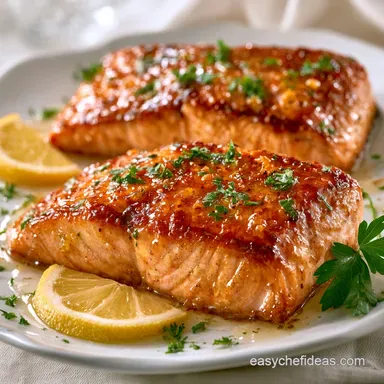
Simple Lemon Salmon Glaze: Sticky and Caramelized
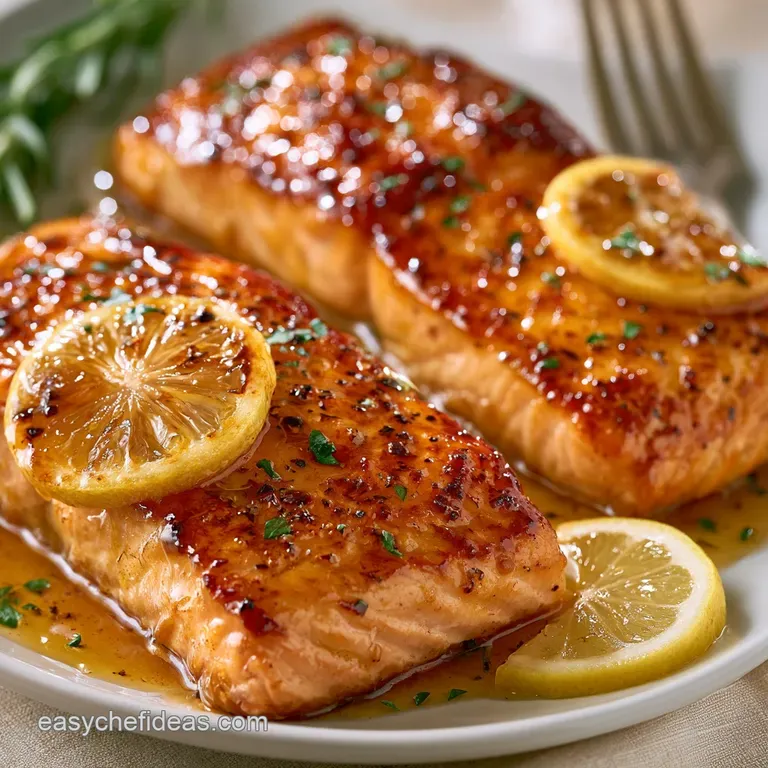
- Time: 5 min active + 12 min cooking = Total 17 min
- Flavor/Texture Hook: Tacky, glossy glaze with a shatter crisp sear
- Perfect for: Weeknight dinner or a low stress date night
Perfecting the Simple Lemon Salmon Glaze
That sharp, citrusy scent hitting the hot olive oil is where the magic starts. I remember the first time I tried a glaze like this for a dinner party. I was so nervous about overcooking the fish that I kept flipping it every thirty seconds. The result?
A fragmented crust and salmon that looked more like a scrambled egg than a fillet. It was a disaster, but it taught me the most important lesson in searing: leave it alone.
Once I learned to trust the sizzle, everything changed. Now, when that honey and lemon mixture hits the pan, it bubbles into this thick, golden syrup that clings to the fish. There is nothing quite like the smell of garlic browning in butter and lemon, filling the whole kitchen with a scent that just screams "fresh."
You can expect a dish that's velvety on the inside and tacky on the outside. We're aiming for that specific moment where the glaze transforms from a liquid into a glossy coat. This Simple Lemon Salmon Glaze isn't about being fancy, it's about using a few pantry staples to make the salmon the star of the show.
Trust me, once you see that glaze bubble, you'll never go back to plain baked fish.
The Magic Behind the Glaze
I've always been curious about why some glazes just slide off the fish while others stick like glue. It turns out it's all about how the sugars and acids play together.
- Sugar Caramelization: The honey provides simple sugars that brown quickly, creating that sticky, golden brown exterior.
- Acidic Balance: The lemon juice breaks down the heavy fats in the salmon, making the overall flavor feel lighter and brighter.
- Umami Boost: Soy sauce adds a hit of salt and depth, which prevents the honey from making the dish taste like a dessert.
- Surface Tension: Patting the fish dry allows the oil to sear the protein directly, which creates a better "grip" for the glaze.
If you're interested in how salt affects protein, Serious Eats has some great deep dives on dry brining. I've found that even a short rest with salt makes a huge difference in how the skin crisps up.
| Method | Time | Texture | Best For |
|---|---|---|---|
| Pan Searing Only | 12 mins | Crispier edges, thinner glaze | Quick lunches |
| Pan to Oven | 17 mins | Evenly cooked, thicker glaze | Dinner parties |
| Air Fryer | 10 mins | Matte finish, very lean | Meal prep |
Component Analysis
Understanding what each ingredient is actually doing helps you tweak the recipe later. For example, if you want it more savory, you'll know exactly which knob to turn.
| Ingredient | Science Role | Pro Secret |
|---|---|---|
| Honey | Thickening agent | Use a lighter honey (like clover) to keep the lemon taste prominent |
| Lemon Juice | pH Balancer | Fresh is non negotiable; bottled juice lacks the bright volatile oils |
| Soy Sauce | Flavor Amplifier | Adds the "dark" notes that balance the bright citrus |
| Garlic | Aroma Base | Mince it fine so it incorporates into the glaze without burning |
Gathering Your Essentials
Right then, let's look at what you need. I've kept this list short because the beauty of a Simple Lemon Salmon Glaze is that you probably have most of this in your cupboard already.
- 2 salmon fillets, 170g each Why this? Center cut fillets cook most evenly
- 1 tbsp olive oil Why this? High smoke point for a good sear
- 1/2 tsp kosher salt Why this? Coarser grains are easier to control
- 1/4 tsp cracked black pepper Why this? Freshly cracked adds a woody heat
- 2 tbsp honey Why this? Creates the signature sticky texture
- 1 tbsp fresh lemon juice Why this? Essential for that zesty punch
- 1 tsp lemon zest Why this? Where the actual lemon oil lives
- 2 cloves garlic, minced Why this? Adds a savory, pungent depth
- 1 tsp soy sauce Why this? Provides the salt and umami base
If you're out of honey, maple syrup is a great swap. It'll give the Simple Lemon Salmon Glaze a slightly more autumnal, woody flavor, but the texture remains just as tacky.
| Original Ingredient | Substitute | Why It Works |
|---|---|---|
| Honey (2 tbsp) | Maple Syrup (2 tbsp) | Similar sugar content. Note: Adds a distinct maple flavor |
| Soy Sauce (1 tsp) | Coconut Aminos (1 tsp) | Similar salty/umami profile. Note: Slightly sweeter and soy free |
| Olive Oil (1 tbsp) | Avocado Oil (1 tbsp) | Higher smoke point. Note: More neutral flavor |
| Fresh Lemon | Lime | Similar acidity. Note: Shifts the profile toward a Thai inspired flavor |
Honestly, don't even bother with low-fat substitutes here. The fat in the salmon and the oil is what carries the flavor of the garlic and lemon.
Equipment Needed
You don't need a professional kitchen for this, but a few specific tools make it way easier.
First, a 12 inch oven safe skillet is my absolute favorite. Cast iron is the gold standard because it holds heat so well, but stainless steel works too. If your pan isn't oven safe, you can just finish the fish on the stovetop, though you'll have to be more careful with the basting.
I also recommend a fish spatula. Those wide, thin metal ones are a lifesaver when you're flipping a glazed fillet. There's nothing worse than the glaze sticking to the pan and the fillet breaking in half because you used a chunky spatula.
Finally,, grab a small whisk and a bowl. You could stir the glaze with a fork, but a whisk ensures the honey and soy are fully integrated, giving you a velvety consistency.
The Cooking Process
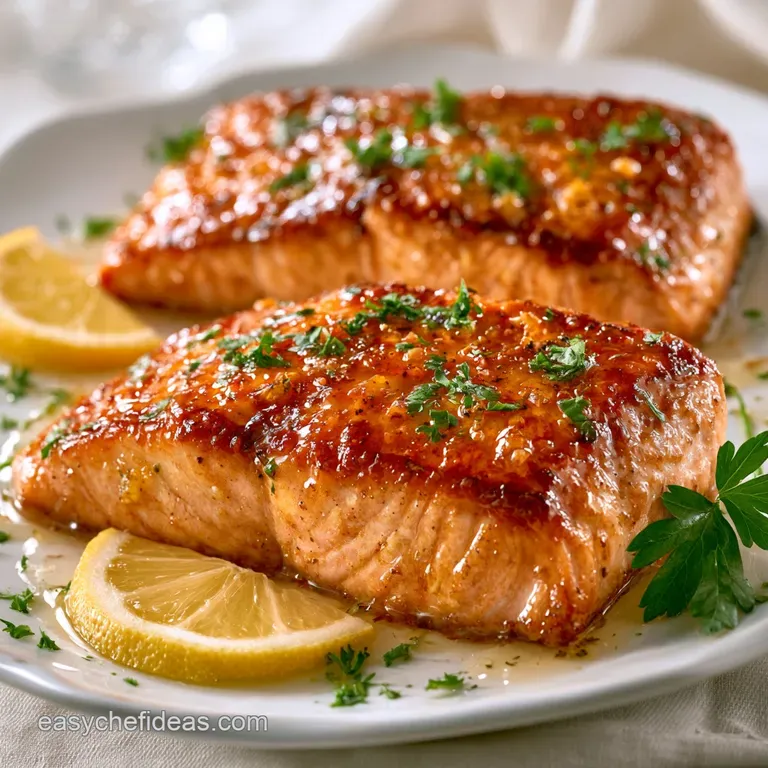
Let's crack on with the actual cooking. Pay attention to the smells here, as they tell you exactly when to move to the next step.
Prep and Seasoning
- Pat the salmon fillets completely dry with paper towels. Note: Moisture is the enemy of a good sear
- Season both sides evenly with salt and black pepper.
The Searing Phase
- In a small bowl, whisk together the honey, lemon juice, lemon zest, minced garlic, and soy sauce until smooth and glossy.
- Heat olive oil in your skillet over medium high heat until it shimmers and just starts to wisps of smoke.
- Place salmon skin side up and sear for 3-4 minutes until a golden brown crust forms and the fish releases easily from the pan.
Glazing and Finishing
- Flip the fillets carefully.
- Pour the Simple Lemon Salmon Glaze directly over the fish.
- Baste the fish continuously with a spoon as the sauce bubbles and thickens, or transfer the skillet to a 200°C (400°F) oven for 5-7 minutes.
- Remove from heat until the glaze is tacky and the salmon flakes easily with a fork.
Chef's Note: If you're finishing on the stove, keep the heat at medium. Honey burns fast, and you want a mahogany glaze, not a black char.
Pro Tips & Pitfalls
Cooking fish is all about timing. If you overdo it by even two minutes, you've gone from velvety to chalky.
Troubleshooting Common Issues
| Issue | Solution |
|---|---|
| Why Your Salmon Sticks | If the fish won't budge from the pan, it's usually because you didn't let the sear finish. The protein needs to form a crust before it naturally releases. If you force it, you'll leave the best part o |
| Why the Glaze Burnt | Honey is a sugar, and sugar burns quickly. If your pan is screaming hot when you add the glaze, it will scorch before the fish is cooked through. Lower the heat slightly before pouring in the sauce. |
| Why the Fish is Dry | This happens when you cook the salmon all the way through in the pan and then put it in the oven for too long. Remember that carryover cooking happens. Pull the fish when it's just slightly underdone |
Common Mistakes Checklist
- ✓ Did you pat the fish dry? (Wet fish steams; it doesn't sear)
- ✓ Is the oil shimmering? (Cold oil leads to sticking)
- ✓ Did you avoid moving the fish during the first 3 minutes? (Patience = Crust)
- ✓ Did you pull the fish before it looked "done"? (Carryover cooking is real)
- ✓ Is your lemon fresh? (Bottled juice lacks the necessary oils)
Adjusting the Yield
Whether you're cooking for just yourself or a crowd, you can scale this Simple Lemon Salmon Glaze easily.
Cooking for One Use a smaller 8 inch skillet. Since there's less mass in the pan, the oil heats up faster. Reduce your searing time by about 20% and keep a close eye on the glaze, as it will reduce much faster with only one fillet.
Cooking for Four or More Don't crowd the pan. If you put four fillets in a 12 inch skillet, the temperature drops and the fish will boil in its own juices instead of searing. Work in batches. Sear two, move them to a plate, sear the next two, then put them all in the oven together to finish.
When scaling the glaze, don't just double everything linearly. Increase the honey and lemon, but only increase the soy sauce and garlic by about 1.5x. Too much soy can make the glaze overly salty as it reduces.
Truths About Searing
There are a few things people tell you about fish that just aren't true. Let's set the record straight.
First, you'll hear that searing "seals in the juices." It doesn't. Moisture escapes the fish regardless of how you sear it. What searing actually does is create a layer of flavor through the Maillard reaction, giving you that shatter crisp texture and deep taste.
Second, some people think you have to cook salmon until it's opaque all the way through. Honestly, that's a mistake. Salmon is best when the center is slightly translucent (medium rare to medium). If it's opaque throughout, you've likely overcooked it.
Storage Guidelines
If you have leftovers, store the salmon in an airtight container in the fridge for up to 2 days. Avoid the freezer; the texture of cooked salmon changes significantly when frozen and thawed, becoming mushy.
To reheat, don't use the microwave if you can help it. It'll overcook the fish in seconds. Instead, put it in a pan over low heat with a tiny splash of water or butter. Cover it with a lid for 2-3 minutes to gently steam it back to temperature.
For zero waste, don't throw away the lemon rinds. You can freeze them to use in future recipes or toss them into a jar of vodka for a homemade citrus infusion. If you have leftover glaze in the bowl, stir in a teaspoon of water and simmer it in a pan for a minute to make a sauce for some grilled asparagus.
Pairing Ideas
This dish is quite bold, so you want sides that provide a clean, crisp contrast. I love serving this with a light grain like quinoa or a simple jasmine rice.
If you want something green, the acidity of the glaze pairs beautifully with a creamy sauce. My Béarnaise sauce recipe is a great choice if you're going for a more indulgent dinner. Otherwise, a simple side of steamed broccoli or sautéed spinach works wonders.
For a full on seafood feast, you could pair this with a chilled salad. If you've already had a heavy main, something light like a Seared Tuna Salad as a starter creates a great progression of flavors.
The key is to keep the sides simple. The Simple Lemon Salmon Glaze does the heavy lifting here, so don't distract from it with overly complex side dishes. Just a bit of salt, some butter, and fresh greens, and you've got a meal that feels like it came from a high end bistro.
Recipe FAQs
What ingredients are in this lemon glaze?
Honey, lemon juice, lemon zest, minced garlic, and soy sauce. These ingredients are whisked together until the mixture is smooth and glossy.
What glaze is best for salmon?
A balance of sweet and acidic, like this honey lemon glaze. If you loved the sweet tart balance here, see how we use the same acid technique in our fish cakes.
How to make a simple, yet tasty salmon glaze?
Whisk together honey, lemon juice, lemon zest, garlic, and soy sauce. Pour the mixture over seared fillets and baste continuously as it bubbles and thickens.
How to cook salmon for diabetes?
Sear the fillets in olive oil and minimize the honey. Focus on the garlic and lemon for flavor while reducing the sugar content in the glaze.
Is it true that you should reheat leftover salmon in the microwave?
No, this is a common misconception. Microwaves often overcook the fish; instead, gently steam it in a pan over low heat with a tiny splash of water.
Why does the salmon stick to the pan?
The fish was flipped too early. You must let the protein form a golden brown crust, which allows the fillet to release naturally from the skillet.
How to prevent the honey glaze from burning?
Lower the heat slightly before adding the sauce. Because honey is a sugar, it can scorch quickly if the pan is too hot when the glaze is poured in.
Simple Lemon Salmon Glaze