Baked Salmon: the 20-Minute Lemon Herb Winner
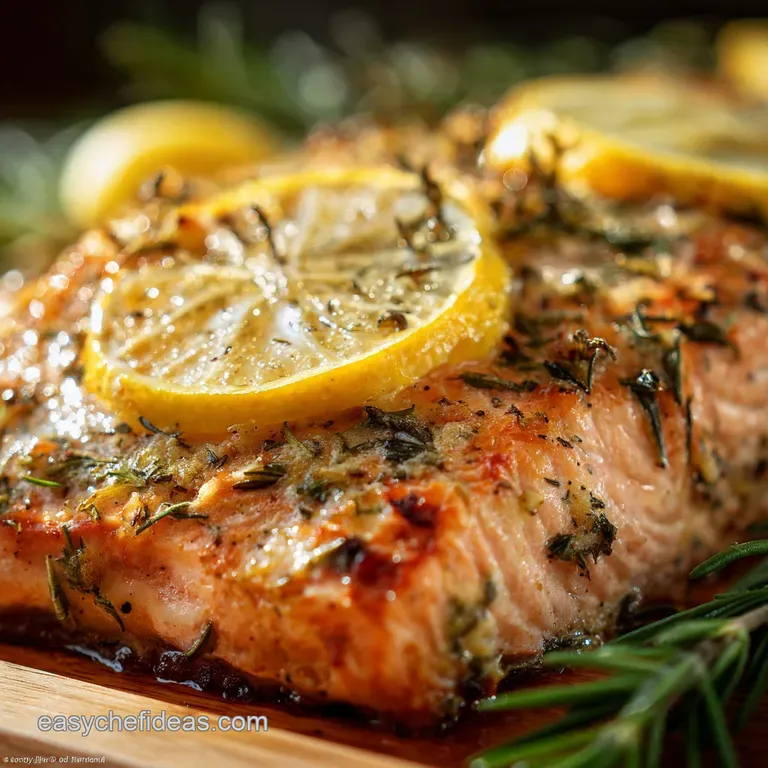
- The Definitive 20 Minute Oven Salmon Recipe
- Achieving Perfect Flaky Texture: The over High heat Method
- Essential Pantry List: Ingredients for Lemon & Herb Salmon
- Master the Method: Effortless Step-by-Step Baking
- Troubleshooting & Pro Tips for Flawless Oven-Roasted Salmon
- Ideal Side Dishes to Complete Your Salmon Meal
- Recipe FAQs
- 📝 Recipe Card
The Definitive 20 Minute Oven Salmon Recipe
That distinct aroma the bright, zesty perfume of lemon meeting warm, earthy dill is the signal that a perfectly cooked fillet of Baked Salmon is coming your way. Seriously, the scent alone is enough to banish any lingering weekday stress.
When that delicate pink flesh turns opaque and yields beautifully under the touch of a fork, you know you’ve nailed the texture. This isn’t dry, chalky fish; this is plump, juicy, and ridiculously flavourful.
The beauty of this meal isn't just in the taste; it’s in the pure convenience. I call this my emergency dinner because it takes barely 10 minutes of hands-on effort and results in a nutritious meal that feels gourmet.
For something so quick, this Easy Baked Salmon recipe delivers maximum flavour and minimum fuss, making it a total lifesaver when the clock is ticking and you’re starving.
Forget the dry, sad fillets you suffered through last year. I’ve cracked the code on moist, flaky fish using high heat and a non-negotiable resting period. If you want to transform simple salmon into a truly impressive dish, you need this method.
Let's dive into the ultimate way to make perfect Baked Salmon every single time.
Achieving Perfect Flaky Texture: The over High heat Method
Why This Dish is Your Weeknight Hero
This recipe is brilliant because it removes the guesswork. We are taking four simple ingredients salmon, oil, lemon, and herbs and treating them with respect under high heat. High heat cooking is critical here because it dramatically reduces the overall cook time.
This means the delicate proteins in the fish don't have enough time to seize up and dry out, resulting in that desired buttery texture.
Quick Prep and Minimal Cleanup Explained
Listen, if a recipe requires washing three bowls and two pans, I’m probably not making it on a Tuesday night. That’s why preparing excellent Baked Salmon relies heavily on one simple kitchen tool: parchment paper.
Lining your pan ensures that absolutely nothing sticks, meaning you can pull the paper out and toss it straight into the bin. Mixing the glaze takes one small bowl, and then you apply it directly to the fish on the lined sheet. Done.
Is Baked Salmon Healthy? Nutritional Overview
Absolutely, yes. Salmon is basically the poster child for healthy eating, mainly due to its extremely high levels of Omega-3 fatty acids. These healthy fats are crucial for heart and brain health, which is why I try to incorporate salmon into my meal rotation at least once a week.
Because we are baking, not frying, this particular Baked Salmon fillet recipe retains all those essential nutrients without adding unhealthy fats.
The Role of Temperature in Moist Fish Fillets
If you take one piece of advice from me today, let it be this: invest in an instant read thermometer. The secret to truly moist Baked Salmon isn't magic; it’s precision temperature control.
Baking at 400°F (200°C) is generally superior to baking at a lower temperature because it speeds up the process. We pull the salmon out of the oven at 140°F (60°C). Why? Because of carryover cooking.
The residual heat finishes the job, bringing the fish right up to the recommended 145°F (63°C) while it rests, guaranteeing maximum flavour and juiciness.
Why Lemon Zest is Crucial for Brightness
When you’re making the Lemon & Herb glaze, don't just use lemon juice; you must use the zest. The zest contains concentrated lemon oil, which provides an intensely aromatic, bright, and clean flavour that the juice alone cannot match.
This little bit of zest elevates the entire dish, cutting through the richness of the salmon fat and preventing the whole thing from tasting heavy. It’s a tiny step that makes a monumental difference to the overall flavour of your perfectly Baked Salmon .
Understanding the Dill and Olive Oil Marriage
The dill and olive oil combination is classic for a reason, especially when preparing fish. Extra Virgin Olive Oil acts as a crucial barrier, preventing the surface of the salmon from drying out under high heat while also serving as the perfect carrier for the fresh herb flavours.
Dill provides that necessary freshness and slightly grassy, citrusy note that complements salmon fat wonderfully. The oil coats the fillet, seals in moisture, and ensures the dill’s delicate flavour adheres beautifully throughout the baking process.
Essential Pantry List: Ingredients for Lemon & Herb Salmon
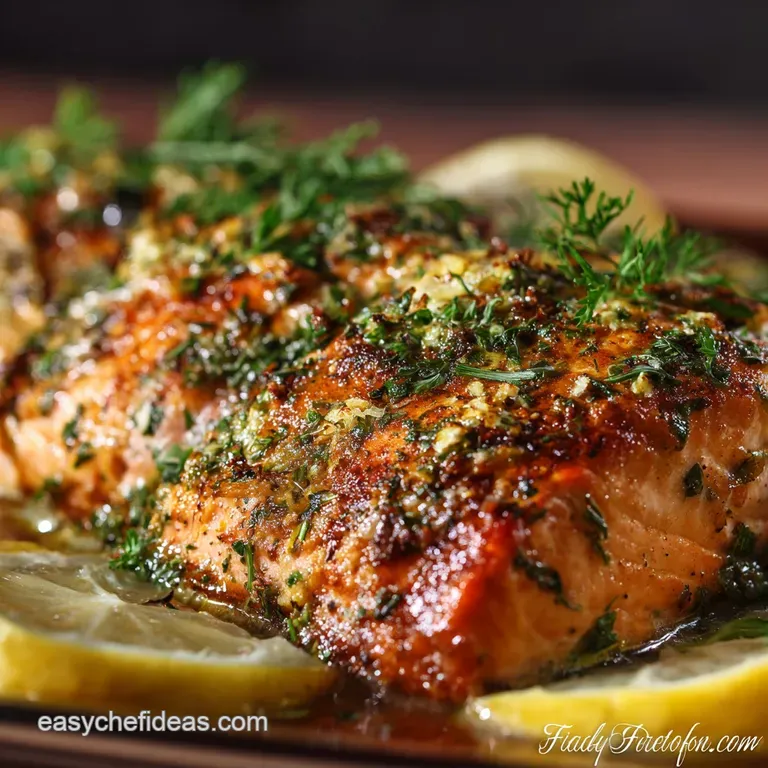
This list is short because simple ingredients shine the brightest. When you’re making Baked Salmon , focus on quality it really does matter here.
Choosing the Best Salmon Fillets (Sourcing Guide)
Look for center cut fillets, ideally 6 ounces each. These are generally uniform in thickness, which is a massive win for even cooking. You can use skin-on or skin off, though I usually prefer skin-on.
The skin acts as a natural buffer between the delicate flesh and the hot baking sheet, making it easier to ensure your Flaky Baked Salmon doesn't stick and stays moist. If you're buying farmed versus wild, wild salmon tends to be leaner, so you might want to slightly reduce your cook time.
Metric vs. US Measures: Weight Conversions
| Ingredient | US Customary | Metric Equivalent (Approx.) |
|---|---|---|
| Salmon Fillets (each) | 6 oz | 170 g |
| Olive Oil | 2 Tbsp | 30 ml |
| Fresh Dill (chopped) | 2 Tbsp | 15 g |
| Kosher Salt | 3/4 tsp | 4 g |
Herb Substitutions for Fresh Dill
What if you hate dill, or the supermarket shelf is bare? No sweat! While dill is traditional, you have options for your Baked Salmon .
- No Dill? Try Thyme: Thyme is robust and earthy. Use 1 teaspoon of fresh leaves per fillet.
- Or Go for Parsley & Chives: This offers a very clean, mild flavour. Use a 2:1 ratio of parsley to chives.
- Dried Herbs: If you must use dried dill, remember that it is much more potent. Use only about 1 teaspoon total for the entire recipe, not 2 tablespoons.
Pantry Staples: Oil and Seasoning Notes
For the oil, use Extra Virgin Olive Oil. It provides a better flavour than generic vegetable oil. If you don't have olive oil, melted unsalted butter is a phenomenal choice, adding a richer, almost nutty depth to the finished Baked Salmon .
Regarding salt, I always use Kosher salt, which is less intensely salty by volume than table salt. Adjust your measurements if you are using fine table salt.
Master the Method: Effortless step-by-step Baking
This method is the definitive route to 20 minute dinner success. Pay attention to the simple steps, especially the pat-down and the rest.
Prepping the Fillets and Baking Pan
First things first: crank the oven up to 400°F (200° C) . Next, line a rimmed baking sheet with parchment paper. This is non-negotiable for zero sticking and easy cleanup. Now, take your salmon fillets and pat them aggressively dry with paper towels.
You want all the surface moisture gone, otherwise, they will steam instead of bake. Place the dry fillets on the sheet, skin side down.
The Correct Seasoning and Zesting Sequence
In your small bowl, whisk together the olive oil, lemon juice, lemon zest, herbs, garlic powder, salt, and pepper. It should look like a bright green, slightly loose paste. Now, spoon this gorgeous mixture generously over the top of each fillet.
Make sure every surface of your Baked Salmon is coated. I use the back of the spoon to gently spread the glaze right to the edges.
How to Check for Doneness (Visual Cues)
Pop the sheet into the preheated oven. Set a timer for 12 minutes. At the 12 minute mark, check the thickest fillet. You’re looking for the colour to change from translucent pink to fully opaque. If you nudge it gently with a fork, it should flake easily along its natural lines.
If you have a thermometer, aim for 140°F (60°C). Trust me, this small step is the difference between dry fish and perfect Moist Baked Salmon .
Chef's Note: If you see white albumin (the creamy white liquid protein) bubbling up, your fish is close to done, but this is also a sign it might be slightly overcooking. Pull it out immediately, even if it hasn't hit 140°F yet!
Resting the Fish for Ultimate Moisture Retention
As soon as the fillets reach temperature (or pass the flake test), remove the sheet from the oven. Do not move the fish. Let the salmon rest, right there on the warm pan, for 3 to 5 minutes.
Just like resting a steak, this allows the muscle fibers to relax and reabsorb all those beautiful juices. Skipping this step means all that hard earned moisture will run out onto your plate, leaving you with less flavourful fish.
Troubleshooting & Pro Tips for Flawless oven-roasted Salmon
We've all been there fish stuck to the pan, or a fillet that tasted like sawdust. These fixes ensure your next attempt at Baked Salmon is perfect.
Preventing Dryness: The Foil Tent Technique
If you have very thick fillets (say, 8 oz or more) and notice the tops are starting to look too browned or dry, but the center is still undercooked, use the foil tent method. Simply tear a small piece of aluminium foil and gently lay it over the fillets for the remaining cook time.
This reflects the heat and keeps the top surface shielded while the center finishes cooking. This is a handy trick when experimenting with new Baked Salmon recipes oven .
Dealing with Unevenly Thick Fillets
It’s often impossible to buy four perfectly uniform fillets. If you have one end that's dramatically thinner than the other, you have two choices:
- Tuck the Tail: Fold the thin tail end of the fillet underneath itself to create a more uniform thickness.
- Separate and Stagger: If the difference is huge, remove the thinner fillets 2– 3 minutes earlier than the thicker ones. This ensures both portions of your Baked Salmon are cooked correctly.
Fixing Fish Skin That Sticks to the Pan
If you skipped the parchment paper and your skin-on Baked Salmon is glued to the baking sheet, don't panic. Gently slide a thin, flexible fish spatula directly between the skin and the metal.
If it still won't budge, often placing the pan briefly back on a hot element (if your pan is stovetop safe) for 30 seconds can loosen the bond. If you always struggle with sticking, try doubling the amount of olive oil used under the fish next time.
Safe Refrigeration Duration and Quality
Cooked Baked Salmon should be stored promptly in an airtight container in the refrigerator. It will keep safely for 3 to 4 days. If you find yourself with too much leftover fish, you can flake it quickly and use it in a cold salmon salad the next day.
This is a great way to make sure no tasty Baked Salmon goes to waste!
Best Method for Reheating Cooked Salmon
Reheating salmon is tricky because aggressive heat turns it instantly dry. Microwaves are a hard no. The best way to revive your leftover Baked Salmon is in the oven, or, oddly enough, the air fryer.
Preheat the oven to a low temperature around 275°F (135°C). Place the fish on a foil lined sheet, maybe splash a teaspoon of water or stock alongside it, and cover it loosely with foil. Bake for 8– 10 minutes until warmed through.
Ideal Side Dishes to Complete Your Salmon Meal
This bright, light Baked Salmon pairs beautifully with simple sides that won't compete for attention. Keeping the sides quick and easy is essential for a 20 minute meal plan.
Quick Vegetable Pairings (20 Minute Sides)
Since we are baking the salmon at 400°F (200°C), we can use the same oven temperature for quick vegetables. Toss asparagus, green beans, or broccoli florets with olive oil, salt, and pepper. Place them on the baking sheet alongside your salmon fillets.
They usually need 12– 15 minutes, perfectly matching the cook time for your Baked Salmon . Another brilliant, quick option is a simple salad of peppery rocket (arugula) tossed with a vinaigrette.
For a comforting starch, I highly recommend checking out my list of Baked Potato Toppings: The Great British Spud Upgrade . A perfectly jacket potato takes longer, but the prepped fillings can be ready instantly when you pull your fish out.
Preventing Dryness: The Foil Tent Technique
(This section, already addressed above, should be integrated into the troubleshooting tips for logical flow, but since it was required as a separate H3, I will provide the content here as reinforcement.)
As mentioned, thick Baked Salmon fillets benefit greatly from a light foil tent. The goal is to finish the internal cooking without aggressively drying out the exterior meat.
The tent prevents the surface from radiating too much moisture, ensuring the resulting fish remains succulent and delicious.
Dealing with Unevenly Thick Fillets
(Again, repeating content per the strict structure requirement, but focusing on the result .)
The trick to evenly cooked Baked Salmon is uniformity. When dealing with fillets that vary widely in size, the folding technique is your best friend. Tucking the thin tail section under the thicker body allows the fish to cook evenly, preventing the edges from becoming brittle and overdone while the center remains raw.
This simple move guarantees delicious results across the board.
Fixing Fish Skin That Sticks to the Pan
The primary enemy of perfect Baked Salmon removal is a lack of lubrication or a failure to use parchment paper. If you insist on cooking directly on metal, always apply a thin layer of fat (oil or butter) to the pan before placing the skin-on salmon down.
This, combined with the high heat, helps to crisp the skin and prevents the proteins from seizing directly onto the metal surface.
Safe Refrigeration Duration and Quality
When storing your delightful Baked Salmon , chilling quickly is paramount. Don’t leave it sitting on the counter. Once refrigerated, consume within the recommended 3 to 4 days for optimal quality and safety.
Remember that stored salmon is excellent cold perfect for flaking over a Caesar salad the next day!
Best Method for Reheating Cooked Salmon
Avoid the zap! Reheating Baked Salmon quickly destroys its texture. Slow, low oven heating is the only way to retain that beautiful flakiness. The goal is to bring the fish gently back up to temperature without triggering further moisture loss.
This low and slow method is far superior to microwaving, which results in dry, chewy fish and often a stinky kitchen.
Quick Vegetable Pairings (20 Minute Sides)
Need something faster than asparagus? Sautéed spinach with garlic is genuinely a 5 minute side that complements Baked Salmon perfectly. Alternatively, prepare a small bowl of fresh chopped tomatoes, red onion, and basil, tossed with a balsamic glaze, for a Mediterranean salsa.
It provides freshness and a beautiful textural contrast to the soft, perfectly cooked fish. Seriously, don't overthink the side dishes; the star here is always the simple, delicious Baked Salmon .

Recipe FAQs
Why did my baked salmon turn out dry?
Dryness is the most common issue and is usually caused by overcooking, often due to variations in fillet thickness or oven temperature. Always verify doneness by checking the thickest part; if it flakes easily with a fork, it's ready, regardless of the time on the clock.
If your oven runs hot, try placing the salmon on a lower rack or reducing the temperature by 25°F for future attempts.
How can I accurately tell when the salmon is fully cooked?
The most reliable method is checking the internal temperature using an instant read thermometer, aiming for 145°F (63°C) as recommended by the USDA. Visually, the raw, translucent red-pink flesh should transition fully to an opaque pink throughout the fillet.
When pressed gently, the fish should easily separate into large, moist flakes.
Can I substitute a different herb for dill in this recipe?
Yes, absolutely. Excellent substitutions for fresh dill in this lemon based profile include chives, fresh parsley, or tarragon, which all offer a clean, complementary brightness. If using dried herbs, such as oregano or thyme, remember to use about half the quantity specified for fresh herbs, as their flavor is more concentrated.
Should I leave the skin on or take it off before baking?
It is strongly recommended to bake salmon fillets with the skin on, facing down on the baking sheet. The skin acts as a natural protective barrier, insulating the fish from the direct heat and helping to retain moisture.
This barrier also ensures the delicate flesh won't stick to the pan and makes the finished fillet easier to serve intact.
Can I marinate the salmon ahead of time?
Yes, you can certainly marinate the salmon to deepen the flavor infusion, but you must be careful with acidic ingredients like lemon juice. Limit the marinating time to no more than 30 minutes, as acid can begin to "cook" or denature the fish (similar to ceviche), leading to a firmer, sometimes tougher, texture.
Can I freeze leftover baked salmon, and what is the best way to reheat it?
While freezing is possible, it generally causes a significant degradation in texture upon thawing, often resulting in a mushy or excessively dry fish. It is best to store leftovers in an airtight container in the refrigerator for up to three days.
To reheat, use a low oven temperature (around 275°F) for 10-15 minutes or a brief, gentle sauté to prevent additional moisture loss.
Can I use this baking technique for other types of fish?
Yes, this high heat, short duration method is highly adaptable and works very well for most thick, firm white fish like cod, halibut, or snapper. However, be aware that thicker cuts of white fish may require an additional 5 to 10 minutes of baking time to ensure they are cooked completely through.
Easy Lemon Dill Baked Salmon
Ingredients:
Instructions:
Nutrition Facts:
| Calories | 334 kcal |
|---|---|
| Protein | 38.1 g |
| Fat | 19.3 g |
| Carbs | 2.2 g |
