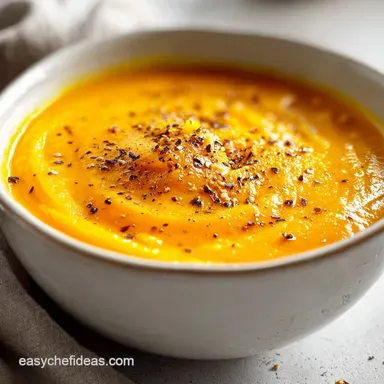
Healthy Creamy Roasted Pumpkin Soup: Velvety Smooth

- Time: 15 min active + 45 min cook = 60 min total
- Flavor/Texture Hook: Velvety smooth with mahogany charred undertones
- Perfect for: Chilly autumn weeknights or cozy dinner parties
- Easy Creamy Roasted Pumpkin Soup
- Why These Flavors Work
- Quick Recipe Details
- Component Analysis
- Ingredients and Simple Swaps
- Essential Kitchen Tools
- Step by Step Method
- Fixing Common Issues
- Troubleshooting Common Issues
- Variations and Flavor Twists
- Scaling the Batch
- Common Soup Myths
- Storage and Waste Tips
- Serving Your Soup
- High in Sodium
- Recipe FAQs
- 📝 Recipe Card
Easy Creamy Roasted Pumpkin Soup
That first sizzle when the pumpkin hits the hot olive oil is where the magic happens. I remember one October evening when the rain was absolutely hammering against the windows, and I just wanted something that felt like a warm blanket.
I tossed my pumpkin and garlic into the oven, and within twenty minutes, the whole house smelled like toasted nuts and sweetness. It's that specific, earthy aroma that tells you winter is coming, and you're totally ready for it.
The secret is in the roasting. I used to just boil everything in a pot, but it always tasted a bit flat, almost like baby food. Once I switched to roasting the pumpkin and onion together, the flavor shifted completely.
You get these little charred edges on the pumpkin that add a smoky depth you just can't get any other way.
This creamy roasted pumpkin soup is all about simplicity and a few smart shortcuts. We're using a minimal toolset, meaning less cleanup and more time actually enjoying the food. It's a plant forward dish that feels indulgent without being heavy, and it's the kind of meal that makes your kitchen feel like the center of the home.
Why These Flavors Work
Concentrated Sugars: Roasting evaporates water from the pumpkin, which concentrates the natural sugars. This creates a rich, sweet base that doesn't need extra sweeteners.
Aromatic Softening: Roasting garlic in its skin prevents it from burning and turns it into a buttery paste. This adds a mellow, savory backbone to the soup rather than a sharp, raw bite.
Acidic Balance: A splash of lemon juice at the end cuts through the richness of the cream. It wakes up the earthy pumpkin notes and prevents the soup from tasting one dimensional.
Warm Spice Synergy: Nutmeg and thyme create a bridge between the sweet pumpkin and the salty broth. This is similar to the roasting logic used in a homemade tomato soup, where high heat transforms raw vegetables into a complex base.
Quick Recipe Details
When deciding how to make your soup, you might wonder if the extra step of roasting is actually worth it. I've tried both ways, and the difference in depth is huge.
| Method | Prep Time | Texture | Best For |
|---|---|---|---|
| Fast Boil | 10 mins | Smooth, light | Quick weeknight lunches |
| Classic Roast | 15 mins | Velvety, rich | Cozy dinners & guests |
| Slow Cooker | 10 mins | Uniform, soft | Hands off meal prep |
Right then, you can see that roasting takes a tiny bit more effort but pays off in the flavor profile. The high heat of the oven does the heavy lifting for you.
Component Analysis
Understanding how each part of this creamy roasted pumpkin soup contributes helps you adjust it on the fly.
| Ingredient | Science Role | Pro Secret |
|---|---|---|
| Pumpkin | Structural Base | Use sugar pumpkins for better texture |
| Roasted Garlic | Savory Depth | Leave skins on to steam the cloves |
| Vegetable Broth | Hydration | Low sodium allows you to control salt |
| Lemon Juice | Flavor Brightener | Stir in at the very end to keep it fresh |
It's all about the balance of sweet, salty, and sour. If you skip the lemon, the soup feels heavy. If you skip the roasting, it feels thin.
Ingredients and Simple Swaps
For this recipe, I prefer a plant based approach to keep things wholesome. Everything here is designed to be veggie filled and comforting.
- 3 lbs pumpkin, peeled and cubed Why this? Dense flesh prevents the soup from becoming watery
- 1 medium yellow onion, quartered Why this? High sugar content for better charring
- 6 cloves garlic, skin on Why this? Protects the garlic from scorching in the oven
- 2 tbsp extra virgin olive oil Why this? High smoke point and rich flavor
- 1 tsp sea salt Why this? Enhances natural sweetness
- 1/2 tsp black pepper Why this? Adds a subtle heat
- 4 cups low sodium vegetable broth Why this? Provides a clean, savory liquid base
- 1 tsp dried thyme Why this? Earthy notes that complement the pumpkin
- 1/4 tsp ground nutmeg Why this? Adds a classic autumnal warmth
- 1/2 cup light cream Why this? Creates a velvety finish
- 1 tbsp lemon juice Why this? Cuts through the richness
- 2 tbsp toasted pumpkin seeds Why this? Adds a necessary crunch
- 1 tbsp fresh parsley, chopped Why this? Fresh green contrast to the orange
Substitution Table
| Original Ingredient | Substitute | Why It Works |
|---|---|---|
| Light Cream (1/2 cup) | Full fat Coconut Milk (1/2 cup) | Similar fat content. Note: Adds a slight tropical nuttiness |
| Pumpkin (3 lbs) | Butternut Squash (3 lbs) | Very similar texture. Note: Slightly sweeter, less earthy |
| Vegetable Broth (4 cups) | Cashew Broth (4 cups) | Creamier profile. Note: Heavier body, may need more water |
| Dried Thyme (1 tsp) | Dried Sage (1 tsp) | Same herb family. Note: More pungent, classic "Thanksgiving" taste |
Don't be afraid to swap the pumpkin for butternut squash if that's what's available at your local market. Both work brilliantly for a creamy roasted pumpkin soup.
Essential Kitchen Tools
You don't need a professional kitchen to pull this off. In fact, the fewer tools you use, the better.
- Sheet Pan: A large rimmed baking sheet. I prefer using parchment paper so I don't have to scrub burnt onion bits later.
- Large Pot: A heavy bottomed pot or Dutch oven. This helps distribute the heat evenly when simmering the broth.
- Immersion Blender: This is the real hero. Blending directly in the pot saves you from transferring hot liquid into a traditional blender, which can be dangerous.
- Chef's Knife: For cubing the pumpkin into uniform pieces so they roast at the same rate.
Chef's Note: If you don't have an immersion blender, you can use a standard blender. Just do it in batches and leave a gap at the top of the jar to let the steam escape, or the lid will pop off!
Step by step Method
Let's crack on with the cooking. Remember, we're looking for specific visual cues here, not just the timer.
- Preheat your oven to 400°F (200°C). Toss the cubed pumpkin, quartered onion, and whole garlic cloves with olive oil, salt, and pepper on a parchment lined baking sheet. Spread in a single layer and roast for 25-30 minutes until pumpkin edges are mahogany colored and the onion is charred.
- Squeeze the roasted garlic out of its skin into a large pot. Note: The garlic should be soft and buttery.
- Add the roasted pumpkin and onion into the pot with the garlic.
- Pour in the vegetable broth, thyme, and nutmeg. Bring the mixture to a gentle simmer over medium heat for 10 minutes until the aromas are blended and fragrant.
- Remove the pot from the heat. Use an immersion blender to process the soup until completely smooth and velvety.
- Stir in the light cream (or coconut milk) and lemon juice. Note: Doing this off the heat prevents the cream from separating.
- Taste and add a pinch more salt or pepper if needed.
- Ladle into bowls and garnish with toasted pumpkin seeds and chopped fresh parsley.
According to Serious Eats, roasting vegetables before blending them is the best way to maximize flavor because it creates compounds that boiling simply cannot. This is why the mahogany edges on your pumpkin are so important.
Fixing Common Issues

Even with a simple recipe, things can sometimes go sideways. Most of the time, it's a quick fix.
Troubleshooting Common Issues
| Issue | Solution |
|---|---|
| Why Your Soup Is Grainy | If you see little bits of pumpkin or onion, it's usually because the blender didn't quite get everything. If you have an immersion blender, just keep pulsing in the same spot for a few more seconds. I |
| Why Your Soup Is Too Thick | Pumpkin varies in water content. If your soup looks more like a puree than a soup, simply stir in an extra 1/2 cup of vegetable broth. Do this slowly so you don't lose the richness. |
| Why Your Soup Lacks Depth | If it tastes "flat," you're likely missing acid. Add an extra teaspoon of lemon juice. The acid acts like a volume knob for the other flavors, making the salt and spices pop. Troubleshooting Table |
Variations and Flavor Twists
This creamy roasted pumpkin soup is a great canvas for other flavors. Depending on what you have in the pantry, you can take this in a few different directions.
The Hearty Version If you want this to be a full meal, stir in some cooked quinoa or sautéed kale at the end. The greens add a nice bitterness that balances the sweet pumpkin.
The Asian Inspired Twist Swap the thyme and nutmeg for a teaspoon of red curry paste and use coconut milk instead of cream. Add a squeeze of lime instead of lemon. It transforms the dish into something completely different but equally comforting.
The Extra Crunch While the pumpkin seeds are great, I love adding toasted walnuts or a swirl of pesto on top. For a more complete snack, try making some roasted pumpkin seeds as a side topping.
Decision Shortcut
- If you want it vegan, use full fat coconut milk.
- If you want it spicier, add 1/2 tsp of smoked paprika to the roasting pan.
- If you want it lighter, swap the cream for a dollop of Greek yogurt.
Scaling the Batch
Sometimes you're just cooking for yourself, and other times you're feeding a crowd. Here is how to adjust.
Scaling Down (Half Batch) Use 1.5 lbs of pumpkin and 2 cups of broth. Use a smaller baking sheet (about 9x13 inches) to ensure the vegetables roast and don't steam. Reduce the roasting time by about 5 minutes, as smaller batches often cook faster.
Scaling Up (Double Batch) When doubling, don't just double the spices. Start with 1.5x the thyme and nutmeg, then taste and add more if needed. You will definitely need two separate baking sheets.
If you crowd one pan with 6 lbs of pumpkin, it will release too much moisture and you'll lose that mahogany char.
Baking Adjustments If you're roasting a massive amount of pumpkin on multiple racks, rotate the pans halfway through. The top rack usually gets more heat, so swapping them ensures an even roast across all batches.
| Batch Size | Pumpkin Amount | Broth Amount | Pan Requirement |
|---|---|---|---|
| Single (6 servings) | 3 lbs | 4 cups | 1 Large Sheet Pan |
| Half (3 servings) | 1.5 lbs | 2 cups | 1 Medium Sheet Pan |
| Double (12 servings) | 6 lbs | 7-8 cups | 2 Large Sheet Pans |
Common Soup Myths
Myth: You must peel the pumpkin completely. Actually, if you're using a very small pumpkin with thin skin, you can leave it on. However, for standard carving pumpkins or large sugar pumpkins, the skin is too tough and will leave "strings" in your velvety soup.
Myth: Cream is necessary for the "creamy" texture. Not at all. The pumpkin itself is naturally starchy. If you blend it well enough, you get a thick, rich consistency without any dairy. The cream is for luxury and mouthfeel, not for the actual thickness.
Myth: You need to sauté the onions in a pot first. While this is traditional, roasting them on the pan with the pumpkin is faster and gives you a charred, sweeter flavor that sautéing can't match. It's a huge time saver for busy cooks.
Storage and Waste Tips
Don't let a single bit of that pumpkin go to waste. This soup keeps incredibly well.
Fridge Storage Store your creamy roasted pumpkin soup in an airtight container for up to 4 days. You'll notice it thickens as it cools, which is normal. Just add a splash of water or broth when reheating to bring it back to a velvety consistency.
Freezing for Later This soup freezes beautifully for up to 3 months. Crucial Tip: If you plan to freeze it, leave the cream out. Freeze the blended pumpkin and broth base. When you thaw and reheat it, stir in the fresh cream and lemon juice.
This prevents the dairy from separating or getting a grainy texture during the freeze thaw cycle.
Zero Waste Ideas
- The Seeds: Never toss the guts! Rinse the seeds, pat them dry, and roast them with a bit of salt and paprika.
- The Peels: If you have organic pumpkin peels, you can toss them into a veggie scrap bag in the freezer. Once the bag is full, boil the scraps to make a homemade vegetable stock.
- Leftover Soup: Use the soup as a base for a pasta sauce. Just reduce it further on the stove and toss with some tortellini or ravioli.
Serving Your Soup
The way you present this dish makes a difference. Since the soup is a monochrome orange, you want contrast.
The Visuals Ladle the soup into a wide, shallow bowl. Create a small well in the center with a spoon and pour in a thin swirl of extra cream or a drop of olive oil. This adds a professional, "restaurant" look to your home cooking.
The Toppings Scatter your toasted pumpkin seeds and fresh parsley over the top. The bright green of the parsley against the deep orange is stunning. For a little extra kick, a crack of fresh black pepper right before serving adds a sharp, aromatic finish.
The Perfect Pairings This soup is rich, so it pairs best with something acidic or crunchy. A toasted sourdough grilled cheese is the classic choice, but a crisp apple and walnut salad also works perfectly to cleanse the palate between spoonfuls.
It's a wholesome, veggie filled meal that feels complete without needing much else on the table.
High in Sodium
840 mg 840 mg of sodium per serving (37% 37% of daily value)
The American Heart Association recommends a daily sodium limit of 2,300 mg, with an ideal limit of 1,500 mg for most adults to reduce the risk of cardiovascular disease.
Tips to Reduce Sodium
-
Switch to Unsalted Broth-30%
Replace the low-sodium vegetable broth with unsalted vegetable stock or a homemade version to significantly lower the base sodium level.
-
Reduce Added Sea Salt-25%
Reduce the sea salt by half or omit it entirely; the natural sweetness of the roasted pumpkin provides a strong flavor profile on its own.
-
Amplify the Acidity-15%
Increase the lemon juice slightly. Acid mimics the 'brightening' effect of salt on the taste buds, allowing you to use less sodium.
-
Boost Aromatics and Herbs
Increase the amount of dried thyme and fresh parsley to add deeper layers of flavor without increasing the sodium content.
Recipe FAQs
What to add to pumpkin soup to make it creamy?
Stir in light cream or coconut milk. These additions provide the velvety texture and richness that balance the roasted sweetness of the pumpkin.
What's the best soup for diabetics?
Pumpkin soup made with low-sodium vegetable broth. It is nutrient-dense and keeps the glycemic load manageable compared to cream-heavy canned alternatives.
What are common mistakes when making pumpkin soup?
Under-roasting the vegetables and skipping the lemon juice. Without those mahogany-colored edges and a splash of acid, the soup tastes flat and lacks depth.
Which soup is best for a heart patient?
Low-sodium vegetable soups, such as this roasted pumpkin version. It utilizes heart-healthy olive oil and avoids heavy salts to keep cholesterol and blood pressure in check.
How to fix grainy pumpkin soup?
Pulse the immersion blender longer in the same spot. If you enjoyed mastering this smoothness here, see how the same blending principle works in our red pepper sauce.
Is it true that boiling the pumpkin is the only way to get a smooth consistency?
No, this is a common misconception. Roasting at 400°F develops far more complex flavor and achieves an equally smooth result once blended.
How to store leftover soup?
Place it in an airtight container in the fridge. The soup keeps well for several days and can be reheated gently on the stove.
Creamy Roasted Pumpkin Soup for 6