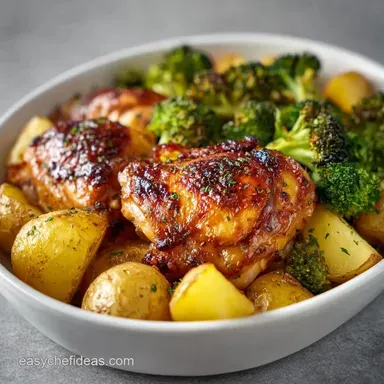
Sheet Pan Chicken Thighs: Crispy and Golden
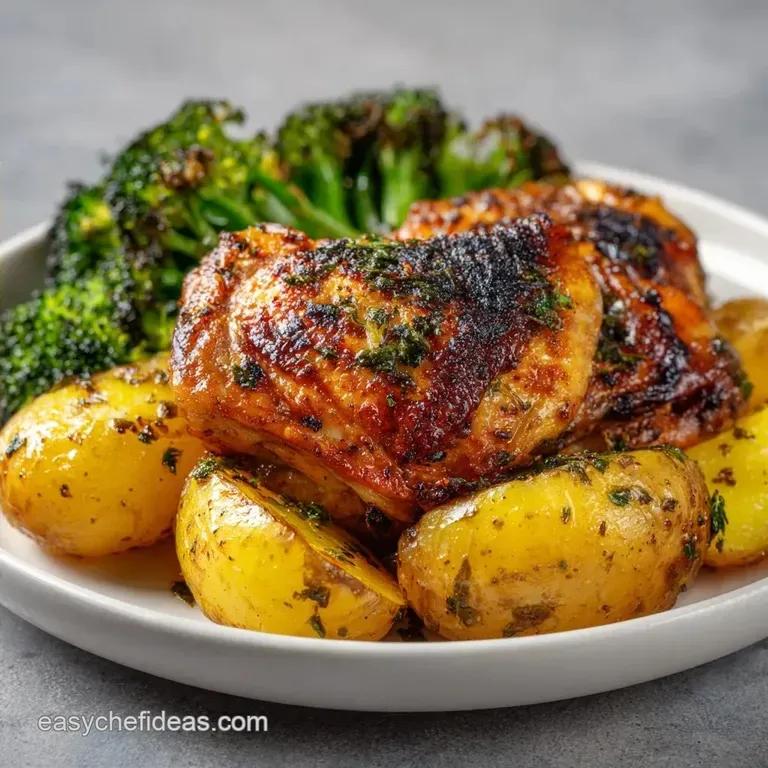
- Time:15 minutes active + 45 minutes cooking
- Flavor/Texture Hook: Shattering skin with velvety, tender meat and charred broccoli
- Perfect for: Weeknight dinner or meal prep for the week
- Easy Sheet Pan Chicken Thighs
- The Logic Behind It
- Ingredient Component Analysis
- The Shopping List
- Essential Kitchen Tools
- Step by Step Guide
- Avoiding Common Mistakes
- Troubleshooting Common Issues
- Adjusting Batch Sizes
- Common Kitchen Myths
- Storage and Waste
- The Best Pairings
- Recipe FAQs
- 📝 Recipe Card
That specific sound of chicken skin hitting a hot pan is a total trigger for me. It's a sizzle that promises something satisfying. Have you ever wondered why some oven-roasted chicken ends up with rubbery, pale skin while others have that golden, shatter crisp texture?
Most people just throw everything on a tray and hope for the best, but that's how you end up with soggy potatoes and overcooked meat.
I used to make the mistake of crowding the pan, which basically steams the food instead of roasting it. Now, I treat the baking sheet like a map. There's a specific order to how things go in, creating a contrast between the bright, zesty lemon finish and the rich, salty depth of the roasted chicken fat.
These Sheet Pan Chicken Thighs are my go to because they handle the "busy night" stress perfectly. You get the richness of bone in meat balanced by the slight bitterness of charred broccoli. It's a simple setup, but the results feel a bit more special than your average tray bake.
Easy Sheet Pan Chicken Thighs
The real magic here is the contrast. You have the skin that cracks when you bite into it, paired with meat that stays juicy because we're using thighs instead of breasts. Then you have the Yukon Gold potatoes, which get those crispy brown edges but stay creamy in the middle.
It's a full meal that hits every texture note.
I’ve found that the lemon wedges added at the end are a must. The acidity cuts right through the fat of the chicken, waking up the whole dish. If you're looking for something a bit different in the future, you might like my Greek Chicken Bowls, but for a cozy, one pan dinner, this is the winner.
The Logic Behind It
- Staggered Entry: Potatoes need more time than broccoli. Putting them in first prevents the greens from burning while the spuds are still raw.
- Skin Drying: Moisture is the enemy of crispiness. Patting the skin dry allows the heat to hit the fat immediately rather than wasting energy evaporating water.
- Fat Rendering: As the chicken cooks, it releases liquid gold. The potatoes sitting on the edges soak up this chicken fat, which gives them a deeper, saltier flavor than oil alone.
- High Heat: Roasting at 218°C (425°F) creates a rapid sear. According to Serious Eats, higher temperatures are essential for creating that browned, savory crust without overcooking the interior.
| Method | Time | Texture | Best For |
|---|---|---|---|
| Oven Roast | 60 mins | Crispy skin, tender veg | Hands off dinner |
| Stovetop | 30 mins | Seared skin, steamed veg | Faster turnaround |
| Air Fryer | 25 mins | Ultra crispy, smaller batch | Single servings |
Ingredient Component Analysis
| Ingredient | Science Role | Pro Secret |
|---|---|---|
| Bone in Thighs | Flavor & Moisture | Bones act as an insulator, preventing the meat from drying out |
| Yukon Gold | Starch Stability | Higher wax content keeps them from falling apart into mash |
| Lemon Wedges | Acid Balance | Fresh juice breaks down the richness of the rendered fat |
| Garlic Powder | Uniform Coating | Powder sticks better to potatoes than fresh garlic, which burns fast |
The Shopping List
For the Chicken 900g (2 lbs) bone in, skin on chicken thighs Why this? Bone in stays juicy and skin provides texture 15ml (1 tbsp) olive oil Why this? High smoke point for roasting 5g (1 tsp) kosher salt Why this?
Coarser grains are easier to control 2.5g (½ tsp) black pepper Why this? Adds a subtle heat
For the Roasted Veggies 450g (1 lb) Yukon Gold potatoes, cubed 1 inch Why this? Natural buttery flavor and holds shape 1 head broccoli, cut into florets Why this? Charred tips add a nutty taste 30ml (2 tbsp) olive oil Why
This? Ensures veggies don't dry out 5g (1 tsp) garlic powder Why this? Even flavor distribution 5g (1 tsp) dried oregano Why this? Earthy contrast to the lemon
For the Finishing Touch 2 cloves garlic, minced Why this? Fresh punch at the end 5g (1 tbsp) fresh parsley, chopped Why this? Bright color and freshness 1 lemon, cut into wedges Why this? Essential acidity
Essential Kitchen Tools
You don't need a fancy arsenal for this, but a few things make it easier. A large, rimmed baking sheet is non negotiable. If the rim is too low, the chicken fat will spill over into your oven and create a smoke show. I prefer a heavy duty aluminum pan because it distributes heat more evenly.
I also recommend using parchment paper or a silicone mat. It doesn't change the flavor, but it saves you from scrubbing burnt on potato starch for twenty minutes. A digital meat thermometer is the only "pro" tool you really need here to ensure the chicken is safe but not dry.
Step by step Guide
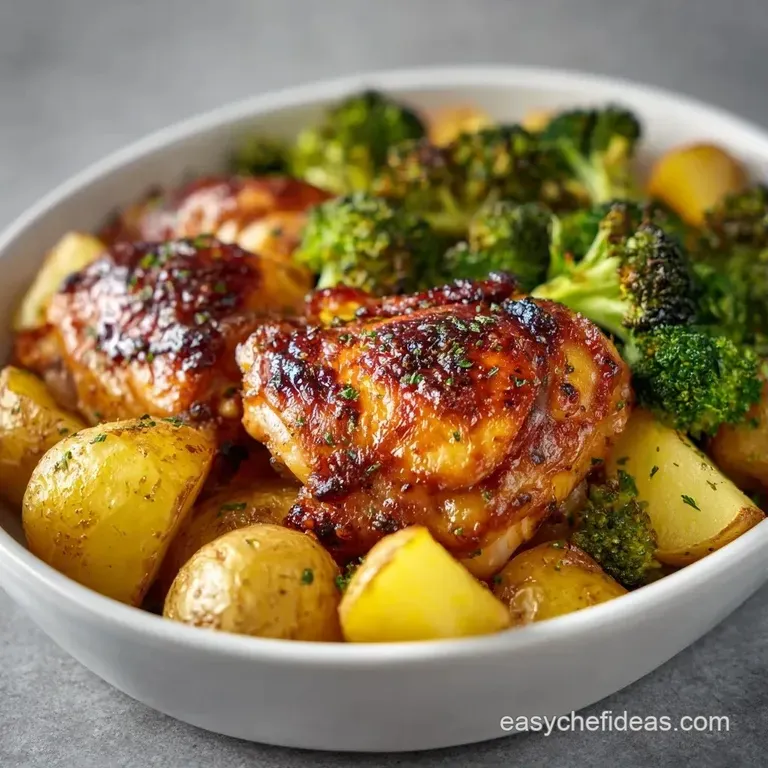
- Dry the chicken. Use paper towels to pat the thighs completely dry. Note: Damp skin will steam, not crisp.
- Season potatoes. In a bowl, toss your 450g of cubed potatoes with 30ml olive oil, garlic powder, and oregano.
- First roast. Spread the potatoes on one side of the baking sheet. Roast at 218°C (425°F) for 15 minutes.
- Prep the meat. Rub the thighs with 15ml olive oil, salt, and pepper.
- Position chicken. Move the pre roasted potatoes to the edges of the pan and place the chicken in the center, skin side up.
- Second roast. Return the pan to the oven for 20 minutes.
- Add broccoli. Tuck the broccoli florets into the remaining open spaces. Roast for 10-15 minutes until the chicken hits 85°C (185°F) and broccoli edges are charred.
- The finish. Remove from oven and immediately garnish with minced garlic, parsley, and lemon wedges.
Avoiding Common Mistakes
One of the biggest issues people face with Sheet Pan Chicken Thighs is the "steaming" effect. This happens when you crowd the pan. If the chicken is touching the potatoes too much, the moisture gets trapped, and you lose that shatter crisp skin. Give every piece of food a little breathing room.
Another common slip is pulling the chicken out too early. While 74°C (165°F) is the safety mark, thighs actually taste better when cooked to 85°C (185°F).
The connective tissue breaks down more at this temperature, making the meat velvety.
Troubleshooting Common Issues
| Issue | Solution |
|---|---|
| Why Your Skin Is Rubbery | If the skin isn't crisping, it's usually due to too much moisture or the oven temperature being too low. Make sure your oven is fully preheated before the potatoes ever hit the rack. |
| Why Your Broccoli Is Mushy | Adding the broccoli too early is the main culprit. Since it's a delicate vegetable, it only needs those final 10-15 minutes to get a nice char without losing its structure. |
| Why The Potatoes Are Raw | Small cubes (1 inch) are key. If the potatoes are too large, the chicken will overcook before the center of the potato is soft. |
Common Mistakes Checklist
- ✓ Pat skin completely dry before oiling
- ✓ Pre roast potatoes before adding meat
- ✓ Use bone in thighs for better moisture
- ✓ Avoid overlapping ingredients on the pan
- ✓ Roast to 85°C (185°F) for maximum tenderness
Adjusting Batch Sizes
If you're cooking for just one or two, you can halve the recipe. Use a smaller baking sheet (like a quarter sheet) so the ingredients don't spread out too far, which can cause the oil to pool. Reduce the total cooking time by about 20% since there is less mass in the oven.
For a crowd (2x or 3x), do not try to fit everything on one pan. You'll end up with a soggy mess. Work in batches using two separate sheets. Only increase the salt and spices to 1.5x the original amount, as these can become overpowering in large volumes.
If using two pans, rotate them halfway through to ensure both get equal heat.
| Goal | Adjustment | Expected Result |
|---|---|---|
| Half Batch | Smaller pan, -20% time | Same crispiness, faster cook |
| Double Batch | Two separate pans | Consistent browning across all pieces |
| Low Carb | Swap potatoes for cauliflower | Lighter meal, shorter roast time |
Common Kitchen Myths
A lot of people think you need to sear the chicken in a skillet before putting it in the oven to "seal in the juices." This is a total myth. Searing adds flavor and color, but it doesn't lock anything in. The high heat of the oven does the same job here without the extra dirty pan.
Another misconception is that you should let the meat "rest" for 20 minutes. While a 5 minute rest is great for large roasts, chicken thighs are much more forgiving. A quick 5 minute break allows the juices to redistribute, but you won't lose a river of moisture if you eat it sooner.
Storage and Waste
Keep your leftovers in an airtight container in the fridge for up to 4 days. To reheat, avoid the microwave if you want to keep the skin crisp. Pop them back in the oven or an air fryer at 180°C (350°F) for 5-10 minutes.
This brings back that shatter crisp texture.
Don't toss the chicken bones if you have a few left over from a larger batch. I love putting them in a pot with some carrot scraps and celery to make a base for a spicy chicken soup. It's a great way to make sure nothing goes to waste.
The Best Pairings
Since the Sheet Pan Chicken Thighs already come with potatoes and broccoli, you don't need much else. A simple side of wild rice or a crisp arugula salad with a balsamic glaze works well. The bitterness of the greens balances the richness of the chicken.
If you want something more substantial, a crusty piece of sourdough bread is great for mopping up the leftover lemon garlic oil on the pan. For those who love a bit of zest, a side of homemade tzatziki adds a cooling element that pairs beautifully with the roasted flavors.
Recipe FAQs
What temperature do you cook chicken thighs in a sheet pan?
425°F (218°C). This high temperature is essential for achieving crispy skin and ensuring the potatoes roast instead of steam.
Is it better to bake chicken thighs at 375 or 400 degrees?
No, 425°F is the ideal temperature. Baking at lower temperatures like 375°F or 400°F often results in rubbery skin and soggy vegetables.
Are chicken thighs okay for heart patients?
Yes, when prepared with heart healthy fats. Using olive oil and roasting with nutrient dense broccoli and potatoes makes this a balanced meal.
How to cook chicken for diabetic patients?
Focus on the non-starchy vegetables. Increase the proportion of broccoli and use the provided olive oil and garlic to add flavor without adding processed sugars.
What is the best way to cook skinless chicken thighs?
Reduce the total roasting time. Without skin to crisp, cook the chicken for about 15-20 minutes until the internal temperature hits 185°F (85°C) to avoid drying out the meat.
How to make these chicken thighs zesty and flavorful?
Squeeze fresh lemon wedges over the chicken immediately after roasting. The combination of fresh lemon acid, minced garlic, and parsley creates a bright, zesty finish.
What are some great side dish ideas for sheet pan chicken thighs?
Serve with a crisp green salad. If you love building bold flavor profiles, see how we use the same balancing technique in our salad supreme seasoning.
Sheet Pan Chicken Thighs