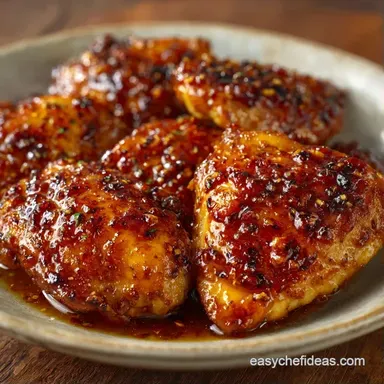
Easy Honey Garlic Chicken Thighs: Sticky and Glossy
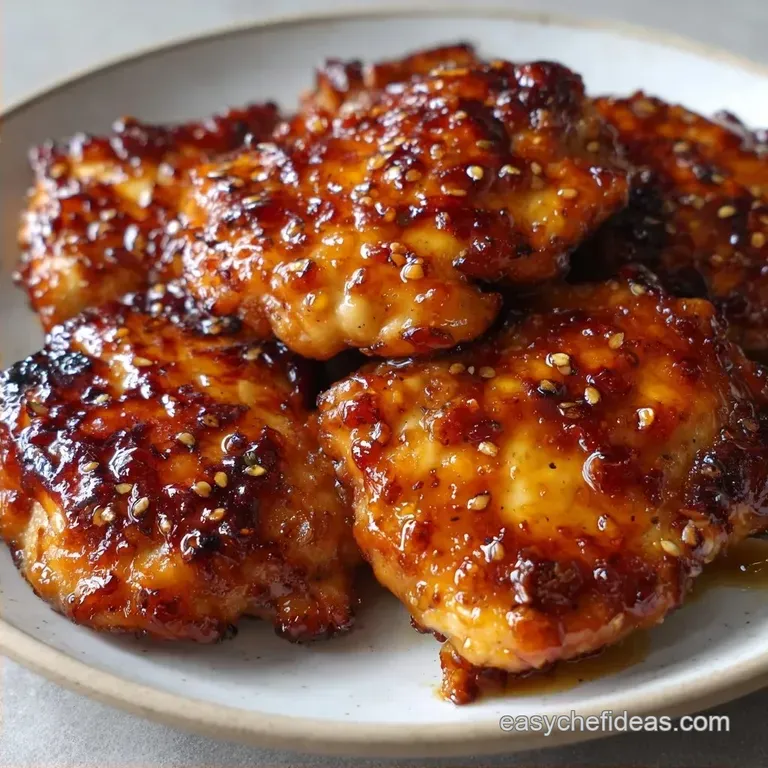
- Time: 10 min active + 15 min cook
- Flavor/Texture Hook: Sticky, glossy glaze with a deep golden brown crust
- Perfect for: Weeknight dinners, beginner cooks, meal prep
- Honey Garlic Chicken Thighs
- Secrets of the Sticky Texture
- Component Analysis
- Shopping List Analysis
- Necessary Kitchen Tools
- The Full Process
- Fixing Common Errors
- Troubleshooting Common Issues
- Alternative Diet Versions
- Storage and Leftovers
- Final Plating Ideas
- High in Sodium
- Recipe FAQs
- 📝 Recipe Card
The smell of garlic hitting hot oil is one of my favorite things in the kitchen. It's that sharp, pungent aroma that immediately turns into something sweet and nutty. For a long time, I thought you had to dredge chicken in flour or use a deep fryer to get that restaurant style "sticky" coating.
I spent way too much time cleaning up flour messes and wondering why my pan seared chicken looked pale and sad.
Then I realized the secret isn't in the coating, but in the sear and the reduction. You don't need a batter to get a crust that almost shatters when you bite into it. You just need the right heat and a bit of patience.
These Honey Garlic Chicken Thighs prove that a few simple pantry staples can create a meal that feels like it took hours, even though it's done in under 30 minutes.
This recipe is all about contrast. You have the salty kick of soy sauce, the sweetness of honey, and the bright zing of apple cider vinegar. When these combine and bubble down in the pan, they create a glaze that clings to the meat instead of puddling at the bottom.
It's a simple balance, but it's what makes the dish work.
Honey Garlic Chicken Thighs
The real magic here is using boneless, skinless thighs. I used to be a breast meat loyalist, but breasts dry out the second you look at them wrong. Thighs are more forgiving. They have enough fat to withstand the high heat needed for that deep brown color without turning into rubber.
When you first put the chicken in the pan, you'll hear a loud, aggressive sizzle. That's the sound of the moisture leaving the surface and the sugars in the meat beginning to brown. If you move the chicken too early, you tear that developing crust and lose the flavor. Trust the process.
Leave them alone for a few minutes.
Once the sauce goes in, the energy in the pan changes. It goes from a dry sear to a bubbling, velvety reduction. The sauce transforms from a thin liquid into a glossy syrup that coats every inch of the meat. It's a fast process, but it's where the flavor really builds.
Secrets of the Sticky Texture
Rather than a textbook explanation, here is how the ingredients actually behave in your pan.
Sugar Reduction: Honey is mostly sugar. As water evaporates during simmering, the sugar concentrates and becomes viscous, creating that "sticky" feel.
Acid Balance: Apple cider vinegar cuts through the heavy sweetness of the honey. This prevents the dish from tasting like candy and gives it a sharp finish.
Fat Rendering: The chicken thighs release small amounts of fat during the sear. This fat mixes with the sauce, creating a silky emulsion that looks professional.
Protein Browning: According to Serious Eats, high heat creates a complex flavor profile on the surface of the meat, which provides the savory base for the sweet sauce.
| Method | Time | Texture | Best For |
|---|---|---|---|
| Pan Sear (This Recipe) | 25 mins | Glossy & Sticky | Fast weeknights |
| Baked | 45 mins | Tender & Juicy | Hands off cooking |
| Air Fryer | 20 mins | Crispy Edges | Small portions |
Component Analysis
I like to look at ingredients by what they actually contribute to the bite, not just their name.
| Ingredient | Science Role | Pro Secret |
|---|---|---|
| Honey | Glaze Base | Use a runny honey for easier mixing |
| Soy Sauce | Salt & Umami | Low sodium allows more control over salt |
| AC Vinegar | Brightness | Use organic for a fruitier tang |
| Garlic | Aromatics | Mince finely to avoid burnt chunks |
Shopping List Analysis
When you're at the store, don't just grab the first thing you see. The quality of the honey and the cut of the chicken make a big difference in the final result.
- 1.5 lbs boneless skinless chicken thighsWhy this? Higher fat content prevents drying out
- ½ tsp saltWhy this? Basic seasoning for the protein
- ½ tsp black pepperWhy this? Adds a subtle heat
- 1 tbsp neutral oilWhy this? High smoke point like canola or avocado
- ⅓ cup honeyWhy this? Provides the stickiness and sweetness
- 2 tbsp soy sauceWhy this? Adds depth and salty contrast
- 3 cloves garlic, mincedWhy this? Fresh is vastly better than powdered
- 1 tbsp apple cider vinegarWhy this? Balances the sugar levels
- ½ tsp onion powderWhy this? Adds a savory background note
- 1 tbsp sesame seedsWhy this? Adds a nutty crunch for garnish
- 2 stalks green onions, slicedWhy this? Freshness and color contrast
| Original Ingredient | Substitute | Why It Works |
|---|---|---|
| Honey (⅓ cup) | Maple Syrup (⅓ cup) | Similar viscosity. Note: More woody, less floral flavor |
| Soy Sauce (2 tbsp) | Coconut Aminos (2 tbsp) | Salty and savory. Note: Slightly sweeter, lower sodium |
| AC Vinegar (1 tbsp) | Rice Vinegar (1 tbsp) | Mild acidity. Note: More subtle, traditional Asian profile |
| Neutral Oil (1 tbsp) | Ghee (1 tbsp) | Very high smoke point. Note: Adds a buttery richness |
For those looking for a different vibe, you might enjoy a classic chicken adobo which uses a similar soy vinegar base but with a different flavor profile.
Necessary Kitchen Tools
You don't need a fancy kitchen, but the pan matters. I strongly suggest a stainless steel or cast iron skillet. Non stick pans are fine for eggs, but they don't develop the same "fond" (those brown bits at the bottom) that stainless steel does. Those bits are flavor gold and they integrate into the sauce.
Tongs are non negotiable. You need them to flip the thighs without poking holes in the meat. If you use a fork, you'll let the juices escape, and you'll end up with drier chicken. A small whisk is also helpful for the sauce to make sure the honey isn't just sitting in a clump at the bottom.
The Full Process
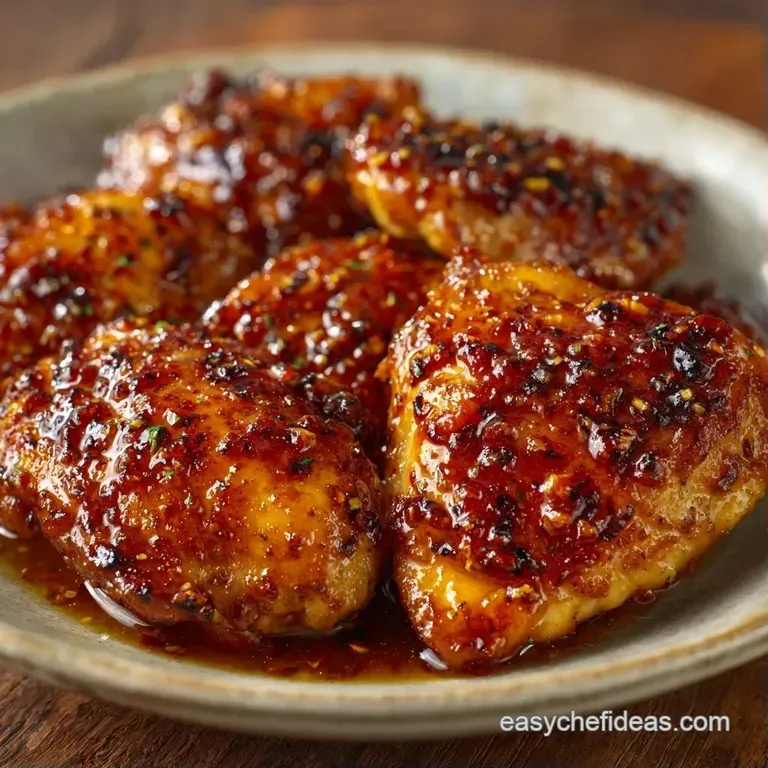
Follow these steps closely. The timing of the sauce is the most important part. If you add it too early, the chicken won't brown. If you add it too late, the sauce will burn before the chicken is cooked through.
Phase 1: The Foundation Prep
- Season the chicken thighs evenly with salt and pepper. Note: Do this right before cooking so the salt doesn't draw out too much moisture
- In a small bowl, whisk together the honey, soy sauce, minced garlic, vinegar, and onion powder until the honey is fully integrated.
Phase 2: The over High heat Sear
- Heat the oil in a 12 inch stainless steel or cast iron skillet over medium high heat until it shimmers. Note: Shimmering oil means it's ready to sear
- Place the thighs in the pan without crowding; cook for 5–7 minutes per side without moving them, until they develop a deep golden brown crust.
Phase 3: The Glaze Reduction
- Lower the heat to medium and pour the honey garlic mixture directly over the chicken.
- Use tongs to turn the thighs, coating them in the liquid, and simmer for 3–5 minutes until the sauce thickens into a glossy syrup.
- Garnish with sesame seeds and sliced green onions before serving.
Fixing Common Errors
The biggest issue people have with this recipe is the sauce burning. Honey has a low burn point. If your pan is screaming hot when the sauce goes in, the honey will turn black and bitter in seconds. This is why lowering the heat to medium is a non negotiable step.
Another common struggle is overcrowding the pan. If the thighs are touching or overlapping, they will steam instead of sear. You'll get grey meat instead of golden brown crust. If you're doubling the recipe, work in two batches.
Troubleshooting Common Issues
| Issue | Solution |
|---|---|
| Why Your Sauce Is Too Thin | If the sauce doesn't cling to the meat, you likely didn't simmer it long enough. It needs those few minutes of bubbling to reduce the water content. |
| Why The Chicken Is Tough | Overcooking is the main culprit. While thighs are hardy, they can still get rubbery if left on the heat too long. Use a meat thermometer to hit 165°F (74°C). |
| Why The Garlic Tastes Burnt | Adding garlic too early in the searing process can lead to burnt bits. By mixing it into the sauce and adding it at the end, the garlic cooks gently in the liquid. |
Common Mistakes Checklist
- ✓ Did you wait for the oil to shimmer?
- ✓ Did you leave the chicken undisturbed for 5-7 minutes?
- ✓ Did you lower the heat before pouring in the honey?
- ✓ Did you avoid overcrowding the pan?
- ✓ Did you use a meat thermometer for doneness?
Alternative Diet Versions
If you're avoiding gluten, this recipe is almost there. Standard soy sauce contains wheat. Switch to Tamari or Coconut Aminos. Both work great, though Coconut Aminos are a bit sweeter, so you might want to reduce the honey by a tablespoon.
For a Paleo or Whole30 version, you'll need to ditch the honey. Maple syrup is sometimes accepted, but for a strict version, use a small amount of date syrup or a touch of coconut sugar. Be aware that the texture won't be as "sticky" without the honey.
If you're watching your sugar intake, you can substitute the honey with a monk fruit syrup. It's not a perfect swap because the viscosity is different, but the flavor profile remains surprisingly close.
Storage and Leftovers
These thighs keep well in the fridge for up to 4 days. Store them in an airtight container with any leftover sauce poured over the top. This keeps the meat moist and lets the flavors penetrate deeper into the chicken.
When reheating, avoid the microwave if you can. Microwaving makes the chicken rubbery and the sauce watery. Instead, put them back in a skillet over medium low heat with a splash of water or chicken broth. This loosens the glaze and warms the meat evenly.
For freezing, let the chicken cool completely. Freeze for up to 3 months. Thaw in the fridge overnight before reheating.
If you have leftover sauce in the pan, don't waste it. I often toss some steamed broccoli or snap peas into the pan after the chicken is gone to pick up those last bits of glaze. If you have a lot of leftovers, you can shred the meat and use it in a bowl. You might also like my creamy slow cooker chicken if you're looking for more ways to use chicken thighs in bulk.
Final Plating Ideas
To get that restaurant look, don't just dump the chicken on a plate. Start with a bed of fluffy jasmine rice or quinoa. The grains act like a sponge for the extra glaze.
Place three or four thighs on top, slightly overlapping. Spoon the remaining sauce from the pan directly over the center of the meat so it drips down the sides. The contrast of the mahogany chicken against white rice is stunning.
Finish with a generous sprinkle of sesame seeds and the sliced green onions. The bright green against the dark glaze makes the dish pop visually. A side of charred bok choy or steamed carrots adds a bit of crunch and color to the plate.
For a Deep Mahogany Color
The key is the sear. Don't be afraid of the heat. If the chicken isn't releasing easily from the pan, it's not done searing. It will naturally "release" once the crust has formed.
For a Glaze That Actually Clings
Make sure you use the apple cider vinegar. The acid helps the sugars bond to the protein, creating a coating that stays on the meat rather than sliding off into a puddle on your plate.
For Maximum Juiciness
Let the meat rest for 5 minutes after taking it out of the pan. This allows the juices to redistribute. If you cut into it immediately, all that flavor runs out onto the board.
High in Sodium
1105 mg 1105 mg of sodium per serving (48% 48% of daily value)
The American Heart Association recommends a daily sodium limit of 2,300 mg, and an ideal limit of 1,500 mg for most adults to reduce the risk of cardiovascular disease.
Tips to Reduce Sodium
-
Eliminate Added Salt-25%
Completely remove the ½ tsp of salt from the recipe; the soy sauce already provides significant sodium.
-
Swap Soy Sauce-20%
Replace regular soy sauce with low-sodium soy sauce or coconut aminos to drastically cut salt content.
-
Boost the Acidity-10%
Increase the apple cider vinegar or add a squeeze of fresh lemon juice to provide a tangy flavor that mimics salt.
-
Enhance Aromatics-5%
Increase the amount of minced garlic to add more savory depth and complexity without adding milligrams of sodium.
-
Use Bold Spices
Increase the black pepper or add a pinch of crushed red pepper to create a flavor profile that doesn't rely on salt.
Recipe FAQs
How long do you cook boneless chicken thighs on the stove?
Sear for 5 7 minutes per side and simmer for 3 5 minutes. This timing ensures the meat develops a deep crust before the sauce reduces into a glossy syrup.
Why is my honey garlic sauce too thin?
Simmer the sauce for a few more minutes. The liquid needs enough time to bubble and reduce its water content so it can cling to the chicken.
How to prevent the garlic from burning in the pan?
Whisk the garlic into the sauce mixture. Adding the garlic at the end with the honey and vinegar prevents it from scorching during the high heat searing process.
What is the best way to reheat these chicken thighs?
Use a skillet over medium low heat with a splash of water. This loosens the glaze and warms the meat evenly, avoiding the rubbery texture caused by microwaves.
Can I make this recipe gluten-free?
Yes, substitute the soy sauce with Tamari or Coconut Aminos. If you enjoyed the sweet tart balance here, see how we use a similar acid technique in our poke bowl sauce.
Is it true that chicken thighs can't be overcooked because they are so hardy?
No, this is a common misconception. While more forgiving than breasts, thighs can still become rubbery if left on the heat too long; use a thermometer to hit 165°F.
How to get a deep golden brown crust on the meat?
Heat the oil until it shimmers and leave the chicken undisturbed. Avoid moving the thighs for the first 5 7 minutes to allow the natural browning process to occur.
Honey Garlic Chicken Thighs