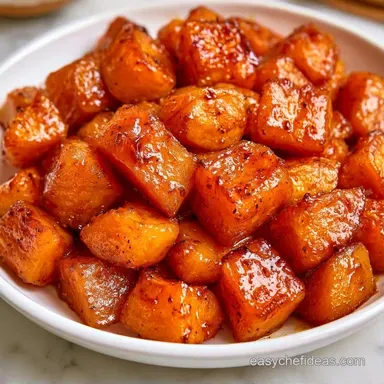
Roasted Maple Brown Sugar Squash
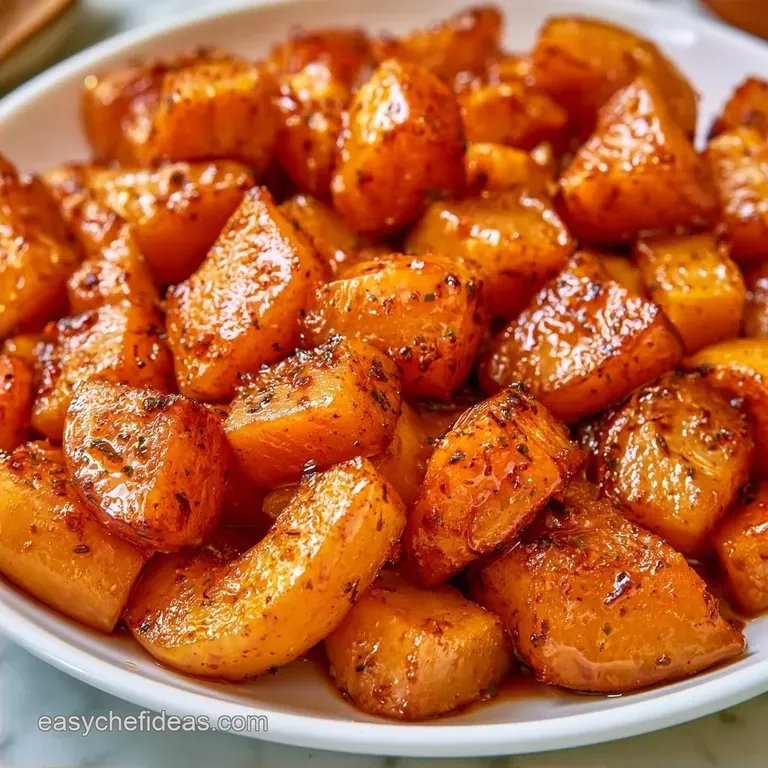
- Time: 10 minutes prep + 30 minutes in the oven
- Key Appeal: A tacky, caramelized exterior paired with a decadent, buttery core
- Perfect for: Festive side dishes, vegetable-heavy Sunday dinners, or a comforting weeknight meal
There's nothing quite like the aroma of maple syrup and browning butter sizzling in a hot pan. However, many roasted squash recipes result in either a mushy, pale heap or a charred sugar catastrophe.
This usually happens when ingredients are combined too early, causing the syrup to burn before the vegetable is actually cooked through.
The secret lies in the sequence. By roasting the squash before adding the glaze, you achieve a lustrous, dark finish that clings perfectly to every piece. It transforms a simple winter vegetable into a sophisticated addition to any meal.
The result is a balance of earthy thyme and salt against a concentrated sweetness. This Maple Brown Sugar Squash doesn't demand professional technique only a watchful eye on your pan.
Quick Recipe Specs
Here is the general workflow. The process is simple: prep the vegetables, roast them for structure, and finish with a layer of glaze.
Since high heat is required, the timing is precise. Expect 10 minutes of active preparation and 30 minutes of roasting. To keep the caramelization intact when increasing the quantity, avoid overcrowding your pan.
| Fresh Squash | Frozen Cubes | Impact | Savings |
|---|---|---|---|
| Best texture | Softer finish | Loss of crisp edges | 5 min prep |
| More flavor | Convenient | Less "bite" | $1-2 per lb |
Why the Process Works
I once thought more sugar would mean more flavor, but it often results in a bitter, charred crust.
- Staged Sweetening
- Adding the maple and brown sugar only at the end keeps the sugars from burning at 400°F (200°C).
- Airflow Spacing
- Leaving room between the cubes allows steam to escape, so the squash roasts instead of boils.
- Fat Barrier
- The initial butter coating protects the squash and helps the thyme stick, creating a savory foundation for the sweet glaze.
If you enjoy these autumn flavors, you might also like my Pumpkin Butter recipe for toast.
Ingredient Deep Dive
Your choice of winter squash is the foundation. While I lean toward butternut or acorn, delicata is an excellent option if you prefer to leave the peel on. The butter provides a velvety richness that carries the thyme, while sea salt ensures the sweetness stays balanced.
The maple syrup in the glaze lends a woody depth, complemented by the classic molasses notes of light brown sugar. Dried thyme is essential here, as its earthy, herbal punch cuts through the sugar.
Substitutions for a Plant Based Twist: - Butter: Swap for a premium vegan butter stick. - Brown Sugar: Coconut sugar is a viable alternative, though it's slightly less "caramelly."
| Original Ingredient | Substitute | Why It Works |
|---|---|---|
| Unsalted Butter (3 tbsp) | Vegan Butter (3 tbsp) | Matches the fat content. Note: Use a stick version for superior roasting |
| Maple Syrup (1/4 cup) | Honey (1/4 cup) | Comparable viscosity. Note: Adds a floral quality, less "woody" than maple |
| Light Brown Sugar (1/4 cup) | Coconut Sugar (1/4 cup) | Similar sweetness. Note: More dense and less moist than brown sugar |
Essential Kitchen Tools
No professional gear is required, just a few simple staples. Use a large mixing bowl to toss the squash and keep your workspace clean.
A heavy rimmed baking sheet is the best option. If possible, choose a light colored aluminum pan, as dark ones can scorch the sugar too quickly. Line it with parchment paper to keep the glaze from sticking to the surface.
Step-by-step Cooking Flow
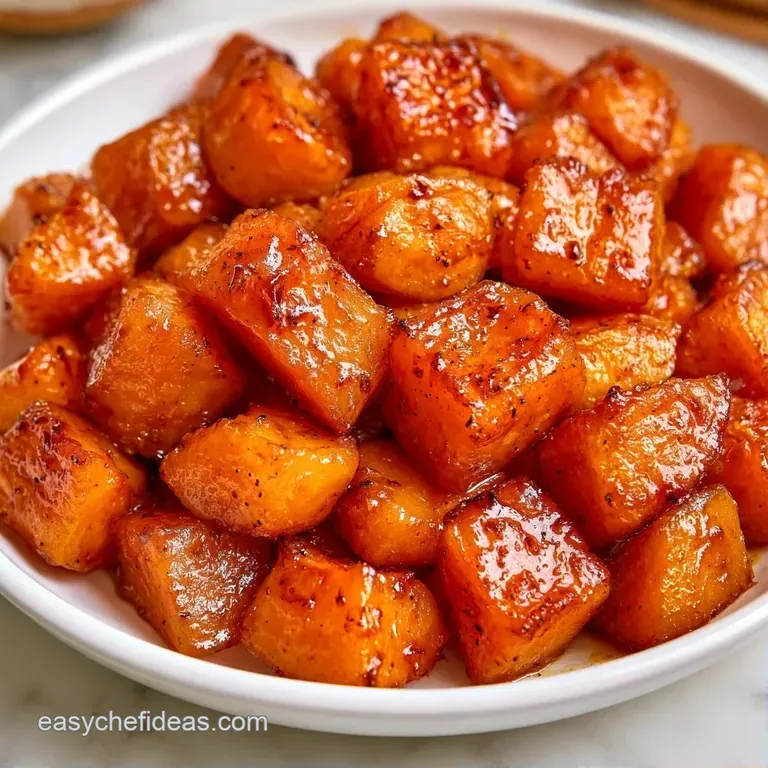
Get the oven hot at 400°F (200°C) and line your sheet with parchment paper.
- Toss cubed squash with melted butter, salt, and pepper in a large bowl. Note: This ensures every side is coated in fat for a better sear.
- Arrange the squash in a single layer on the baking sheet. Make sure pieces aren't touching to avoid steaming the veg.
- Roast for 15-20 minutes until the edges are softening and a pale gold color.
- Whisk together the maple syrup and brown sugar in a small bowl.
- Remove the pan from the oven. Drizzle the maple brown sugar mixture over the squash.
- Toss gently with a spatula until every cube is glossy and coated.
- Return the pan to the oven for 10-15 minutes until the glaze is mahogany colored and sticky.
- Remove from heat once the squash is fork tender.
Chef's Tip: If the glaze looks too thin after the second roast, let the pan sit for 5 minutes. The sugar will tighten up and cling to the squash as it cools slightly.
Fixing Common Issues
The most common gripe with Maple Brown Sugar Squash is the texture. If it's too soft, it's usually a spacing issue. If it's too bitter, the sugar stayed in the heat too long.
Avoiding Mushy Pieces
When cubes are crowded, they release moisture that stays on the pan. This creates a steam bath. Use two pans if you're doing a big batch.
Stopping Burnt Sugar
Sugar can go from mahogany to charcoal in 60 seconds. Watch for the bubbles to get thick and slow before pulling the pan.
Fixing Uneven Cooking
Some cubes might stay hard while others brown. Give the pan a shake or a toss halfway through the first roast phase.
| Problem | Root Cause | Solution |
|---|---|---|
| Soggy texture | Overcrowded pan | Use multiple baking sheets |
| Burnt glaze | Oven too hot/too long | Reduce final roast by 2-3 mins |
| Pale color | Low heat or too much moisture | Ensure 400°F (200°C) and don't crowd |
Flavor Twists to Try
Once you've got the base down, you can really play with this. For a nutty crunch, toss in some pecans or walnuts during the final 10 minutes of roasting. They'll toast in the glaze and add a great contrast.
If you want a spicy kick, add a pinch of cayenne pepper or red chili flakes to the butter. The heat cuts through the maple syrup beautifully. For a more savory version, swap the thyme for fresh sage.
Quick Decision Guide:
- Extra crunch? → add 1/2 cup toasted pecans
- More heat? → add 1/4 tsp cayenne pepper
- Earthier tone? → swap thyme for fresh sage
Save and Reheat
Keep these in a sealed glass container in the cooler for about 3 to 4 days. The glaze will thicken as it chills, which is totally normal.
For the freezer, let the squash cool completely first. Store them in a freezer safe bag for up to 3 months. When you're ready to eat, avoid the microwave if you can, as it makes the squash mushy.
Instead, toss the chilled pieces back onto a baking sheet. Heat at 350°F (175°C) for 10 minutes. This restores the sticky glaze and keeps the edges from getting too soft.
As for zero waste, don't toss the squash seeds. Clean them, toss them with a bit of salt and oil, and roast them at 325°F (160°C) for 15 minutes for a healthy snack.
Best Serving Pairings
This dish is a powerhouse on a holiday table. Because it's so sweet and rich, it needs something acidic or salty to balance it out. I love serving it alongside a roasted pork loin or a hearty lentil roast.
If you're doing a full autumn spread, this pairs nicely with a Classic Pumpkin Pie for dessert. The earthy squash prepares the palate for the creamier dessert.
For a more modern approach, try it in a grain bowl. Place a scoop of quinoa or farro in a bowl, add the Maple Brown Sugar Squash, some baby spinach, and a drizzle of tahini dressing. It's a great way to use leftovers for lunch.
Why the Process Works
The magic here is all about the temperature and the timing of the sugar.
Texture Contrast: The first roast creates a firm structure, and the second roast creates a thin, glassy shell of sugar. This gives you a velvety interior and a tacky exterior.
Flavor Layering: By roasting the thyme and butter first, the savory notes penetrate the squash before the sugar seals the outside.
Serious Eats' testing suggests that roasting vegetables at higher temperatures helps evaporate surface moisture faster, which is exactly why we use 400°F (200°C) to avoid the "steamed" texture.
Debunking the Pre Glaze Myth
Many people think tossing everything in syrup before roasting is the way to go. In reality, the sugar burns long before the squash is cooked through. The two stage method is the only way to get that deep color without the bitter burnt taste.
The "Perfectly" Ripe Myth
Some believe you need to cure squash for weeks. While curing helps some varieties, for a roasted side dish, the freshness of the squash matters less than the size of the cube. Keep your cubes uniform (about 1 inch) for even cooking.
Right then, you're all set. This Maple Brown Sugar Squash is a simple way to bring some comfort to the table. Just remember: don't crowd the pan, and watch that glaze like a hawk in the final minutes. Trust me, the wait for the second roast is worth it for that mahogany finish.
Recipe FAQs
What is the recipe for brown sugar butternut squash?
Toss cubed squash with butter, salt, and pepper, then roast at 400°F. Once pale gold, drizzle with a mix of maple syrup and brown sugar and roast again until mahogany.
How to make the maple brown sugar glaze?
Whisk together 1/4 cup pure maple syrup and 1/4 cup packed light brown sugar. Combine these in a small bowl until smooth before drizzling over the pre-roasted squash.
Can I use acorn squash instead of butternut?
Yes, it works perfectly. Acorn squash has a similar density and holds up well to the 400°F roasting temperature.
Is it true butternut squash significantly raises blood sugar?
No, and here's why. While it contains carbohydrates, the fiber in winter squash helps slow glucose absorption compared to refined sugars.
Why is my squash steaming instead of roasting?
Avoid crowding the pan. Ensure pieces are in a single layer and not touching so moisture can evaporate instead of trapping steam.
Does the oven temperature need to be exactly 400°F?
Yes, for the best caramelization. This specific heat triggers the Maillard reaction and ensures the glaze becomes sticky and mahogany colored.
Which side dish pairs best with this?
Sausages or roasted roots work well. If you enjoyed mastering the roasting timing here, see how the same caramelization technique works in our crispy roasted sweet potatoes.
Is it a requirement to use only dried thyme?
Surprisingly, no. You can omit the dried thyme or use a different herb, though thyme provides the traditional earthy balance to the sweet glaze.
Maple Brown Sugar Squash