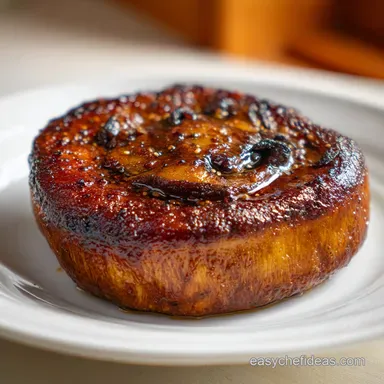
Pressed Mushroom Steak: Hearty and Savory

- Time: 15 min active + 20 min cooking = Total 35 min
- Flavor/Texture Hook: Dense, chewy center with a sticky, charred mahogany crust
- Perfect for: Dinner parties where you need to win over the skeptics
Why This Mushroom Steak Works
I spent a lot of time wondering why some mushroom steaks feel like eating a wet sponge. It turns out it's all about the water content. According to Serious Eats, getting a proper sear requires removing surface moisture, and with mushrooms, you have to get the moisture out from the inside too.
Air Displacement: Pressing the mushrooms forces out the air pockets and water, which condenses the fibers into a meatier structure.
Sugar Caramelization: The maple syrup and balsamic vinegar create a sticky layer that browns quickly under high heat, giving you those charred edges.
Umami Stacking: By combining soy sauce, balsamic, and smoked paprika, we're hitting multiple savory notes that trick the brain into thinking it's eating a traditional steak.
Fiber Breakdown: Searing first and glazing later ensures the mushroom stays firm rather than becoming a soggy mess in the sauce.
| Method | Time | Texture | Best For |
|---|---|---|---|
| Stovetop Press | 35 min | Dense and charred | Maximum "steak" feel |
| Oven Roast | 45 min | Soft and tender | Easier batch cooking |
| Air Fryer | 20 min | Crispy edges | Quick weeknight meal |
Component Analysis
I don't just throw things in a pan; I want to know why they're there. Lion's Mane is the star here because it has a naturally shaggy texture that mimics meat fibers better than almost any other fungi.
| Ingredient | Science Role | Pro Secret |
|---|---|---|
| Lion's Mane | Structural Base | Don't wash with water; wipe with a damp cloth |
| Balsamic Vinegar | Acid/Sugar | Use a thick glaze for a deeper mahogany color |
| Soy Sauce | Salt/Umami | Low sodium allows you to control the salt level |
| Maple Syrup | Browning Agent | Adds the sugar needed for the final over high heat char |
The Component List
Here is everything you need to get this on the table. I've kept it simple, but the quality of the oil and vinegar really makes a difference here.
- 1 lb Lion's Mane mushrooms Why this? Unmatched fibrous texture that mimics steak. (Substitute: King Oyster mushrooms, sliced lengthwise)
- 1 tbsp extra virgin olive oil Why this? High smoke point for the initial sear. (Substitute: Avocado oil)
- 1/2 tsp sea salt Why this? Draws out moisture for a better crust. (Substitute: Kosher salt)
- 2 tbsp low sodium soy sauce Why this? Provides the deep umami base. (Substitute: Coconut aminos)
- 1 tbsp balsamic vinegar Why this? Adds acidity and sweetness. (Substitute: Apple cider vinegar + pinch of brown sugar)
- 1 tsp smoked paprika Why this? Gives it a grilled, woody aroma. (Substitute: Chipotle powder for more heat)
- 1 clove garlic, minced Why this? Sharp aromatic contrast. (Substitute: 1/4 tsp garlic powder)
- 1 tbsp maple syrup Why this? Essential for the sticky lacquer. (Substitute: Agave nectar)
- 1/4 tsp black pepper Why this? Adds a subtle bite. (Substitute: White pepper)
The Essential Gear
You can't just use any pan for this. You need something that holds heat. A heavy cast iron skillet is the gold standard here. If you don't have one, a heavy bottomed stainless steel pan will work, but you'll lose some of that deep char.
For the pressing part, I use a piece of parchment paper and a heavy cast iron press. If you don't have a professional steak press, don't sweat it. A heavy pot with some water in it or even a brick wrapped in foil does the trick. The goal is consistent, heavy pressure across the entire surface of the mushroom.
Right then, let's get into the actual flow of the cook.
Step-by-step Cooking Flow
I like to think of this in three phases: the dry down, the infusion, and the char.
Phase 1: The Press and Dry 1. Heat the olive oil in a cast iron skillet over medium high heat. Note: The oil should shimmer but not smoke. 2. Place the Lion's Mane mushrooms in the pan and sprinkle with sea salt. 3.
Cover the mushrooms with a piece of parchment paper and place your heavy press or pot on top. 4. Sear for 5-7 minutes per side until the mushrooms have shrunk in size and the water has evaporated. You'll hear the sizzle change from a wet bubble to a sharp hiss.
Phase 2: The Umami Infusion 5. While the mushrooms press, whisk together the soy sauce, balsamic vinegar, smoked paprika, minced garlic, maple syrup, and black pepper in a small bowl. 6. Lower the heat to medium. 7. Pour the glaze over the pressed mushrooms. 8.
Use tongs to turn the steaks until they are fully coated and the glaze reduces into a thick lacquer. The sauce should look velvety and cling to the mushroom.
Phase 3: The Final Sear 9. Increase the heat to high for the final 60 seconds. 10. Press down one last time until the edges are charred and mahogany brown. This is where the sugars in the maple syrup really pop.
Chef's Note: I once forgot the parchment paper and the mushroom practically fused to my press. Always use a barrier! It keeps the mushroom intact and makes cleanup a breeze.
Fixing Common Mushroom Issues

The biggest struggle with this Vegan Recipe to Impress a Carnivore with Hearty Mushroom Steak is usually the texture. If it feels like a sponge, you likely didn't press it long enough or your pan wasn't hot enough to drive off the internal moisture.
Why Your Steak is "Soggy" or Rubbery
This happens when the mushroom is steamed instead of seared. If you crowd the pan, the mushrooms release water that has nowhere to go, essentially boiling the steak in its own juices. Give them space to breathe.
Why The Glaze Burnt Too Quickly
Maple syrup and balsamic are high in sugar. If your pan is screaming hot when you add the glaze, it will turn into carbon before it penetrates the mushroom. Lower the heat to medium before pouring in the sauce.
| Problem | Root Cause | Solution |
|---|---|---|
| Glaze is too thin | Not reduced enough | Simmer 2-3 mins longer on medium |
| Mushroom breaks apart | Not pressed firmly | Use a heavier weight or a smaller pot |
| Taste is too salty | Soy sauce reduction | Add a squeeze of lemon juice to balance |
Common Mistakes Checklist
- ✓ Did you wipe the mushrooms instead of rinsing them?
- ✓ Is the pan hot enough to sizzle immediately upon contact?
- ✓ Did you use a weight to compress the fibers?
- ✓ Did you wait for the "lacquer" stage before the final char?
- ✓ Did you let the steaks rest for 2 minutes before slicing?
Different Twists and Swaps
Once you've mastered the base, you can really play with the flavors. If you want a more Asian inspired profile, swap the balsamic for rice vinegar and add a teaspoon of toasted sesame oil. If you're looking for something with a similar depth of flavor, try my Indonesian Beef Rendang recipe, which uses a similar concept of reducing a rich sauce.
The "Beefier" Flavor Profile
Add a teaspoon of tomato paste to the glaze. The glutamates in the tomato paste work with the soy sauce to create a flavor that is shockingly close to a grilled sirloin.
The Keto Friendly Swap
Substitute the maple syrup with a few drops of liquid monk fruit or a touch of allulose. Note: You won't get the same "shatter" on the charred edges since these don't caramelize exactly like real sugar.
The Oyster Mushroom Twist
If you can't find Lion's Mane, Oyster mushrooms work well. However, they are thinner, so you'll need to press them for a shorter time (about 3-4 minutes per side) to avoid overcooking.
| Original Ingredient | Substitute | Why It Works |
|---|---|---|
| Lion's Mane (1 lb) | King Oyster (1 lb) | Similar density. Note: Slicing into thick rounds is better than whole |
| Maple Syrup (1 tbsp) | Agave (1 tbsp) | Similar viscosity. Note: Slightly milder sweetness |
| Soy Sauce (2 tbsp) | Coconut Aminos (2 tbsp) | Similar salt/umami. Note: Lower sodium and soy free |
Decision Shortcut If you want a meatier bite, use a heavier press. If you prefer it sweeter, add an extra tsp of maple syrup. If you're in a rush, skip the final char and serve immediately.
Mushroom Myths
There's a common idea that mushrooms are just "sponges" that soak up whatever you put in them. While they are porous, the pressing method actually changes their cellular structure. By collapsing the air pockets, we create a barrier that allows the glaze to coat the outside rather than just soaking into a void.
Another myth is that you need processed meat substitutes like seitan to impress a carnivore. While those work, the whole food approach of a pressed mushroom provides a more natural, complex flavor that doesn't have that "artificial" aftertaste some people dislike.
Storage and Reheating Guide
If you have leftovers, store them in an airtight container in the fridge for up to 4 days. To keep them from getting mushy, I recommend lining the container with a paper towel to absorb any excess moisture.
For reheating, avoid the microwave. It will turn your steak back into a sponge. Instead, throw them back into a dry skillet over medium heat for 2-3 minutes per side. This will re crisp the edges and bring back that mahogany glaze.
As for zero waste, don't throw away the mushroom stems or the bits that broke off during the pressing. Toss them into a pot with some onion peels and carrot ends to make a rich, umami packed veggie broth.
What to Serve Alongside
Since the mushroom steak is so rich and salty, you need sides that bring some brightness and acidity. A crisp arugula salad with a lemon vinaigrette or some roasted asparagus with a squeeze of lime works brilliantly.
If you want something more filling, a side of garlic mashed cauliflower or a wild rice pilaf is the way to go.
For a different kind of comfort food night, these would be a great alternative to Swedish Meatballs, especially if you're serving a mixed group of vegans and meat eaters.
- 1. The Prep Phase (15 mins)
- Clean mushrooms, mince garlic, and whisk the glaze.
- 2. The Searing Phase (15 mins)
- Press the mushrooms in the skillet, 5-7 minutes per side.
- 3. The Glazing Phase (5 mins)
- Reduce the glaze to a lacquer and hit the final over high heat char.
This Vegan Recipe to Impress a Carnivore with Hearty Mushroom Steak is all about patience with the press and aggression with the heat. Once you nail that timing, you've got a plant based dish that holds its own against any traditional steak. Let's crack on and get cooking!
High in Sodium
840 mg 840 mg of sodium per serving (37% 37% of daily value)
The American Heart Association recommends a daily sodium limit of no more than 2,300 mg to reduce the risk of high blood pressure and heart disease.
Tips to Reduce Sodium
-
Eliminate Added Salt-25%
Remove the 1/2 tsp of sea salt entirely; the soy sauce already provides significant salinity for the mushrooms.
-
Swap Soy Sauce for Coconut Aminos-20%
Replace the low-sodium soy sauce with coconut aminos, which offers a similar umami flavor with much less sodium.
-
Enhance with Acid-10%
Add a squeeze of fresh lemon juice at the end to brighten the flavor, which reduces the need for added salt.
-
Boost Flavor Aromatics
Increase the amount of minced garlic or smoked paprika to add depth and punch without increasing sodium levels.
Recipe FAQs
What can I put on my steak for a carnivore diet?
No, avoid non-animal products. A carnivore diet focuses solely on animal-derived foods. For flavoring, consider using animal fats or broths rather than plant-based options.
How to cook a steak carnivore style?
Cook with high-quality animal fat over direct heat. Sear the steak until it's well-browned, ensuring flavor and moisture retention, similar to the process of searing Lion's Mane mushrooms in this recipe.
What to pair with vegan steak?
Try a side of roasted vegetables or quinoa. These options complement the flavors and provide a hearty contrast to the texture of the vegan steak, enhancing the meal's overall experience.
What is the vegan brand of mushroom steak?
No specific brand. Instead, focus on making your own delicious mushroom steaks at home using our method with Lion's Mane mushrooms for the best results.
Can I use other types of mushrooms for this recipe?
Yes, but choose meaty varieties. While Lion's Mane works great, you can experiment with portobello or shiitake mushrooms for different textures, keeping in mind that cooking times may vary.
How can I get a charred effect on my mushroom steak?
Increase the heat during the final stage. At the end of cooking, press down the mushrooms and raise the heat to caramelize the sugars, achieving that desired charred look.
What’s the best way to store leftover mushroom steaks?
Store them in an airtight container. They're best kept in the fridge for up to 4 days. To maintain texture, line the container with a paper towel to absorb moisture, just like for other savory dishes.
Hearty Mushroom Steak in 35 Minutes