Garlic Butter Steak Bites: Crusty Exterior
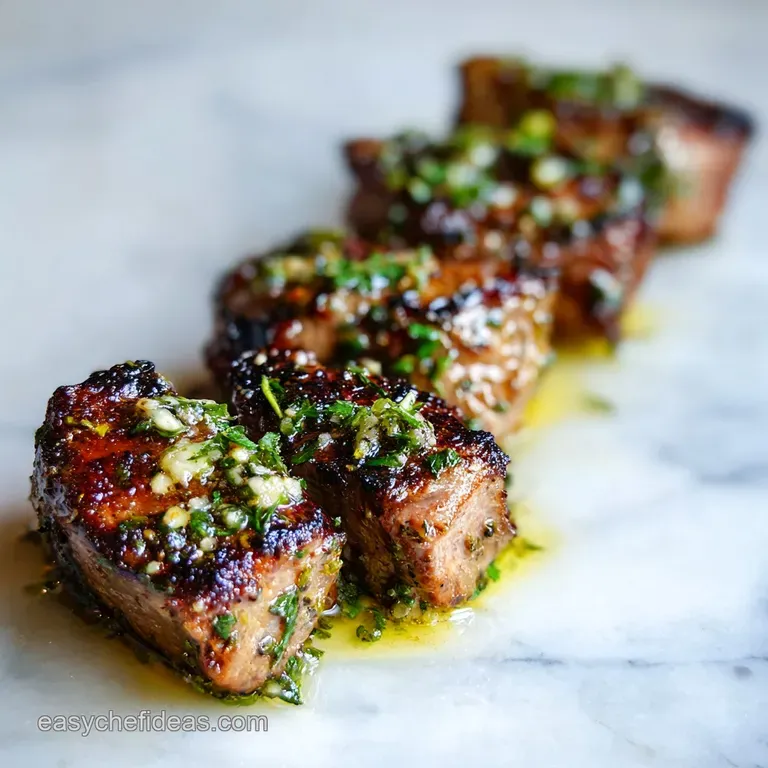
- Time: Active 10 minutes, Passive 5 minutes, Total 15 minutes
- Flavor/Texture Hook: Crusty, salt kissed exterior with a velvety, garlic infused finish
- Perfect for: High protein weeknight dinners or a crowd-pleasing appetizer
- The Chemistry of the Crust
- Component Analysis and Pro Secrets
- Essential Kitchen Gear
- Selecting Your Elements
- Crafting the Perfect Sear
- Solving Common Searing Issues
- Adjusting for Any Occasion
- Debunking Searing Misconceptions
- Storage and Sustainable Cooking
- Serving and Flavor Pairings
- Recipe FAQs
- 📝 Recipe Card
I remember the first time I tried making these. It was a Tuesday, I was exhausted, and I had a beautiful ribeye sitting in the fridge but absolutely zero patience to wait for a full steak to rest. I took a knife to it, hacked it into cubes, and tossed them into a smoking hot cast iron pan.
The sound was like a round of applause - that sharp, aggressive hiss that tells you the sear is going to be legendary.
Within minutes, the kitchen smelled like a high end steakhouse. But the real magic happened when I threw in a massive knob of cold butter and some smashed garlic. The butter didn't just melt; it foamed and swirled, picking up all the brown bits from the pan and coating the beef in a liquid gold sauce.
It was a revelation. We ended up eating them straight out of the pan with toothpicks, leaning over the counter because they were too good to even move to a plate.
Since then, I've obsessed over the details. I've learned that if you crowd the pan, you're essentially boiling your meat in its own juices - a culinary tragedy. I've realized that the herb steak bites need that hit of rosemary at the absolute last second to keep the oils from turning bitter.
This isn't just a recipe; it's the result of many smoky kitchens and a few "tough as boots" mistakes that I've finally ironed out for you.
The Chemistry of the Crust
Maillard Reaction: High heat triggers a chemical reaction between amino acids and reducing sugars, creating hundreds of flavor compounds and that characteristic brown crust.
Thermal Inertia: A heavy pan, like cast iron, retains heat even when cold meat is added, ensuring the temperature doesn't drop and cause the meat to steam.
Fat in-Water Emulsion: Adding cold butter to the hot pan at the end creates a stable, thickened sauce rather than just greasy, melted oil.
Aromatic Infusion: The fat in the butter acts as a solvent, pulling the essential oils out of the garlic and herbs to distribute flavor evenly.
| Meat Thickness | Internal Temp | Rest Time | Visual Cue |
|---|---|---|---|
| 1 inch cube | 135°F (Medium Rare) | 2 minutes | Deep brown crust, pink center |
| 1 inch cube | 145°F (Medium) | 2 minutes | Dark exterior, sliver of pink |
| 1 inch cube | 160°F (Well Done) | 1 minute | Charred edges, no pink visible |
Beef behaves differently depending on how it's handled before it even touches the pan. For example, if you pull your steak straight from the fridge and toss it in, the center stays cold while the outside overcooks. Giving it just 15 minutes on the counter makes a world of difference in the tenderness.
Component Analysis and Pro Secrets
| Ingredient | Science Role | Pro Secret |
|---|---|---|
| Sirloin or Ribeye | Structural protein/fat | Dry with paper towels to ensure a "shatter" crisp crust. |
| Avocado Oil | High smoke point fat | Use this for the initial sear to avoid burnt oil flavors. |
| Cold Butter | Emulsifier | Keeps the sauce thick and glossy rather than thin and oily. |
| Garlic | Aromatic flavor | Add it only in the last 60 seconds to prevent acrid bitterness. |
Similar to the technique used in The Pub Classic recipe, the goal here is to manage the heat so the garlic perfumes the meat without scorching. If you find yourself craving a bit more spice, you can always pivot toward the flavors in The Sizzling Secret recipe for a different vibe.
Essential Kitchen Gear
A heavy bottomed skillet is your best friend here. If you use a thin, non stick pan, you won't get that deep, mahogany sear we're looking for. I prefer a 12 inch cast iron skillet because it distributes heat beautifully and can handle the high temperatures required for butter herb steak bites.
You'll also want a set of long kitchen tongs. Moving these little cubes individually is a pain, but with tongs, you can toss them like a pro. A meat thermometer is also a great safety net, though after a few tries, you'll be able to tell doneness just by the springiness of the meat.
Finally, make sure your ventilation is on high. We're going for a hard sear, and things might get a little smoky in the best way possible.
Selecting Your Elements
- 1.5 lb sirloin or ribeye steak: Why this? Sirloin is lean and tender, while ribeye offers richer fat for flavor.
- Substitute: Beef tenderloin for ultimate tenderness, though it’s pricier.
- 1 tbsp avocado oil: Why this? It has a very high smoke point, perfect for searing.
- Substitute: Grapeseed oil or light olive oil (not extra virgin).
- 1 tsp kosher salt: Why this? Larger grains make it easier to season evenly by hand.
- Substitute: 1/2 tsp table salt, but be careful not to over salt.
- 1/2 tsp coarse black pepper: Why this? Provides a spicy bite and textural contrast.
- Substitute: White pepper for a more subtle, earthy heat.
- 1 tbsp Worcestershire sauce: Why this? Adds fermented umami depth and helps with browning.
- Substitute: Soy sauce or coconut aminos for a similar salty kick.
- 4 tbsp unsalted butter: Why this? Cold butter creates a creamier, more stable pan sauce.
- Substitute: Ghee (clarified butter) if you need a higher smoke point.
- 6 cloves garlic: Why this? Fresh garlic is essential for that punchy, aromatic finish.
- Substitute: 1 tsp garlic powder in the rub, but fresh is vastly superior.
- 1 tbsp fresh rosemary and thyme: Why this? Fresh herbs provide woodsy, bright notes that cut through the fat.
- Substitute: 1 tsp dried Italian seasoning if fresh herbs aren't available.
Crafting the Perfect Sear
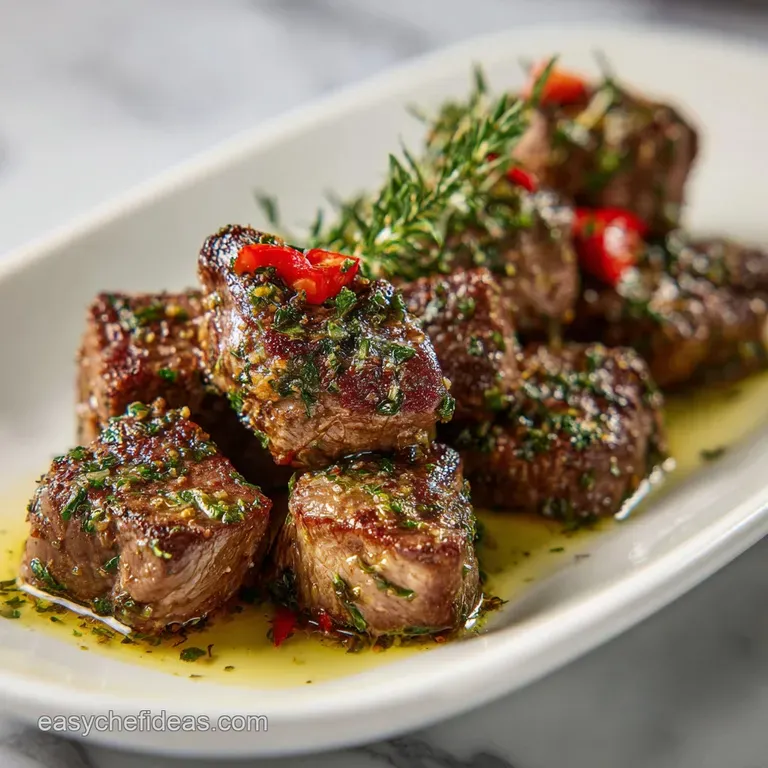
- Prep the beef. Pat the 1.5 lb of steak cubes completely dry with paper towels. Note: Surface moisture is the enemy of a good sear; it creates steam instead of a crust.
- Season thoroughly. Toss the cubes with 1 tsp kosher salt, 1/2 tsp black pepper, and 1 tbsp avocado oil. Note: Coating the meat in oil first ensures every surface hits the pan with a fat barrier.
- Heat the pan. Place your skillet over high heat for 3-4 minutes until a drop of water flicked onto it dances and evaporates instantly.
- Sear the meat. Add the steak in a single layer, ensuring they don't touch. Note: You may need to do this in two batches to avoid crowding.
- Develop the crust. Let the meat sit undisturbed for 2 minutes until a dark, crispy crust forms on the bottom.
- Flip and finish. Toss the bites and cook for another 1-2 minutes. Note: We are looking for an internal temp of about 130°F at this stage.
- Deglaze the pan. Pour in 1 tbsp Worcestershire sauce and stir until the liquid bubbles and coats the meat.
- Lower the heat. Reduce the burner to medium and add 4 tbsp cold butter and 6 cloves of minced garlic.
- Baste and infuse. Stir constantly as the butter melts and foams, spooning it over the meat until the garlic is fragrant and golden.
- Add the herbs. Toss in 1 tbsp of chopped rosemary and thyme, stir for 30 seconds, and remove from heat immediately.
Solving Common Searing Issues
Gray and Steamed Meat
If your garlic butter steak bites look gray and unappealing rather than brown and crispy, the pan wasn't hot enough or you put too much meat in at once. When the pan is overcrowded, the temperature drops and the moisture released by the meat can't evaporate fast enough, so the beef boils.
Bitter and Burnt Garlic
Garlic is delicate. If you add it at the start with the steak, it will turn into little black bitter pellets. Always add it at the end with the butter when the heat is lower. If it does burn, you’ll have to wipe the pan and start the sauce over, as the bitterness will ruin the whole batch.
| Problem | Root Cause | Solution |
|---|---|---|
| Tough meat | Overcooking or wrong cut | Use an instant read thermometer; stop at 135°F. |
| Salty sauce | Salted butter used | Always use unsalted butter to control the seasoning. |
| Oily/Broken sauce | Warm butter used | Use cold from the fridge butter and stir constantly to emulsify. |
Common Mistakes Checklist
- ✓ Skipping the paper towel step (dry meat = better crust)
- ✓ Using a non stick pan (it can't get hot enough for a proper sear)
- ✓ Moving the meat too soon (let that crust build for at least 2 minutes)
- ✓ Crowding the pan (work in batches if the skillet is small)
- ✓ Adding garlic too early (keep it for the final 60 seconds)
Adjusting for Any Occasion
When you're scaling garlic butter herb steak bites, it's not always a straight multiplication. If you're cutting the recipe in half for a solo dinner, use a smaller pan so the butter doesn't burn on the empty surface. You can reduce the cooking time by about 20% since the pan will stay hotter with less meat.
If you're doubling the recipe for a party, do NOT double the oil or the liquids. Use about 1.5x the salt and spices, and reduce the total liquid by 10% to prevent the meat from swimming. The most important rule for large batches is to work in three or even four smaller sets.
If you try to do 3 lbs of steak at once, you’ll end up with a lukewarm stew instead of the best steak bites recipe you’ve ever had.
| Fresh Ingredient | Shortcut Option | Flavor Impact |
|---|---|---|
| Fresh Garlic | Jarred Minced Garlic | Less pungent, slightly sweeter |
| Fresh Herbs | Dried Herbs | More concentrated, less "bright" finish |
| Ribeye | Pre cut Stew Meat | Much tougher; not recommended for this method |
For those looking for a different profile, try The Butchers Rich recipe as a dipping side. It adds a tangy contrast to the rich butter.
Debunking Searing Misconceptions
One of the biggest myths is that searing meat "seals in the juices." Science shows that moisture loss actually increases at higher temperatures. However, we sear for the Maillard reaction, which provides the flavor that makes the meat taste "juicy" by stimulating our salivary glands.
Another common one is that you should only flip steak once. In reality, flipping steak bites frequently after the initial crust has formed helps them cook more evenly and prevents any one side from over charring. It actually helps the center reach the target temperature faster without drying out the exterior.
Storage and Sustainable Cooking
These are best eaten immediately while the butter is emulsified and the crust is crisp. If you have leftovers, keep them in an airtight container in the fridge for up to 3 days. When reheating, avoid the microwave it will turn the steak into rubber.
Instead, flash fry them in a hot pan for 60 seconds with a tiny splash of water to loosen the butter sauce. You can freeze them for up to 2 months, but the texture of the crust will soften significantly upon thawing.
For a zero waste approach, don't throw away those herb stems! Throw the leftover rosemary and thyme stems into a bag in your freezer to use for making beef stock later. If you have leftover garlic butter in the pan, wipe it up with a piece of crusty bread it's basically liquid gold and too good to wash down the sink.
Serving and Flavor Pairings
These steak bites are incredibly versatile. I love serving them over a bed of creamy mashed potatoes or even cauliflower puree if I'm keeping it lighter. The sauce naturally puddles into the potatoes, creating a built in gravy.
They also work beautifully tossed into a simple pasta with a bit of extra parmesan and a squeeze of lemon to brighten the fats.
If you're serving these as an appetizer, a bowl of horseradish cream or a quick chimichurri on the side offers a sharp acidity that cuts through the richness of the butter herb steak bites.
For a vegetable side, roasted balsamic Brussels sprouts or a simple arugula salad with a lemon vinaigrette provides the perfect balance. Just make sure you serve them on warmed plates nothing kills the joy of a garlic butter steak bite faster than the butter solidifying on a cold ceramic surface.
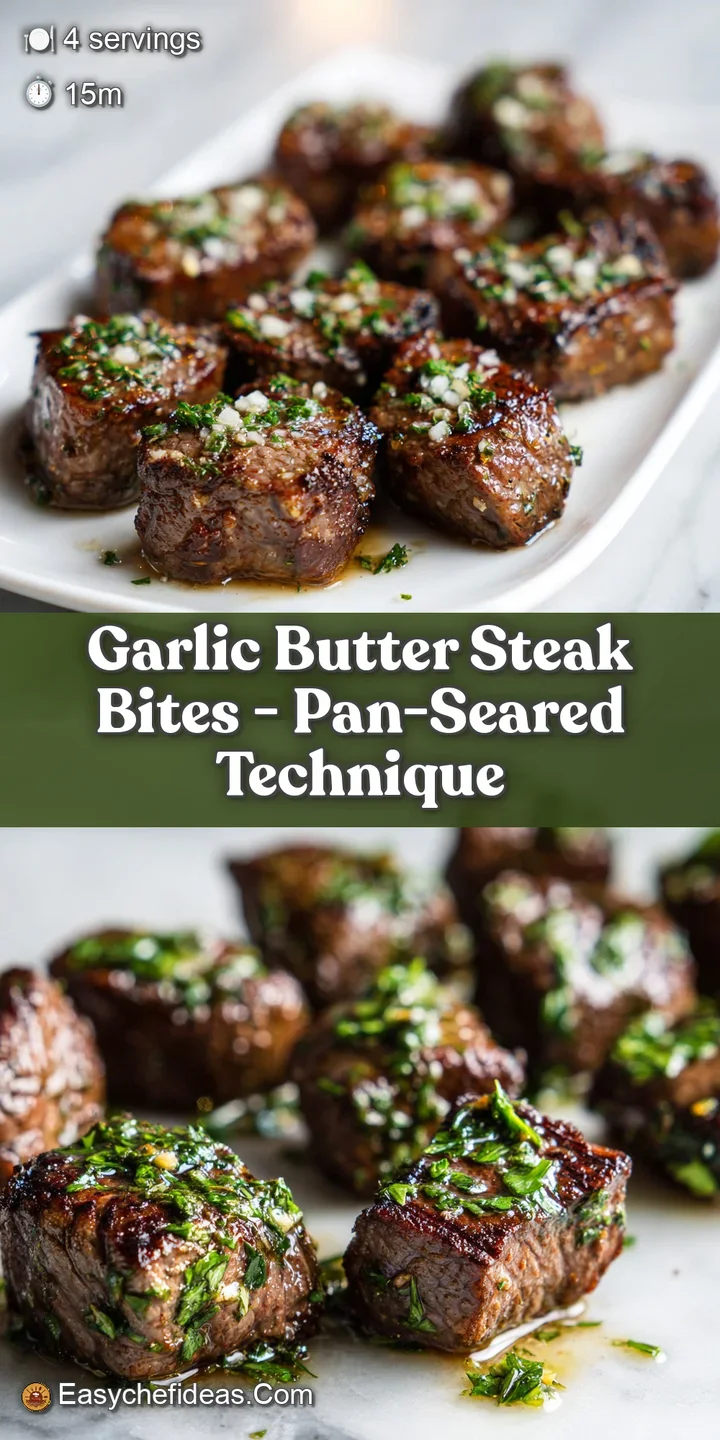
Recipe FAQs
Can I use pre-cut, frozen steak cubes instead of fresh?
No, frozen cubes are not recommended. Frozen meat releases excessive moisture during thawing and cooking, which prevents the crucial Maillard reaction necessary for a proper sear.
What is the critical step to achieve a deep, brown crust?
Ensure the pan is smoking hot before adding the meat. Use an oil with a high smoke point, like avocado oil, and do not crowd the skillet, otherwise the meat will steam instead of sear.
How do I stop the garlic from burning before the steak is cooked?
Add minced garlic only during the final minute of cooking. Sauté the steak first, then reduce the heat to medium low right before adding the butter and garlic to infuse the flavor without scorching.
How do I create the thick, glossy garlic butter sauce at the end?
Introduce cold butter off the heat or on very low heat while constantly stirring. This technique creates a stable emulsion where the fat and water emulsify, resulting in a thick sauce rather than just melted oil.
What internal temperature should the steak bites reach for medium rare?
Pull the cubes off the heat when they hit 130°F. Since these are small pieces, they will continue to cook as they rest, so target slightly below your desired final temperature for perfect carryover cooking. If you need a guide for whole cuts, check out the How to Cook Steak recipe for thermal precision.
Is it true that searing locks all the juices inside the meat?
No, this is a common misconception. Searing primarily builds flavor through the Maillard reaction; moisture loss is inevitable when cooking, but the strong flavor profile fools the palate into perceiving enhanced juiciness.
What is the best way to reheat leftovers without turning them tough?
Flash fry them in a hot skillet for 60 seconds. Do not use the microwave, as it tends to dry out the meat fibers rapidly. If you enjoy rich pan sauces, the technique of emulsifying cold butter at the end is crucial, similar to what we use in our Pork Chops with recipe.
Garlic Butter Steak Bites 3
Ingredients:
Instructions:
Nutrition Facts:
| Calories | 483 kcal |
|---|---|
| Protein | 34.1 g |
| Fat | 38.8 g |
| Carbs | 2.3 g |
| Fiber | 0.2 g |
| Sugar | 0.8 g |
| Sodium | 623 mg |
