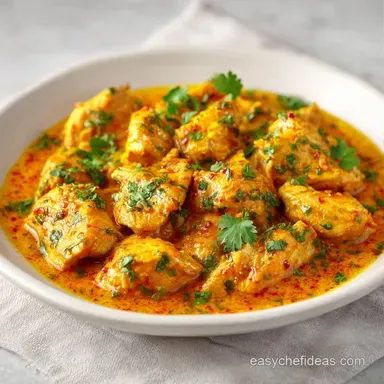
Quick & Creamy Indian Chicken Thigh Curry
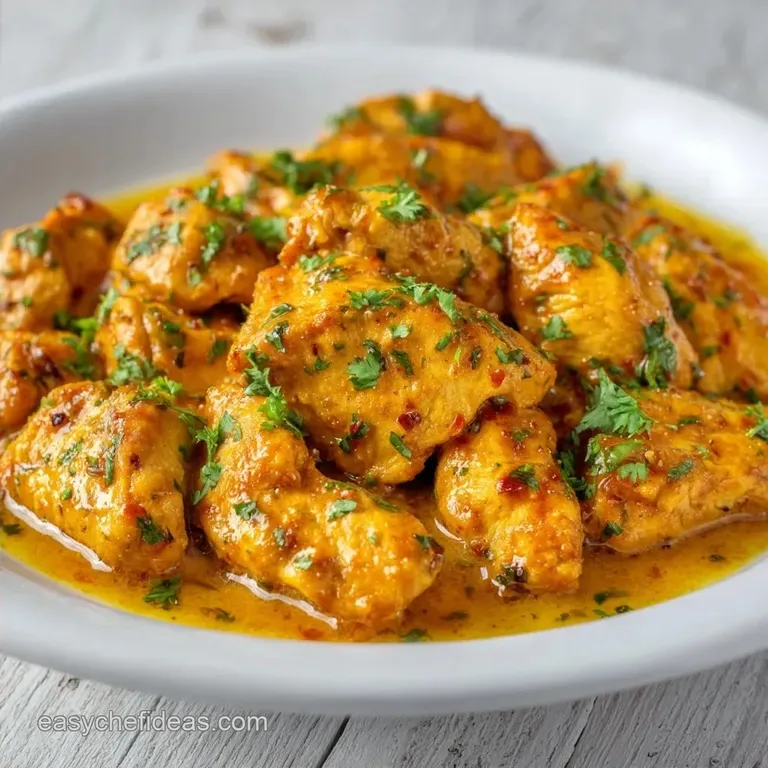
- Time:15 minutes active + 45 minutes cooking
- Flavor/Texture Hook: Mahogany seared chicken in a velvety, spiced coconut sauce
- Perfect for: Cozy weeknight dinners or nourishing meal prep for the week
- Easy Chicken Thigh Curry Recipe
- The Secret to These Flavors
- The Component Analysis
- The Essential Ingredients
- Tools for the Job
- Step by Step Instructions
- Common Pitfalls and Fixes
- Troubleshooting Common Issues
- Adjusting the Yield
- Truths About Curry
- Storage and Leftovers
- Serving and Enjoying
- Recipe FAQs
- 📝 Recipe Card
The sound of the chicken hitting the hot oil is the first sign that dinner is actually happening. That loud, aggressive sizzle is exactly what we want. It's the sound of moisture leaving the surface of the meat so the real flavor can move in.
I remember making this for my family on a rainy Tuesday when the house felt cold. The smell of toasted Madras powder and ginger filled every room, and suddenly the weather outside didn't matter.
We're focusing on nourishment and community here. This isn't about a fast food imitation; it's about building a meal that feels like a hug in a bowl. You'll get a sauce that's thick enough to cling to rice but smooth enough to feel luxurious.
This Chicken Thigh Curry Recipe is designed for anyone who wants those deep, complex layers of flavor without needing a spice rack the size of a bookshelf. We're going to layer the aromatics, bloom the spices, and let the coconut milk tie everything together.
Trust me, the wait during the simmer is where the magic happens.
Easy Chicken Thigh Curry Recipe
The beauty of this dish is how it transforms simple ingredients into something that tastes like it spent all day on the stove. By using chicken thighs, we ensure the meat stays juicy even after a long simmer. We aren't looking for a thin soup; we're aiming for a rich, concentrated sauce that coats the back of a spoon.
Right then, let's get into the specifics. This recipe focuses on the build. We start with a hard sear, move into a soft sauté of aromatics, and finish with a slow reduction. It's a process of layering flavors, where each step adds a new dimension to the final bite.
If you've ever had a curry that tasted "flat," it's usually because the spices weren't toasted or the meat wasn't browned. We won't let that happen here.
But why thighs? I've tried this with breasts, and honestly, don't even bother. Breasts dry out the moment you push them past a certain temperature. Thighs have more fat and connective tissue, which breaks down into a silky texture that holds up to the acidity of the tomatoes.
It's the difference between a meal that's just "fine" and one that's truly nourishing.
The Secret to These Flavors
Understanding why this works makes you a better cook. It's not magic; it's just how ingredients behave when they hit heat. For those who love creamy textures, you might also appreciate my Chicken and Mushrooms in White Wine Sauce, which uses a similar principle of reducing liquids to concentrate flavor.
- Fat Soluble Flavor: Many of the compounds in curry powder and turmeric are fat soluble. By "blooming" them in butter and oil, we unlock flavors that boiling in water would never reach. According to Serious Eats, this process is essential for removing the "raw" taste of dried spices.
- The Fond Factor: Those brown bits stuck to the pan after searing the chicken are called the fond. When we pour in the coconut milk and tomatoes, we scrape those bits up, folding that concentrated meat flavor directly into the sauce.
- Coconut Emulsion: Full fat coconut milk provides a stable emulsion. The fat prevents the sauce from splitting, while the natural sugars balance the heat from the cayenne and the acidity of the lime juice.
- Acidic Brightening: Adding lime juice at the very end prevents the flavors from becoming "muddy." The citric acid cuts through the heavy fat of the coconut milk, making the spices pop.
| Method | Time | Texture | Best For |
|---|---|---|---|
| Fast (Skip Sear) | 30 mins | Soft meat, thinner sauce | Extremely rushed nights |
| Classic (This Recipe) | 60 mins | Mahogany crust, velvety sauce | Maximum flavor and depth |
The Component Analysis
Before we start chopping, let's look at what these ingredients are actually doing in the pan. It's not just about the taste; it's about the function.
| Ingredient | Science Role | Pro Secret |
|---|---|---|
| Madras Curry Powder | Flavor Base | Toast it in butter to remove the "dusty" taste |
| Coconut Milk | Emulsifier | Use full fat only; light versions separate and taste thin |
| Diced Tomatoes | Acid Balance | Lightly crushing them helps the sauce thicken faster |
| Chicken Thighs | Protein/Fat | Leave some fat on for a richer, more velvety sauce |
The Essential Ingredients
I've listed everything in metric for precision. If you're looking at the coconut milk, USDA FoodData shows it's high in saturated fats, which is exactly why it creates such a satisfying, creamy mouthfeel in this Chicken Thigh Curry Recipe.
- 680g boneless, skinless chicken thighs, cut into bite sized pieces Why this? Stays tender during the simmer.
- 30ml neutral oil (like avocado or canola) Why this? High smoke point for searing.
- 5g kosher saltWhy this? Coarse grains prevent over salting.
- 2g cracked black pepperWhy this? Adds a subtle woody heat.
- 1 large yellow onion, finely diced Why this? Provides a sweet, savory base.
- 15g fresh ginger, grated Why this? Adds a zesty, sharp contrast.
- 4 cloves garlic, minced Why this? Essential aromatic depth.
- 30g unsalted butterWhy this? Adds richness and helps bloom spices.
- 30ml Madras curry powderWhy this? A bolder, spicier blend than standard curry.
- 5g ground turmericWhy this? Gives that iconic golden hue.
- 2g cayenne pepperWhy this? Control your heat level here.
- 400ml full fat coconut milk (1 can) Why this? The creamy backbone of the dish.
- 400g diced tomatoes, lightly crushed (1 can) Why this? Adds body and tang.
- 15ml lime juiceWhy this? Brightens the heavy flavors.
- 15g fresh cilantro, chopped Why this? Fresh, herbal finish.
Ingredient Swaps
| Original Ingredient | Substitute | Why It Works |
|---|---|---|
| Madras Curry Powder | Garam Masala + Chili Powder | Similar profile, though slightly less tangy |
| Coconut Milk | Heavy Cream | Same fat content. Note: Loses the tropical nuttiness |
| Chicken Thighs | Boneless Pork Shoulder | Similar fat content and texture; holds up well |
| Lime Juice | Lemon Juice | Similar acidity, but a bit more sharp/citrusy |
Tools for the Job
You don't need a professional kitchen, but a few specific tools make this a lot easier.
- Heavy bottomed skillet or Dutch oven: This is non negotiable. A thin pan will create hot spots, burning your spices and searing the chicken unevenly. Cast iron or enameled steel is best.
- Wooden spoon or silicone spatula: You'll be doing a lot of scraping to get that fond off the bottom. A sturdy tool is a must.
- Microplane or fine grater: For the ginger and garlic. If you chop them too coarsely, you'll get chunks in the sauce instead of a smooth emulsion.
- Tongs: For flipping the chicken pieces quickly without tearing the seared crust.
Step by step Instructions
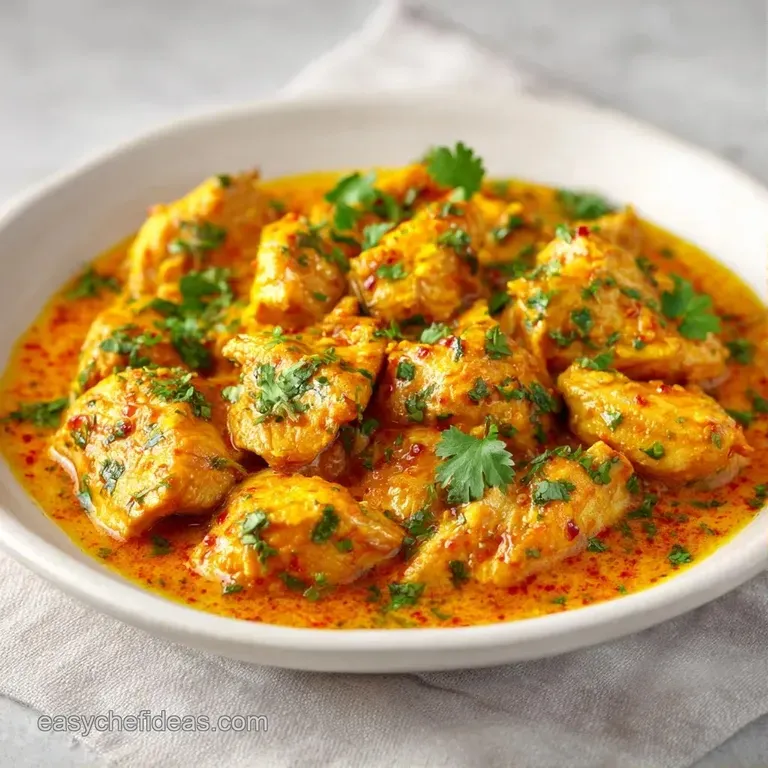
Let's get cooking. Focus on the visual cues the colors and smells rather than just the timer.
Phase 1: The Golden Sear
- Heat the oil. Place your skillet over medium high heat. Wait until the oil shimmers. If it starts to smoke, it's too hot; take it off for a second.
- Season the meat. Toss your chicken pieces with the salt and black pepper. Don't overdo the salt, as the curry powder often has some.
- Sear the chicken. Add the chicken to the pan in a single layer. Do not crowd the pan; if you have too much meat, work in batches. Cook for 3-4 minutes per side until a mahogany colored crust forms.
- Rest the meat. Remove the chicken to a plate. Leave all that golden fat in the pan that's where the flavor lives.
Phase 2: Building the Flavor Base
- Sauté the onions. Drop the heat to medium and melt the butter into the chicken fat. Stir in the diced onions and cook for 5-7 minutes until they are translucent and slightly golden.
- Add aromatics. Stir in the minced garlic and grated ginger. Cook for exactly 60 seconds. You'll know it's ready when the smell hits you it should be fragrant, not burnt.
- Bloom the spices. Stir in the Madras curry powder, turmeric, and cayenne. Stir constantly for 1 minute. The spices will darken and smell toastier. This is the "bloom" that defines a great Chicken Thigh Curry Recipe.
Phase 3: The Simmer and Reduction
- Deglaze the pan. Pour in the diced tomatoes and coconut milk. Use your spatula to scrape the bottom of the pan until all the browned bits are incorporated. The sauce should be a uniform, vibrant orange.
- Combine and simmer. Return the seared chicken and any juices on the plate back into the pan. Lower the heat to a gentle simmer.
- Reduce the sauce. Cook uncovered for 20-25 minutes. You're looking for the sauce to become velvety and the chicken to be tender.
- The final touch. Stir in the lime juice right before turning off the heat. Garnish with chopped cilantro.
Chef's Note: If the sauce is reducing too quickly and looks dry, add a splash of water or chicken broth. If it's too thin, simmer for another 5 minutes.
Common Pitfalls and Fixes
Even experienced cooks hit a snag now and then. The most common issue with this Chicken Thigh Curry Recipe is the sauce consistency or the spice balance.
Troubleshooting Common Issues
| Issue | Solution |
|---|---|
| Why Your Sauce Is Too Thin | If your sauce looks more like a soup than a curry, it's usually because the heat was too low or the lid was on. A lid traps steam, which prevents the liquid from evaporating and thickening. |
| Why the Spices Taste Bitter | Bitter curry usually happens when the spices burn. If you leave the curry powder on high heat without stirring or without enough fat, the powder scorches. |
| Why the Coconut Milk Separated | This happens if the sauce boils too aggressively. A hard boil can break the emulsion of the coconut milk, leaving you with oily streaks on top. Keep it at a gentle simmer. |
Mistakes Checklist:
- ✓ Did you sear the chicken in a single layer? (Avoids steaming)
- ✓ Did you bloom the spices in butter? (Removes raw taste)
- ✓ Did you scrape the fond from the bottom? (Adds depth)
- ✓ Did you add the lime juice at the end? (Balances fat)
- ✓ Did you use full fat coconut milk? (Ensures velvet texture)
Adjusting the Yield
Scaling a curry isn't as simple as doubling the numbers. When you increase the volume, the way liquids evaporate changes.
Scaling Down (Half Batch): Use a smaller skillet to keep the sauce depth consistent. Reduce the cooking time for the onion sauté by about 20%. Since you're using less liquid, keep a close eye on the simmer so it doesn't dry out.
Scaling Up (Double or Triple Batch): Do not double the spices and salt immediately. Start with 1.5x the spices and taste at the end. Liquids generally reduce more slowly in large pots, so you may need to simmer for an extra 10-15 minutes to get that velvety thickness.
Most importantly, sear the chicken in batches. If you dump 3 lbs of meat into one pan, the temperature will drop, and you'll end up with grey, steamed meat instead of a mahogany crust.
| Budget Item | Premium Choice | Budget Substitute | Impact |
|---|---|---|---|
| Fat | Unsalted Butter | Vegetable Oil | Slightly less richness, same function |
| Protein | Organic Thighs | Standard Thighs | No noticeable difference in taste |
| Garnish | Fresh Cilantro | Dried Parsley | Loses the bright, citrusy finish |
Truths About Curry
There are a few things people tell you about cooking meat and spices that just aren't true.
The "Sealing" Myth: Searing meat does not "seal in the juices." Moisture loss happens regardless of how you start the cook. However, we sear the chicken in this Chicken Thigh Curry Recipe because the browning creates complex flavor compounds that you simply can't get from simmering alone.
The Heat Myth: More cayenne doesn't always mean "better" curry. Too much heat masks the nuances of the ginger and the sweetness of the coconut. The goal is a balanced warmth, not a burn that hides the other ingredients.
Storage and Leftovers
This dish is actually better the next day. The spices have more time to penetrate the meat, and the sauce thickens as it cools.
Fridge Storage: Store in an airtight container for up to 4 days. The sauce may thicken significantly in the fridge.
Freezer Guidelines: You can freeze this curry for up to 3 months. Let it cool completely before freezing. When reheating, add a tablespoon of water or coconut milk to loosen the sauce.
Zero Waste Tips: Don't throw away the onion skins or the ends of the ginger root. Toss them into a freezer bag and use them the next time you make a homemade vegetable or chicken stock.
Also, if you have leftover cilantro stems, mince them finely and add them to the aromatic base along with the garlic; they hold a ton of flavor.
Serving and Enjoying
The way you serve this dish changes the whole experience. To keep the meal nourishing, I recommend pairing it with something that can soak up every drop of that sauce.
For a classic experience, serve this over steamed basmati rice. If you're looking for a different way to enjoy chicken, you might try a Slow Cooker Chicken for those days when you can't stand over the stove.
- The Bread
- Warm garlic naan or a simple piece of toasted sourdough is great for scooping.
- The Crunch
- Add a side of quick pickled red onions (vinegar, sugar, salt) to provide a sharp contrast to the creamy sauce.
- The Freshness
- A dollop of plain Greek yogurt or coconut yogurt on top adds a cool, tangy element that balances the cayenne.
When you sit down to eat, notice the contrast. You have the mahogany sear of the chicken, the vibrant orange of the sauce, and the bright green of the cilantro. It's a meal that feels complete, filling both the stomach and the spirit.
This Chicken Thigh Curry Recipe is more than just a set of steps; it's about taking the time to build something real. Enjoy every bite.
Recipe FAQs
Is chicken thigh or breast better for curry?
Chicken thighs are better. They remain juicy and tender during the 20-25 minute simmer, whereas breasts often become dry and overcooked.
Should I cook chicken thighs before adding to curry?
Yes, sear them first. Browning the meat for 3-4 minutes per side creates a mahogany crust that adds essential depth to the overall flavor.
Can you eat curry with diabetes?
Yes, but monitor your portions. This recipe uses coconut milk and spices which are generally suitable, though individuals should align the caloric density with their specific dietary plan.
How to prevent the curry sauce from becoming too thin?
Simmer the sauce uncovered. This allows excess moisture to evaporate so the sauce reaches a velvety consistency; using a lid traps steam and prevents thickening.
Why does the curry taste bitter sometimes?
Prevent the spices from burning. Stir the curry powder, turmeric, and cayenne constantly for one minute to bloom them without scorching the powder.
What other ways can I prepare chicken thighs?
Try roasting for a different texture. If you want a simpler preparation than a stew, you can bake easy chicken thighs for a classic comfort meal.
How to store and reheat leftovers?
Keep in an airtight container for 4 days. Stir in a tablespoon of water or coconut milk when reheating to loosen the sauce, as it thickens significantly in the fridge.
Chicken Thigh Curry Recipe for 4