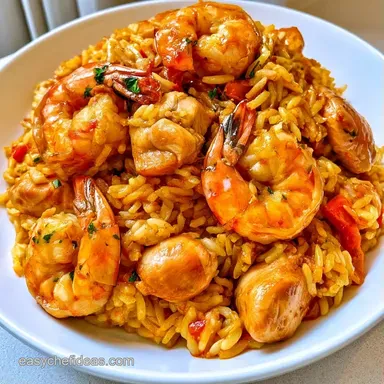
Authentic Spanish Paella Rice with Shrimp

- Time: 10 min active + 45 min cooking
- Flavor & Texture: Smoky and savory with a crisp, rich brown crust
- Perfect for: Community dinners or a special weekend meal
Paella started in the wetlands of Valencia, where farmers used whatever was available, like rabbit, snails, and local rice. It is more than just a meal. In Spain, it is a social event, a way to nourish a community and spend hours chatting around a wide pan.
The beauty of Spanish paella rice is the contrast. You get the bright, floral notes of saffron and the deep, smoky hit of paprika. The real prize, however, is the socarrat. That is the toasted, crunchy layer of rice that forms at the bottom of the pan.
You can get this result at home without professional equipment. The trick is managing the heat and resisting the urge to stir the rice once the liquid goes in.
Making Authentic Spanish Paella Rice
The Right Rice: Bomba rice has a higher absorption rate than standard grains. It soaks up three times its volume in broth but stays firm and distinct.
The No-Stir Rule: Leaving the rice alone during the simmer allows the starch to settle. This creates the space for the bottom layer to fry in the remaining oil, forming the crust.
The Final Sizzle: Increasing the heat at the end evaporates the last bit of moisture. This shifts the process from steaming to frying, which browns the rice.
Recipe Specs
This dish provides a rich, hearty meal for a large group. The chicken thighs keep the meat juicy, while the shrimp add a sweet, coastal flavor.
For the best results, use a wide skillet. The more surface area you have, the more crust you can create.
What Each Ingredient Does
- 1½ lb boneless, skinless chicken thighs, cut into bite-sized pieces
- 1 lb large shrimp, peeled and deveined
- 3 tbsp extra virgin olive oil
- 1 medium yellow onion, finely diced
- 1 medium red bell pepper, diced
- 4 cloves garlic, minced
- 1 tsp smoked Spanish paprika
- 1/2 tsp saffron threads, crushed
- 2 cups Spanish Bomba rice
- 4 cups low-sodium chicken broth, warm
- 1 cup frozen peas
- 1 tsp salt
| Ingredient | Role | If You Don't Have It |
|---|---|---|
| Bomba Rice | Absorbs liquid without getting mushy | Arborio rice. Note: It is creamier, so reduce broth by 1/4 cup |
| Saffron Threads | Adds floral aroma and yellow color | A pinch of turmeric. Note: Color is similar, but flavor is earthier |
| Smoked Paprika | Provides a deep, woody base | Regular paprika and a drop of liquid smoke |
| Chicken Broth | Carries the seasoning into the grain | Vegetable stock. Note: Use a rich, dark stock for similar depth |
Essential Pan Choice
A 12 to 15 inch stainless steel or carbon steel skillet is the best tool here. These materials conduct heat quickly and evenly, which is what you need for that bottom crust. Non-stick pans are okay, but they don't develop the same deep brown color on the rice.
Step-by-step Instructions
1. Searing for Depth
Warm the olive oil in your pan using medium-high heat. Brown the chicken pieces until golden and the internal temperature is 165°F (74°C), then set them aside.
In the same oil, sear the shrimp for 1 minute per side until pink and the internal temperature is 145°F (63°C), then remove them.

2. Building the Sofrito
Lower the heat to medium. Sauté the diced onion and red bell pepper until soft and translucent. Stir in the smoked Spanish paprika and minced garlic, cooking for 60 seconds. Be careful not to let the paprika brown too much, as it may become bitter.
3. Toasting the Grain
Toss in the Spanish Bomba rice. Stir constantly for 2 minutes until the edges of the rice look translucent and the grains are coated in the red oil. This ensures the rice stays separate.
4. The Simmer and Steam
Pour in the warm chicken broth, stirring in the salt and crushed saffron. Arrange the seared chicken evenly across the pan. Level the rice with a spoon and leave it undisturbed. Simmer over medium-low heat for 15 to 18 minutes until most of the liquid is absorbed.
5. The Socarrat Finish
Boost the heat to medium-high for the final 2 to 3 minutes to complete your Spanish paella rice. Listen for a rhythmic crackling and a nutty, toasted aroma. During the last 2 minutes of cooking, gently press the seared shrimp and frozen peas into the top of the rice.

If Something Goes Wrong
If the rice is too soft, you likely stirred it too much or used too much liquid. Stirring releases starch, which creates a creamy texture like risotto instead of the distinct grains needed here.
If you don't see a crust, the pan might not have been hot enough at the end. You need to hear that "popping" sound to know the rice is frying.
Fixing Mushy Grains
Too much liquid or stirring ruins the texture. Next time, use a precise measuring cup and leave the pan alone.
Avoiding Burnt Bottoms
There is a thin line between a toasted crust and burnt rice. If it smells like acrid smoke instead of toasted nuts, kill the heat immediately.
Creating a Better Crust
Ensure your pan is wide. A deep pot won't work because the rice is too thick for the heat to penetrate the top layers.
| Problem | Fix |
|---|---|
| Rice is too wet | Simmer 2 more minutes without a lid |
| No bottom crust | Increase heat to medium-high for 2 minutes |
| Shrimp are rubbery | Sear them quickly and add them only at the end |
Ways to Customize it
I like adding a handful of frozen peas for a pop of color, but you can swap them for chopped asparagus. If you want a more coastal feel, replace the chicken with mussels and clams. Just add the shellfish during the last 5 minutes of simmering.
For a garden harvest version, use a Spanish paella rice variation with mushrooms and vegetable stock. Use a mix of shiitake and oyster mushrooms to keep that meaty texture.
Storage and Reheating
Keep leftover Spanish paella rice in a sealed glass jar in the refrigerator for 3 days. Do not freeze this dish, as the rice crystals break down and it becomes grainy.
To reheat, put a portion in a skillet with a tablespoon of water or broth. Cover it with a lid and heat over medium, stirring occasionally, until a food thermometer inserted into the center reads 165°F (74°C). This steams the grains back to tenderness without drying them out.
Serving the Dish

To keep the dish warm, serve it directly from the pan. I suggest including fresh lemon wedges on the side, as a bit of citrus helps cut through the rich saffron and oil.
Accompany this with some garlic bread to round out the meal. A crisp green salad with a tangy vinaigrette is also a great way to balance the smokiness of the paprika.
Recipe FAQs
How much stock for paella?
Use 4 cups of warm chicken broth for 2 cups of rice.
Tip: Warm the broth first to prevent the pan temperature from dropping during the simmer.
What type of rice is traditionally used in paella?
Spanish Bomba rice is the traditional choice because it absorbs significant liquid without becoming mushy.
Tip: Avoid long-grain varieties as they lack the necessary starch for the proper texture.
What city in Spain is famous for paella?
Valencia is the city most famous for the creation and tradition of this dish.
Tip: Local versions always emphasize the balance of proteins and the toasted bottom crust.
How to store leftover paella?
Store the rice in a sealed glass jar for 3 days in the refrigerator.
Tip: Cool the rice quickly and refrigerate within 1 hour to ensure food safety.
Spanish Paella Rice with Shrimp