Sourdough Discard Garlic and Herb Pull-Apart Bread
- Time: Active 80 minutes, Passive 30 minutes, Total 110 minutes
- Flavor/Texture Hook: Shatter crisp edges with a velvety, tangy interior
- Perfect for: Holiday centerpieces or cozy seasonal gatherings
- Capturing This Sourdough Discard Recipe with Garlic and Herbs
- Why This Tangy Bread Works Well
- Ingredient Science for Better Baking
- Essential Ingredients and Smart Swaps
- The Best Tools for Baking
- Steps for a Mouthwatering Loaf
- Fixing Common Bread Baking Errors
- Scaling and Recipe Variations
- Busting Sourdough Discard Myths
- Storing and Using Your Scraps
- Serving Ideas for Holiday Dinners
- Recipe FAQs
- 📝 Recipe Card
Capturing This Sourdough Discard Recipe with Garlic and Herbs
The aroma of roasting garlic and woodsy rosemary hitting a hot oven is a scent that defines my kitchen every autumn. I remember the first time I pulled this loaf out; the sun was hitting the cooling rack just right, catching the golden hues of the Parmesan crust.
I’d spent months feeling guilty about pouring my "discard" down the drain, thinking it was just waste. Discover our amazing Sourdough Discard Recipe with Garlic and Herbs, a must try for any baker. It changed everything about how I view my starter maintenance.
It isn't just about using up leftovers; it's about the specific texture that only sourdough discard provides. While commercial yeast gives us the lift we need for a quick turnaround, the discard brings a complexity of flavor and a tender crumb that feels like it took days to develop.
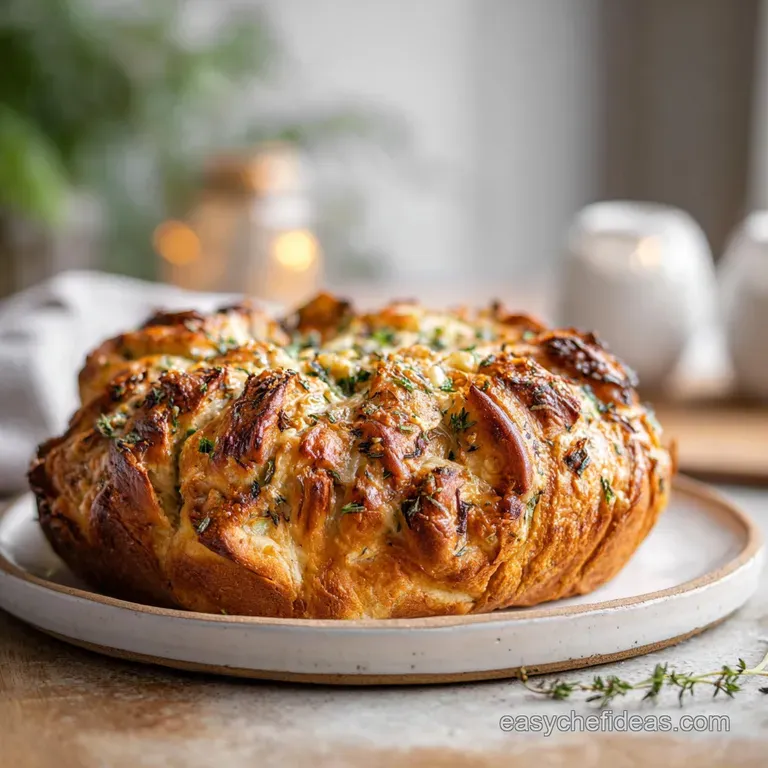
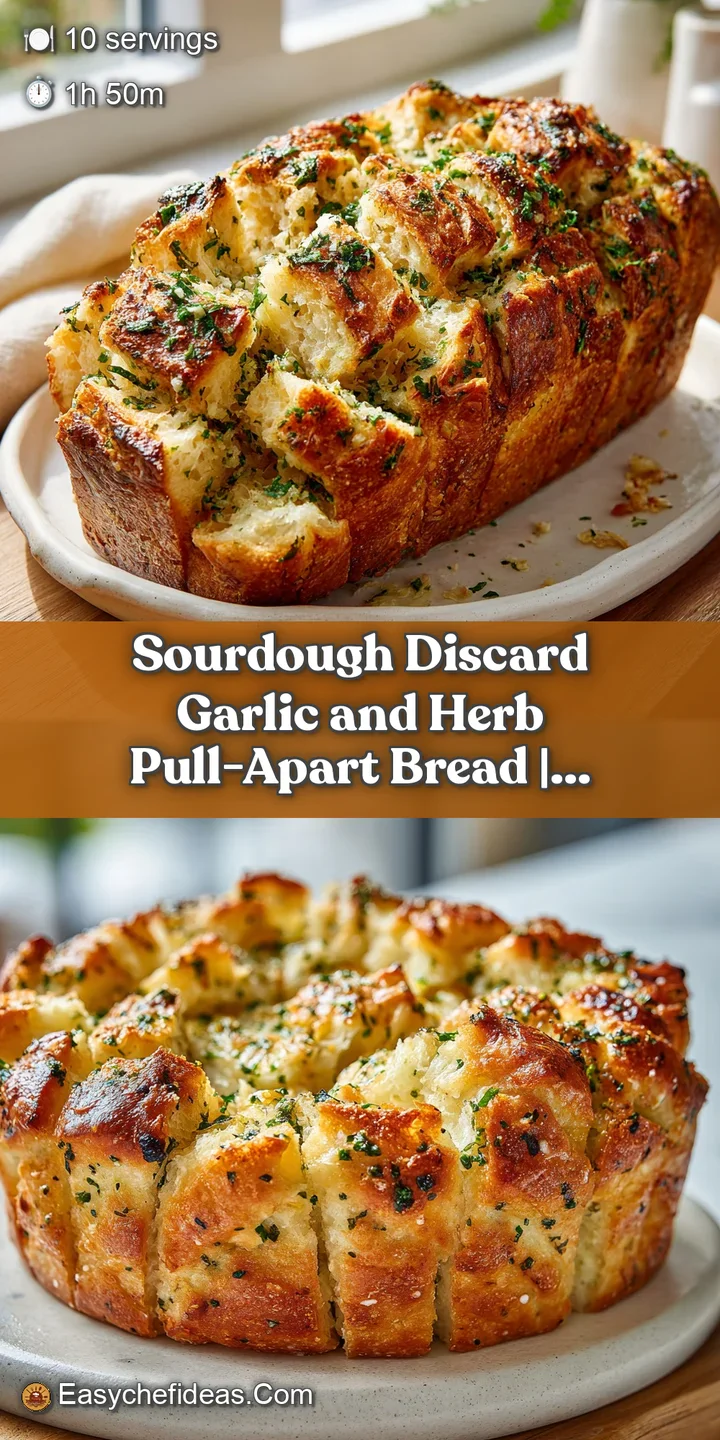
When you pull a warm piece away from the stack, you see those beautiful herb flecks and the way the butter has laminated the layers. It’s photography ready and honestly, it’s hard to stop at just one piece.
We are aiming for a bread that feels celebratory. Most people think sourdough has to be a two day project involving stretching and folding every thirty minutes. This isn't that. We're using the "fast vs. classic" hybrid method, combining the reliability of instant yeast with the soul of a mature sourdough starter.
It’s the perfect compromise for a busy host who still wants that artisanal, mouthwatering finish that guests will talk about for weeks.
Why This Tangy Bread Works Well
The Acid Factor: The lactic acid in the discard breaks down gluten slightly, resulting in a velvety crumb that stays soft longer than standard white bread.
Hybrid Leavening: Using instant yeast alongside the starter provides a guaranteed rise in 110 minutes total, while the discard adds the fermented depth.
Fat Lamination: Dipping individual dough pieces in herb butter creates distinct layers that steam cook, creating a "shatter" effect on the exterior edges.
| Method | Time | Texture | Best For |
|---|---|---|---|
| Fast Hybrid | 110 minutes | Light, airy, tangy | Last minute guests |
| Cold Ferment | 12-24 hours | Deeply sour, chewy | Maximum flavor depth |
| No Yeast Discard | 4-6 hours | Dense, biscuit like | Using very active discard |
Choosing the right method depends on your schedule. If you have the time, the cold ferment in the fridge helps those garlic and herb flavors really penetrate the dough. But for a seasonal gathering where you need results fast, the 110 minutes total time is a lifesaver.
The sourdough discard acts as a natural preservative here, too, keeping the bread from drying out as quickly as a standard yeast roll might.
Ingredient Science for Better Baking
Understanding what each component does helps you adjust the recipe based on your kitchen's temperature or the age of your discard. The 200g of sourdough discard is our "hero" ingredient, providing the moisture and the tang that makes this recipe stand out from a basic dinner roll.
| Ingredient | Science Role | Pro Secret |
|---|---|---|
| Sourdough Discard | Adds acidity and hydration | Use it cold from the fridge to control dough temp |
| Whole Milk | Fat softens the gluten strands | Heat to exactly 105°F to wake up the yeast |
| Unsalted Butter | Creates a tender, "short" crumb | Use European style butter for higher fat content |
| Parmesan Cheese | Provides a salty, umami crust | Grate it fresh so it melts without clumping |
The milk temperature is non negotiable. If you go above 115°F, you risk killing the yeast cells, and your dough will stay flat and heavy. I always use a digital thermometer because "warm to the touch" can be very subjective depending on how cold your hands are that day.
Using 450g of all purpose flour gives us enough protein for structure without making the bread as tough as a traditional sourdough loaf.
Essential Ingredients and Smart Swaps
For this seasonal bake, I always reach for the freshest herbs I can find. Dried herbs just don't have that bright, grassy punch that cuts through the rich butter and garlic infusion. The 115g of melted butter for the dip is where most of the flavor lives, so don't skimp on the quality there.
- 200g Sourdough discard: Unfed and straight from the fridge is fine. Why this? It provides the signature tang and tenderizes the bread crumb.
- 450g All purpose flour: high-quality is better. Why this? Provides enough structure for the pull apart layers without being too chewy.
- 180ml Warm whole milk: 105°F exactly. Why this? The fat in whole milk creates a richer, more velvety texture.
- 7g Instant yeast: One standard packet. Why this? Ensures a consistent rise within the 80 minutes of prep time.
- 115g Unsalted butter (melted): For the herb dip. Why this? This creates the "lamination" that allows the pieces to pull apart.
- 6 Cloves fresh garlic: Finely minced. Why this? Fresh garlic mellows and sweetens as it bakes into the dough.
| Original Ingredient | Substitute | Why It Works |
|---|---|---|
| Whole Milk | Oat Milk (Full Fat) | Provides similar creaminess. Note: Slightly less browning on the crust. |
| All Purpose Flour | Bread Flour | Higher protein content. Note: Results in a much chewier, more rustic texture. |
| Parmesan Cheese | Pecorino Romano | Similar salty profile. Note: More sharp and pungent than Parmesan. |
When swapping ingredients, keep in mind that sourdough discard is already 50% water and 50% flour. If your discard is very runny, you might need to add an extra tablespoon of flour during the kneading process.
I’ve found that using 50g of softened butter inside the dough makes it feel much more like a brioche, which is exactly the kind of mouthwatering luxury we want for a special occasion.
The Best Tools for Baking
You don't need a professional bakery setup, but a few specific tools make this process much smoother. A stand mixer, like a KitchenAid, is nearly essential for the 7-10 minutes of kneading required to get that elastic, smooth finish. Doing it by hand is possible, but be prepared for a workout.
A 9x5 inch loaf pan is the standard here. If you use a larger pan, the pieces will fall over rather than stacking vertically, and you'll lose that beautiful pull apart height. I also highly recommend a digital scale.
Measuring flour by the cup is notoriously inaccurate, and in a recipe where hydration is key, 10g of extra flour can make the difference between a light loaf and a leaden one.
Chef's Tip: Grease your loaf pan with softened butter, then dust it with a little extra Parmesan. This creates a "frico" style cheesy crust on the very bottom of the loaf that is absolutely incredible.
Steps for a Mouthwatering Loaf

- Activate the yeast. Combine 180ml warm milk (105°F), 25g sugar, and 7g instant yeast in your mixer bowl. Let it sit for 5 minutes until a thick foam forms on top.
- Mix the slurry. Add the 200g sourdough discard to the yeast mixture. Whisk gently until the starter is fully broken up and no large lumps remain.
- Form the dough. Add 450g all purpose flour and 10g sea salt. Use the dough hook on low speed until a shaggy, messy ball forms.
- Incorporate the butter. Increase speed to medium low. Add 50g softened butter, one tablespoon at a time. Knead for 7-10 minutes until the dough clears the sides of the bowl.
- First rise. Place dough in a greased bowl. Cover and let rise in a warm spot for 60 minutes until it has visibly doubled in size.
- Prep the infusion. While rising, mix 115g melted butter, 6 minced garlic cloves, and 2 tbsp chopped rosemary/thyme. Grease your 9x5 pan.
- Shape the pieces. Punch down the dough. Divide it into about 20-24 small pieces. Dip each piece into the garlic herb butter until completely coated.
- Stack vertically. Arrange the pieces in the pan like a file folder. Don't pack them too tight; they need room to expand.
- The final touch. Sprinkle the 50g of grated Parmesan over the top.
- Bake and monitor. Bake at 350°F (175°C) for 30 minutes until the top is deep mahogany and sounds hollow when tapped.
Fixing Common Bread Baking Errors
Why Your Bread Stays Dense
If your loaf didn't rise, the most likely culprit is the temperature of your milk or your kitchen. If the milk was too hot, it killed the yeast. If your kitchen is below 70°F, that 60 minute rise might need to be 90 minutes.
I like to let my dough rise inside the oven with just the oven light on; it creates a perfect mini proofing chamber.
Why the Center is Doughy
Pull apart breads are notorious for being brown on top but raw in the middle. This usually happens because the oven was too hot or the pieces were packed too tightly. Always use a thermometer to check for an internal temperature of 190°F.
If the top is getting too dark but the middle isn't done, tent the pan with foil for the last 10 minutes.
| Problem | Root Cause | Solution |
|---|---|---|
| Bottom is soggy | Too much butter pooled at the base | Remove from pan immediately after baking to a wire rack. |
| Dough is too sticky | High humidity or thin discard | Add flour 1 tbsp at a time until dough clears the bowl sides. |
| Garlic tastes bitter | Garlic was burnt during the bake | Mince finer or mix better into the butter to protect it. |
- ✓ Always weigh your ingredients with a digital scale for accuracy.
- ✓ Ensure your butter is truly "softened," not melted, for the internal dough.
- ✓ Use fresh garlic, never the jarred stuff, for the best flavor profile.
- ✓ Don't skip the 5 minute rest for the yeast; it’s your insurance policy.
- ✓ Let the bread rest in the pan for only 5 minutes before depanning to prevent steaming.
Scaling and Recipe Variations
If you're hosting a large seasonal dinner, you can easily double this recipe. However, don't just throw everything in one bowl. Work in batches to ensure the dough hook can properly develop the gluten.
For a smaller household, you can halve the recipe and bake it in a small 6 inch cake pan for a round, flower like presentation.
If you are looking for more ways to use that herb butter, it goes beautifully with my Garlic Butter Noodles for a quick lunch the next day. The flavor profile is very similar, focusing on that rich, garlicky punch.
| Servings | Discard Amount | Pan Size | Cook Time |
|---|---|---|---|
| 5 People | 100g | 6" Round | 22 minutes |
| 10 People | 200g | 9x5 Loaf | 30 minutes |
| 20 People | 400g | 9x13 Rect. | 40 minutes |
The "Everything" Twist
Instead of just rosemary and thyme, use two tablespoons of "everything bagel" seasoning in the butter dip. It adds a salty, oniony crunch that is absolutely mouthwatering with the sourdough tang.
dairy-free Adaptation
You can substitute the milk for full fat oat milk and the butter for a high-quality vegan butter stick (like Miyoko's). The texture will be slightly less "brioche like," but the sourdough discard does a lot of the heavy lifting for the flavor regardless.
Busting Sourdough Discard Myths
"Discard is dead yeast and has no value." This is probably the biggest myth in the baking world. While discard might not have the leavening power of a fresh, bubbly starter, it is packed with organic acids and broken down starches that improve the shelf life and flavor of anything it touches.
It is a flavor powerhouse, not a waste product.
"You can't use cold discard in bread." You absolutely can! In this recipe, we use warm milk to offset the cold starter. Using cold discard can actually be beneficial because it slows down the fermentation slightly, allowing those complex flavors to develop without the dough over proofing too quickly in a warm kitchen.
Storing and Using Your Scraps
This bread is best served within an hour of baking, but life happens. To store, wrap the cooled loaf tightly in foil or an airtight container. It will stay fresh at room temperature for up to 3 days. To reheat, don't use the microwave; it will make the crust rubbery.
Instead, wrap it in foil and pop it into a 350°F oven for 10 minutes.
If you have leftovers that have gone a bit stale, don't throw them away! Cut them into cubes and toss them in a pan with a little more butter to make the best sourdough croutons you've ever had. Or, pulse them in a food processor for garlic herb breadcrumbs that elevate any pasta dish.
You can also freeze the baked loaf for up to 2 months. Just thaw it at room temperature and refresh it in the oven before serving.
Serving Ideas for Holiday Dinners
This Sourdough Discard Recipe with Garlic and Herbs is a natural fit for a holiday spread. I love placing it right in the middle of the table so guests can tear off pieces as they please. It looks stunning next to a roasted bird or a hearty seasonal stew.
The visual appeal of the stacked layers is always a conversation starter.
For a complete bread spread, you could also serve these alongside my Homemade Breadsticks. They share a similar garlic butter DNA but offer a different texture for guests to enjoy. If you're feeling fancy, serve the loaf with a small bowl of balsamic vinegar and high-quality olive oil for dipping. The acidity of the vinegar plays beautifully with the sourdough tang.
The key to a great presentation is the photography. If you're taking photos for your own blog or social media, try to catch the light while the bread is still steaming. That slight glisten from the garlic butter and the dusting of Parmesan creates a mouthwatering image that truly captures the essence of home baking.
Trust me, once you master this loaf, you'll never look at your sourdough discard the same way again.
Recipe FAQs
How to ensure the dough rises properly?
Place your dough in a warm, draft free spot and allow it to sit for approximately 60 minutes. It is ready when it has visibly doubled in size and feels airy to the touch.
Can I use active sourdough starter instead of discard?
Yes, you can. Using active starter will simply make the dough rise a bit faster, so keep a close eye on it during the 60-minute proofing stage.
How to reheat leftover garlic bread without ruining the texture?
Wrap the loaf in foil and place it in a 350°F oven for 10 minutes. Avoid the microwave, as it will cause the crust to become unpleasantly rubbery rather than crisp.
Is it true I can use a different flour if I run out of all-purpose?
No, this is a common misconception. This recipe is specifically formulated for the protein content of all-purpose flour; using bread flour or whole wheat will significantly alter the hydration and final crumb texture.
How to tell when the bread is fully baked?
Bake at 350°F for 30 minutes until the crust reaches a deep mahogany color. For precise results, use an instant read thermometer to ensure the internal temperature has reached 190°F.
What is the best way to handle the dough if it feels too shaggy?
Keep the dough hook running on low speed until the shaggy mess pulls together into a cohesive ball. If you enjoyed mastering the texture control required here, you will find similar patience is key when building the foundation of a rich vegetable ragu.
How to keep the garlic and herb flavor from burning?
Ensure the garlic and herbs are thoroughly coated in the 115g of melted butter before assembly. Since the pieces are tucked between layers of dough, the butter acts as a protective shield during the 30-minute bake.
Sourdough Discard Garlic Bread

Ingredients:
Instructions:
Nutrition Facts:
| Calories | 358 kcal |
|---|---|
| Protein | 8.3 g |
| Fat | 15.9 g |
| Carbs | 44.3 g |
| Fiber | 1.5 g |
| Sugar | 3.5 g |
| Sodium | 462 mg |
