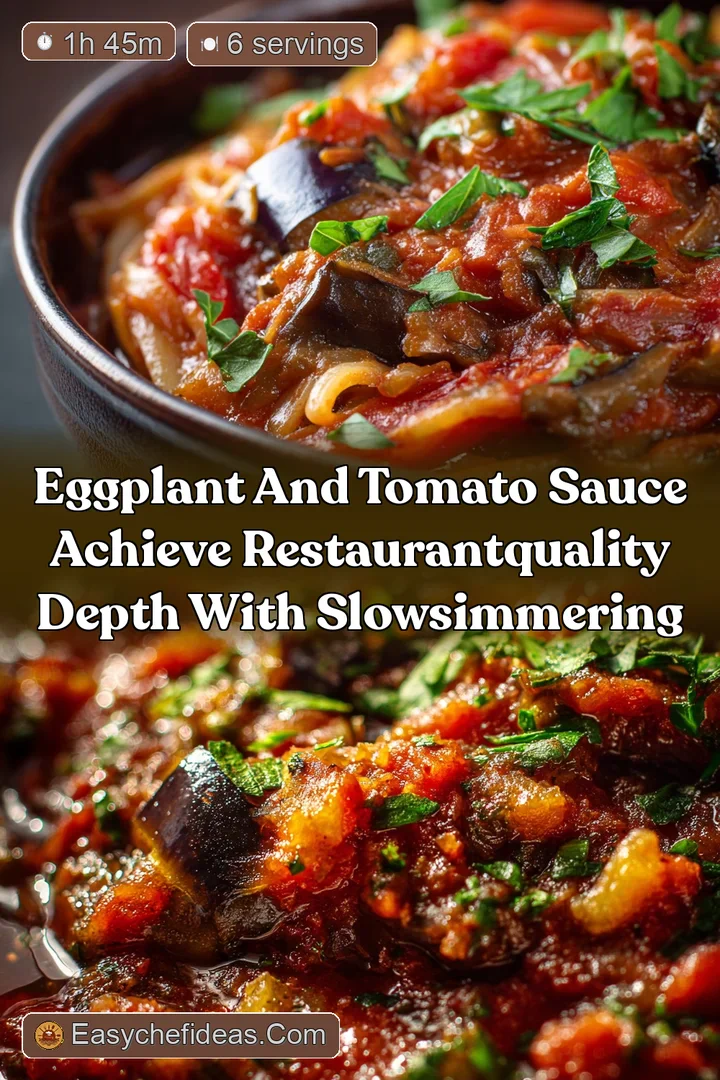
Eggplant and Tomato Sauce the Mediterranean Maestros Slowsimmered Ragu

- Capturing the Essence of Southern Italian Flavour
- A Versatile Ragu That Defines Comfort Food
- Essential Components for the Perfect Eggplant and Tomato Sauce
- Kitchen Gear and Prepping Ingredients Like a Chef
- Phase One: Achieving Depth Through Eggplant Caramelisation
- Phase Two: The Patient Art of Slow and Simmered Perfection
- Mastering the Final Stages of Preparation
- Customizing Your Ragu: Dietary Swaps and Flavor Twists
- Recipe FAQs
- 📝 Recipe Card
Capturing the Essence of Southern Italian Flavour
I want you to forget every watery, basic jarred sauce you've ever had. This isn't that. This is the real deal. It’s what happens when you take two humble ingredients eggplant and tomato and give them the time, the respect , they deserve.
We’re not making a quick marinara here; we’re crafting a deeply savoury, slow and simmered eggplant and tomato sauce that tastes like pure, rustic Italian sunshine.
It’s an absolute masterpiece of vegetarian comfort food, even if you’re not vegetarian. When I made this ragu for my neighbour last month, he literally asked if my nonna had flown in for a visit. (She hasn't.
It's just technique.) We’re talking about a sauce so rich, so robust, it feels like it simmered for three days, not just an hour. And the texture? The eggplant melts into something almost unbelievably creamy and meaty.
A Versatile Ragu That Defines Comfort Food
Think beyond just spaghetti here. We are making a ragu, which means it’s thick, chunky, and substantial enough to stand on its own. Honestly, this eggplant sauce for pasta is the main event. It holds up beautifully when tossed through hearty shapes like rigatoni or paccheri.
I also love using this as a layer in a vegetarian lasagna. Or, try spooning it over a thick slice of creamy, buttery polenta. It’s killer. It won't disappear on you. It coats everything it touches with flavour.
The Magic of Slow Simmering: Why Time Equals Taste
You cannot rush this step. I know, 60 minutes sounds like forever when you’re hungry, but here is the payoff: the acidity in the tomatoes mellows out entirely. The natural sugar concentrates.
All those beautiful aromatic flavours (the garlic, the oregano) actually melt and integrate perfectly. If you try to stop after 20 minutes, it just tastes like canned tomatoes and onion. If you let it go, it transforms.
It stops tasting like ingredients and starts tasting like Italy .
Beyond Marinara: The Role of Caramelized Eggplant
This is the secret handshake, folks. Eggplant isn't just filler in this eggplant stew recipe. We caramelise it first. We get it deeply golden brown, creating the Maillard reaction, which is a fancy way of saying we create layers of complex, nutty flavour.
What does that do for the final sauce? It gives us this unbelievably silky, almost meaty texture that mimics the long and cooked beef or pork found in a traditional meat ragu. When the aubergine and tomato sauce finishes simmering, those little cubes collapse and thicken the whole thing naturally.
Pairing Perfection: Serving Suggestions for This Rich Sauce
Since the sauce is so satisfyingly chunky, don't waste it on thin pasta like angel hair or linguine. Go for shapes with ridges or large tunnels. Rigatoni. Maybe casarecce. Those shapes are built to grab and hold every chunk of eggplant and every drop of sauce.
And please, just promise me you will serve this with a huge chunk of crusty sourdough bread. You need something for soaking up the remaining sauce left in the bottom of your bowl. That is mandatory.
Essential Components for the Perfect Eggplant and Tomato Sauce
Right then, let's talk shopping. You don't need a hundred ingredients for this eggplant and tomato sauce recipe, but the few we use need to be top and tier. I mean it. This is a very simple recipe, and simple recipes demand quality ingredients.
- Olive Oil: Use high and quality Extra Virgin Olive Oil. If you wouldn't dip bread in it, don't cook with it here.
- Tomatoes: San Marzano tomatoes, crushed. They are sweeter, less acidic, and worth the extra two dollars.
- Aromatics: Fresh garlic is essential. Don’t even think about using the jarred stuff.
Kitchen Gear and Prepping Ingredients Like a Chef

I’m telling you this because I learned the hard way: prep work matters just as much as the cooking itself. Getting your eggplant ready correctly is the difference between a sublime, rich ragu and a greasy, bitter mess.
Selecting the Right Tomatoes: Crushed vs. Whole Peeled
I prefer using high and quality crushed San Marzano tomatoes for this particular recipe. They break down faster and help contribute to the thick, uniform consistency we want for a ragu.
| Tomato Type | Best Use in Ragu | Notes |
|---|---|---|
| Crushed Tomatoes | Ideal | Creates a smoother, thicker sauce quicker. |
| Whole Peeled Tomatoes | Great, but messy | Must be crushed by hand (or with a potato masher) for best results. |
| Diced Tomatoes | Avoid | Often have added calcium chloride, which prevents them from breaking down properly during long simmers. |
The Secret to Silky Eggplant: Salting or Skipping?
I’ve tried both ways hundreds of times. Trust me, salt it. It stops the eggplant from soaking up half a cup of olive oil like a sponge. It also removes those sneaky bitter compounds sometimes found in larger globe eggplants.
It’s non and negotiable: Salting the eggplant draws out bitterness and excess moisture. If you skip this, your eggplant will either be greasy or steamed, never caramelized. Thirty minutes on the counter, rinse, then pat bone dry. That's the formula.
Must and Have Tools: Choosing Your Dutch Oven or Stockpot
A heavy and bottomed pot is crucial for the slow simmer. I use my 6 quart enameled Dutch oven. The thick bottom distributes the heat evenly, which prevents scorching. If you use a thin stockpot, the sauce might burn on the bottom before the flavour has time to develop properly.
Flavor Foundation: Mastering the Soffritto Base
Our soffritto is simple: onion, garlic, and oil. The goal here is sweet and fragrant, not crispy or brown. Cook the onion gently in olive oil over medium heat until it’s translucent, almost melting (about 6 minutes).
Add the garlic and chili flakes only for the last 60 seconds. The minute you smell the garlic, you’re done. Don't let it brown. Burnt garlic is a flavour destroyer.
Related Recipes Worth Trying
- Chickpea Avocado Salad The Bright and Easy PlantBased Lunch — This nocook Chickpea Avocado Salad recipe is the ultimate creamy crunchy and refreshing lunch solution Its a versatile plantbased tuna replacement perfect...
- Fish Florentine Recipe Baked with Creamy Gruyère Mornay Sauce — Fish Florentine is the ultimate elegant seafood recipe Master this baked white fish florentine featuring tender fillets garlicky spinach and a silky Gruyère...
- Chocolate Chip Scones The Secret to Light and Tender BakeryStyle Fluff — Chocolate Chip Scones made with cold heavy cream are unbelievably light and tall This easymedium recipe uses grated butter for guaranteed fluffy chocolate...
Phase One: Achieving Depth Through Eggplant Caramelisation
This is the first big hurdle. Caramelisation means browning . It doesn’t just mean soft. It means brown, slightly nutty, and a little crispy on the edges. You must work in batches.
If the eggplant cubes are crowded, the temperature drops instantly, and the cubes will steam instead of caramelising. Steam. Gross. Use high heat and let the oil get nice and hot between batches. Fry until deeply golden (6 to 8 minutes per batch). Then, scoop them out and set them aside.
Do not put them in the sauce yet!
Phase Two: The Patient Art of Slow and Simmered Perfection
Once the aromatics are built and you’ve deglazed the pot (that red wine scrape and up is crucial for depth!), dump in the crushed tomatoes. Add your dried oregano, a half teaspoon of sugar (which just helps balance acidity), and salt and pepper. Bring the sauce barely up to a simmer. Then, turn the heat down.
Low. Super low. You want little bubbles that only occasionally pop, not a rolling boil. Put the lid on, slightly askew to let some steam escape, and go read a book. The longer this slow and simmered eggplant tomato ragu goes, the better.
Mastering the Final Stages of Preparation
We’re in the home stretch now! These final steps bring all that beautiful flavour together and determine the final, silky texture of your sauce.
Sautéing the Eggplant Cubes Until Golden Brown
Remember the rule: patience, batches, and high heat. When those 1 inch (2.5 cm) cubes of chopped eggplant recipes are deeply golden, they’re ready for the big reveal. Don't worry if they look slightly firm when you remove them; they will soften up completely in the sauce.
Building the Aromatic Base: Garlic, Herbs, and Olive Oil
After you remove the eggplant, we build the flavour foundation right in the same pot. That lingering eggplant flavor in the oil is a bonus. We gently cook the onion, then add the minced garlic and a few red pepper flakes for warmth.
Cook until fragrant, and use the red wine to scrape up all those beautiful browned bits stuck to the bottom of the pot.
Combining the Elements: Introducing the Tomatoes and Liquid
Once the wine reduces by about half (a couple of minutes), introduce the tomatoes. Season well, stir, and bring it to that gentle, low simmer. You don't want the pot lid fully sealed; that traps too much water.
A slightly tilted lid allows excess liquid to evaporate, concentrating your vegetarian tomato eggplant recipe perfectly.
The Long Wait: Tasting and Adjusting the Final Seasoning
After the minimum 45 minute simmer, introduce the reserved, caramelized eggplant. Stir it in gently. Let it warm through and soak up the sauce for another 10 minutes. This is the moment to taste. Does it need more salt? Often, the answer is yes. Does it taste slightly flat?
Maybe a pinch more sugar or a tiny splash of vinegar can brighten it up. Turn off the heat and stir through the fresh basil. It gives the sauce a burst of necessary freshness.
Customizing Your Ragu: Dietary Swaps and Flavor Twists
The beauty of cooking at home is making the recipe yours. This recipe is already naturally vegan and gluten and free (assuming you don’t toss it with wheat pasta), but there are tons of ways to tweak it.
Making This Dish Vegan or Dairy and Free Friendly
Good news: it already is! Since this eggplant stew recipe relies on vegetables and olive oil for richness, there’s no need to substitute dairy in the main sauce. When serving, simply skip the traditional Parmesan cheese.
Instead, try topping it with a generous sprinkle of nutritional yeast mixed with toasted pine nuts for a nutty, cheesy flavour without the dairy.
Beyond Eggplant: Incorporating Zucchini or Squash for Variation
If eggplant isn’t your favourite, or if you simply want to bulk up the dish, it welcomes other firm vegetables.
- You can substitute one eggplant with one medium zucchini (courgette) or a cup of diced butternut squash .
- A major tip: Zucchini and squash don't require salting beforehand since they aren't bitter and hold far less moisture than eggplant. Just chop and fry/roast them as normal!
Freezing and Thawing: How to Store Sauce for Later Use
This vegetarian tomato eggplant recipe is brilliant for meal prep. The flavours actually deepen and improve overnight!
- Refrigeration: Store in an airtight container for up to 5 days.
- Freezing: Cool the sauce completely. Transfer to freezer and safe bags or containers (leaving headspace for expansion). It freezes beautifully for up to 4 months.
- Thawing: Thaw overnight in the refrigerator, or reheat gently in a saucepan, adding a splash of water or broth if it looks too thick.
Nutritional Snapshot: Calories, Protein, and Fiber Breakdown
I’m not a nutritionist, I just cook food. But one thing I love about this slow and simmered eggplant tomato ragu is the density of fiber and healthy fats. It feels like a splurge, but it's genuinely nourishing. It’s heavy on the veggies, which means lots of fiber to keep you full.
(Note: These numbers are estimates and highly depend on how much olive oil you use while frying the eggplant!)
Recipe FAQs
Why on earth do I have to salt the eggplant? Is it really necessary?
Salting is non-negotiable for this recipe; it’s a game changer! It pulls out excess moisture (which prevents the eggplant from browning properly) and eliminates any bitterness, ensuring your final ragu is creamy and flavourful, not spongy or greasy.
Can I make this Slow Simmered Eggplant and Tomato Sauce ahead of time? How long does it last?
Absolutely, this sauce is even better the next day it's brilliant for meal prep as the flavours deepen overnight. Store the cooled sauce in an airtight container in the fridge for up to 4 days, or freeze it for up to 3 months; it reheats like a dream.
My eggplant turned out greasy or steamed instead of browned. What did I do wrong?
The usual culprit is either moisture or overcrowding; ensure your eggplant is absolutely bone dry after rinsing the salt off, and cook it in small, separate batches so the oil stays hot enough to brown the pieces beautifully.
This simmer time is a bit hefty can I speed up the cooking process?
While the long, slow simmer is crucial for achieving deep flavour, you can shave off 20 minutes of simmering time if you’re in a real rush, though try not to go below 30 minutes for flavour melding. Alternatively, roasting the eggplant instead of frying it saves considerable active stirring time.
I want to make this richer. Can I add meat or is it better kept vegetarian?
While it’s perfect as a vegetarian dish, you can certainly add meat; sautéing finely diced Italian sausage or beef mince with the onions works beautifully for a richer, true ragu style depth. If keeping it veggie, stir through some cooked Puy lentils during the final simmer for extra protein and body.
Slowsimmered Eggplant Tomato Ragu Recipe

Ingredients:
Instructions:
Nutrition Facts:
| Calories | 205 calories |
|---|---|
| Fat | 13.5 g |
| Fiber | 8 g |
