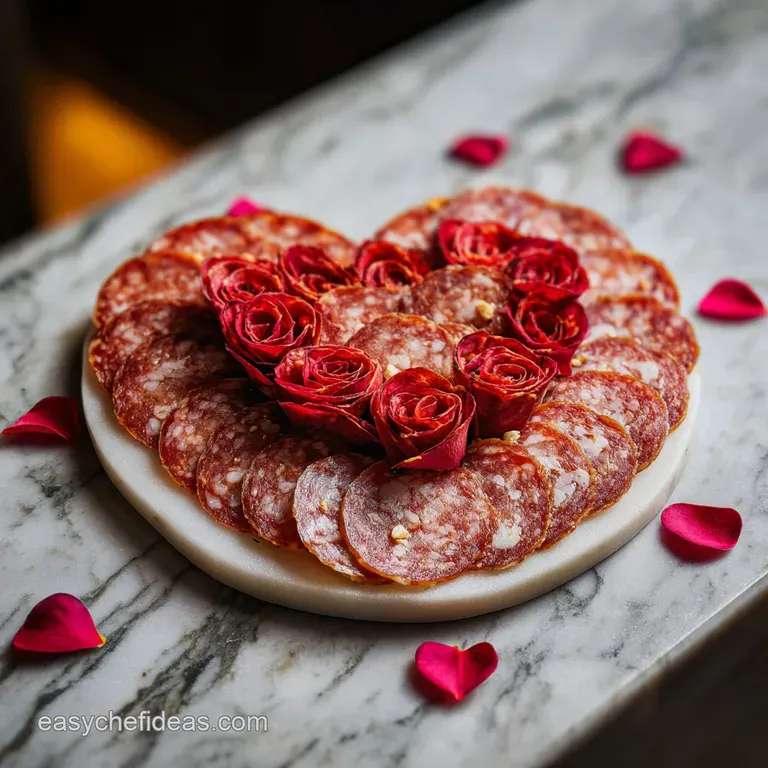
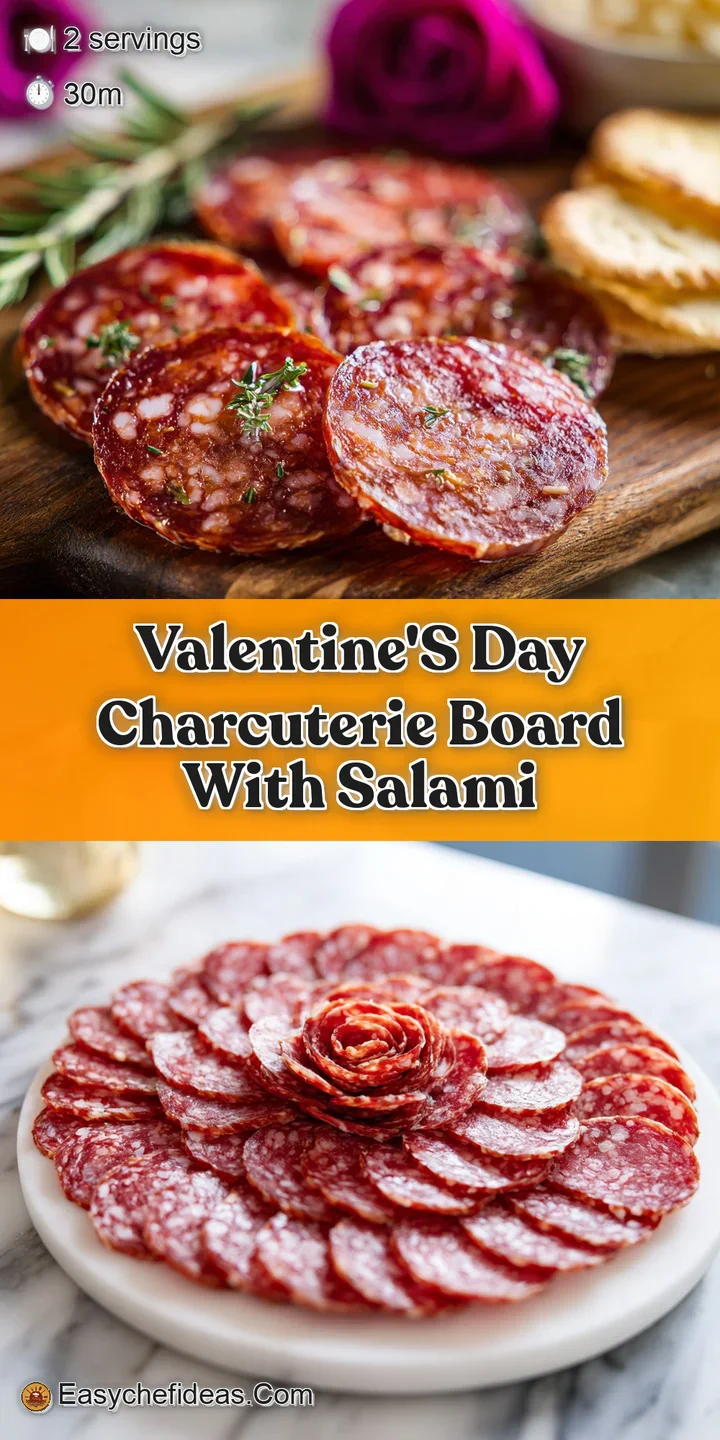
Valentine's Day Charcuterie Board with Salami Roses
- Time: Active 30 minutes, Passive 0 minutes, Total 30 minutes
- Flavor/Texture Hook: Silky brie paired with salty, folded ribbons of salami and the snap of beet crackers
- Perfect for: Romantic date nights, intimate gatherings, or a cozy evening of shared nourishment
- Create the Ultimate Valentine's Day Charcuterie Board with Salami Roses
- The Science of Structural Meat Folding
- Exploring Global Elements for This Spread
- Simple Tools for Artisan Results
- Layering Textures From Start to Finish
- Fixing Common Assembly Issues Fast
- Adjusting Portions for a Crowd
- Debunking Board Design Misconceptions
- Adapting Ingredients for Specific Diets
- Keeping Your Board Fresh and Vibrant
- Creating a Moment of Shared Nourishment
- Critical in Sodium
- Recipe FAQs
- 📝 Recipe Card
Create the Ultimate Valentine's Day Charcuterie Board with Salami Roses
Picture this: the soft clink of a wine glass against the countertop, the gentle peel of a thin slice of Genoa Salami, and the earthy, sweet scent of fresh raspberries filling the room. Last year, I tried to just "toss" everything on a plate, and it looked like a fridge clean out gone wrong.
But when I took the time to fold that first meat petal, everything changed. Crafting salami roses elevates this charcuterie board into a perfect Valentine's Day centerpiece.
This dish is about more than just food; it is about the diversity of flavors and how they come together to nourish the soul. We are building layers of salt, cream, acid, and crunch. You do not need a culinary degree to make this happen, just a bit of patience and a love for the process.
Trust me, when you place that final pomegranate aril, you will feel like an artist.
We are going to move through the assembly together, focusing on how each element supports the other. From the velvety Brie to the shatter crisp crackers, every component has a purpose. Let's get into the details of how to make this spread feel both sophisticated and welcoming.
The Science of Structural Meat Folding
Fat Induced Friction: The high fat content in 8 oz (227g) of Genoa Salami creates a natural adhesive quality when pressed against glass, allowing the "petals" to hold their shape without toothpicks.
Lactic Acid Synergy: The sharp white cheddar contains lactic acid crystals that provide a tiny crunch, contrasting the silky, buttery lipids found in the 8 oz (227g) Brie wheel.
Osmotic Balance: Pomegranate arils provide a burst of acidity that cuts through the heavy proteins, refreshing the palate between bites of cured meat.
| Board Style | Prep Time | Visual Impact | Best For |
|---|---|---|---|
| Classic Fold | 15 minutes | Traditional, flat | Quick weeknight snacking |
| Rose Technique | 30 minutes | High end, sculptural | Special romantic occasions |
| The "Fast" Pile | 5 minutes | Minimalist, rustic | Immediate hunger relief |
The difference between a "fast" board and a "classic" one often comes down to the architecture of the meat. While a pile of pepperoni is fine for a Tuesday, the rose technique creates a focal point that invites people to pause and appreciate the diversity of the plate. If you find yourself wanting something even sweeter to go alongside this, you might enjoy trying my Valentine's Day Snack recipe.
Exploring Global Elements for This Spread
Selecting ingredients is an act of community. We are looking for high-quality components that represent different textures and traditions. The sharp white cheddar brings a punchy, aged depth, while the goat cheese offers a tangy, creamy brightness that lightens the heavier Genoa salami.
| Ingredient | Science Role | Pro Secret |
|---|---|---|
| Genoa Salami | Structural Base | Use cold meat; the fat stays firmer and holds the "rose" shape longer. |
| Brie Wheel | Moisture Center | Temper for 20 minutes before serving to ensure a velvety, spreadable core. |
| Pomegranate | Acidic Contrast | These "jewels" provide a bright pop that cleanses the palate of fat. |
Selecting the right crackers is just as vital as the cheese. The beet infused crackers add a stunning red hue that fits the Valentine's theme, but they also provide an earthy base that doesn't overpower the delicate goat cheese. We want to nourish our guests with a variety of textures that keep the palate engaged.
Simple Tools for Artisan Results
Small Wine Glass
A glass with a thin rim is essential for the "rose" method. The narrow circumference forces the salami to overlap tightly, ensuring the flower doesn't flop over when you flip it.
Small Heart Cutter
To turn a block of 5 oz (142g) sharp white cheddar into a romantic statement, a small metal cookie cutter is your best friend. It creates clean, sharp edges that look professional.
Offset Spatula
While not strictly required, a small spatula helps move the delicate Brie and goat cheese log onto the board without smudging the edges of your other ingredients.
Layering Textures From Start to Finish
- Chill the meat. Place your 8 oz (227g) of Genoa Salami and 4 oz (113g) of pepperoni in the fridge for 15 minutes. Note: Cold fat is less slippery and holds folds better.
- Anchor the board. Place the 8 oz (227g) Brie wheel and the 4 oz (113g) goat cheese log on opposite corners. Note: These act as the heavy visual anchors for the rest of your design.
- Cut the cheddar. Slice your 5 oz (142g) sharp white cheddar and use your cutter to create heart shapes. Note: Place these near the grapes for color contrast.
- Fold the roses. Layer slices of salami around the rim of a wine glass, overlapping them by half. Keep adding layers until the center hole is closed.
- Invert the glass. Carefully flip the glass onto the board and lift it to reveal the salami rose. Note: Do this slowly to ensure no petals "shatter" out of place.
- Add the crunch. Fan the beet infused crackers around the Brie. Note: Positioning them near the cheese makes it intuitive for guests to serve themselves.
- Fill with fruit. Nestled the 1 cup of strawberries and raspberries into the gaps. Look for "negative space" where the board is visible.
- Scatter the accents. Drop the 0.5 cup (65g) Marcona almonds and 0.25 cup pomegranate arils into the tiny remaining cracks. Note: This creates a lush, "overflowing" look.
- Add the sweetness. Place 6 dark chocolate truffles near the Brie. They should look like hidden treasures.
- Final garnish. Drape the bunch of red grapes over the edge of the board. Note: This adds height and a sense of abundance.
Creating these layers is a meditative process. When you see the red of the pomegranate against the white of the goat cheese, you start to see how colors can nourish our visual senses just as much as the food nourishes our bodies. For another romantic touch to finish the meal, you could even pair this with my Strawberry Roses with recipe.
Fixing Common Assembly Issues Fast
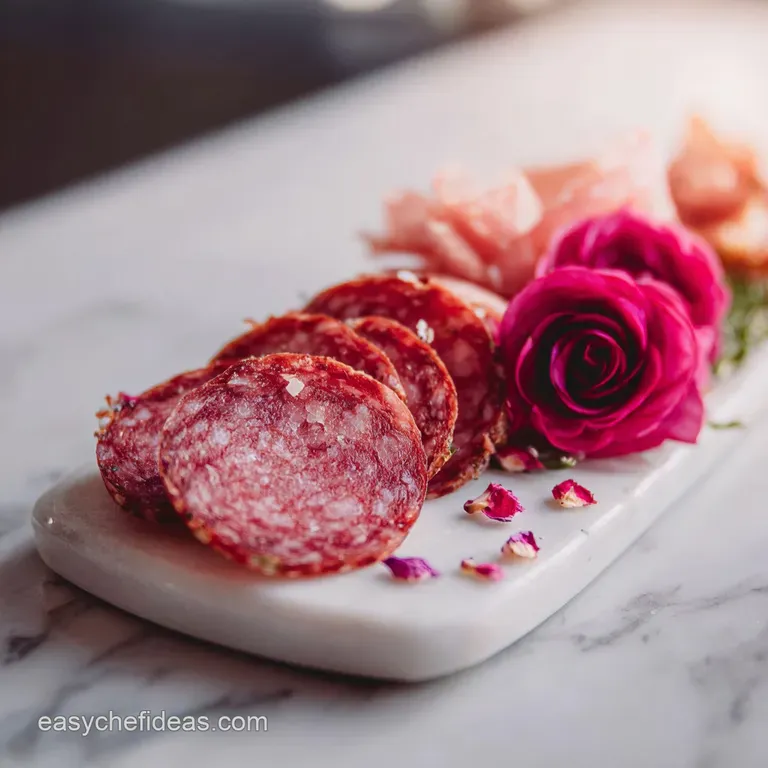
Even the most seasoned home cooks run into a few snags. Sometimes the meat is too greasy, or the cheese starts to sweat. The key is to stay calm and use these quick fixes to keep your board looking vibrant and fresh.
| Problem | Cause | Fix |
|---|---|---|
| Rose Collapsing | Slices are too thick | Use thinner slices or overlap the petals more aggressively. |
| Sweating Cheese | Room is too warm | Place the board back in the fridge for 10 minutes before serving. |
| Dull Fruit | Oxidation | Brush a tiny bit of lemon juice on cut strawberries to keep them bright. |
But what about the sogginess? We'll get to that. Usually, moisture comes from the fruit touching the crackers. I always suggest creating a "buffer zone" using the almonds or the salami to keep the dry elements away from the juicy ones.
| Problem | Root Cause | Solution |
|---|---|---|
| Soggy Crackers | Direct contact with fruit | Place almonds or cheese between crackers and berries. |
| Loose Pomegranate | Arils rolling away | Tuck them into small bowls or press them into the soft Brie. |
| Greasy Salami | Meat is too warm | Pat the slices with a paper towel before folding onto the glass. |
Common Mistakes Checklist
- ✓ Don't use room temperature salami; it will slide right off the wine glass rim.
- ✓ Avoid stacking crackers too early; they absorb humidity from the air and lose their "shatter."
- ✓ Don't cut the Brie while it's cold; wait until it softens slightly so it doesn't crumble.
- ✓ Never crowd the grapes; leave them in small clusters to make them easier for guests to grab.
- ✓ Remember to pat your berries dry after washing to prevent "pink puddles" on your white cheeses.
Adjusting Portions for a Crowd
Scaling a charcuterie board is surprisingly simple because the "ratio of variety" stays mostly the same. If you are moving from 2 servings to a party of 8, you don't necessarily need 4 times the number of cheese types, just more volume of the ones people love.
For a larger gathering, I recommend doubling the 8 oz (227g) of Salami and adding a third cheese perhaps a blue cheese or a hard Manchego to increase the flavor diversity.
When scaling up, keep your spices and salt at about 1.5x rather than a full 2x, as the collective saltiness of the cured meats can become overwhelming. Use a larger wooden board or even a clean butcher paper runner down the center of your table to create a communal feast.
If you are scaling down for a solo treat, half the quantities work perfectly. You can use a smaller juice glass for the salami rose to maintain the structural integrity. Just beat one egg if you're making a side dish that requires it, but for this board, simply reducing the counts of truffles and almonds is enough.
Debunking Board Design Misconceptions
One major myth is that you need expensive, imported cheeses to make a board look "fancy." Honestly, don't even bother with the $30 an ounce stuff if you're just starting. A standard 5 oz (142g) sharp white cheddar from the grocery store looks incredible when cut into hearts.
The beauty comes from the arrangement and the diversity of the colors, not the price tag.
Another misconception is that "more is always better." If you overcrowd the board without a plan, it just looks messy and becomes hard to eat. Focus on the "Rule of Three": three types of meat, three types of cheese, and three colors of fruit. This keeps the design intentional and nourishing to look at.
Adapting Ingredients for Specific Diets
We want everyone at our table to feel included in the community. Whether someone is gluten-free or prefers a plant based lifestyle, there are simple swaps that won't compromise the aesthetic of your Valentine's Day Charcuterie Board with Salami Roses.
| Original Ingredient | Substitute | Why It Works |
|---|---|---|
| Genoa Salami | Thinly sliced smoked tofu | Salty and firm. Note: Won't hold a "rose" shape as well; better for folding. |
| Sharp White Cheddar | dairy-free cashew cheddar | Similar tang and firm texture. Note: Can be more brittle when cutting shapes. |
| Beet Crackers | Rice based seed crackers | Provides the necessary "shatter" and crunch without the gluten. |
The physics of the rise doesn't apply here since we aren't baking, but the "physics of the fold" still matters! If you're using vegan meats, they often lack the fat friction of salami. In that case, use a tiny bit of honey or agave on the rim of the glass to help the slices stick.
Keeping Your Board Fresh and Vibrant
If you have leftovers (which is rare in my house!), storage is key to preventing waste. Wrap the 5 oz (142g) sharp white cheddar and the Brie separately in wax paper rather than plastic wrap. This allows the cheese to "breathe" without drying out or absorbing the smells of the fridge.
The salami and pepperoni can go back into an airtight container for up to 5 days.
Zero waste is a beautiful way to honor the ingredients. If you have extra pomegranate arils, toss them into a morning smoothie or a salad. Leftover cheese ends are perfect for a "fridge raid" grilled cheese or a mac and cheese blend. Even the stems from the grapes can be composted to nourish your garden.
Creating a Moment of Shared Nourishment
When you finally set this Valentine's Day Charcuterie Board with Salami Roses down, take a second to breathe in the aroma. The salty meat, the sweet berries, and the rich chocolate create a sensory experience that is truly special.
I love pairing this board with a crisp sparkling water or a light hibiscus tea to keep the palate clean and refreshed.
This board isn't just about eating; it's about the conversation that happens while you're reaching for that last almond or the perfect slice of Brie. It’s about building a moment of connection through the diversity of food.
Share it with someone who makes your life better, and enjoy the process of nourishing both your body and your relationship. Right then, let’s get to the kitchen and start folding!
Critical in Sodium
3980 mg of sodium per serving (173% of daily value)
The American Heart Association recommends limiting sodium intake to no more than 2,300mg per day for overall cardiovascular health.
Sodium Reduction Tips for Your Charcuterie Board
-
Lower Sodium Meats-25%
Replace the Genoa salami and pepperoni with lower sodium cold cuts like roast beef or turkey breast. These often have significantly less sodium per serving. Look for no-salt added varieties when available.
-
Reduced Sodium Cheese-15%
Opt for lower sodium cheese options. Instead of sharp white cheddar, consider Swiss cheese or fresh mozzarella, which generally contain less sodium. For the goat cheese, select a plain, unsalted variety or reduce the amount.
-
Unsalted Crackers-10%
Swap the beet infused crackers for unsalted crackers or baguette slices. Many crackers contribute a surprising amount of sodium; choosing an unsalted option makes a big difference.
-
Unsalted Almonds-5%
Choose unsalted Marcona almonds. Even small amounts of added salt in nuts can contribute to your daily sodium intake.
-
More Fruits & Veggies-5%
Increase the amount of fresh raspberries, strawberries, pomegranate arils and red grapes to balance the salty flavors. Adding more fresh produce can help reduce the overall sodium density of the board.
-
Flavor with Herbs & Spices
Enhance the flavors of the cheese and other components with fresh herbs and spices instead of relying on salt. Try adding black pepper, rosemary, or thyme to your cheese.
Recipe FAQs
What is the 3 3 3 3 rule for charcuterie?
No, there is no universal "3 3 3 3 rule." This is likely a simplified guideline suggesting using three types of meat, three types of cheese, three types of crackers, and three accompaniments (like fruit or nuts) for balance.
Aiming for diversity in texture and flavor is more important than sticking to exact numbers.
What pairs well with salami on a charcuterie board?
Acidity and creamy textures pair best with rich salami. Look for sharp, tangy cheeses like goat cheese or aged cheddar to cut through the fat content. Sweet accompaniments, such as honey or figs, also provide an excellent counterpoint to the saltiness of the cured meat.
How to make a rose out of salami for a charcuterie board?
Layer thin salami slices around the rim of a small wine glass, overlapping them by half. Continue layering until the center hole is almost closed, creating a dense flower shape. Carefully invert the glass onto the board and gently lift to reveal your structural meat rose.
What are 5 things to avoid on a charcuterie board?
Yes, avoid overcrowding, temperature errors, and poor texture pairings. Specifically, avoid stacking crackers too early, using very warm meat (which collapses the fold), placing wet fruit directly next to dry crackers, serving cheese straight from the fridge, and forgetting an acidic element to cut the
richness.
Is it true that I must use toothpicks to hold the salami rose together?
No, this is a common misconception. If you use a narrow glass and ensure the salami slices overlap tightly, the natural fat content creates enough surface tension to hold the structure when inverted. Mastering this technique is simpler than trying to pierce the delicate meat.
Should I use fruit spread or fresh berries on my board?
Use both, but layer them strategically to prevent sogginess. Jams or fruit spreads pair wonderfully with creamier cheeses like Brie, acting as a binder. For freshness, reserve berries to place near drier elements like crackers, or try making Sweetheart Hand Pies recipe for a baked fruit element.
Why do my cheeses sweat when I take them out to serve?
Sweating occurs when cold cheese rapidly warms, causing surface moisture (humidity or condensation) to form. To prevent this, temper hard and semi hard cheeses, like cheddar, for about 20 minutes, but never leave soft cheeses like Brie out for more than two hours total.
Salami Rose Charcuterie Board
Ingredients:
Instructions:
Nutrition Facts:
| Calories | 2317 kcal |
|---|---|
| Protein | 91 g |
| Fat | 169 g |
| Carbs | 106 g |
| Fiber | 13 g |
| Sugar | 45 g |
| Sodium | 3980 mg |
