Red Wine Braised Short Ribs
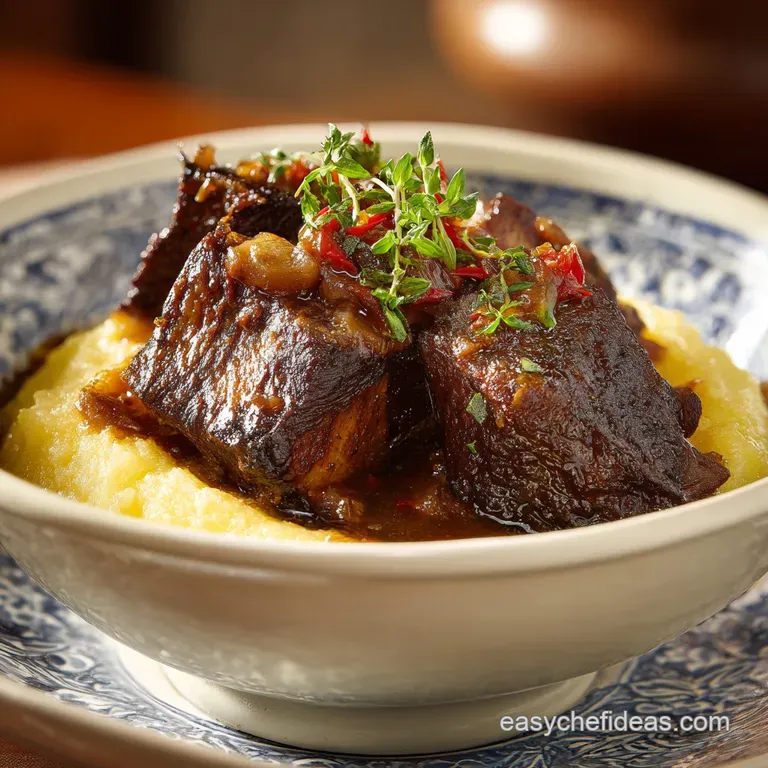
- Time: Active 25 minutes, Passive 210 minutes, Total 235 minutes
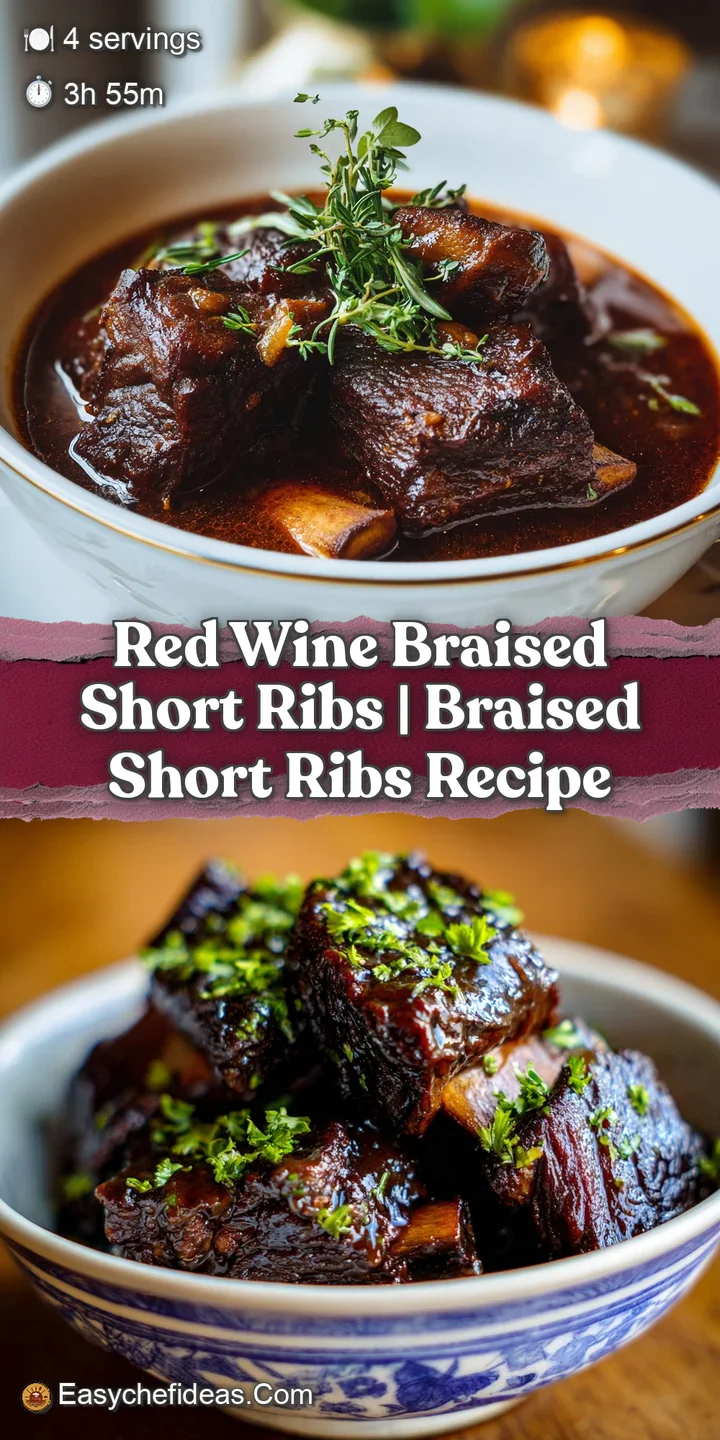
- Flavor/Texture Hook: Velvety, fork tender beef with a glossy, mahogany rich red wine reduction.
- Perfect for: Soul warming Sunday dinners, festive community gatherings, or a nourishing winter feast.
- The Only Beef Short Ribs Recipe
- Critical Timing and Precision Benchmarks
- Selecting High-quality Nutritious Ingredients
- Essential Tools for Better Braising
- Mastering the Layered Cooking Process
- Troubleshooting Texture and Sauce Issues
- Global Variations and Simple Swaps
- Storing and Reheating for Longevity
- Serving Ideas for Shared Community
- CRITICAL Sodium Alert!
- Recipe FAQs
- 📝 Recipe Card
The Only Beef Short Ribs Recipe
There is nothing quite as heartbreaking as spending a small fortune on beautiful English cut beef only to have it come out of the oven feeling like a rubber eraser. I remember the first time I tried making a short ribs recipe for a big neighborhood block party.
I rushed the sear, didn't use enough liquid, and pulled them out an hour too early. The result? A pot full of grey, chewy knots that even the most polite guests struggled to swallow. It was embarrassing, but it taught me the most important lesson in the kitchen: you cannot rush a transformation.
This dish is all about the transition from tough to tender, and from simple ingredients to a complex, layered sauce. When you see that deep mahogany crust forming in the pan and hear the rhythmic bubble of the wine reduction, you know you’re creating something that nourishes more than just the body.
It's about that specific moment when the fibers finally give up their resistance and become velvety. That’s the promise of this recipe it’s the fix for every "tough meat" tragedy you've ever had.
We are going to walk through this together, focusing on how each stage adds a new dimension to the final plate. We’ll talk about why the sear matters, how the wine interacts with the fat, and why the "low and slow" approach is a universal language of comfort.
Whether you're cooking for a quiet night in or a loud table full of friends, these ribs are designed to bring people together through the sheer joy of a well crafted meal.
Critical Timing and Precision Benchmarks
Success in braising isn't about guesswork; it's about hitting specific markers that tell you the chemistry is working in your favor. When we cook these ribs, we are looking for a few "precision checkpoints" to ensure the texture is exactly where it needs to be.
For instance, the internal temperature of the meat needs to hit about 205°F (96°C) for the collagen to fully melt, but since we are cooking in liquid, we usually rely on the "fork tender" visual cue.
| Timing/Temp Item | Precision Benchmark | Visual/Sensory Cue |
|---|---|---|
| Searing Heat | Medium High (400°F/200°C pan) | Deep mahogany crust, not grey |
| Oven Temp | 300°F (150°C) | Slow, lazy bubbles in the liquid |
| Total Braise Time | 3 hours 30 mins | Meat pulls away from bone easily |
The beauty of this method is that it’s incredibly forgiving once you get the liquid ratios right. However, choosing between a labor intensive fresh prep and a shortcut method can change the soul of the dish.
While shortcuts have their place in a busy world, the depth of flavor you get from a traditional braise is a testament to the culture of slow food.
| Feature | Fresh Traditional Braise | Shortcut (Pre seared/Store Sauce) |
|---|---|---|
| Crust Depth | Shatter crisp exterior from fresh sear | Often soft or steamed texture |
| Sauce Complexity | Layers of wine, fond, and fresh herbs | Usually one note or overly sweet |
| Meat Texture | Consistent, buttery fibers | Can be uneven or "stringy" |
Choosing the traditional route means you are in control of the sodium and the quality of the wine. It’s a way to nourish your community with ingredients you’ve personally tended to. If you find yourself short on time, you can always check out my oven baked beef ribs for a slightly different approach to achieving that tender result.
Breaking Down Tough Connective Tissue
Gelatin Conversion: The long, moist heat at 300°F (150°C) slowly breaks down the tough collagen fibers into silky gelatin. This is what gives the sauce its body and the meat its "melt in-your mouth" quality.
Maillard Reaction for Deep Flavor
Surface Caramelization: Searing the meat at high heat before braising creates hundreds of new flavor compounds. Without this step, the beef lacks the "savory sweet" complexity that defines a world class braise.
Emulsification for Velvety Sauce Finishes
Fat Integration: Whisking in cold butter at the very end binds the wine reduction together. This creates a stable emulsion that coats the back of a spoon and feels incredibly luxurious on the tongue.
Selecting high-quality Nutritious Ingredients
To build a truly diverse and soulful meal, we start with the ingredients. Every component here serves a purpose, from the structural role of the bone in ribs to the aromatic foundation of the mirepoix.
When you select your beef, look for the English cut these are the thick, rectangular pieces where the meat sits on top of a straight bone. The marbling should be visible; those little white flecks of fat are exactly what will keep the meat moist during the 3 hours 30 mins of cooking.
| Ingredient | Science Role | Pro Secret |
|---|---|---|
| Bone in Short Ribs | Provides collagen/structure | Pat them bone dry before searing |
| Dry Red Wine | Acidity breaks down fibers | Use a wine you'd actually drink |
| Tomato Paste | Umami and thickener | Cook until it turns rust colored |
| Bone Broth | Mineral depth and moisture | Use low sodium to control the salt |
The aromatics onions, carrots, and celery are the unsung heroes of this short ribs recipe. They melt into the sauce, providing a natural sweetness that balances the heavy, savory notes of the beef.
I like to keep the carrots in thick rounds so they hold their shape, adding a pop of color and nutrition to the final plate.
- 4 lbs Bone in Beef Short Ribs: English cut, well marbled. Why this? The bone adds deep marrow flavor and structural integrity during the long braise.
- Substitute: Boneless short ribs (reduce cook time by 30 mins, but expect less richness).
- 2 tbsp Avocado oil: High smoke point for searing. Why this? It won't burn during the over high heat searing phase like butter or olive oil might.
- Substitute: Grapeseed oil or beef tallow.
- 750ml Dry Red Wine: Cabernet Sauvignon or Pinot Noir. Why this? The tannins and acidity cut through the heavy fat of the ribs perfectly.
- Substitute: Alcohol free red wine or extra beef broth with 2 tbsp balsamic vinegar.
- 2 cups Beef bone broth: Low sodium. Why this? Adds a velvety mouthfeel thanks to the natural gelatin in the broth.
- Substitute: high-quality beef stock or veal demi glace.
- 2 tbsp Tomato paste: For body and color. Why this? It provides a concentrated "sun dried" sweetness and thickens the sauce naturally.
- Substitute: 1/4 cup tomato purée (reduce longer to compensate for water).
- Aromatics (Onions, Carrots, Celery, Garlic): The mirepoix base. Why this? These create the aromatic "soul" of the dish, building a bridge of flavor.
- Substitute: Shallots for onions; parsnips for carrots for an earthier vibe.
Essential Tools for Better Braising
The most critical piece of equipment for this journey is a heavy bottomed Dutch oven. I personally use a cast iron one because it holds heat like a champion. When you're braising for 3 hours 30 mins, you need a vessel that won't have hot spots, which can cause the bottom of your sauce to scorch.
The heavy lid is also non negotiable it traps the steam, creating a self basting environment where the moisture continuously rains back down onto the meat.
If you don't have a Dutch oven, a deep, heavy stainless steel pot with a very tight fitting lid (or a double layer of foil) can work. You'll also need a good pair of long handled tongs.
Searing 4 lbs of beef involves some splattering, and you want to be able to turn the meat comfortably without getting too close to the "sizzle." Finally, a fine mesh strainer is the secret to that "restaurant quality" sauce.
It removes the spent vegetables and herbs, leaving you with a silky liquid that's pure essence of beef.
Chef's Tip: If your lid isn't perfectly tight, place a piece of parchment paper between the pot and the lid. It creates an extra seal that prevents the braising liquid from evaporating too quickly.
Mastering the Layered Cooking Process
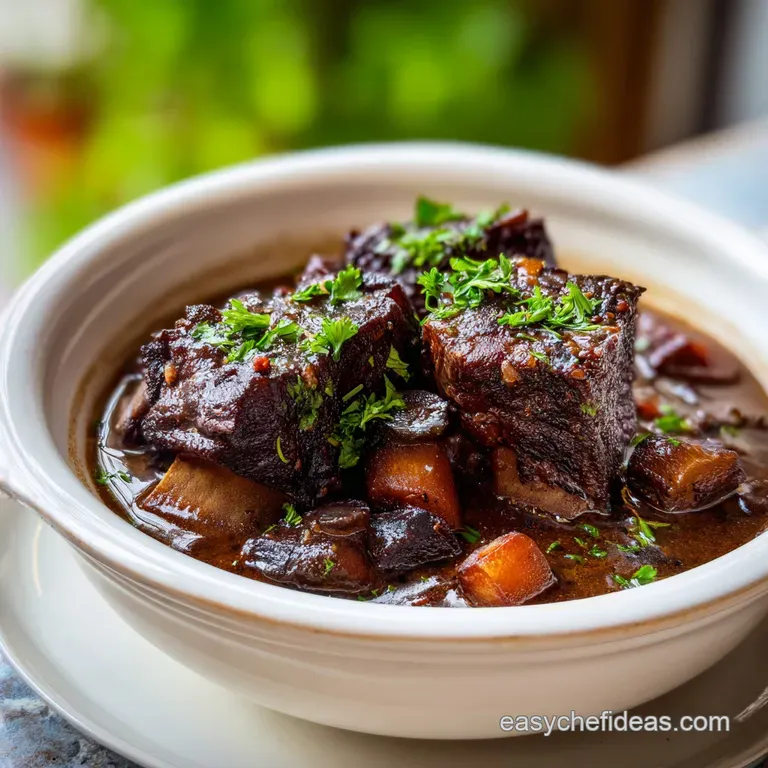
- Pat the short ribs bone dry with paper towels. Note: Moisture is the enemy of a good sear; dry meat browns, wet meat steams.
- Season all sides aggressively with kosher salt and black pepper.
- Heat oil in a heavy Dutch oven over medium high heat.
- Sear the ribs in batches, 2-3 minutes per side. Cook until a deep mahogany crust forms. Remove meat and set aside.
- Reduce heat to medium; add diced onions, carrots, and celery to the rendered fat. Sauté until translucent and slightly browned.
- Stir in tomato paste and smashed garlic. Cook for 2 minutes until the paste turns rust color.
- Pour in the red wine and deglaze the pan, scraping up all the brown bits (fond).
- Return ribs to the pot; add broth, Worcestershire, and herbs. Liquid should cover 3/4 of the meat.
- Cover and simmer on low (or 300°F oven) for 3 to 3.5 hours. Wait until meat is fork tender.
- Strain liquid, reduce by half on the stovetop, and whisk in cold butter. Whisk until sauce is glossy and thick.
Troubleshooting Texture and Sauce Issues
One of the most common issues people face with this ribs recipe is meat that feels "dry" even though it's swimming in liquid. This usually happens because the heat was too high, causing the muscle fibers to tighten and squeeze out all their moisture before the collagen had a chance to melt.
If your meat is tough, the answer is almost always "more time."
Why Your Short Ribs Stay Tough
If you poke the meat and it still feels springy or resists the fork, it simply hasn't reached the "melting point." Beef short ribs are incredibly resilient. Even after 3 hours, they might need that extra 30 minutes to finally surrender.
Don't panic just put the lid back on and keep the heat low.
| Problem | Root Cause | Solution |
|---|---|---|
| Sauce is too thin | Not enough reduction time | Simmer uncovered for 10-15 mins after straining |
| Meat is greasy | Fat wasn't skimmed | Chill sauce to harden fat, or use a fat separator |
| Sauce tastes bitter | Tomato paste or garlic scorched | Add a pinch of sugar to balance the acidity |
Why Your Sauce Feels Greasy
Short ribs are a fatty cut. As they braise, that fat renders out into the liquid. If you don't strain and reduce the sauce properly, you'll end up with a layer of oil on top of your plate. The best fix? Make the ribs a day in advance.
Once chilled, the fat solidifies into a hard white cap that you can easily lift off and discard, leaving behind nothing but pure, beefy gold.
Common Mistakes Checklist:
- ✓ Skipping the sear: You'll miss out on the Maillard reaction's deep savory notes.
- ✓ Crowding the pan: Searing too many ribs at once drops the pan temp and prevents browning.
- ✓ Using "cooking wine": These are often loaded with salt and lack the complexity of a real bottle.
- ✓ Rushing the reduction: The sauce needs time to concentrate into that velvety texture.
- ✓ Forgetting to deglaze: Those brown bits on the bottom of the pan are where the flavor lives!
Global Variations and Simple Swaps
The beauty of the braise is its diversity. While this red wine version is a classic of Western culture, you can easily pivot to other flavor profiles. For a Korean style short ribs recipe, swap the red wine for a mix of soy sauce, pear juice, ginger, and sesame oil.
The technique remains exactly the same sear, aromatics, liquid, slow heat but the soul of the dish shifts to something sweet, salty, and aromatic.
If you find yourself without a bottle of wine, don't worry. You can achieve a beautiful result using a dark stout beer or even just extra bone broth with a splash of apple cider vinegar for acidity. The key is maintaining that balance of fat, acid, and time. For those looking for a different texture profile, you might enjoy experimenting with a homemade rib rub before the searing phase to add an extra layer of spice.
- If you want a smokier flavor, add 2 tsp of smoked paprika or a splash of liquid smoke to the braise.
- If you want it spicy, stir in 1 tbsp of harissa paste or 2 canned chipotle peppers in adobo.
- If you want it brighter, finish the dish with a gremolata of lemon zest, parsley, and minced garlic.
| Method | Time | Texture | Best For |
|---|---|---|---|
| Dutch Oven (300°F) | 3.5 hours | Even, buttery, traditional | Weekend family dinner |
| Slow Cooker | 8 hours (Low) | Extremely soft, shreds easily | Busy workdays |
| Pressure Cooker | 60 mins | Tender but less flavor depth | Last minute cravings |
Storing and Reheating for Longevity
Braising is the ultimate meal prep. In fact, most chefs will tell you that short ribs taste better on the second or third day. As the dish cools, the meat "drinks" back in some of the braising liquid, making it even more succulent. You can store the ribs in their sauce in the fridge for up to 4 days.
When it comes to the freezer, this recipe is a champion. You can freeze the cooked meat and sauce together in an airtight container for up to 3 months. Just make sure to thaw it overnight in the fridge before reheating.
To reheat, place everything in a covered pot over low heat with a splash of water or broth to loosen the sauce. Avoid the microwave if possible, as it can make the meat feel rubbery.
For a zero waste approach, don't throw away those braising vegetables if you decide not to strain the sauce! You can blend them directly into the liquid to create a thicker, more rustic gravy.
Also, any leftover sauce is basically "liquid gold" use it as a base for a rich beef noodle soup or toss it with pappardelle pasta for a quick weeknight meal.
Serving Ideas for Shared Community
How you serve this dish is just as important as how you cook it. In our home, we love placing the Dutch oven right in the middle of the table, letting everyone dig in and share the experience. It creates a sense of community that you just don't get with plated meals.
I usually pair these ribs with something that can soak up that velvety sauce creamy polenta, garlic mashed potatoes, or even a thick slice of crusty sourdough bread.
To balance the richness of the beef, a simple, bright side dish is essential. A crisp green salad with a sharp lemon vinaigrette or some blanched green beans with sea salt provides the necessary contrast. If you're looking for more inspiration on how to handle different types of ribs for your next gathering, you might find my guide on St. Louis ribs helpful for your outdoor cooking sessions.
Scaling the Recipe Up or Down
If you're cooking for a larger crowd, you can easily double this recipe. Just be sure not to double the salt and spices immediately; start with 1.5x and adjust to taste, as flavors concentrate during the reduction. You will likely need to sear the meat in more batches to avoid crowding the pan.
If you're scaling down for two people, you can use a smaller pot, but keep the cook time roughly the same. The collagen doesn't care how many ribs are in the pot it still needs those 3 hours 30 mins to melt!
Debunking Braising Misconceptions
One big myth is that you need an expensive bottle of wine for the sauce. The truth is, the nuances of a $50 bottle will be lost during a 3 hour braise. Use a decent $10-15 bottle that you enjoy drinking, and it will be more than sufficient.
Another myth is that searing "seals in the juices." Science tells us this isn't true; moisture loss happens regardless of the sear. The real reason we sear is for the flavor and color provided by the Maillard reaction.
Finally, "low and slow" doesn't mean you can leave it forever eventually, the meat will cross the line from tender to mushy, so stick to the 3.5 hour mark!
CRITICAL Sodium Alert!
1410 mg 1410 mg of sodium per serving (61% 61% of daily value)
The American Heart Association recommends limiting sodium intake to less than 2,300mg per day, ideally to less than 1,500mg for most adults.
Tips to Reduce Sodium in Your Short Rib Recipe
-
Choose Low-Sodium Broth-30%
You're already using low-sodium beef bone broth, which is excellent! Continuing to use low-sodium or no-salt added broth significantly reduces the base sodium content.
-
Halve the Kosher Salt-25%
The recipe calls for 2 tablespoons of kosher salt. Reduce this to 1 tablespoon. You can always add a pinch more salt at the table if needed, but starting with half will make a big difference.
-
Mindful Worcestershire Sauce-20%
Worcestershire sauce is a concentrated source of sodium. Look for a low-sodium version of Worcestershire sauce or consider using other umami rich ingredients like mushrooms or a tiny bit of soy sauce with a much lower sodium content.
-
Boost with Herbs and Spices
Enhance flavor without salt by generously using fresh herbs like thyme and rosemary, as you're already doing. Consider adding garlic powder, onion powder, paprika, or a pinch of red pepper flakes for added zest.
-
Flavorful Aromatics
You're using a good amount of onions, carrots, celery, and garlic. Ensure they are cooked until well softened and slightly caramelized to maximize their natural sweetness and depth of flavor.
Recipe FAQs
What is the best method for cooking short ribs?
Braising in a Dutch oven is the gold standard. By searing the ribs to build a mahogany crust, then simmering them low and slow in red wine and beef bone broth for 3 to 3.5 hours, you achieve maximum tenderness and flavor depth.
What are the common mistakes when cooking short ribs?
Overheating is the most frequent error. If your heat is too high, the muscle fibers tighten and squeeze out moisture, making the meat feel dry even when submerged in liquid. Keep the temperature at a low simmer or 300°F oven to ensure the collagen breaks down properly.
Do short ribs have collagen?
Yes, they are packed with it. Short ribs are a tough cut with high connective tissue content, which is exactly why they require a long, slow cook to transform into a succulent, fork tender texture.
How does Gordon Ramsay cook short ribs?
Focus on high heat searing followed by a controlled braise. He emphasizes creating a deep, dark fond on the bottom of the pan during the searing process, then deglazing that concentrated flavor with red wine before slow cooking the ribs until they pull away from the bone.
How to ensure the sauce has a glossy finish?
Whisk in cold butter after reducing the strained liquid. Reducing the braising liquid by half concentrates the beef and wine flavors, and the cold butter provides the final emulsion needed for a restaurant quality shine. If you enjoy mastering this type of foundational culinary skill, applying controlled heat and texture adjustments will serve you well in all your home cooking.
How to check if the ribs are perfectly cooked?
Test for fork tenderness. The meat is ready when it is completely soft and just beginning to pull away from the bone; if it offers any resistance, it simply needs more time in the oven.
How to store leftovers for the best taste?
Keep the meat in the sauce. Storing them together allows the meat to "drink" back in the braising liquid, which actually improves the flavor and texture significantly over the next few days.
Red Wine Braised Short Ribs
Ingredients:
Instructions:
Nutrition Facts:
| Calories | 782 kcal |
|---|---|
| Protein | 46g |
| Fat | 52g |
| Carbs | 16g |
| Fiber | 3g |
| Sugar | 7g |
| Sodium | 1410mg |
