No Bake Buckeye Peanut Butter Balls Recipe
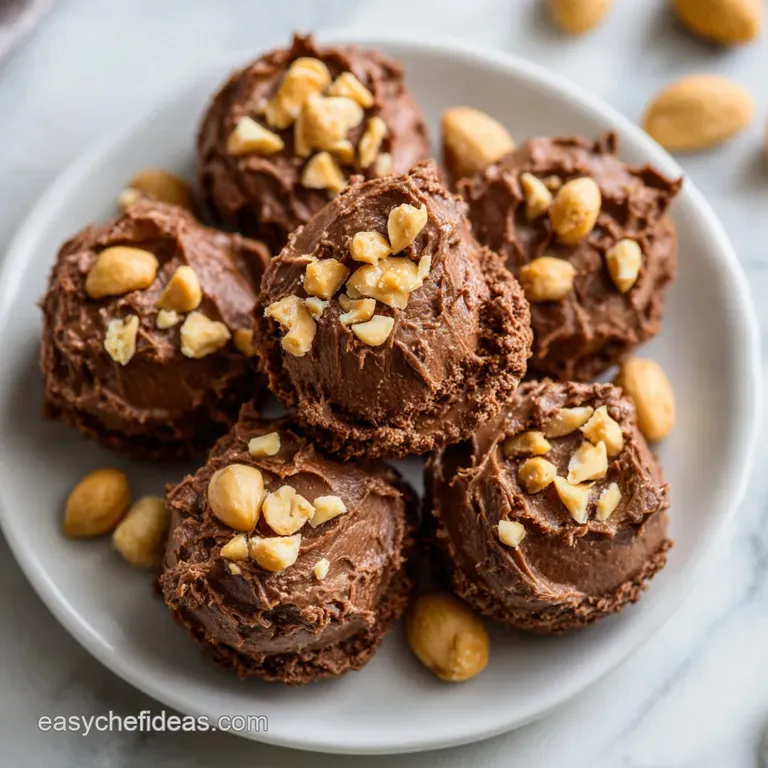
- Time: Active 25 minutes, Passive 5 minutes, Total 30 minutes
- Flavor/Texture Hook: Velvety peanut butter centers with a chocolate snap
- Perfect for: Holiday platters, game day snacks, or beginner friendly gifting
- Mastering No Bake Buckeye Peanut Butter Balls
- The Science of Texture Control
- Essential Recipe Success Metrics
- Sourcing Your Base Components
- Tools for Mess Free Dipping
- Steps for a Flawless Finish
- Fixing Common Consistency Issues
- Creative Variations and Swaps
- Preserving the Velvety Center
- Perfect Pairings and Complements
- Recipe FAQs
- 📝 Recipe Card
Mastering No Bake Buckeye Peanut Butter Balls
The smell of roasted peanuts hitting softened butter is basically my childhood in a bowl. I remember standing on a rickety wooden stool in my Aunt Sarah’s kitchen, my palms stained tan from rolling dozens of these little spheres while she warned me unsuccessfully not to eat the "test" dough.
There’s something deeply therapeutic about that repetitive motion, the way the sugar transforms the sticky butter into something like edible silk.
We’ve all been there: you take a bite of a buckeye and it’s either so dry it crumbles like sawdust or so sweet it makes your teeth ache. I spent years tweaking the ratios until I found the sweet spot where the center stays fudgy even after being refrigerated.
Trust me, once you see that chocolate pool into a glossy coat and feel the toothpick slide out cleanly, you’ll never go back to store-bought versions. This recipe is about that perfect contrast between the "give" of the filling and the "shatter" of the shell.
The Science of Texture Control
- The Snap Factor: Adding vegetable shortening to the semi sweet chocolate chips lowers the melting point while ensuring the coating sets with a brittle, professional snap rather than a chewy, tacky finish.
- Lipid Stability: Creamy peanut butter acts as a structural fat that, when combined with softened unsalted butter, creates a stable emulsion that resists "sweating" at room temperature.
- Starch Saturation: Sifting the confectioners’ sugar is vital because it ensures the starch particles are evenly distributed, preventing "sugar pockets" that cause the centers to feel gritty or grainy on the tongue.
| Ball Diameter | Chill Time | Dip Duration | Visual Cue |
|---|---|---|---|
| 1 inch | 20 mins | 2 seconds | Matte finish on peanut butter |
| 1.5 inches | 30 mins | 3 seconds | Slightly tacky to the touch |
| 2 inches | 45 mins | 4 seconds | Firm enough to hold a toothpick |
Selecting the right size is the first step in ensuring your no bake buckeye peanut butter balls don't fall off the toothpick during the dipping process. Smaller spheres generally hold their shape better against the weight of the warm chocolate.
Essential Recipe Success Metrics
| Component | Science Role | Pro Secret |
|---|---|---|
| Creamy Peanut Butter | Structural Base | Use shelf stable brands (like Jif) to avoid oil separation. |
| Confectioners’ Sugar | Bulking Agent | Sift twice to ensure a velvety, melt in-your mouth feel. |
| Vegetable Shortening | Thinning Agent | This creates the "shatter" texture in the chocolate shell. |
These core elements work in tandem to create the iconic buckeye. While it’s tempting to use natural peanut butter, the oil separation in those varieties often leads to a greasy center that won't hold its shape when dipped.
Sourcing Your Base Components
- 1.5 cups creamy peanut butter: Why this? Provides the dense, nutty structure needed for rolling. (Substitute: Almond butter note: will be softer).
- 0.5 cup unsalted butter, softened: Why this? Adds richness and helps the sugar bind. (Substitute: Salted butter skip the extra sea salt).
- 1 teaspoon pure vanilla extract: Why this? Rounds out the earthy peanut notes with floral sweetness. (Substitute: Almond extract for a cherry like undertone).
- 0.25 teaspoon fine sea salt: Why this? Cuts through the heavy sugar for balance. (Substitute: Table salt).
- 3.5 cups confectioners’ sugar, sifted: Why this? Provides the sweetness and the solid body. (Substitute: Erythritol powder for lower sugar).
- 12 oz semi sweet chocolate chips: Why this? The high cocoa butter content ensures a smooth melt. (Substitute: Dark chocolate chunks).
- 2 tablespoons vegetable shortening: Why this? Keeps the chocolate fluid and glossy. (Substitute: Coconut oil note: melts faster at room temp).
Tools for Mess Free Dipping
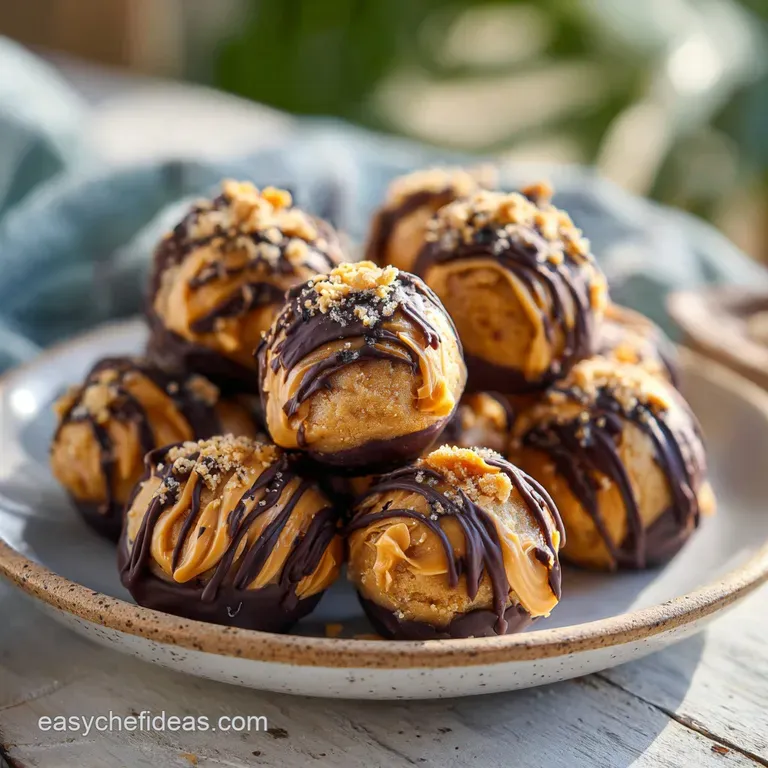
You don’t need a professional pastry kitchen to make these no bake buckeye peanut butter balls, but a few specific tools make the process much smoother. A standard stand mixer (like a KitchenAid) is a lifesave for incorporating the heavy sugar into the peanut butter without wearing out your arm.
I also highly recommend using a small cookie scoop (the 1 tablespoon size) to ensure every ball is identical. For the chocolate, a double boiler is ideal, but a microwave safe glass bowl works perfectly if you go slow.
Don't forget the toothpicks they are the only way to get that signature "eye" look without getting chocolate all over your fingers.
Steps for a Flawless Finish
Mixing the Base
- Cream the 1.5 cups creamy peanut butter and 0.5 cup softened butter together until pale and fluffy. Note: This aeration makes the center lighter.
- Stir in the 1 teaspoon vanilla and 0.25 teaspoon sea salt until fully incorporated.
- Gradually add the 3.5 cups sifted confectioners’ sugar, one cup at a time, until a stiff dough forms.
Rolling the Spheres
- Scoop the dough and roll into 1 inch balls until smooth and crack free.
- Place the balls on a parchment lined sheet and chill for 20 minutes until firm to the touch.
Dipping for the Buckeye Look
- Melt the 12 oz chocolate chips and 2 tablespoons shortening until glossy and liquid.
- Insert a toothpick into a chilled ball and dip into the chocolate, leaving a small circle of peanut butter exposed.
- Gently shake off excess chocolate and place back on parchment until the shell begins to set.
- Remove the toothpick and use a clean finger or a small spatula to smooth over the hole.
- Chill the finished batch for another 10 minutes until the chocolate is completely hard.
Fixing Common Consistency Issues
Why Your Centers Crumble
If your peanut butter dough is falling apart as you roll it, you’ve likely added too much sugar or used a brand of peanut butter that is too dry. The dough should feel like soft clay pliable but not greasy.
Fixing Sweating Chocolate
When you move the treats from a very cold fridge to a warm kitchen, moisture in the air condenses on the chocolate. This doesn't ruin the taste, but it can make the shell feel tacky.
| Problem | Root Cause | Solution |
|---|---|---|
| Crumbly centers | Too much sugar/Low moisture | Add 1 tsp of melted butter at a time until cohesive. |
| Chocolate sliding off | Balls are too cold/greasy | Pat the balls with a paper towel before dipping. |
| Dull chocolate shell | Overheated chocolate | Melt in 20 second bursts; never let it boil. |
The key to success with any peanut butter balls recipe is temperature control. If the kitchen is too hot, the dough will soften; if the balls are too cold, the chocolate will seize. Similar to the technique used in The Soft Homemade recipe, patience during the resting phase is your best friend.
Common Mistakes Checklist ✓ Sift the confectioners’ sugar (prevents "chalky" lumps in the center). ✓ Use a high-quality shortening (ensures the chocolate doesn't turn gray). ✓ Don't skip the chilling step (prevents the balls from melting into the warm chocolate).
✓ Use a deep, narrow bowl for dipping (allows for a full dunk with less chocolate). ✓ Tap the toothpick on the side of the bowl to remove the "tail" of chocolate.
Creative Variations and Swaps
If you are looking for a lighter version, you can adapt these into weight watchers peanut butter balls by using a powdered peanut butter (like PB2) reconstituted with water and a sugar-free confectioners' substitute. The texture will be slightly less fatty, but the flavor remains surprisingly close to the original.
For those who want a bit of crunch, try swapping half the creamy peanut butter for crunchy. It breaks the "velvety" rule but adds a fantastic texture that reminds me of a certain famous candy bar. If you’re a fan of no bake treats, you might also enjoy making a Safe Chocolate Covered recipe which uses a similar dipping technique but with a flourless dough.
| Original Ingredient | Substitute | Why It Works |
|---|---|---|
| Semi Sweet Chips | White Chocolate | Adds a creamy, vanilla forward profile. Note: Sweeter than the original. |
| Vegetable Shortening | Coconut Oil | Provides a clean melt. Note: Treats must stay refrigerated or they will soften. |
| Vanilla Extract | Maple Syrup | Adds a deep, autumnal woodsy flavor. Note: Use only 1 tbsp to avoid thinning dough. |
Lowering the fat content or changing the sugar type will always alter the "set" of the center. If you use a liquid sweetener like honey, you will need to increase the dry ingredients significantly to maintain the rolling consistency.
Preserving the Velvety Center
Storage: Keep these in an airtight container in the fridge for up to 2 weeks. The chocolate acts as a sealant, but the peanut butter can still pick up "fridge smells" if not covered tightly. Always place a sheet of parchment paper between layers to prevent the chocolate from sticking.
Freezing: These are actually better frozen! They stay good for up to 3 months. When you’re ready to eat them, just grab one straight from the freezer the center doesn't get rock hard, it just gets incredibly dense and fudgy.
Zero Waste Tip: If you have leftover melted chocolate, stir in a handful of crushed pretzels or leftover peanut butter crumbs. Spread it on parchment, let it cool, and you’ve got a quick "Buckeye Bark." Never throw away the scrapings from the mixing bowl; they make a great topping for morning oatmeal or yogurt.
Perfect Pairings and Complements
- The Salty Sweet Duo: Serve these alongside a bowl of sea salt dusted popcorn. The crunch of the corn highlights the smoothness of the peanut butter balls recipe.
- Coffee Pairing: A dark, bitter espresso or a black Americano cuts through the intense sweetness of the confectioners’ sugar beautifully.
- The Party Platter: I love arranging these with fresh strawberries. The acidity of the fruit cleanses the palate between the rich, heavy bites of the buckeye.
Chef's Tip: If you really want to lean into the gourmet side, sprinkle a tiny pinch of flaky Maldon salt on the very top of the peanut butter "eye" right after dipping. It transforms the dish from a simple childhood snack into a sophisticated dessert.
Making no bake buckeye peanut butter balls is a labor of love that rewards you with the most nostalgic flavor profile imaginable. Whether you're making a huge batch for a community bake sale or just a few for a midnight snack, the key is the quality of your peanut butter and the snap of your chocolate.
Enjoy the process and try to save at least a few for your friends!
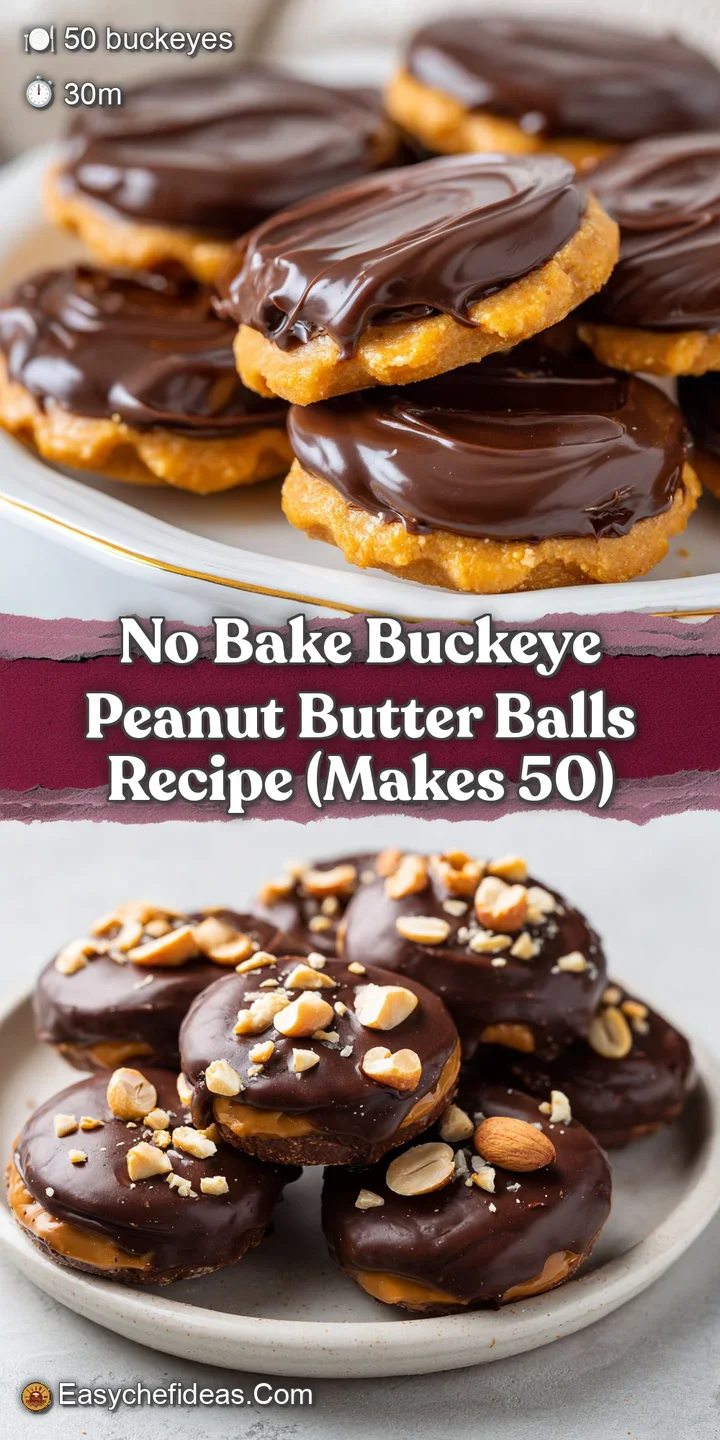
Recipe FAQs
Should I use creamy or crunchy peanut butter for the filling?
Use creamy peanut butter. Crunchy peanut butter introduces air pockets and uneven texture, making the centers difficult to roll smoothly into uniform balls.
How to achieve the perfect "snap" on the chocolate coating?
Add vegetable shortening to the melted chocolate. The shortening lowers the melting temperature of the coating, ensuring it sets with a brittle, glossy snap instead of a soft, tacky finish.
How to stop the peanut butter balls from falling apart during dipping?
Chill the rolled balls thoroughly for at least 20 minutes. They must be firm enough to resist melting slightly when submerged in the warm chocolate; slightly greasy balls will slide off.
Is it true that using natural peanut butter results in a better flavor?
No, natural peanut butter complicates this recipe. Natural varieties separate oil easily, leading to a greasy center that won't hold its shape; stick to stabilized, shelf stable brands for structure.
How to prevent the chocolate coating from looking dull or streaky?
Temper your chocolate carefully or use shortening. Overheating the chocolate causes fat bloom, leading to streaking; melt it gently at 50% power, stirring often to maintain gloss.
Can I substitute vegetable shortening with coconut oil in the chocolate dip?
Yes, but refrigeration is then mandatory. Coconut oil creates a very soft set at room temperature, so while it melts smoothly, the finished buckeyes must be stored cold, unlike those made with traditional shortening.
How to ensure the filling is not overly sweet or grainy?
Sift the confectioners’ sugar twice before mixing. Sifting eliminates dry clumps, ensuring the sugar dissolves evenly into the fat base for a smooth, fudgy texture.
No Bake Buckeye Peanut Butter Balls
Ingredients:
Instructions:
Nutrition Facts:
| Calories | 137 calories |
|---|---|
| Protein | 2.2 g |
| Fat | 8.1 g |
| Carbs | 14.9 g |
| Fiber | 0.7 g |
| Sugar | 13.2 g |
| Sodium | 48 mg |
