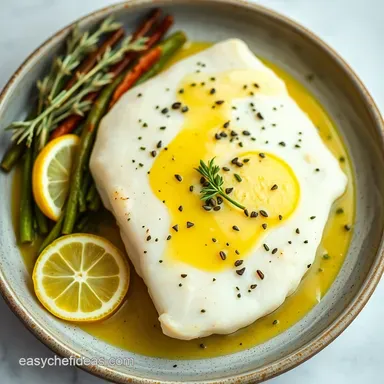
Monkfish Medallions with Lemon-Herb Butter Sauce

- Duration: 10 min active + 10 min cooking
- Taste & Feel: Meaty and firm with a bright, citrusy zing
- Ideal for: An upscale, rapid weeknight dinner
Searing Monkfish Medallions in a Pan
The sound of the fish hitting the hot oil is the first sign this is going to be a win. You get a deep, chestnut brown crust on the outside while the inside stays tender and firm. It's a dish that tastes like it took hours, but it actually comes together in about twenty minutes.
When you're cooking monkfish medallions, the goal is to treat them almost like scallops. They have a dense, lobster-like texture that holds up to high heat without falling apart.
The finish is all about that pan sauce. It smells like fresh herbs and melted butter, cutting through the richness of the fish with a sharp hit of lemon.
How the Flavors Blend
- Flour Dredge: A thin layer of flour helps the fish brown quickly and gives the pan sauce something to cling to.
- Cold Butter: Whisking in chilled cubes at the very end helps create a thick, glossy emulsion that is less likely to break.
- Acid Balance: Lemon juice cuts through the butter, brightening the whole plate.
What the Ingredients Do
| Component | Purpose | Substitute Notes |
|---|---|---|
| Monkfish | Meaty base | Halibut is a lighter, flakier option |
| All-purpose Flour | Browning and thickening | Cornstarch for a gluten-free crust, though it browns differently |
| Chilled Butter | Richness and body | Cold margarine for a dairy-free version |
| Lemon Juice | Acidity | White wine vinegar (use slightly less) |
Everything You'll Need
- 1 lb monkfish medallions
- 2 tbsp olive oil
- 1/4 cup all-purpose flour Purpose: Helps achieve a golden crust and thickens the sauce
- 1 tsp salt
- 1/2 tsp ground black pepper
- 4 tbsp unsalted butter, chilled and cubed Tip: Cold butter creates a stable emulsion
- 2 tbsp chicken broth
- 1 tbsp fresh lemon juice
- 1 tbsp fresh parsley, finely chopped
- 1 tsp fresh thyme leaves
- 1 clove minced garlic
Necessary Tools
A stainless steel or cast iron skillet is ideal. Non-stick pans won't develop the "fond" (those browned bits on the bottom) that makes the pan sauce so flavorful. Keep a whisk nearby for the butter and a meat thermometer for precision.
Bringing It All Together
Preparing the Fish
Use paper towels to thoroughly dry the monkfish medallions. Any surface moisture will create steam and hinder browning. Sprinkle both sides with 1 tsp salt and 1/2 tsp black pepper, then lightly coat each piece in 1/4 cup all-purpose flour. Tap off any extra flour to ensure a light coating.
Achieving the Golden Sear
Set a large skillet over medium-high heat and add 2 tbsp olive oil, heating until it begins to shimmer. Place the fish in the pan, searing for 3–4 minutes on each side. Continue cooking until you have a deep golden-brown crust and a core temperature of 145°F (63°C). Transfer the pieces to a plate to rest.

Creating the Pan Sauce
Drop the temperature to medium. Sauté 1 clove of minced garlic for 30 seconds until aromatic. Deglaze the skillet with 2 tbsp chicken broth, whisking to incorporate the browned bits from the bottom. Stir in 1 tbsp fresh lemon juice and simmer for 1 minute.
Finishing the Glaze
Turn the heat to low. Whisk in 4 tbsp of chilled, cubed unsalted butter, adding one piece at a time until the sauce is velvety. Mix in 1 tbsp chopped fresh parsley and 1 tsp fresh thyme leaves. Pour the finished glaze over the fish immediately.

Quick Fixes
If the fish feels rubbery, it probably stayed in the pan too long. Since this fish is so lean, it can turn from tender to tough in just 60 seconds. A thermometer is the most reliable tool for precision.
If your sauce appears greasy or has separated, the pan was likely too hot when the butter was introduced, causing it to melt too quickly to emulsify with the broth. To correct this, remove the pan from the heat and whisk in one more small cube of ice-cold butter.
Rubbery or Tough Fish
Overcooking is the main cause. Monitor the temperature early and remember that the fish continues to cook slightly while resting.
Sauce Separating
This occurs when the emulsion breaks due to too much heat.
Fish Sticking
This usually happens if you add the fish before the oil starts shimmering.
| Problem | Root Cause | Solution |
|---|---|---|
| Rubbery texture | Internal temp exceeded 145°F | Pull fish at 145°F (63°C) and let it rest |
| Greasy sauce | Butter added at too high heat | Lower heat to low before whisking butter |
| Pale crust | Pan not hot enough or fish was damp | Pat fish drier and wait for oil to shimmer |
Serving Ideas

I like serving this over a bed of sautéed spinach or alongside roasted asparagus. The lemon-butter sauce is great for soaking up with a piece of crusty sourdough. For a more filling meal, try it with a side of wild rice or smashed potatoes.
Storage and Reheating
Store any leftovers in a sealed container in the fridge for up to 2 days.
I don't recommend freezing this dish. The lean proteins in monkfish can become dry and mealy after thawing, and the butter sauce will separate.
To reheat, use a covered skillet over low heat. Add a tablespoon of water or butter to the pan to keep the fish moist, and heat until the thickest piece reaches 165°F (74°C) inside.
When reheating cooked leftovers, check with a food thermometer that the centre reaches 165°F (74°C); the appliance temperature and time alone do not confirm this.
Simple Swaps
Caper and Lemon
Add 1 tbsp of drained non-pareil capers when you add the lemon juice. The saltiness of the capers balances the butter perfectly.
Brown Butter Sage
Instead of parsley, use fresh sage leaves. Let the butter cook a bit longer until it turns nut-brown and smells toasted before tossing in the sage.
Different Crusts
If you want more texture, try an herb-crusted monkfish recipe using breadcrumbs for a crunchier finish.
Critical in Sodium
1375 mg of sodium per serving (60% of daily value)
American Heart Association recommendation: no more than 2,300 mg of sodium per day
Tips to Reduce Sodium
-
Reduce Added Salt
Significantly reduce or omit the teaspoon of salt used for seasoning the monkfish medallions.
-
Swap the Broth
Replace the standard chicken broth with a low-sodium or no-salt-added version to lower the base sodium level.
-
Increase Citrus
Add more fresh lemon juice to provide a tart, bright flavor that mimics the taste of salt.
-
Amplify Fresh Herbs
Use extra fresh parsley and thyme to add a rich, aromatic layer of flavor without adding sodium.
-
Boost Aromatics
Increase the amount of minced garlic to create a more pungent and savory profile.
-
Add More Pepper
Increase the black pepper to provide a spicy kick that distracts the palate from the lack of salt.
Frequently Asked Questions
Is monkfish fishy?
No, it has a mild flavor and a texture similar to lobster.
Tip: Pat the fish completely dry to ensure a deep golden-brown sear.
Are there many calories per serving?
One serving contains 577 kcal.
Tip: Use a stainless steel skillet for the best browning.
What internal temperature is required?
The fish should reach 145°F (63°C).
Tip: Remove the medallions from the pan immediately once this temperature is hit.
Do I need to flour the fish?
Dredge the seasoned medallions in flour to help them brown.
Tip: Shake off any excess flour so the pan doesn't get too gummy.
Can this be frozen?
Freezing is not advised because the lean proteins become mealy and the sauce separates.
Tip: Keep leftovers in a sealed container in the refrigerator instead.
How to reheat leftovers?
Warm the fish in a covered skillet over low heat.
Tip: Add a tablespoon of butter to the pan to maintain moisture. When reheating cooked leftovers, check with a food thermometer that the centre reaches 165°F (74°C); the appliance temperature and time alone do not confirm this.
Why is monkfish often expensive?
The cost reflects the significant labor required to clean and fillet the fish.
Tip: Purchasing pre-cut medallions reduces the prep work needed at home.
Monkfish Medallions in 20 Minutes