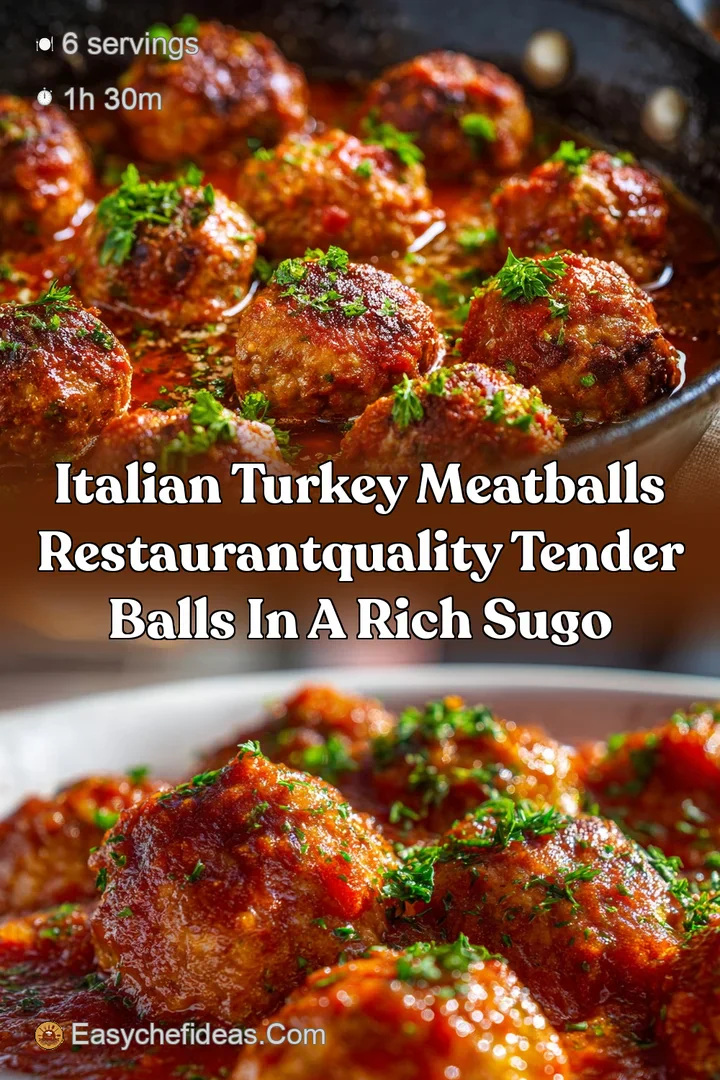
Italian Turkey Meatballs in Sugo the Lighter Moist Meatball Recipe

The Secret to Perfectly Moist Italian Turkey Meatballs
If I told you that turkey makes the absolute best, most tender Italian meatballs, would you believe me? Maybe not, because nine times out of ten, turkey meat is dryer than a political speech. But stick with me.
I spent years trying to perfect an Italian turkey meatballs recipe that didn’t feel like I was chewing on sadness. I failed a lot. I overmixed, I skipped the binder, I used 99% lean meat (rookie mistake, don’t do it).
What I finally figured out is that turkey meat, unlike beef, is a blank slate. It lets the oregano, the fresh parsley, and the glorious Parmesan cheese shine. It just needs a little help in the moisture department. The key?
We ditch the beef, we manage the lean factor, and we introduce a secret weapon: milk and soaked Panko. This is proper comfort food that feels lighter than the classic version, and honestly, the texture is cracking.
Ditching the Dry: Why Turkey Is the Superior Choice Here
We’re aiming for tender, pillowy meatballs that practically melt into the rich tomato sugo. To get there, you must accept one truth: you cannot use the ultra and lean turkey (the 99% stuff) unless you want hockey pucks. I aim for 93% lean ground turkey.
That 7% fat content is crucial for mouthfeel and for preventing the dreaded crumbly texture when searing.
The other major win for turkey is flavour control. Beef fat has a very dominant flavour. Turkey fat is mild. This means the fantastic Italian herbs and sharp Pecorino (or Parmesan) are the stars, not just secondary players. These lighter Italian turkey meatballs genuinely soak up the sauce like sponges.
The Sugo Difference: Crafting a Rich, Slow and Simmered Sauce Base
We’re not making a quick 20 minute marinara here. We’re building a sugo . A sugo is a slow and simmered, rich base that hugs the meatballs and tenderises them beautifully.
First, you need good quality crushed tomatoes. Stop buying the watery stuff in the cheap can. Spend the extra couple of dollars on the San Marzano and style tomatoes. It makes a staggering difference. Second, the step I never skip: blooming the tomato paste.
You sauté the onions, you add the garlic, but then you stir in the tomato paste and cook it for just sixty seconds before adding the liquid. This deepens the tomato flavour immensely and removes that slightly tinny raw taste. It’s brilliant.
CRUCIAL SAUCE TIP: Never boil the sugo once the meatballs are in. It must remain at a very low simmer. Boiling will agitate the meatballs, causing them to fall apart, and make the meat tough. Low and slow, always.
Quick Comparison: Beef vs. Our Tender Turkey Texture
Here’s a snapshot of why we go with turkey for this specific Italian meatball recipe.
| Characteristic | Traditional Beef Meatballs | Our Italian Turkey Meatballs |
|---|---|---|
| Texture | Dense, heavy, tight crumb | Light, incredibly tender, moist |
| Flavor Profile | Rich, earthy, beef and forward | Bright, herb and focused, savory |
| Simmer Time | Generally shorter | Longer, mandatory simmer (for tenderness) |
| Fat Content | High (often 80/20 mix) | Lower (93/7 mix, compensated with milk) |
Gathering Your Lighter Italian Turkey Meatballs Components

This is where the magic starts. Get everything measured and laid out. Mise en place, people. It makes everything less stressful, especially when you’re dealing with messy ground meat.
Essentials for the Tender Turkey Mixture (The Meatball Base)
The binder is everything here. We use Panko (it’s lighter and absorbs moisture better than standard dry breadcrumbs) soaked entirely in whole milk. That milk is non and negotiable. It replaces the fat that turkey naturally lacks, giving us the luxurious, soft interior we want.
We combine that with 93% lean turkey, a large egg for structure, and a generous amount of freshly grated Parmesan. Please, grate it yourself. The pre and shredded stuff has additives that prevent it from melting correctly and dull the flavour.
We also use a mixture of dried oregano and fresh parsley. A little garlic powder works better here than fresh minced garlic, as it distributes more evenly without the risk of clumping.
What You Need for the Rich Tomato Sugo
As mentioned, get the good canned crushed tomatoes. You’ll need a medium yellow onion, four cloves of minced garlic (don’t skimp), and good quality extra virgin olive oil. The sugar is just to balance the acidity of the tomatoes; you won't taste sweetness, just a rounder flavour.
A bay leaf is a must and have for that deep, complex background note that screams slow cooking.
Pro Tip: Specialized Kitchen Tools for Meatball Success
You don’t need much, but two tools are essential if you make meatballs regularly:
- A 1.5 inch Ice Cream Scoop: This ensures every single meatball is the exact same size. Why does that matter? Even cooking. No tiny ones getting burned while the big ones stay raw. It’s the difference between a good cook and a great one.
- A Heavy and Bottomed Dutch Oven: This is for the simmering stage. The heavy bottom holds and distributes heat extremely well, preventing scorching on the bottom and ensuring the gentle simmer we need for maximum tenderness. I swear by mine.
Related Recipes Worth Trying
- Stuffed Zucchini with Sausage Boats The Best Italian Parmesan Recipe — Stuffed Zucchini with Sausage is the perfect weeknight meal These savory Zucchini Boats are filled with robust Italian sausage and Parmesan offering a low...
- Giant Turkey Meatball Parmesan The Secret to Juicy Supersized Turkey Parm Meatballs — Learn how to make the ultimate Giant Turkey Meatball Parmesan Our recipe uses a secret panade technique for succulent ground turkey parm meatballs perfect...
- Turkey Chili with Sweet Potato Easy Healthy UltraSmoky Recipe — This Turkey Chili with Sweet Potato recipe is a smoky lean heartwarmer Use ground turkey and chunks of sweet potato for a healthy Turkey Chili with Sweet...
Step and by-Step Culinary Journey: From Prep Bowl to Simmer
Right then, let's crack on with the process. Follow these steps exactly, especially the chilling part.
Mastering the Meatball Mix and Shaping Technique
First, soak your Panko in the milk until it’s totally mushy. This is your foundation. Now add everything else: the turkey, egg, cheese, and all the seasonings.
Here is where I made my most significant mistakes for years: overmixing . Use your hands, but treat the mixture very gently. Mix until the ingredients are just incorporated, and then stop.
The second you start kneading it like dough, you’re developing the proteins, and your meatball will be tough and chewy. It should still look a little shaggy.
Shape them gently using your scoop, and then place them on a parchment and lined tray. Now, here's the absolute secret for Italian turkey meatballs no breadcrumbs (wait, we used breadcrumbs for moisture, but if you skip them, you really need this step): Chill them for 30 minutes.
Chilling firms up the fat and the egg binder, preventing them from falling apart when they hit the hot oil.
The Critical Sear: Browning Without Overcooking
While your sugo is happily simmering away (remember to build that flavour base first), heat 2 Tbsp of oil in a separate skillet over medium and high heat.
You are not cooking them through here. You are building a crust. That golden, browned exterior is pure flavour (the Maillard reaction). Working in batches so you don't crowd the pan, sear the meatballs until they are golden brown on all sides (3- 4 minutes). They should still be pink inside.
Once seared, transfer them immediately into the simmering sugo.
Low and Slow: Integrating the Meatballs into the Sugo
Once the meatballs are nestled in the deep, rich sauce, it’s a waiting game. Cover the pot partially and reduce the heat to low. We are looking for a gentle bubble barely a movement.
Simmer them like this for 25 to 30 minutes. This long, slow soak allows the meat to absorb the glorious tomato sugo, transforming the turkey into an incredibly tender texture. Check the largest meatball with a thermometer; 165°F (74°C) is the goal for ground turkey.
Final Touches and Plating Suggestions
Remove the bay leaf (don’t eat the bay leaf!) and taste the sauce. Does it need a little more salt? A twist of pepper? Serve these Italian turkey meatballs hot.
You can serve them:
- The Traditional Way: Piled high over perfectly al dente spaghetti or bucatini, dusted with Parmesan.
- The Comfort Way: Spooned over creamy polenta (my personal favourite).
- The Sandwich Way: Squished into a crusty roll with melted mozzarella for an incredible meatball sub.
Troubleshooting and Expert Enhancements for Your Recipe
Storage and Reheating Methods for Batch Cooking
This Italian turkey meatballs recipe yields a good batch, so they are fantastic for freezing. If you plan to freeze them, I recommend cooling the entire pot completely, then transferring them (sauce and all) into airtight containers. They will last three months in the freezer.
To reheat, thaw them in the fridge overnight and then reheat gently on the stove until simmering hot. Alternatively, if you are making Italian turkey meatballs in oven (without sauce) for meal prep, cook them fully and store them separately; they reheat beautifully in a toaster oven.
Adjusting Flavors: Delicious Variations on Classic Italian Turkey Meatballs
If you want to shake things up a bit, here are a few simple tweaks that add fantastic dimension:
- Ricotta Boost: Substitute 1/4 cup of the whole milk with whole milk ricotta cheese in the meatball mix. This gives an unparalleled, incredibly creamy interior.
- A Kick of Heat: Stir 1 teaspoon of Calabrian chili paste or red pepper flakes into the olive oil when you sauté the onions for the sugo base. This adds a lovely, slow and burning warmth.
- The Lemon Twist: Grate the zest of one lemon into the meatball mixture before shaping. It brightens the entire flavour profile without tasting distinctly lemony.
FAQs: Answering Common Texture and Sauce Questions
Q: Why are my meatballs falling apart during searing? A: You likely skipped the chilling step, or you didn't use enough binder (milk/egg/breadcrumbs). Chilling is crucial for ensuring they hold their shape! Also, make sure the oil is hot enough.
Q: I ran out of Panko. Can I use oats? A: Technically yes, you can use quick oats, but the texture won't be as light. If you’re trying to make Italian turkey meatballs no breadcrumbs, you must heavily increase the amount of Parmesan and milk to compensate for the lost binder and moisture.
Q: My sauce is too acidic. Help! A: Add another half teaspoon of sugar and/or a small pat of butter. The butter helps round out the flavour and smooth out the tomato’s sharpness.
Nutrient Breakdown: A Quick Look at the Lighter Profile
Choosing ground turkey (even the 93% lean) over standard 80/20 beef cuts out a significant amount of saturated fat. While this recipe is incredibly flavourful and feels decadent, it’s an Italian turkey meatballs skinnytaste profile compared to its beefy cousins.
It’s high in protein, thanks to the turkey, and you get some good fiber from the rich tomato sugo. It's comfort food you can genuinely feel good about serving regularly.
Recipe FAQs
Why do my Italian Turkey Meatballs always come out a bit dry, and how does your recipe stop that?
Turkey is naturally lean, bless its heart, so the secret is soaking the Panko breadcrumbs in milk first; this creates essential moisture barriers, and using a light touch during mixing prevents them from becoming tough, rubbery little rocks.
I always worry my meatballs will fall apart when I sear them. Any tips for keeping them holding their shape?
Absolutely, skipping the vital 30-minute chill is a common mistake; this rest time firms up the fat and binders, ensuring they are sturdy enough for a quick sear before they happily finish cooking in the rich sugo.
Can these be frozen, and should I freeze them cooked or uncooked?
For maximum flavour and texture, freeze the cooked meatballs submerged in the sugo in an airtight container for up to three months; alternatively, you can freeze the raw, chilled balls on a tray and transfer them to a bag for later use (thaw overnight before searing).
Are these turkey meatballs genuinely a much lighter meal than traditional beef or pork ones?
They are indeed; using 93% lean turkey significantly reduces the saturated fat content compared to a standard beef/pork mix, making this proper comfort food that sits a bit lighter on the stomach.
I need a variation can I make these gluten-free or swap out the Parmesan cheese?
Yes, for a gluten-free option, substitute the Panko for fine cornmeal or almond flour, and if you prefer a sharper flavour than Parmesan, Pecorino Romano is a cracking substitution.
Moist Italian Turkey Meatballs In Sugo

Ingredients:
Instructions:
Nutrition Facts:
| Calories | 139 kcal |
|---|---|
| Protein | 12.8 g |
| Fat | 6.7 g |
| Carbs | 6.8 g |
