Mastering the Elegant Charcuterie Board Assembly

- Effort/Time: 25 minutes (No-cook assembly)
- Flavor Hook: Salty-sweet umami bomb
- Perfect for: Communal-gatherings, holiday-hosting
Building a Curated Canvas of Flavor and Culture
There is nothing more heartbreaking than witnessing a $120 investment in artisan cheeses transform into a "sweaty," oxidized pile of sadness because of poor temperature management on your charcuterie board.
I’ve hosted many gatherings where I rushed the assembly, only to see my expensive 7 oz Double Cream Brie lose its velvety integrity, turning into a rubbery puddle before the first guest even arrived.
It’s a financial and aesthetic failure that dampens the spirit of community, turning a potential masterpiece charcuterie board into a disappointment.
Years ago, I used to treat a charcuterie board like a random pile of snacks, disregarding the chemistry of how flavors interact. I once paired a highly acidic, young goat cheese with a delicate Bresaola, and the acid completely obliterated the subtle, air-dried beef notes.
It was a lesson in humility; I realized that without understanding the "why" behind the pairings, I was just wasting high-quality ingredients for an inadequate charcuterie board.
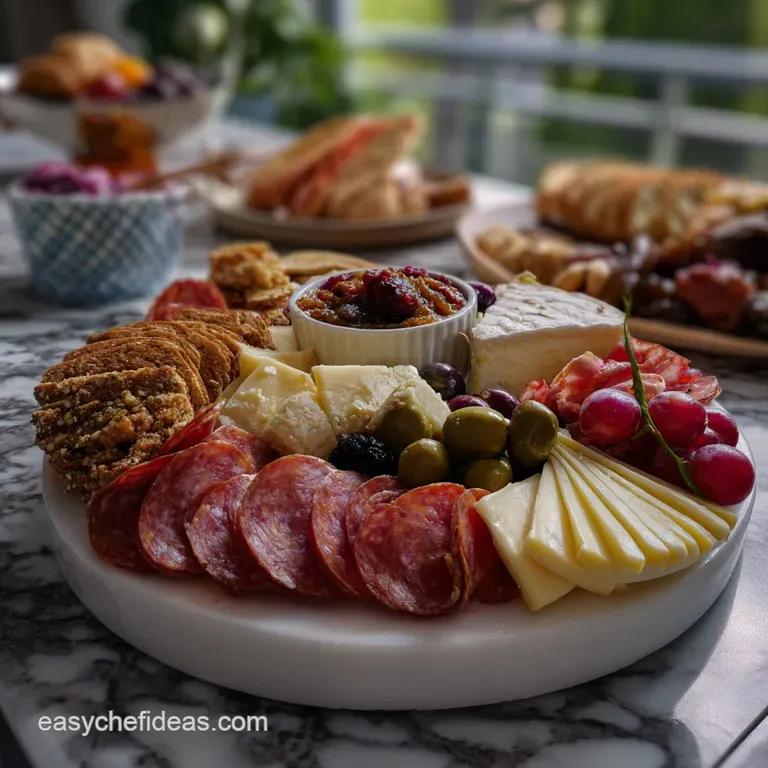
The secret to a world class charcuterie board isn't just buying expensive items; it’s the science of Palate Mapping. By layering textures the shatter of 5 oz Artisanal Water Crackers against the supple fold of 4 oz Prosciutto di Parma you create a sensory journey on your platter.
We aren't just making a snack; we are honoring the culture of preservation and the science of fat-acid heat (the "heat" here being the spicy 3 oz Soppressata) that elevates this entire charcuterie board.
Let’s master the physics of the perfect bite for your next charcuterie board.
The Science of Palate Harmony and Fat Solubility
- Lipid Coating: The high fat content in 7 oz Double Cream Brie coats the tongue, creating a barrier that softens the impact of the tannins in grapes or the sharp bite of 6 oz Aged Sharp Cheddar a key component of a successful charcuterie board.
- Osmotic Balance: The 4 oz Prosciutto di Parma uses salt to draw out moisture, concentrating the meat’s amino acids (glutamate) for an intense umami explosion that triggers "savory" receptors, essential for this savory charcuterie board.
- Acid Cleansing: The 1/2 cup Cornichons provide acetic acid which cuts through the dense fat of the 4 oz Genovese Salami, resetting the palate for the next flavor layer on your magnificent charcuterie board.
- Capillary Action: 5 oz Artisanal Water Crackers are designed with microscopic air pockets to provide a structural snap without absorbing moisture too quickly from the cheeses on the charcuterie board.
Technical Precision for a Perfectly Balanced Board
| Metric | Requirement | Purpose |
|---|---|---|
| Temper Time | 45 minutes | Allows lipids in cheese to soften for a velvety mouthfeel on the charcuterie board. |
| Meat Thickness | < 1 mm | Maximizes surface area for instant fat-melt on the tongue. |
| Cheese-to-Meat Ratio | 1.5 : 1 | Ensures enough protein to balance the richness of the dairy in the final charcuterie board. |
The Alchemy of Umami: Selecting Your Elements
Selecting your ingredients is where you celebrate global diversity. We aren't just picking food; we are choosing stories from different cultures to nourish our friends when they arrive to enjoy the charcuterie board.
Ingredient Chemistry Breakdown
| Ingredient | Chemical/Physical Role (Science) | The Pro Secret (Why This Matters) |
|---|---|---|
| Double Cream Brie | High butterfat emulsion (approx. 60 75%) | Fat acts as a flavor carrier for the earthy, mushroom like notes of the rind. |
| Prosciutto di Parma | Proteolysis during 12 36 month aging | Breaks proteins into free amino acids, creating a melt-in-the-mouth texture. |
| Aged Sharp Cheddar | Calcium lactate crystal formation | Provides a "crunchy" contrast to the smooth paste of the cheese. |
| Fig Jam | Pectin sugar matrix | Provides the necessary glucose to balance the sodium heavy bresaola. |
- 4 oz Prosciutto di ParmaWhy this? Specific salt curing degrades muscle fibers into buttery, transparent ribbons.
- Substitute: Jamón Serrano (Similar cure but slightly nuttier).
- 7 oz Double Cream BrieWhy this? The Penicillium camemberti rind provides an enzymatic breakdown for a gooey center.
- Substitute: Camembert (More pungent, earthy profile).
- 6 oz Aged Sharp CheddarWhy this? Extended aging creates tyrosine crystals for textural complexity.
- Substitute: Aged Gouda (Sweet, butterscotch notes).
- 3 oz BresaolaWhy this? Lean beef provides a dense, mineral rich contrast to fatty pork salamis.
- Substitute: Cecina (Smoked air-dried beef).
- 1/2 cup Marcona AlmondsWhy this? Higher oil content and skinless prep offer a cleaner, buttery crunch.
- Substitute: Roasted Marcona Almonds (Deepens the Maillard based nuttiness).
- 5 oz Artisanal Water Crackers
- Substitute: Crostini (More structural integrity for heavy cheeses).
- 1 cup Red Seedless Grapes
- Substitute: Sliced Pears (Lower acidity, higher fiber).
Essential Tools for Structural Integrity and Presentation
- Large Wooden Board (at least 45cm): Wood is naturally antimicrobial and provides a "warm" thermal mass that doesn't chill the cheese too quickly. I prefer a John Boos Walnut Block for presentation of my charcuterie board.
- Cheese Knife Set (Rind, Soft, and Hard): Use a Global G-102 Cheese Knife with holes in the blade to prevent the 7 oz Double Cream Brie from sticking during the "shatter cut" when assembling your charcuterie board.
- Small Ceramic Ramekins: Essential for 1/2 cup Fig Jam and 1/2 cup Cornichons to prevent vinegar or sugar from seeping into the 5 oz Artisanal Water Crackers.
- Offset Spatula: For spreading the 4 oz Goat Cheese Log with precision on the charcuterie board.
The Architecture of Assembly: Building Your Masterpiece
- Temper the 7 oz Double Cream Brie for 45 minutes until the center feels supple and yielding to light thumb pressure.
- Anchor the board by placing the 7 oz Double Cream Brie and 4 oz Goat Cheese Log at opposite poles until the layout feels visually grounded.
- Slice the 5 oz Manchego into triangles 6 mm thick until they resemble a consistent geometric "river."
- Crumble the 6 oz Aged Sharp Cheddar into irregular chunks until the natural crystalline structure is exposed.
- Ribbon the 4 oz Prosciutto di Parma by folding each slice loosely until it resembles a "flower" to trap air between layers.
- Fan the 4 oz Genovese Salami and 3 oz Soppressata until they form a shingled, overlapping line that guides the eye across the board.
- Nestle the 3 oz Bresaola in tight rolls until they sit upright and resist unravelling.
- Place the 1/2 cup Fig Jam in a central ramekin until the surface is glossy and inviting.
- Scatter 1 cup Red Seedless Grapes in small clusters until the gaps between the cheeses are filled with vibrant color—a classic visual technique for any beautiful charcuterie board.
- Tuck 1/2 cup Marcona Almonds and 1/2 cup Raw Walnuts into the smallest crevices until the board looks "abundant" and no wood is visible.
Troubleshooting the Physics of Cured Meats and Cheese
Why Your Cheese Looks Sweaty
When cheese is moved from a 4°C fridge to a 22°C room too abruptly, moisture in the air condenses on the surface. On top of that,, the fats begin to "bleed" out if the room is too warm, leading to a greasy appearance.
This is a failure of lipid stabilization on the surface of your charcuterie board.
| Problem | Root Cause | The Fix | Pro Protocol |
|---|---|---|---|
| Salami Curling | Moisture loss at edges | Keep pre-sliced meats covered with damp parchment | Shingle tightly to reduce exposed surface area on the charcuterie board. |
| Soggy Crackers | Osmotic migration from fruit | Place 5 oz Artisanal Water Crackers last | Create a barrier using almonds between fruit and bread. |
| Brie "Running" | Over tempering or high humidity | Serve at exactly 18 20°C | Use a chilled marble slab under soft cheeses only for the best texture. |
⚗️ The Scaling Lab
Non-Linear Scaling for Large Gatherings:
- Flavor Saturation: If you double the board for 20 people, scale the 1/2 cup Fig Jam to 0.75 cups (1.5x). Sweetness compounds quickly; too much sugar will dull the salt receptors needed to appreciate the 3 oz Bresaola on a very large charcuterie board.
- The Evaporation Paradox: For pre-sliced items like 4 oz Genovese Salami, a larger board means more surface area. Reduce the exposed time by 10% as more pieces will dry out simultaneously.
- Thermal Mass: A double sized board carries more thermal energy. If you are using a large stone platter, it will stay cold longer, potentially keeping your 7 oz Double Cream Brie too firm. Pull the board from the fridge 15 minutes earlier than a single batch to ensure optimal serving temperature.
- Pan Crowding (Visual): Do not pile meats higher than 3 layers. This creates an anaerobic environment at the bottom, causing the 4 oz Prosciutto di Parma to become slimy. Instruction: Use two separate boards rather than one "over stacked" giant charcuterie board.
Debunking Common Charcuterie Myths
- Myth: You must eat the rind of all cheeses.
Truth: While the bloomy rind of the 7 oz Double Cream Brie is edible and full of mushroom umami, the wax on some cheddars or the hard rind on 5 oz Manchego is purely for structural protection and should be discarded from your charcuterie board.
Myth: Expensive wine is the only pairing.
- Truth: High carbonation beverages like sparkling cider or kombucha are better palate cleansers because the bubbles physically scrub the fat of the 4 oz Genovese Salami off the tongue, preparing you for the next bite of the charcuterie board.
Preserving the Harvest: Storage and Zero Waste Protocols
- Fridge
- Store meats and cheeses separately. Cheese should be in wax paper (to breathe) and meats in airtight containers. Use within 3 5 days.
- Freeze
- Do not freeze the 7 oz Double Cream Brie; the emulsion will break, leaving it grainy. You can freeze the 4 oz Genovese Salami for up to 2 months.
- Reheat
- Never heat these items. If the 6 oz Aged Sharp Cheddar gets too cold, let it sit at room temperature for 30 minutes to restore the flavor profile.
- Cheese Rinds? Transform
- Toss the hard rind of the 5 oz Manchego into a simmering minestrone. Science: The rind releases glutamates and fat, creating a silky, umami rich broth, which can be added to sauces for your next charcuterie board.
- Dried Fruit Scraps? Transform
- Chop remaining 1/2 cup Dried Apricots into morning oatmeal. Science: The concentrated sugars act as a natural, fiber rich sweetener.
- Salami Ends? Transform
- Render them down in a pan for a "salami fat" vinaigrette. Science: The fat is infused with garlic and peppercorns, providing a high smoke point base for dressings.
The Communal Table: Presentation and Pairing Mastery
When you present your charcuterie board, you are offering a map of global diversity and craftsmanship. This isn't just a meal; it’s a way to nourish the community through shared discovery. For a truly cohesive experience, consider how your board fits into a larger seasonal theme. For instance, the techniques we used here for layering flavor are very similar to what you'll find in my winter b kind recipe, where we focus on seasonal produce and holiday specific textures for that arrangement.
To ensure your guests get the most out of the experience, suggest a "perfect bite." I like to recommend a piece of the 5 oz Artisanal Water Crackers topped with a smear of the 7 oz Double Cream Brie, a dollop of 1/2 cup Fig Jam, and a tiny sliver of 3 oz Soppressata. This combination hits every flavor profile: creamy, sweet, salty, and spicy. It’s the ultimate demonstration of how a charcuterie board becomes greater than the sum of its parts. Trust the science, respect the ingredients, and let the board spark the conversation. Your holiday charcuterie board will be the talk of the season because you understood the "why" behind every fold and crumble of this charcuterie board.

Recipe FAQs
How long should cheese temper before assembly?
45 minutes. Lipids soften when cheese reaches 18°C, achieving the intended velvety texture. Skipping this step results in rubbery dairy failing to release its full flavor profile.
Can I substitute fresh mozzarella for Double Cream Brie?
No. Brie’s bloomy rind contains Penicillium camemberti essential for enzymatic flavor breakdown. Mozzarella lacks the necessary fat concentration and complex protein breakdown.
What is the ideal thickness for sliced cured meats?
Less than 1 mm. Thin slicing maximizes the surface area for the tongue’s fat receptors to dissolve the lipids immediately. Thicker cuts resist melting, leading to a chewier mouthfeel.
Should I serve the board straight from the refrigerator?
No. Serving cheese cold locks flavor molecules in the fat matrix. Cold temperatures suppress olfactory reception, meaning you taste less salt and less umami.
Is it better to use salted or unsalted butter/crackers?
Unsalted butter for precision control. Salted brands vary widely in sodium content, making standardized balancing of salty meats impossible. Unsalted allows you to adjust seasoning based on the curing salts present in the meats.
Why does my soft cheese look "sweaty" or greasy?
Sudden temperature change causes fat exudation. When cold cheese moves rapidly to warmer air, surface fats begin to weep (bleed) due to thermal shock. This breakdown compromises the stable protein emulsion.
- Temper cheese at room temperature slowly
- Do not store near active cooling vents
- Use ceramic or marble serving platters
Myth: You must pair hard cheese with hard crackers.
Myth: You must pair hard cheese with hard crackers. Reality: Pairing the sharp crunch of Aged Cheddar with a softer, oilier cracker balances texture for superior palate satisfaction. The soft cracker absorbs fat better.
Mastering The Charcuterie Board
Ingredients:
Instructions:
Nutrition Facts:
| Calories | 587 kcal |
|---|---|
| Protein | 31.2 g |
| Fat | 35.8 g |
| Carbs | 34.4 g |
| Fiber | 3.2 g |
| Sugar | 11.5 g |
| Sodium | 1145 mg |
