Masterclass Peanut Butter Cookies Recipe
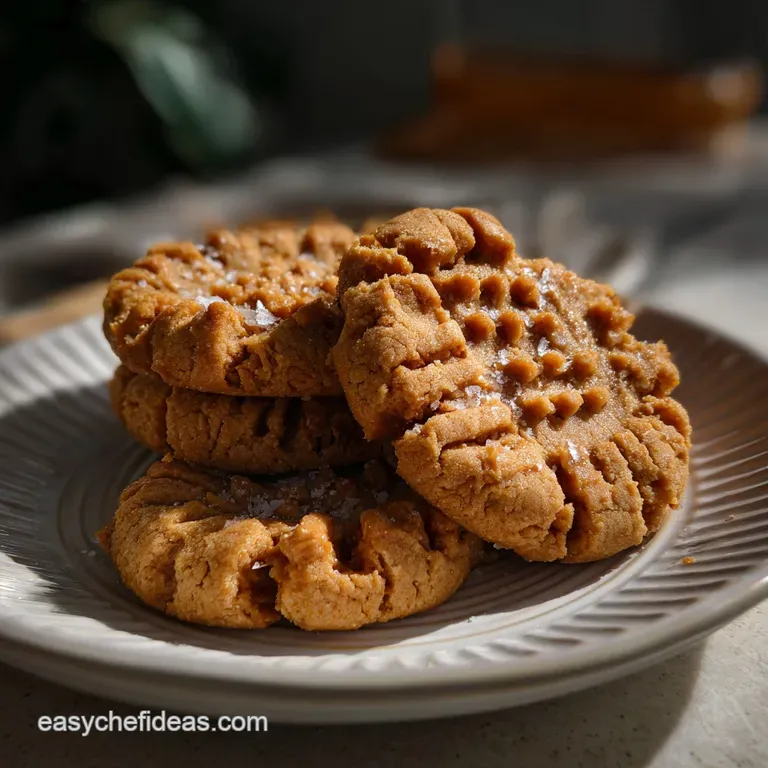
- Effort/Time: 25 minutes total
- Flavor Hook: Salty-sweet umami with a deep roasted finish
- Perfect for: Community gatherings, lunchbox surprises, or high-protein snacking
- Master the Ultimate Peanut Butter Cookies for Every Occasion
- The Chemistry of Texture and Flavor Symmetry
- Precision Baking Performance and Yield Metrics
- The Alchemy of Ingredients: Selecting Your Elements
- Essential Tools for the Professional Home Kitchen
- The Systematic Assembly of the Dough
- The Scaling Lab: Physics of Doubling the Batch
- Why Your Cookies Spread or Crumble: Pro Baker Fixes
- Flavor Architecture: Creative Variations and Substitutions
- Storage, Freezing, and Zero-Waste Philosophy
- Serving Suggestions for a Nourishing Experience
- Debunking Common Cookie Myths
- Recipe FAQs
- 📝 Recipe Card
Master the Ultimate Peanut Butter Cookies for Every Occasion
There is nothing quite like the heartbreak of pulling a tray of cookies from the oven only to find they have spread into a singular, greasy puddle of wasted ingredients. I once spent $25 on premium organic nut butter only to have these peanut butter cookies turn out dry as sawdust because I didn't understand how moisture interacts with legume proteins.
We’ve all been there staring at a tray of "meh" when we wanted a masterpiece. It feels like a betrayal of your time and your pantry.
I used to rush the process, skipping the room temperature transition for my egg and butter, thinking it wouldn't matter. I was wrong. I ended up with broken emulsions and a gritty texture that no amount of milk could save.
It took three failed batches and a deep dive into the physics of fat-layering before I realized that the secret isn't just "more peanut butter" it's about the structural integrity of the dough for perfect peanut butter cookies.
The breakthrough came when I understood the science of sugar ratios and hydration. By using a specific blend of granulated and light brown sugar, we harness the power of hygroscopy to keep the center chewy while the edges undergo a rapid Maillard reaction.
The result is a cookie with a mahogany colored bottom, a tender heart, and that iconic fork pressed design that offers a satisfying snap when bitten the hallmark of a superb batch of peanut butter cookies.
The Chemistry of Texture and Flavor Symmetry
- Hygroscopic Balance: Brown sugar contains molasses, which attracts water molecules. This prevents the flour from drying out, ensuring the peanut butter cookies stay soft for days.
- Protein Denaturation: The egg provides a scaffold. As the heat rises, the proteins in the egg whites uncoil and bond, trapping air bubbles created during the creaming process.
- Leavening Synergism: Combining baking soda and baking powder provides a dual action lift. The soda reacts instantly with the acidic molasses in the brown sugar, while the powder provides a second "kick" in the oven's over high heat environment.
- Lipid Emulsification: Peanut butter acts as both a flavor agent and a structural fat. When properly creamed with butter, it creates a stable matrix that prevents these peanut butter cookies from collapsing into grease.
Precision Baking Performance and Yield Metrics
When we look at the best peanut butter cookie recipe, we have to compare the traditional methods against modern "shortcuts." A classic recipe relies on the interaction of multiple leaveners and sugars to achieve a specific crumb structure that a 3 ingredient version simply cannot replicate when aiming
for true peanut butter cookies.
| Feature | Fast 3 Ingredient Method | This Classic Masterclass |
|---|---|---|
| Texture Profile | Sandy, crumbly, and dense | Shatter crisp edges; velvety center |
| Flavor Depth | Primarily sweet/nutty | Complex caramel notes; balanced salinity |
| Structural Integrity | Fragile; prone to snapping | Robust; holds up to dipping or shipping |
The Alchemy of Ingredients: Selecting Your Elements
Selecting your elements is about more than just shopping; it's about understanding the culture and diversity of the ingredients that nourish our community. For a spreadable, nostalgic texture, many home cooks reach for Jif Creamy Peanut Butter, though any standard commercial brand works best here because natural oils in "stir style" butters can cause unpredictable spreading in your peanut butter cookies.
Ingredient Chemistry Breakdown
| Ingredient | Chemical/Physical Role (Science) | The Pro Secret (Why This Matters) |
|---|---|---|
| Unsalted Butter | Lipid based shortening of gluten strands | Provides a clean flavor canvas without excess sodium interference |
| Creamy Peanut Butter | High fat protein suspension | Stabilizes the dough while adding intense roasted umami to the peanut butter cookies |
| All-Purpose Flour | Gluten network formation (10 12% protein) | Provides enough structure to hold the "crisscross" without becoming tough |
| Baking Soda | pH elevation for Maillard reaction | Encourages rapid browning and a characteristic "cracked" surface |
- 1/2 cup (115g) Unsalted Butter, softened: Why this? Softened butter allows for optimal air entrapment during the creaming phase.
- 1/2 cup (100g) Granulated White Sugar: Why this? High sucrose content promotes crisping and structural "set" during cooling.
- 1/2 cup (110g) Packed Light Brown Sugar: Why this? Adds moisture and a hint of caramel via glucose and fructose.
- 1 large Egg, room temperature: Cold eggs will curdle the creamed butter, breaking the emulsion for your peanut butter cookies.
- 1 tsp (5ml) Pure Vanilla Extract: Enhances the perception of sweetness without adding more sugar.
- 3/4 cup (190g) Creamy Peanut Butter: Provides the core flavor and additional fat for a tender crumb.
- 1 1/2 cups (190g) All-Purpose Flour: The backbone of the cookie; do not overwork to avoid gluten toughness.
- 1 tsp Baking Soda: Essential for browning and aeration.
- 1/2 tsp Baking Powder: Ensures a uniform rise and prevents the cookie from being too dense.
- 1/2 tsp Sea Salt: Use Maldon Sea Salt or a similar high-quality flake to brighten the nutty notes.
Essential Tools for the Professional Home Kitchen
You don't need a bakery to produce high end soft peanut butter cookies, but the right tools ensure consistency.
- KitchenAid Stand Mixer: Using the paddle attachment is non-negotiable for achieving the correct aeration. If you are also making our low-fat Rice recipe, you'll find this mixer indispensable for marshmallow integration as well.
- USA Pan Half Sheet Warp Resistant Baking Pan: This heavy gauge steel ensures even heat distribution, preventing burnt bottoms.
- Silpat Silicone Baking Mat: Provides a non-stick surface that also insulated the bottom of the cookie, encouraging a gentler bake.
- Stainless Steel Cookie Scoop (1.5 tbsp size): Consistency in size ensures every cookie finishes at the exact same moment.
The Systematic Assembly of the Dough
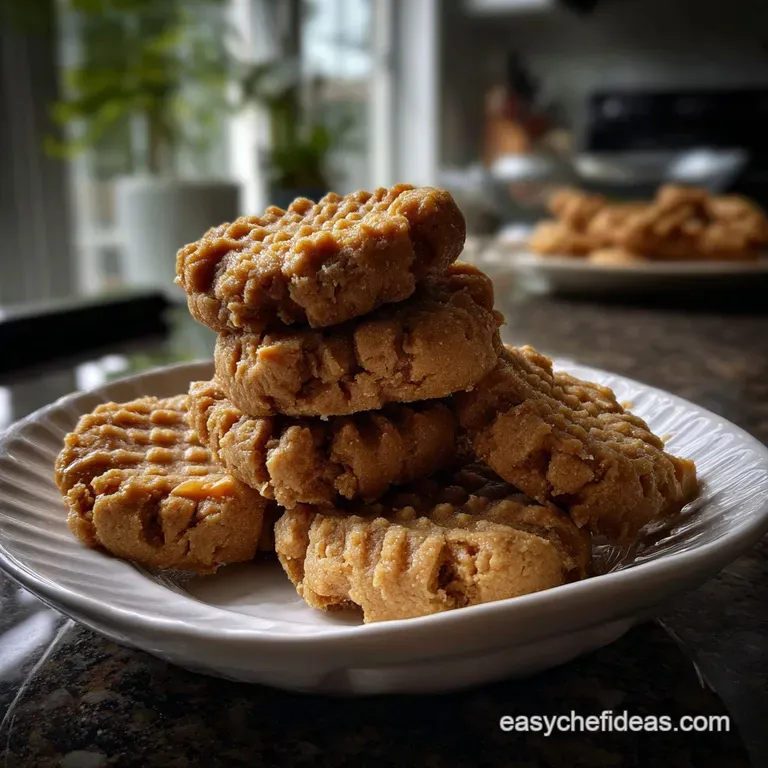
This is where physics meets flavor. Follow these steps exactly to ensure your chewy peanut butter cookies maintain their shape and soul.
- Preheat the oven to 350°F (175°C) and line your pans with parchment paper.
- Cream the 115g softened butter and both sugars (100g white, 110g brown) for 3 minutes until the mixture is pale, fluffy, and looks like wet sand. Note: This incorporates micro air bubbles.
- Incorporate the large egg and 1 tsp vanilla extract, beating for 1 minute until the liquid is fully absorbed and the batter looks glossy.
- Fold in the 190g creamy peanut butter until no streaks of brown remain and the aroma becomes deeply nutty.
- Whisk the 190g all-purpose flour, baking soda, baking powder, and sea salt in a separate bowl until the leaveners are evenly distributed.
- Combine the dry ingredients into the wet mixture at low speed until the flour just disappears and the dough pulls away from the sides. Note: Overmixing creates tough, bread like cookies.
- Scoop rounded tablespoons of dough and roll them into 1 inch balls until the surface is smooth and free of cracks.
- Press a fork into the top of each ball in a crisscross pattern until the cookie is flattened to about 1/2 inch thickness.
- Bake for 10 minutes until the edges are a pale golden mahogany but the centers still look slightly soft and underbaked.
- Cool on the baking sheet for 5 minutes until the structure sets enough to move without breaking, then transfer to a wire rack.
Chef's Note: If you want an extra layer of complexity, try adding a small dollop of the spread from our Pumpkin Butter Velvety recipe on top of the cookies before baking for a festive, autumnal twist.
The Scaling Lab: Physics of Doubling the Batch
⚗️ When you decide to nourish a larger community by doubling this recipe to 48 cookies, the physics of your kitchen changes. If you are making a double batch of peanut butter cookies, pay close attention to thermal mass.
- Thermal Mass Recovery: Placing two cold baking sheets in the oven simultaneously drops the internal temperature. Increase your bake time by 1 2 minutes or use a convection setting to keep air moving.
- The Evaporation Paradox: If you prepare the dough in one massive bowl, the surface-to-volume ratio decreases. This can lead to the dough at the bottom becoming warmer and softer. Keep half the dough in the fridge while the first batch bakes.
- Chemical Leavening: Scale the baking soda and powder exactly. Do not "eyeball" it. Over leavening in a large batch can lead to a soapy aftertaste and cookies that collapse into themselves.
Why Your Cookies Spread or Crumble: Pro Baker Fixes
Understanding how to make peanut butter cookies means knowing how to diagnose a "fail." These fixes are crucial for consistent results in your peanut butter cookies.
Why Your Cookies Spread Too Much
If your cookies turn into a flat puddle, the emulsion broke or the fat was too warm. When butter is over softened (verging on melted), it cannot hold air. Without air, the dough has no internal structure to resist the heat of the oven, causing it to liquefy before the flour can set.
| Problem | Root Cause | The Fix | Pro Protocol |
|---|---|---|---|
| Excessive Spreading | Butter was too warm or "natural" PB was used | Chill the dough for 30 minutes before baking | Use a commercial brand like Jif for stability |
| Dry/Sandy Crumb | Too much flour (packed into the cup) | Use a digital scale to measure 190g flour | Spoon and level flour if no scale is available |
| Burnt Bottoms | Thin baking sheet or high sugar content | Use a heavy duty pan and a silicone mat | Move the oven rack to the top third of the oven |
Flavor Architecture: Creative Variations and Substitutions
The beauty of this recipe lies in its diversity. While the classic is a staple, we can adapt it to different cultural preferences and nutritional needs. These peanut butter cookies handle substitution well.
- Peanut Butter Cookies with Chocolate Chips: Fold in 1/2 cup of Ghirardelli Semi Sweet Chocolate Chips after the flour is incorporated. The bitter chocolate cuts through the rich fat of the peanut butter.
- Healthy Peanut Butter Cookies Recipe: Substitute the all-purpose flour with almond flour (1:1 by weight). Note that the texture will be denser and more velvety rather than crisp, as almond flour lacks gluten.
- Vegan Substitution: Use a flax egg (1 tbsp ground flax + 3 tbsp water) and a high-quality vegan butter stick.
- The Spicy Twist: In many West African cultures, peanuts are paired with heat. Add 1/4 tsp of cayenne pepper to the dry mix for a "hot" cookie that pairs beautifully with coffee.
| Original Ingredient | Substitute | Why It Works |
|---|---|---|
| 1/2 cup Unsalted Butter | 1/2 cup Coconut Oil (solid) | Similar melting point. Note: Adds a tropical coconut aroma |
| 1 1/2 cups AP Flour | 1 1/2 cups Oat Flour | Nutty flavor; great for gluten sensitive diets. Note: Makes a softer cookie |
| 1/2 cup White Sugar | 1/2 cup Coconut Sugar | Lower glycemic index. Note: Results in a much darker, earthier cookie |
Storage, Freezing, and Zero Waste Philosophy
To keep your peanut butter cookies fresh, store them in an airtight container at room temperature for up to 5 days. A slice of white bread placed in the container will act as a sacrificial moisture source, keeping the cookies soft.
- Freezing Dough: Roll the dough into balls and freeze on a tray. Once solid, move to a freezer bag. Bake directly from frozen, adding 2 minutes to the cook time.
- Freezing Baked Cookies: These freeze beautifully for up to 3 months. Thaw at room temperature for 15 minutes or pop in a 300°F oven for 3 minutes to restore the "fresh baked" shatter.
- Reheating: Use a toaster oven rather than a microwave to maintain the contrast between the crisp edge and the soft center.
💡 ZERO WASTE TIP: Don't discard the nearly empty peanut butter jar. Transform: Add your warm cookie dough directly into the jar to scrape out the last bits of oil and protein.
Science: The residual peanut oil in the jar acts as an extra emollient, making the final two cookies of the batch the most flavorful ones you'll ever eat.
Serving Suggestions for a Nourishing Experience
These cookies are a bridge between the sweet and the savory. For a complete community meal, I love serving these as a dessert after a zesty main course like my Chicken Francese Recipe. The lemon butter acidity of the chicken cleanses the palate, making the rich, nutty profile of the cookie even more pronounced.
- If you want extra crunch
- Roll the dough balls in granulated sugar before doing the fork press.
- If you want a "bakery" look
- Top each cookie with three whole roasted peanuts before baking.
- If you want a salty sweet bomb
- Sprinkle a tiny pinch of flaky sea salt on the cookies the second they come out of the oven.
Debunking Common Cookie Myths
Myth: You must use "natural" peanut butter for the best flavor. Truth: Natural peanut butter often separates, leading to a greasy dough that lacks structural integrity.
Commercial creamy peanut butter contains stabilized fats that ensure a consistent, velvety crumb for your peanut butter cookies.
Myth: The fork marks are just for decoration. Truth: Peanut butter dough is denser than chocolate chip dough. The fork press increases surface area and flattens the cookie, ensuring the center cooks at the same rate as the edges.
These easy peanut butter cookies are more than just a snack; they are a lesson in the science of baking and the joy of sharing. Whether you're making them for a school event or a quiet midnight snack, remember that the best recipes are the ones that nourish both the body and the community.
Let's get baking!
Recipe FAQs
Should I chill the dough before pressing and baking?
No. Chilling is unnecessary if fats are correctly incorporated. Over chilling dense dough prevents even heat transfer, leading to pale centers. Ensure butter is properly creamed to maintain structure.
Why are my cookies spreading into greasy puddles?
Butter temperature was too high, breaking the emulsion. If the fat melts before the flour sets, the cookie liquefies in the oven. This results in excessive spread, leaving a greasy residue on the pan.
- Use softened, not melted, butter
- Avoid natural peanut butter variations
- Ensure flour is measured accurately
What is the difference between using baking soda versus baking powder?
Baking soda provides immediate spread and browning. Baking soda is a single acting alkali that reacts with the acid in the brown sugar, while baking powder offers a secondary lift during the bake cycle. This synergism creates the desired thick yet-tender structure.
Is it better to use creamy or crunchy peanut butter?
Creamy peanut butter stabilizes the dough matrix better. Crunchy nuts introduce variable fat pockets and physical disruptions that hinder a smooth, uniform emulsion, making the final texture unpredictable compared to the controlled breakdown of a creamy base.
Can I substitute AP flour with cake flour for a softer result?
Cake flour lowers gluten development, resulting in a softer texture. Cake flour has lower protein content (around 7-9%), resulting in less structural gluten formation than AP flour (10-12%).
If you enjoyed mastering the stable fat ratios here, see how low-protein flour alters texture in our Buttery Homemade Strawberry Pop Tarts Recipe Flaky Pastry.
What is the best internal temperature for doneness?
Aim for 200 205°F (93 96°C) for a chewy center. Cookies are done when the edges are set and slightly browned, but the center still looks slightly moist. The carry over heat will continue the bake for several minutes after removal from the oven.
Myth: You must use salted butter for perfect peanut butter cookies.
Myth: You must use salted butter for perfect peanut butter cookies. Reality: Salted brands vary widely in sodium levels, creating inconsistent final flavor profiles.
Use unsalted butter to control salinity, as demonstrated in our savory Baked Rainbow Trout with Cajun Garlic Butter Sauce Recipe.
Masterclass Peanut Butter Cookies
Ingredients:
Instructions:
Nutrition Facts:
| Calories | 146 kcal |
|---|---|
| Protein | 3.1 g |
| Fat | 8.1 g |
| Carbs | 16.3 g |
| Fiber | 0.7 g |
| Sugar | 9.2 g |
| Sodium | 84 mg |
