Honey Glazed Salmon Bowl Recipe
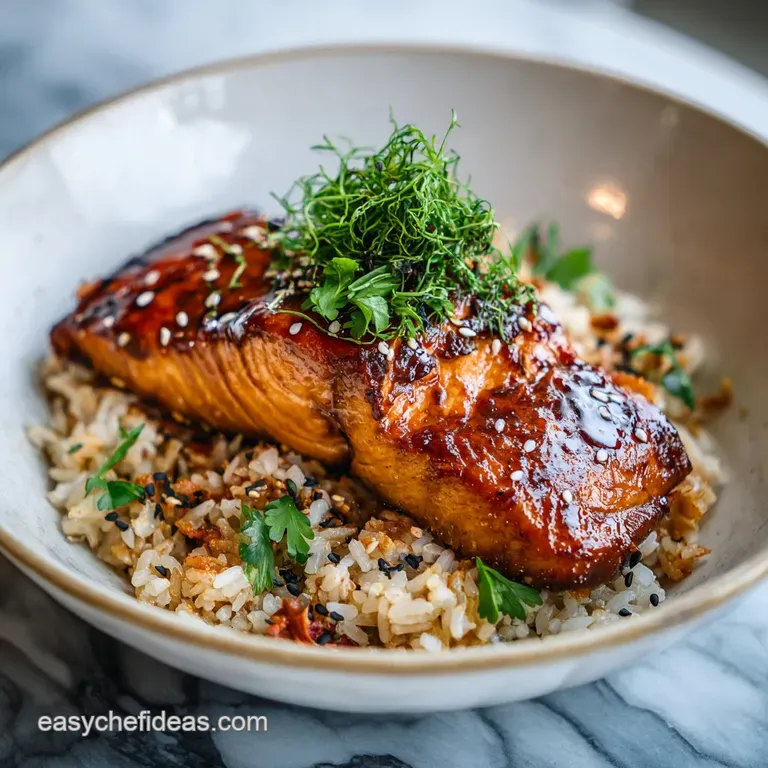
- Time: Active 10 mins, Passive 10 mins, Total 20 mins
- Flavor/Texture Hook: Glazed umami crunch with silky avocado
- Perfect for: High energy lunches or a nourishing weeknight reset
- The Logic of Balancing Grains and Glazed Protein
- Essential Shopping List for Your Fresh Salmon Bowl
- Kitchen Tools for Better Salmon Bowl Prep
- Assembly Guide for a Restaurant Quality Salmon Bowl
- Solving Texture and Flavor Challenges
- Regional Variations for Every Salmon Bowl Craving
- Maximizing Freshness in Your Leftover Salmon Bowls
- Ideal Pairings to Complete Your Meal
- High in Sodium
- Recipe FAQs
- 📝 Recipe Card
I remember the first time I decided to cube my salmon instead of pan frying the whole fillet. I was standing in my kitchen, tired from a long day, and honestly, I just wanted something that would cook in under five minutes. The moment those pink cubes hit the hot oil, the sizzle was different sharper, more rhythmic.
As the honey and soy sauce hit the pan, the aroma of toasted sugar and ginger filled the room, and I knew I’d stumbled onto something much better than a standard fish and veg plate.
The real magic happened when I tossed those hot, sticky cubes into a bowl with cold, vinegary rice and a pile of crunchy edamame. It wasn't just a meal; it felt like a celebration of different cultures and textures coming together to nourish my soul.
We've all had those sad, dry salmon experiences, but this salmon bowl recipe changes the narrative. It’s about building layers of heat, salt, and freshness that make every bite feel like a discovery.
The Logic of Balancing Grains and Glazed Protein
Building a bowl like this isn't just about throwing things together; it’s about the science of satisfaction. We want to hit every part of the palate. By using honey in the marinade, we aren't just adding sweetness; we are creating a vehicle for the Maillard reaction to happen almost instantly on the small surface area of the cubes.
This gives us that sought after mahogany crust without overcooking the delicate interior of the fish.
The Alchemy of the Glaze: The glucose in honey reacts with the amino acids in the soy sauce at high temperatures, creating a complex savory sweet crust. This chemical bonding happens faster than the heat can penetrate the center, keeping the fish flaky and moist.
Decision Shortcut for Cook Styles
| Goal | Action |
|---|---|
| For a deeper crust | Pat the salmon cubes bone dry with paper towels before searing. |
| For extra creaminess | Mash half the avocado with a splash of lime before topping. |
| For more heat | Infuse the olive oil with red pepper flakes for 2 mins first. |
Speed vs Traditional Methods
| Feature | Quick Sear (This Recipe) | Classic Whole Fillet |
|---|---|---|
| Cook Time | 4-5 minutes | 12-15 minutes |
| Surface Area | Maximum glaze contact | Limited to top/bottom |
| Texture | Firm exterior, tender heart | Uniformly flaky |
Essential Shopping List for Your Fresh Salmon Bowl
When you're at the store, the quality of your fish is the most important factor. I always look for "center cut" pieces because they have a consistent thickness, which means every cube cooks at exactly the same rate.
If you can, grab fresh ginger rather than the powdered stuff the zing it provides is irreplaceable for that bright, cultural flavor profile we are aiming for in this salmon bowl recipe.
Component Analysis and Pro Secrets
| Ingredient | Science Role | Pro Secret |
|---|---|---|
| Fresh Salmon | Primary lipid and protein source | Freeze for 15 mins before slicing for clean, sharp edges. |
| Soy Sauce | Provides liquid salt for brining | Use low sodium to control the salt to umami ratio better. |
| Toasted Sesame Oil | Volatile aromatic for depth | Add it at the very end to prevent the flavor from burning off. |
| Rice Vinegar | Acidic counterpoint to fats | Season the rice while it's steaming hot for maximum absorption. |
Ingredients and Clever Substitutions
- 10 oz fresh salmon fillet: The star of the show. Why this? High fat content ensures a silky texture even after searing.
- Substitute: Steelhead trout. It has a similar color and fat profile but a slightly milder taste.
- 1 tsp olive oil: For the over high heat sear.
- Substitute: Avocado oil. It has an even higher smoke point for a worry free sizzle.
- 2 tbsp soy sauce: The salty backbone.
- Substitute: Tamari for a gluten-free version that tastes almost identical.
- 1 tbsp honey: The caramelization agent.
- Substitute: Maple syrup. It adds a woody depth that pairs beautifully with ginger.
- 1 tsp toasted sesame oil: For that nutty, earthy aroma.
- Substitute: Tahini whisked with a drop of neutral oil for a creamy twist.
- 1 tsp fresh grated ginger: Provides a sharp, spicy bite.
- Substitute: Galangal if you want a more citrusy, pine like flavor.
- 1 clove garlic, minced: Essential savory aromatic.
- Substitute: Garlic confit for a mellowed, buttery sweetness.
- 2 cups cooked jasmine rice: The fluffy, fragrant base.
- Substitute: Brown rice. It offers a nuttier flavor and significantly more fiber.
- 1 tbsp rice vinegar: Brightens the heavy fats.
- Substitute: Apple cider vinegar mixed with a tiny pinch of sugar.
- 0.5 small cucumber: Adds a necessary cooling crunch.
- Substitute: Sliced radishes for a peppery snap instead of watery coolness.
- 0.5 ripe avocado: Provides a velvety, buttery mouthfeel.
- Substitute: A dollop of Greek yogurt or labneh for a tangy creaminess.
- 0.25 cup shelled edamame: Boosts protein and adds vibrant color.
- Substitute: Frozen peas, thawed and lightly blanched.
Kitchen Tools for Better Salmon Bowl Prep
You don't need a professional kitchen, but a few specific tools make this much easier. A heavy bottomed pan, like a cast iron skillet (I love my Lodge pan for this), is your best friend. It holds heat so well that the temperature doesn't drop when you add the cold fish. If you're looking for another way to prep fish, check out my How to Cook Salmon recipe which focuses on a different pan technique.
Chef's Tip: Grate your ginger and garlic directly into the honey and soy sauce mixture using a microplane. This creates a fine paste that emulsifies into the glaze, ensuring every millimeter of the salmon is coated in flavor.
Another trick I've learned is to use a very sharp chef's knife. If your knife is dull, it will tear the delicate fibers of the salmon instead of slicing through them. This causes the fish to lose its juices before it even hits the pan, resulting in a drier bowl.
Assembly Guide for a Restaurant Quality Salmon Bowl
- Prep the fish. Slice the 10 oz salmon fillet into uniform 1 inch cubes. Note: Uniformity ensures they all finish cooking at the same time.
- Mix the glaze. Whisk 2 tbsp soy sauce, 1 tbsp honey, 1 tsp sesame oil, 1 tsp ginger, and 1 clove garlic in a small bowl.
- Season the base. Toss 2 cups warm jasmine rice with 1 tbsp rice vinegar. Note: The steam helps the vinegar penetrate the grain.
- Heat the pan. Add 1 tsp olive oil to a skillet over medium high heat until it shimmers and wisps of smoke appear.
- Sear the salmon. Place cubes in the pan in a single layer. Cook for 2 minutes without moving to let a crust form.
- Apply the sauce. Pour the honey soy mixture over the fish. Sizzle for 1 to 2 minutes while tossing gently to coat.
- Watch the glaze. Continue cooking until the sauce thickens into a glossy, dark mahogany syrup.
- Check for doneness. Ensure the salmon is opaque on the outside but slightly translucent in the very center.
- Prepare the toppings. Thinly slice the cucumber and avocado while the salmon rests for 60 seconds.
- Build the bowl. Divide rice into two bowls, top with glazed salmon, cucumber, avocado, and edamame.
Solving Texture and Flavor Challenges
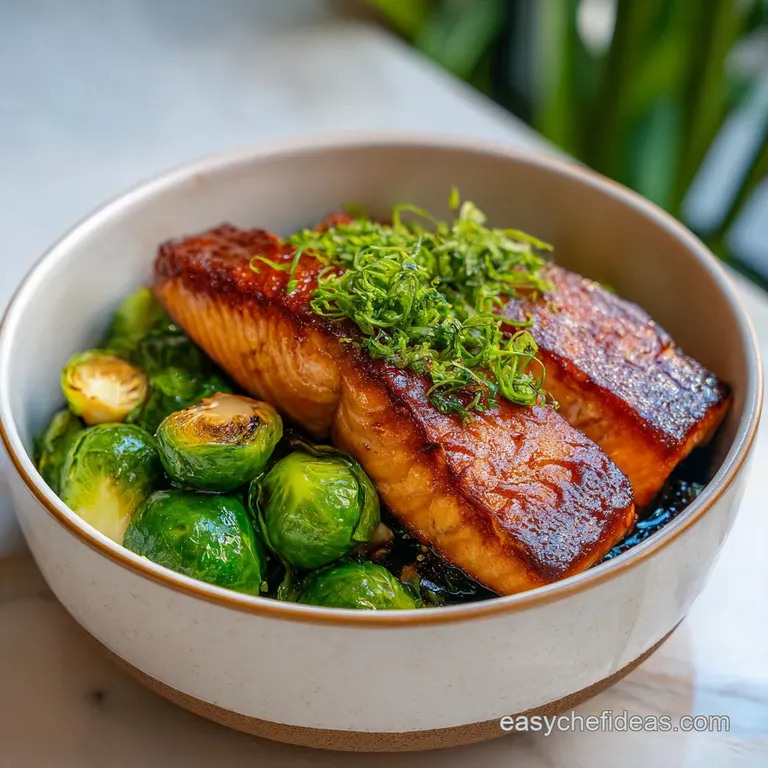
One of the most common issues people have with a salmon bowl recipe is ending up with a "soupy" bowl where the rice gets soggy. This usually happens because the toppings are too wet or the sauce wasn't reduced enough.
If you find your glaze is too thin, simply remove the salmon and simmer the sauce alone for another minute until it reaches a syrupy consistency.
Resolving Dry Fish Issues
If your salmon feels rubbery, it's almost always a case of carryover cooking. Fish continues to cook for a minute or two after it leaves the pan. To get that silky, buttery interior, take the pan off the heat when the salmon still looks a tiny bit "under" in the middle. The residual heat will finish it perfectly.
| Problem | Root Cause | Solution |
|---|---|---|
| Fish sticks to pan | Pan wasn't hot enough | Wait for the oil to shimmer before adding protein. |
| Burnt glaze | Sugar in honey scorched | Reduce heat to medium as soon as you add the sauce. |
| Bland rice | Lack of seasoning | Increase rice vinegar or add a pinch of furikake. |
Common Mistakes Checklist
- ✓ Overcrowding the pan - this steams the fish instead of searing it.
- ✓ Using cold rice - warm rice absorbs the glaze and vinegar much better.
- ✓ Forgetting to pat the salmon dry - moisture is the enemy of a good crust.
- ✓ Slicing avocado too early - wait until the last second to prevent browning.
- ✓ Skipping the resting period - let the fish sit for 1 minute to redistribute juices.
Regional Variations for Every Salmon Bowl Craving
If you want to move away from the classic honey soy profile, there are so many ways to nourish your community with different flavors. For a spicy kick, I love adding a tablespoon of gochujang to the marinade. It adds a fermented funk and a slow building heat that is incredibly addictive.
Swapping Low Carb Bases
For those looking for a lighter option, swapping the jasmine rice for cauliflower rice is a brilliant move. Just make sure to sauté the cauliflower rice with a bit of ginger and lime juice so it doesn't feel like an afterthought. You can also try using quinoa for an extra boost of fiber and protein. If you're craving a different sauce altogether, you might enjoy experimenting with a Homemade Teriyaki Sauce recipe for a thicker, sweeter finish.
Upscaling and Downscaling
- Scaling Up (4-6 servings): When doubling the recipe, do not double the salt or soy sauce immediately. Start with 1.5x the amount and adjust to taste. You must work in batches for the salmon; if you put 20 oz of fish in one pan, it will boil in its own juices.
- Scaling Down (1 serving): Use 5 oz of salmon and a small frying pan. Keep the cook times the same, but watch the glaze carefully as it will reduce much faster in a smaller quantity.
Maximizing Freshness in Your Leftover Salmon Bowls
The best part about this salmon bowl recipe is that it can work for meal prep, though seafood is always best eaten fresh. If you do have leftovers, keep the components separate. Storing the cucumber and avocado in the same container as the warm salmon will make everything mushy and take away that beautiful texture contrast we worked so hard to build.
- Storage: Keep the cooked salmon and rice in an airtight container in the fridge for up to 2 days.
- Freezing: I don't recommend freezing the assembled bowl. However, you can freeze the raw salmon cubes in the marinade for up to 3 months for a quick future meal.
- Reheating: Avoid the microwave for the fish if possible. It makes salmon "pop" and dry out. Instead, warm the salmon in a pan over low heat with a splash of water to loosen the glaze.
- Zero Waste: Don't throw away the salmon skin if you removed it! Fry it in a little oil until it's as crispy as a potato chip. It makes a shatter crisp topping that adds incredible flavor and texture.
Ideal Pairings to Complete Your Meal
To make this a full feast, I usually serve it with a side of pickled ginger or a small dish of kimchi. The acidity and fermentation really cut through the richness of the salmon and avocado.
If you want a more substantial meal, a side of roasted broccoli with a drizzle of sesame oil is a great way to add even more greenery to your plate.
For a completely different vibe, you could even pair the flavors of the salmon with a creamy element. I’ve found that a Silky Salmon Cream recipe works surprisingly well as a side dipping sauce if you're feeling indulgent. Ultimately, the beauty of a bowl is its diversity you can change the toppings based on what's in your fridge, making it a sustainable and nourishing way to eat every single week. Trust me, once you master that 4 minute sear, you'll never look at a salmon fillet the same way again.
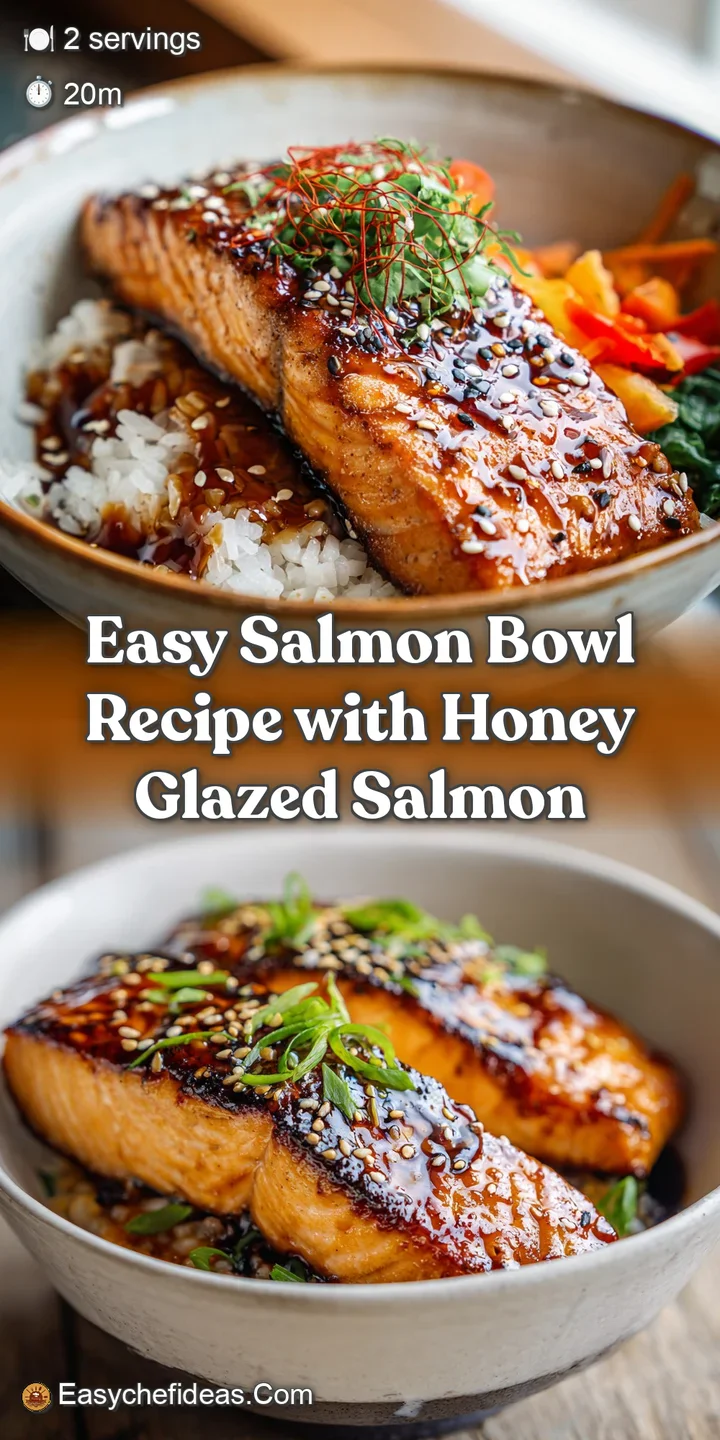
High in Sodium
965 mg of sodium per serving (42% of daily value)
The American Heart Association recommends limiting sodium intake to about 2,300mg per day for overall cardiovascular health.
Sodium Reduction Tips for Your Salmon Rice Bowl
-
Low-Sodium Soy Sauce-20%
Replace regular soy sauce with a low-sodium or reduced sodium version. This simple swap can significantly lower the sodium content without sacrificing flavor.
-
Reduce Soy Sauce Quantity-15%
Cut the amount of soy sauce in half and compensate with a bit more honey and toasted sesame oil. Experiment with the ratio to find a balance you enjoy.
-
Unsalted Rice-10%
Ensure the jasmine rice is cooked without added salt. Adding a tablespoon of rice vinegar provides flavor without increasing sodium.
-
Fresh Herbs & Spices
Enhance the flavor profile with fresh herbs like cilantro or green onions and spices like black pepper or red pepper flakes. These additions boost taste without adding sodium.
Recipe FAQs
What do you put in a salmon bowl?
Start with cooked, vinegared rice as the base. Layer on your protein (seared salmon cubes), fresh crunch (cucumber, edamame), and a healthy fat component like sliced avocado.
What pairs well with a salmon bowl?
Pickled ginger or a side of kimchi pair excellently. These acidic and fermented elements cut through the richness of the glazed salmon and avocado perfectly.
What toppings go on a salmon poke bowl?
Traditional poke toppings include seaweed salad, masago (fish roe), and thinly sliced scallions. For this glazed version, focus on crunchy texture like shelled edamame and crisp cucumber.
Which sauce goes best with salmon?
The best sauce balances sweet, salty, and umami elements. A simple glaze of soy sauce, honey, sesame oil, ginger, and garlic works perfectly because the honey aids in caramelization.
How do I prevent my seared salmon cubes from sticking to the pan?
Heat the pan until the oil shimmers before adding the fish. Ensure the salmon cubes are completely dry; surface moisture causes the protein to bond to the metal instead of searing properly.
How do I get my rice to absorb the vinegar seasoning best?
Toss the rice with the vinegar immediately after it finishes steaming. The heat and escaping steam help the grain structure open up, allowing for maximum absorption of the acid.
Is it true that using raw ginger will make the glaze too harsh?
No, this is a common misconception when using small amounts. Grating the ginger finely and letting it simmer briefly in the honey soy glaze mellows the sharpness while retaining its necessary bright flavor kick.
Honey Glazed Salmon Bowl
Ingredients:
Instructions:
Nutrition Facts:
| Calories | 698 kcal |
|---|---|
| Protein | 34.5 g |
| Fat | 30.2 g |
| Carbs | 61.4 g |
| Fiber | 6.2 g |
| Sugar | 11.8 g |
| Sodium | 965 mg |
