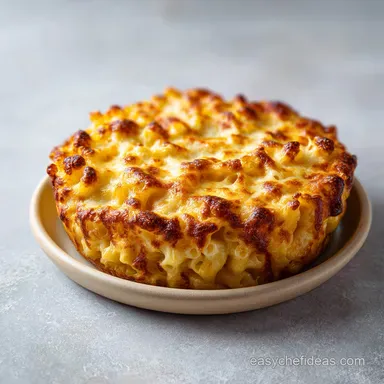
Five Cheese Baked Macaroni and Cheese: Silky and Rich

- Time:20 minutes active + 30 minutes baking = Total 50 minutes
- Flavor/Texture Hook: Shattering mahogany crust with a silky, pull apart center
- Perfect for: Holiday gatherings, winter comfort meals, or a show stopping side dish
- Five cheese baked macaroni and cheese
- Logic Behind The Velvet
- Component Analysis
- Shopping List Breakdown
- Essential Kitchen Gear
- Step By Step Cooking
- Fixing Common Issues
- Customizing Your Bake
- Precision Checkpoints
- Plating Levels
- Truths About Cheese Bakes
- Storing And Waste
- Perfect Side Pairings
- Recipe FAQs
- 📝 Recipe Card
That specific sound is what I live for: the shatter of a buttery panko crust giving way to a molten, bubbling center. There is a common myth that you need to spend hours crafting a complex Mornay sauce or soak your noodles in milk overnight to get a creamy result. Forget that.
You don't need a culinary degree or a twelve hour prep window to achieve a texture that looks like a professional photograph.
I remember trying a "shortcut" version years ago where I just dumped pre shredded cheese into a pot of milk. It was a disaster. The sauce was grainy, oily, and looked more like broken plastic than food. That's when I realized that the secret isn't just the amount of cheese, but the stability of the base.
This five cheese baked macaroni and cheese is about the harmony of different melting points and a sturdy roux that holds everything together.
Expect a dish that balances the sharp bite of aged cheddar with the nutty elegance of Gruyère. It's a mouthwatering combination that feels heavy and indulgent but stays balanced because of the acidity in the Dijon.
We're aiming for a visual masterpiece- golden hues that evoke a cozy autumn evening, topped with a crust that provides a necessary textural contrast to the velvety interior.
Five cheese baked macaroni and cheese
The magic here is in the variety. Most people stick to one or two cheeses, but five creates a depth of flavor that one simply cannot match. You get the stretch from the mozzarella, the salt from the parmesan, the richness from the cream cheese, and the complex profiles of the cheddar and Gruyère.
It's an artful blend that ensures no single note dominates the plate.
When you pull this out of the oven, the visual appeal is immediate. The panko doesn't just brown; it transforms into a deep, toasted mahogany. It's the kind of dish that makes people stop talking the moment it hits the table.
Because we par boil the pasta, the noodles absorb the sauce during the bake, meaning you don't end up with a pool of oil at the bottom of your dish.
For those who love a creamy finish, you might also enjoy the silky texture of a Cottage Cheese Alfredo, which uses a similar logic of blended fats for a smooth mouthfeel. But for a true baked comfort classic, this combination of five cheeses is the gold standard. It's hearty, visually stunning, and hits every sensory note from the sizzle of the oven to the velvety pull of the cheese.
Logic Behind The Velvet
The reason this recipe doesn't separate is all about how we manage the fats and starches. Most homemade macs fail because the cheese "breaks," leaving you with an oily mess. We avoid this by using a stabilized roux and a specific order of integration.
Starch Stability: The flour and butter roux creates a mesh that traps fat droplets, preventing them from coalescing into oil.
The Cream Cheese Bridge: Adding softened cream cheese first creates a thick, emulsified base that helps the other cheeses melt without graining.
Starch Absorption: Par boiling the macaroni for 2 minutes less than the box suggests leaves room for the pasta to soak up the cheese sauce in the oven.
Temperature Control: Introducing cheeses on low heat prevents the proteins from tightening and squeezing out the fat.
| Method | Time | Texture | Best For |
|---|---|---|---|
| Stovetop Only | 20 mins | Liquid/Silky | Quick lunches |
| Fully Baked | 50 mins | Set/Crusty | Meal prep |
| Par Boiled Bake | 50 mins | Velvety/Shattering | Holiday dinners |
Component Analysis
Understanding the role of each ingredient helps you avoid the common mistakes that lead to a grainy sauce. Each element here is chosen for its visual and structural contribution to the final bake.
| Ingredient | Science Role | Pro Secret |
|---|---|---|
| Butter & Flour | Emulsion Base | Cook until it smells nutty to remove raw flour taste |
| Cream Cheese | Stabilizer | Always cube it small for faster, smoother melting |
| Gruyère | Flavor Depth | Use a cave aged variety for a more floral aroma |
| Panko | Textural Contrast | Toss in melted butter for a uniform gold color |
| Whole Milk | Hydration | Room temperature prevents the roux from clumping |
Shopping List Breakdown
When you're at the store, don't let the convenience of the pre shredded bags tempt you. Those bags are coated in potato starch or cellulose to prevent clumping, which is exactly what makes a sauce grainy. Buy the blocks and grate them yourself; the difference in the melt is night and day.
The Cheese Blend
- 8 oz sharp cheddar, freshly gratedWhy this? Provides the classic bold, tangy backbone
- 4 oz Gruyère, freshly gratedWhy this? Adds a sophisticated, nutty, seasonal flavor
- 4 oz mozzarella, freshly gratedWhy this? Creates those mouthwatering, stretchy pulls
- 1/2 cup parmesan, freshly gratedWhy this? Adds a salty, crystalline punch
- 4 oz cream cheese, softened and cubedWhy this? Acts as a velvety binder for the sauce
The Sauce Base
- 4 tbsp unsalted butterWhy this? Creates a rich, nutty foundation for the roux
- 1/4 cup all purpose flourWhy this? Thickens the sauce and stabilizes the fats
- 3 cups whole milk, room temperatureWhy this? High fat content ensures a creamy mouthfeel
- 1/2 cup heavy creamWhy this? Adds a final layer of luxury and silkiness
- 1 tsp Dijon mustardWhy this? Cuts through the richness with a hint of acid
- 1 tsp garlic powderWhy this? Adds a subtle, aromatic base note
- 1/2 tsp smoked paprikaWhy this? Provides a hint of wood fire depth
- salt to taste
- black pepper to taste
The Pasta & Topping
- 1 lb elbow macaroniWhy this? The classic shape for maximum sauce pockets
- 1 cup panko breadcrumbsWhy this? Lighter and crispier than traditional crumbs
- 2 tbsp melted butterWhy this? Ensures the crumbs brown evenly
- 1 tbsp fresh parsley, choppedWhy this? Adds a pop of seasonal green color
Essential Kitchen Gear
You don't need a professional kitchen, but a few specific tools make the process much smoother. A heavy bottomed pot is non negotiable; thin pots create hot spots that can scorch the milk, leading to those tiny brown burnt bits in your sauce.
I highly recommend a sturdy whisk. You'll be doing a lot of aggressive stirring when adding the milk to the roux to ensure there are no lumps. A 9x13 inch ceramic or glass baking dish is the ideal size for this volume, as it allows for a generous surface area for the panko crust to develop.
For the cheese, a box grater works, but a food processor with a shredding disc is a lifesaver when dealing with five different types of cheese. It keeps the shreds uniform, which means they all melt at roughly the same rate, contributing to that velvety consistency.
Step by step Cooking
Now, let's get into the flow. Pay close attention to the sensory cues- the smell of the butter and the color of the crust are your best guides.
Phase 1: The Pasta Prep
- Boil a large pot of salted water. Add the macaroni and cook for exactly 2 minutes less than the al dente package instructions. Note: This prevents the pasta from becoming mushy during the second cook in the oven.
- Drain the pasta and set it aside. Do not rinse it, as the surface starch helps the cheese sauce cling to the noodles.
Phase 2: Building the Velvet Sauce
- Melt 4 tbsp butter over medium heat. Whisk in flour for 1-2 minutes until the mixture smells nutty and looks pale gold.
- Slowly whisk in the room temperature milk and heavy cream. Simmer the mixture until the sauce thickens enough to coat the back of a spoon.
- Stir in the Dijon, garlic powder, and paprika. Whisk well to ensure the spices are evenly distributed.
Phase 3: The Cheese Integration
- Turn the heat to low. Fold in the cubed cream cheese first, stirring until it is completely melted and the sauce is glossy.
- Stir in the Cheddar, Gruyère, and Mozzarella one handful at a time. Stir continuously until the sauce is smooth and free of clumps.
- Fold the cooked macaroni into the cheese sauce until every single noodle is fully submerged in the mixture.
Phase 4: The Final Bake
- Pour the mixture into a 9x13 inch baking dish. Smooth the top with a spatula.
- Mix panko breadcrumbs with 2 tbsp melted butter. Sprinkle the mixture evenly over the top.
- Bake at 350°F (180°C) for 30 minutes until the crust is mahogany colored and bubbling around the edges.
- Garnish with chopped fresh parsley before serving.
Fixing Common Issues

Even the most experienced cooks run into a few hiccups with cheese sauces. The key is knowing how to pivot without starting over. Most issues stem from temperature swings or the type of cheese used.
Grainy Sauce Causes
If your sauce feels sandy or grainy, it's usually because the cheese was added to a sauce that was too hot. High heat causes the proteins in the cheese to clump together and push out the fat.
To fix this, remove the pan from the heat immediately and whisk in a tablespoon of cold milk or cream to bring the temperature down and re emulsify.
Sauce Separating or Oily
An oily layer on top usually means the emulsion has broken. This often happens if you use pre shredded cheese with those anti clumping agents. If you see oil pooling, try whisking in a small amount of warm milk vigorously. For future bakes, remember that freshly grated cheese is the only way to ensure a velvety result.
Dry Macaroni After Baking
If the final dish feels dry, you likely overcooked the pasta in the first step. When the pasta is already fully cooked, it acts like a sponge and sucks every drop of moisture out of the sauce during the bake. Stick to the "2 minutes less" rule for the par boil.
| Problem | Root Cause | Solution |
|---|---|---|
| Grainy Texture | Heat too high | Lower heat; whisk in cold cream |
| Oily Surface | Pre shredded cheese | Use blocks; grate by hand |
| Dry Noodles | Over boiled pasta | Under cook pasta by 2 mins |
Common Mistakes Checklist
- ✓ Grating cheese by hand instead of using pre shredded bags.
- ✓ Ensuring milk is room temperature before adding to the roux.
- ✓ Keeping the heat on low when folding in the cheeses.
- ✓ Using a timer for the par boil to avoid mushy noodles.
- ✓ Tossing panko in butter for an even, mahogany crust.
Customizing Your Bake
One of the best things about this five cheese baked macaroni and cheese is how adaptable it is. Depending on the season, you can shift the flavor profile. For a more rustic, autumn vibe, I love adding a pinch of nutmeg to the roux, which complements the Gruyère beautifully.
If you want to introduce more protein or vegetables, you can stir in some sautéed leeks or steamed broccoli florets during Phase 3. For those who enjoy other creamy pastas, this base works similarly to my Baked Tuna Noodle Casserole, where the starch to sauce ratio is key for that comforting texture.
Decision Shortcut
- If you want more "cheese pull", increase the mozzarella to 6 oz and reduce the cheddar slightly.
- If you want a sharper, more intense flavor, swap the Gruyère for an extra sharp white cheddar.
- If you want an extra crunchy top, add a tablespoon of grated parmesan directly into the panko mixture.
| Modification | Change | Impact |
|---|---|---|
| Extra Spicy | Add 1/2 tsp Cayenne | Adds a warm, lingering heat |
| Smokier | Use Smoked Gouda | Deepens the woody notes |
| Lighter Top | Swap Panko for Cornflakes | More aggressive crunch |
Precision Checkpoints
To ensure you hit that professional mark every time, keep these three numeric markers in mind. These are the "non negotiables" of the process.
- The Pasta Timer: Stop the boil exactly 2 minutes before the package says "al dente". If the package says 8 minutes, pull them at 6.
- The Roux Window: Whisk the flour and butter for exactly 1-2 minutes. Any less and you'll taste raw flour; any more and you'll brown the butter too much, changing the color of the sauce.
- The Crust Color: Don't pull the dish based on a timer alone. Look for the "mahogany" shift. When the panko goes from golden yellow to a deep, toasted brown, it's ready.
Plating Levels
Since this is a visually stunning dish, how you serve it changes the entire experience. Whether it's a casual family meal or a dinner party, the presentation matters.
| Level | Presentation Style | Key Tweaks |
|---|---|---|
| Simple | Family Style | Scoop directly from the dish into bowls; garnish with parsley. |
| Polished | Squared Cuts | Let it rest for 10 mins, cut into perfect squares, top with fresh thyme. |
| Restaurant | Cast Iron | Bake in a skillet, top with micro greens and a drizzle of white truffle oil. |
Truths About Cheese Bakes
There are a few myths that float around the cooking world regarding baked pastas. Let's set the record straight so you don't waste time on unnecessary steps.
One common misconception is that you need to add a splash of vinegar or lemon juice to "cut the fat." While acidity is great, the Dijon mustard in this recipe already provides that balance. Adding more acid can actually cause some of the more sensitive cheeses, like mozzarella, to break.
Another myth is that using "low-fat" milk or cream will result in the same texture. It won't. The fats in whole milk and heavy cream are what suspend the cheese proteins. If you use skim milk, you'll likely end up with a sauce that is thin and separates almost immediately upon hitting the oven.
Storing And Waste
Once you've finished your meal, you'll likely have some leftovers. Because of the high fat content, this dish holds up surprisingly well in the fridge.
Storage Guidelines Store the leftovers in an airtight container in the fridge for up to 4 days. To reheat, I recommend adding a tiny splash of milk to the portion before microwaving or putting it in the oven. This re hydrates the sauce and brings back that velvety feel.
For freezing, you can freeze the unbaked assembly (after step 8) for up to 2 months. Thaw in the fridge overnight before adding the panko and baking.
Zero Waste Tips Don't toss the leftover cheese rinds! If you have the hard ends of the parmesan or Gruyère, throw them into a pot of simmering vegetable or chicken stock. They add an incredible depth of umami to the broth.
Also, any leftover panko butter mix can be used as a breading for pan seared fish or chicken for a quick, matching side.
Perfect Side Pairings
Because this five cheese baked macaroni and cheese is so rich, you need sides that provide contrast. Something crisp, acidic, or slightly bitter will cleanse the palate between bites of the creamy pasta.
A bright, citrusy arugula salad with a lemon vinaigrette is my top choice. The peppery greens and sharp lemon cut right through the richness of the five cheeses. Alternatively, roasted Brussels sprouts with a balsamic glaze offer a charred, sweet and sour element that complements the nutty Gruyère.
For a more seasonal approach, try pairing this with honey glazed carrots or a crisp apple and walnut slaw. The sweetness of the fruit provides a beautiful counterpoint to the salty parmesan, making the whole meal feel balanced and thoughtfully curated.
Recipe FAQs
What are the 5 cheeses in mac and cheese?
Sharp cheddar, Gruyère, mozzarella, parmesan, and cream cheese. This combination provides a blend of sharp, nutty, and salty flavors with a velvety texture.
What are the best 5 cheeses for mac and cheese?
Sharp cheddar, Gruyère, mozzarella, parmesan, and cream cheese. These specific varieties are chosen for their superior melting properties and balanced flavor profiles.
What three cheeses go well together for mac and cheese?
Cheddar, Gruyère, and mozzarella. These three offer the ideal foundation of sharpness, nuttiness, and classic cheese stretch.
What is the secret to really good mac and cheese?
Undercook the pasta and use a roux-based sauce. Cooking macaroni 2 minutes less than al dente prevents it from becoming mushy in the oven. If you enjoyed mastering the roux technique here, see how the same principle creates the creamy Gruyère Mornay sauce.
Are there ways to add extra flavor?
Yes, incorporate Dijon mustard, garlic powder, and smoked paprika. These ingredients add a subtle tang and smokiness that cuts through the richness of the cheese.
How to prevent the cheese sauce from breaking?
Turn the heat to low before adding cheese. Fold in the cream cheese first, then add the remaining cheeses one handful at a time to maintain a smooth, glossy emulsion.
How to reheat leftovers without them drying out?
Add a splash of milk to the portion. This re-hydrates the fats and proteins in the sauce to restore a velvety feel when microwaving or baking.
Five Cheese Baked Mac: Creamy