Crunch Time Ramen Noodle Salad Toasted Sesame Slaw
- Why This Isn't Your Grandmother's Boring Slaw
- The Essential Components for Textural Harmony
- Necessary Kitchen Tools for Seamless Prep
- Step-by-Step: Constructing Your Epic Ramen Noodle Salad
- Advanced Preparation and Storage Secrets
- Elevating the Dish: Flavor Swaps and Protein Additions
- Recipe FAQs
- 📝 Recipe Card
Why This Isn't Your Grandmother's Boring Slaw
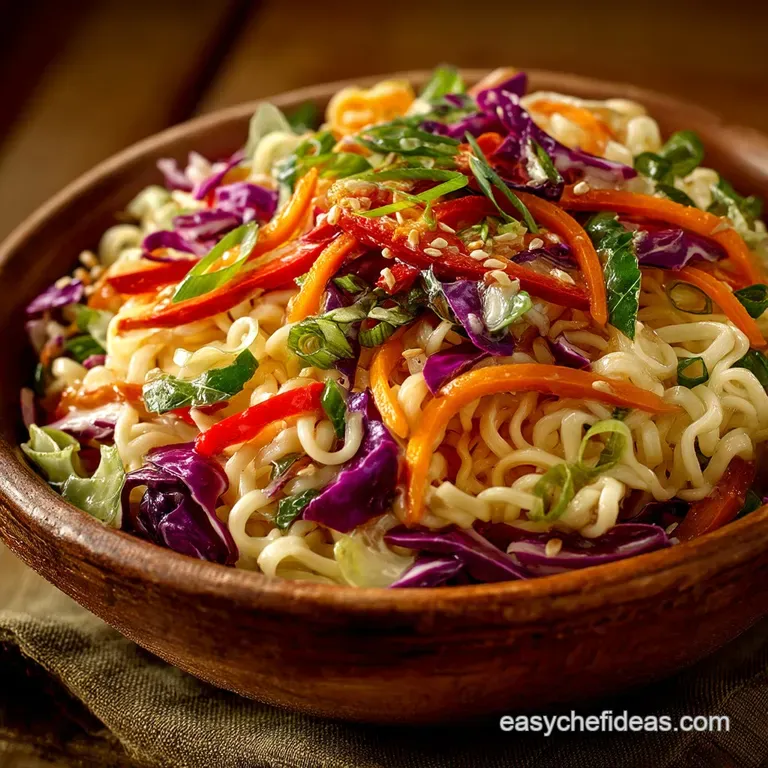
If you believe, as I do, that every salad deserves to be a main event, then you understand why this particular Ramen Salad recipe is a necessity in your repertoire. Traditional creamy coleslaw, while nostalgic, often lacks the vibrant crunch and zing needed to truly excite the palate.
This dish takes the classic concept of shredded cabbage and elevates it into a deeply flavorful, textural masterpiece, rooted firmly in bright Asian inspired cuisine. We discard the heavy mayo and instead embrace a light, tangy, and invigorating dressing, using the humble, dry instant ramen block not boiled, but toasted as our foundation for serious structural integrity.
Defining the 'Unboring' Salad Framework
The success of a great ramen noodle salad recipe hinges on achieving perfect balance across four key elements: a sturdy, finely shredded base; a bright, acidic dressing; a sweet/salty anchor; and the non-negotiable component of maximum, shattering crunch.
Our framework focuses on combining finely sliced vegetables roughly 400g of green cabbage and 150g of carrots which hold up beautifully under the bold flavors of the ginger vinaigrette.
This preparation ensures that every mouthful offers complexity without being overly heavy, making it an incredibly satisfying side dish or light main.
The Secret Weapon: Mastering Maximum Crunch
The element that differentiates this dish from a standard coleslaw is the preparation of the starches and nuts. We bypass the seasoning packets that come with the two packages of dry ramen noodles and instead focus entirely on the texture of the crumbled noodles themselves.
Combined with 1/4 cup of slivered almonds and 2 tablespoons of white sesame seeds, these components are gently toasted either on a baking sheet at 350°F (180°C) for 5 to 7 minutes, or in a dry skillet until they achieve a deep, golden brown hue.
This quick cooking process transforms the ingredients, resulting in a nutty, fragrant, and utterly crispy topping that is crucial to the final experience.
What Makes This Ramen Noodle Salad a Crowd Pleaser?
Beyond the sheer delight of the textures, this specific Asian Ramen Noodle Salad is a favorite because of its remarkable portability and make-ahead potential. It requires minimal active cooking time (just 20 minutes of active prep) and holds up far better than fragile green salads.
If you are looking for the ultimate take along contribution, this Pot Luck Ramen Noodle Salad travels beautifully, provided the crunch components are packed separately and added just before serving.
It hits all the right flavor notes salty, sweet, sour, and savory ensuring it appeals universally, even to picky eaters.
The Essential Components for Textural Harmony
Creating exceptional texture involves selecting ingredients specifically for their density and ability to absorb flavor without wilting immediately. The base of our Cabbage Ramen Noodle Salad relies on a mix of half a medium head of crisp green cabbage and a quarter head of purple cabbage.
The purple variety adds welcome color contrast and a slightly denser chew. We complement this with two large carrots, which should be julienned or coarsely grated, along with six thinly sliced spring onions and 1/4 cup of fresh chopped coriander for aromatic freshness.
The binding agent is the signature vinaigrette, which utilizes neutral oil, rice wine vinegar, and the indispensable toasted sesame oil, ensuring the salad remains bright and never oily.
Necessary Kitchen Tools for Seamless Prep
While this recipe is categorized as easy, having the right equipment ensures the prep time remains short and enjoyable. Efficiency in a dish reliant on fine chopping is paramount.
Building the Perfect Slaw Base (Vegetable Breakdown)
Achieving a uniform, fine shred for the cabbage and carrots is critical for how effectively the dressing penetrates and flavors the vegetables. While a sharp Chef’s knife and cutting board are sufficient, using a box grater on the coarse side, or even better, a mandoline slicer (with caution!), will significantly speed up the process of handling the substantial volume of cabbage (approximately 550g total) and carrots (150g).
Finer cuts mean greater surface area for flavor absorption.
Mastering the Bright and Tangy Ginger Vinaigrette
The ramen noodle salad dressing is easily managed with simple tools. A small jar with a tight fitting lid is ideal for this task, as vigorously shaking the ingredients 1/4 cup each of neutral oil and rice wine vinegar, 2 tablespoons of low-sodium soy sauce, 1 tablespoon of toasted sesame oil, and the aromatics is the best way to properly emulsify the dressing.
Alternatively, a small mixing bowl and a sturdy wire whisk will also suffice to incorporate the 1 tablespoon of light brown sugar or honey, the finely grated teaspoon of fresh ginger, and the minced garlic clove.
Toasting the Ramen and Almonds: The Prep Checklist
Before starting, the two dry ramen blocks must be coarsely crumbled and combined with the nuts and seeds. The immediate transfer of the toasted mixture to a cooling surface is crucial to prevent residual heat from causing them to burn or becoming over toasted.
A metal baking sheet works perfectly for the oven method, but a dedicated plate is needed for the cooling phase.
Selecting the Right Skillet for Optimal Toasting
If you opt for the stovetop method, choose a small, dry, heavy bottomed skillet or saucepan. The heavy base provides excellent, consistent heat distribution, which is necessary when toasting delicate ingredients like slivered almonds and sesame seeds.
Constant stirring is required over medium heat to achieve an even, golden result without burning the edges.
Must Have Chopping and Shredding Equipment
Beyond the shredding tools for the core vegetables, ensure your chef’s knife is sharp for the precise slicing of the six spring onion stalks and the rough chopping of the fresh coriander. These garnishes require quick prep, and a sharp blade prevents bruising the delicate herbs.
Related Recipes Worth Trying
- The Ultimate Easy Canned Chicken Salad Recipe No Fuss — Transform canned chicken into a flavourful bright Chicken Salad Sandwich filling in just 15 minutes Our secret vinegar trick ensures it tastes homemade
- The Proper Pantry Chicken Salad Better Than You Remember — Elevated Canned Chicken Salad Transform the humble tin into the Best Canned Chicken Salad Recipe with fresh herbs and sharp acidity in just 15 minutes
- The Bankers Budget Chicken Salad CrowdPleasing Classic — Stop wasting money on bland lunches This affordable chicken salad recipe is robust flavourful and stretches for a crowdperfect for easy chicken salad sandwiches
step-by-step: Constructing Your Epic Ramen Noodle Salad
Phase One: Preparing the Toasted Crunch Components
Start by combining the crumbled dry ramen, almonds, and sesame seeds. Whether using a 350°F oven for 5– 7 minutes or a dry pan over medium heat, toast until the mixture is fragrant and beautifully golden brown. Immediately transfer this topping to a cold plate.
It is imperative that these components cool completely before assembly, and crucially, they must be stored separately until the final moment of serving to retain their pristine crunch.
Phase Two: Whisking Together the Signature Vinaigrette
In your chosen jar or small bowl, combine the neutral oil, rice wine vinegar, soy sauce, toasted sesame oil, sweetener (sugar or honey), grated ginger, and minced garlic. Whisk or shake until the brown sugar is fully dissolved and the mixture is slightly thickened.
Always remember to taste and adjust the seasoning here a pinch of sea salt or pepper may be necessary to balance the tang.
Phase Three: Combining the Slaw and Dressing (Timing is Key)
Place the finely shredded cabbage, julienned carrots, sliced spring onions, and chopped coriander into a large, sturdy mixing bowl. If you plan on chilling the salad for the recommended 30 minutes to allow the flavors to deepen, only pour half of the vinaigrette over the vegetables at this stage and toss well.
Just before serving and this is the golden rule for textural salads add the remaining dressing and toss thoroughly one last time. Finally, and this step cannot be overstated, sprinkle the cooled, toasted ramen and nut mixture over the top and integrate it with a very gentle final toss.
Serve immediately while the toasted ramen shatters perfectly.
Advanced Preparation and Storage Secrets
Elevating the Dish: Flavor Swaps and Protein Additions
Can I Make Ramen Noodle Salad Ahead of Time?
Yes, this salad is excellent for advance preparation, but success depends on separating the components. You can prepare the entire slaw base and whisk the vinaigrette up to 24 hours ahead of time.
I recommend combining the vegetables with half of the dressing before storing in the refrigerator; this allows the base ingredients to marinate slightly without becoming watery. The toasted ramen and almonds must be stored separately in an airtight container at room temperature to prevent any moisture uptake.
Reviving the Crunch: Troubleshooting Soggy Salad
If you have leftovers the next day, the moisture from the vegetables will inevitably soften the toasted ramen. Don't fret the flavor will still be wonderful, but if you absolutely need that snap back, the easiest solution is to quickly toast a fresh, small batch of ramen and nuts (2- 3 minutes) to sprinkle over individual portions of the leftover salad.
Boosting the Protein: Adding Chicken or Tofu
To transform this fantastic side into a hearty main course, incorporate cooked protein. Ramen noodle salad with chicken is a classic upgrade; simply shred or dice about 2 cups of pre-cooked rotisserie chicken and mix it in with the cabbage base.
For a plant based option, cube and pan-fry 1 cup of firm marinated tofu until crispy before adding it to the assembled salad.
Vegetarian and Vegan Adjustments for the Vinaigrette
The core recipe is easily adaptable for all dietary needs. If utilizing the vegan option, swap the honey for an equal measure of maple syrup or agave nectar. To enhance the overall flavor profile further, consider adding additional ingredients like a handful of segmented ramen noodle salad with mandarin oranges to introduce a burst of sweetness and acidic counterpoint, or swap soy sauce for Tamari to make the dish gluten-free.

Recipe FAQs
This Ramen Noodle Salad sounds like a champion of crunch. How do I stop it going soggy?
Ah, the crucial question! The secret weapon here is the 'Golden Rule of Crunch': never, ever dress the toasted elements (the noodles and nuts) until the very last minute. Keep the crunch topping separate in an airtight container once fully cooled.
If they hit the vinaigrette too early, they’ll go chewy, which is a tragedy we simply must avoid!
I’m hosting a proper garden party. Can I prep this Asian Ramen Noodle Salad a day before?
Absolutely, this dish is a belter for make-ahead prep, but keep the components segregated. You can fully shred the vegetables, make the vinaigrette (which tastes even better after a night in the fridge), and toast the crunch mixture ahead of time.
Just mix the vegetables with about half the dressing 30 minutes before serving to let the flavours marry, then add the rest of the dressing and the toasted bits right as the guests arrive.
Do I really chuck the seasoning packets? It feels like sacrilege!
I know, throwing away a perfectly good packet feels wrong, but trust me on this! The flavour in those packets is often heavily salted and artificial. The fresh ginger and sesame vinaigrette we use provides a much brighter, complex, and professional tasting depth that powdered flavouring simply can’t match.
Save the packets for a quick weeknight soup base if you must, but keep them far away from this elegant salad.
I fancy this for my main lunch. What’s the easiest way to bulk it up with protein?
A brilliant idea to turn this side dish into a substantial main. The fastest fix is shredded rotisserie chicken it blends beautifully and soaks up the dressing well. Alternatively, pan-fried cubes of marinated firm tofu or even shelled edamame beans work wonders for a vegetarian option.
Aim for about 1 cup of added protein per four servings.
I need a gluten-free version of this salad. Are there easy ingredient swaps?
Making this GF is straightforward! The main culprit is usually the soy sauce, so simply swap it for Tamari, which offers the same umami depth without the wheat. Secondly, ensure your ramen noodles are certified gluten-free many modern Asian grocery brands offer rice or millet based ramen blocks that toast up just as crisp as the traditional wheat versions.
Crunch Time Ramen Noodle Salad
Ingredients:
Instructions:
Nutrition Facts:
| Calories | 1733 kcal |
|---|---|
| Protein | 13.4 g |
| Fat | 42.6 g |
| Carbs | 62.8 g |
| Fiber | 12.3 g |
| Sodium | 1084 mg |
