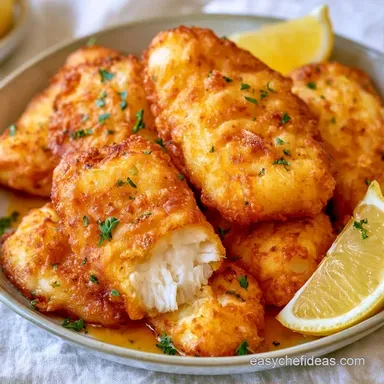
Crispy Fried Fish with Sparkling Water Batter

- Active time: 10 min | Cooking time: 15 min
- Flavor & Texture: Salty, flaky fish with a crisp, dark golden shell
- Ideal for: A cozy family dinner or a weekend treat
The initial crunch of that golden crust is the best part. You're aiming for a shell that shatters instantly while leaving the fish inside moist and tender.
This recipe avoids the thick, doughy batter typical of some eateries. Instead, carbonation is used to ensure a light finish.
You'll achieve a rich gold color and a clean, sharp crispness. It's a simple process, though the precise prep work makes all the difference.
How to Make Crispy Fried Fish
| Fish Type | Texture | Flavor | Best For |
|---|---|---|---|
| Cod | Large flakes | Mild, sweet | Classic fish and chips |
| Halibut | Firm, meaty | Lean, clean | Those who dislike "fishy" tastes |
| Haddock | Medium flakes | Slightly saltier | A more traditional Atlantic vibe |
What Makes It So Crispy
- The Carbonation: Tiny bubbles in sparkling water expand rapidly when they hit the heat, creating air pockets for a lighter crunch.
- Temperature Shock: The secret is the cold batter hitting hot oil, which forces moisture out of the crust instantly so it doesn't get soggy.
Ingredient Deep Dive
| Ingredient | Role | If You Don't Have It |
|---|---|---|
| Cornstarch | Adds crispness | Rice flour (similar result) |
| Sparkling Water | Aerates the batter | Club soda or seltzer |
| Baking Powder | Provides lift | A pinch more cornstarch (will be denser) |
The Grocery List
- 1½ lb fresh white fish fillets (Cod, Halibut, or Haddock)
- 1 tsp kosher salt
- ½ tsp black pepper
- 1 cup all-purpose flour
- ½ cup cornstarch Why this? It prevents the batter from becoming too bread-like.
- 1 tsp baking powder
- 1 tsp paprika
- ½ tsp garlic powder
- 1 cup ice-cold sparkling water Why this? The CO2 creates a lighter, airier crust.
- ¼ tsp salt
- 3 cups neutral oil (such as canola or vegetable)
Tools You Will Need
You won't need professional-grade gear, but a Dutch oven or heavy-bottomed skillet is crucial. These vessels maintain heat more effectively, preventing the oil temperature from dipping when the fish is added. A wire rack is equally important, as paper towels often trap steam and soften the underside of your fried food.
From Prep to Plate
Preparing the Fish
Use paper towels to pat the 1½ lb fish fillets completely dry so the batter sticks well. Lightly season both sides with 1 tsp kosher salt and ½ tsp black pepper.

Creating the Batter
In a large bowl, whisk 1 cup all-purpose flour, ½ cup cornstarch, 1 tsp baking powder, 1 tsp paprika, ½ tsp garlic powder, and ¼ tsp salt. Gradually stir in 1 cup of ice-cold sparkling water, mixing gently until just combined.
Note: leave a few small lumps to prevent overworking the gluten.

Frying for Perfection
Heat 3 cups neutral oil to 375°F (190°C) in a Dutch oven or heavy-bottomed skillet. Dip each fillet in the batter, let the excess drain, and carefully slide the fish into the hot oil. Fry in batches to ensure the oil temperature stays consistent.
Cook for 3–5 minutes per side until the crust is dark golden, the meat flakes easily, and it hits a core temperature of 145°F (63°C). Consult the USDA fish temperature guide for safety standards.
Immediately move the fried fish to a cooling rack placed over a baking tray to keep the coating crisp.

When It Does Not Turn Out
The Batter is Peeling Away
This usually happens because the fish was damp or the oil wasn't hot enough. Make sure fillets are bone-dry and the oil is exactly 375°F before the first piece hits the pan.
The Fish is Raw Inside
If the outside is dark but the middle is underdone, your oil is too hot. Lower the heat slightly and give the fish a bit more time to cook through.
The Result is Too Greasy
This happens when you crowd the pan or use oil that has cooled down. The fried fish turns out oily because the temperature drops, and the batter absorbs oil instead of searing. Fry in smaller batches.
Easy Swaps and Add-Ins
Feel free to customize the flavor of this fried fish base. For a bolder kick, stir a teaspoon of smoked paprika or cayenne into the flour. To add a herbal touch, try incorporating dried thyme or parsley.
If you are avoiding gluten, replace the all-purpose flour with a 1:1 gluten-free blend. Just remember that gluten-free batters can be more delicate, so handle the fish with care when flipping.
Keeping It Fresh
Keep your extra fried fish in a tightly sealed container in the refrigerator; they will remain good for up to 2 days.
To keep the batter from turning rubbery, avoid using a microwave. Instead, heat the fillets in an air fryer at 375°F (190°C) for 3–5 minutes. Alternatively, use a preheated oven at 400°F (200°C) until the surface oil begins to sizzle.
For safety, confirm they have reached an internal temperature of 165°F (74°C).
What to Serve This With

I like a squeeze of fresh lemon over the top to cut through the richness. For sides, a crisp coleslaw or some thick-cut fries are the classic choice.
If you want something different, I like it with a creamy green sauce for a bright, tangy kick that balances the fried crust. Some people also enjoy a simple tartar sauce or a spicy remoulade.
High in Sodium
1019 mg of sodium per serving (44% of daily value)
American Heart Association recommendation: no more than 2,300 mg of sodium per day
Tips to Reduce Sodium
-
Reduce Added Salt
Significantly decrease or omit the 1 tsp of kosher salt used for seasoning the fish fillets.
-
Eliminate Extra Salt
Remove the additional 1/4 tsp of salt from the batter recipe entirely.
-
Swap Baking Powder
Use sodium-free baking powder to maintain the light, airy texture of the batter without the added sodium.
-
Check Sparkling Water
Ensure you use a sodium-free brand of sparkling water, as some mineral waters contain naturally occurring sodium.
-
Enhance with Aromatics
Boost the paprika and garlic powder, or add lemon zest and fresh cracked black pepper to add depth of flavor without relying on salt.
Before You Start Cooking
Which fish is best for frying?
Cod, Halibut, or Haddock are the best choices. Cod has large flakes, Halibut is meaty, and Haddock is slightly saltier.
Do you dip fish in egg or flour first?
Dip the seasoned fillets directly into the batter. Letting the excess drip off before frying ensures a light crust.
What makes the batter so crispy?
Ice-cold sparkling water creates bubbles that expand rapidly in the heat. This aeration, combined with cornstarch, results in a shattering crunch.
How to ensure the batter sticks to the fish?
Pat the fillets completely dry with paper towels. Removing surface moisture allows the batter to adhere properly.
Can a sauce be paired with this dish?
Serve with lemon wedges or a creamy dip. You can use a similar creamy tang to the one in my horseradish sauce for a bold flavor.
Why should the batter stay cold?
Cold batter creates a temperature shock when it hits the 375°F oil. This forces moisture out of the crust instantly so it doesn't get soggy.
When is the fish finished cooking?
Fry for 3–5 minutes per side until the crust is dark golden. Ensure the internal temperature reaches 145°F (63°C).
Where should I store leftovers?
Keep cooked fish in the refrigerator. Seafood must be refrigerated to stay safe for consumption.
Crispy Fried Fish in 25 Minutes