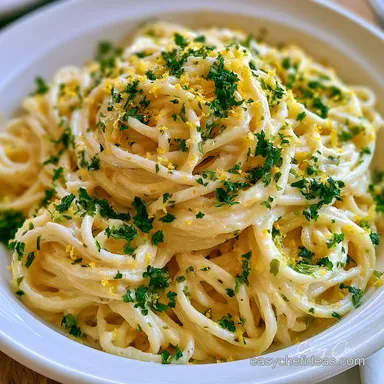
Creamy Lemon Pasta with No Cream: Velvety and Bright
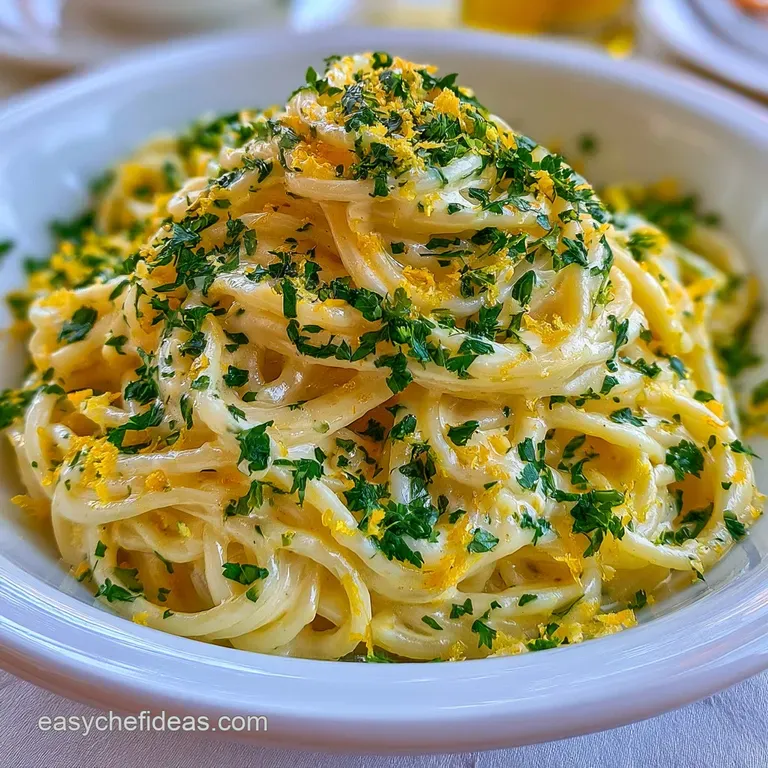
- Time: 5 min active + 10 min cooking = 15 minutes total
- Flavor/Texture Hook: Zesty, velvety, and bright
- Perfect for: A fast weeknight dinner or a light plant forward lunch
Creamy Lemon Pasta with No Cream
Imagine walking through a lemon grove on the Amalfi Coast, where the air is thick with a scent so bright it almost feels electric. In southern Italy, pasta al limone isn't just a recipe, it's a celebration of the land. They don't lean on heavy creams or blocks of butter to create richness.
Instead, they use the lemon's natural oils and the starch from the pasta itself to create something that feels luxurious but tastes clean.
Discover the secret to the perfect Creamy Lemon Pasta with No Cream and No Butter for Pure Flavor. For a long time, I thought that "creamy" had to mean "dairy heavy". I used to add splashes of heavy cream to everything, but it often masked the actual taste of the lemon.
When I stopped doing that and started focusing on the pasta water, the flavor finally popped.
This dish is all about balance. You get the sharp tang of the citrus, the savory punch of the garlic, and a velvety finish that coats every strand of pasta. It's a wholesome transformation of a few pantry staples into something that feels like a restaurant meal.
It's light, zesty, and honestly, way more satisfying than the heavy versions.
Why This Texture Works
Since we aren't using cream, we have to rely on a bit of kitchen logic to get that glossy finish. It's not magic, it's just how starch and fat play together.
- Starch Binding: The cloudy water left over from boiling pasta is full of released starch, which acts as a natural thickener.
- Fat Emulsion: When you toss the olive oil and Parmesan with the starchy water, they bond together instead of separating.
- Citrus Integration: The lemon juice thins the starch just enough to create a glaze rather than a thick paste.
- Cheese Melting: The residual heat of the pasta melts the Parmesan into the emulsion, adding body and a salty depth.
| Fresh Lemon | Bottled Juice | Impact | Best For |
|---|---|---|---|
| Bright, aromatic oils | Flat, acidic taste | Loss of fragrance | Fast prep |
| Natural zest available | No zest | No top note flavor | Emergency swaps |
| Balanced acidity | Often too sharp | Harsh aftertaste | Avoiding fresh fruit |
Component Analysis
Understanding what each part does helps you tweak the recipe without breaking the sauce. If you've ever tried a Cheese Sauce Recipe, you know how important the binding agent is. Here, the starch is our hero.
| Ingredient | Science Role | Pro Secret |
|---|---|---|
| Pasta Water | Emulsifier | Reserve more than you think you need |
| Lemon Zest | Aroma Carrier | Rub it into the pepper for more scent |
| Parmesan | Thickener/Salt | Use a microplane for faster melting |
| Olive Oil | Heat Medium | Use a fruity oil to complement the lemon |
Essential Kitchen Tools
You don't need a fancy setup for this, but a few specific tools make the process a lot smoother.
- Large Skillet: You need plenty of room to toss the pasta vigorously. A wide pan ensures the sauce coats everything evenly.
- Tongs: Essential for that "vigorous tossing" motion that builds the emulsion.
- Microplane or Zester: Getting just the yellow part of the lemon without the bitter white pith is key.
- Measuring Cup: Use a heat proof glass cup to scoop out the pasta water before draining.
Bringing It Together
The timing here is everything. We want the pasta to be just underdone when it hits the pan so it finishes cooking in the lemon sauce.
Phase 1: The Starch Foundation
Boil a pot of water with 1 tbsp salt. Add 1 lb spaghetti or linguine and cook until al dente (usually 1-2 minutes less than package directions). Note: This allows the pasta to absorb the sauce later. Before draining, reserve at least 1 cup of the starchy pasta water.
Phase 2: Building the Flavor Base
While the pasta boils, heat 2 tbsp extra virgin olive oil in a large skillet over medium heat. Add 3 cloves minced garlic and sauté for about 1 minute until fragrant and translucent.
Stir in the lemon zest and 1/2 tsp cracked black pepper, allowing the heat to release the citrus oils for 30 seconds.
Phase 3: The Final Emulsion
Transfer the cooked pasta directly into the skillet. Pour in the juice of 1 large lemon and half of the reserved pasta water, tossing vigorously with tongs. Gradually sprinkle in 1/2 cup freshly grated Parmesan cheese while continuing to toss until the sauce emulsifies into a glossy, velvety glaze.
Stir in 1/4 cup finely chopped fresh parsley right at the end.
Chef's Note: If the pasta looks a bit dry or the cheese isn't fully integrating, add another splash of that reserved pasta water. It's the "liquid gold" that saves the dish.
Common Pitfalls & Fixes
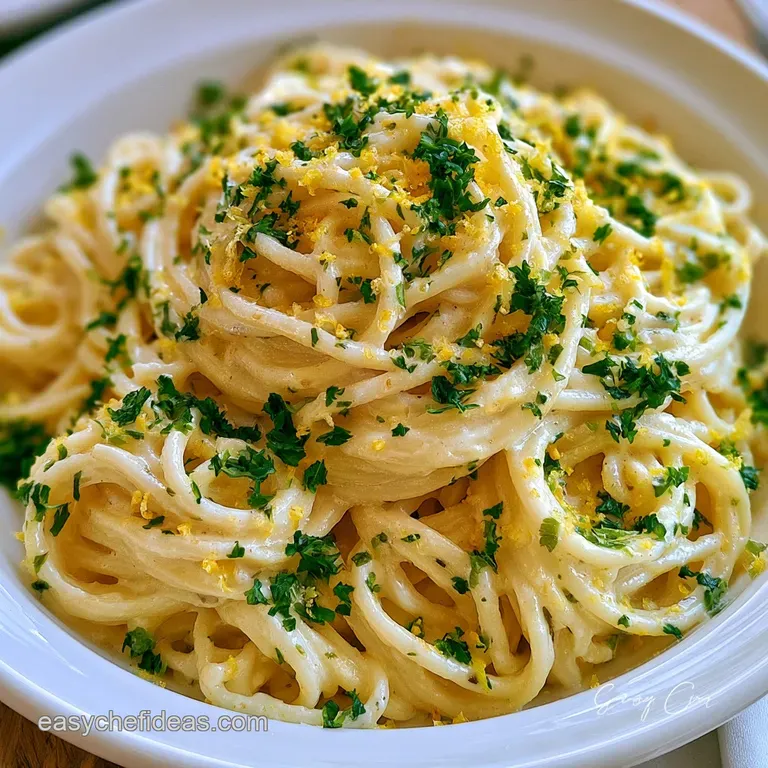
Even a simple recipe can go sideways if the heat is too high or the proportions are off. The most common issue is the sauce breaking, where you see oil floating on top of the pasta.
Why Your Sauce Is Oily
This usually happens if the oil didn't emulsify with the water and cheese. It often means the pan was too hot when the water was added, or you didn't toss the pasta enough to create that bond.
What If the Pasta Is Dry
If the noodles soak up the sauce too quickly, it's because the pasta was slightly overcooked in the pot. You can fix this by adding more reserved pasta water, a tablespoon of olive oil, or a tiny bit of warm water.
Avoiding Bitter Lemon
Bitterness comes from the white pith of the lemon peel. When zesting, only take the bright yellow surface. If you accidentally get too much pith in there, a pinch of salt or an extra sprinkle of Parmesan can help mask it.
| Problem | Root Cause | Solution |
|---|---|---|
| Clumpy Cheese | Heat too high | Lower heat and add pasta water |
| Bland Taste | Not enough salt | Add a squeeze of lemon or salt |
| Watery Sauce | Too much water | Toss over heat for 1 more minute |
Checklist for Success:
- ✓ Pasta is slightly underdone before hitting the pan.
- ✓ Reserved pasta water is hot when added.
- ✓ Zest is only the yellow part of the skin.
- ✓ Parmesan is finely grated, not pre shredded.
- ✓ Pasta is tossed vigorously to create the emulsion.
Making It Your Own
While I love the pure flavor of this version, you can easily adapt it to fit your dietary needs. If you're looking for a dairy free Creamy Lemon Pasta, you can swap the Parmesan for 3 tbsp of nutritional yeast and a tablespoon of cashew cream. It gives a similar nutty, salty vibe.
For those who want more bulk, adding sautéed shrimp makes this feel like a full feast. If you enjoy seafood, you might also like my Shrimp Scampi recipe for another zesty option. If you want to add greens, throw in two handfuls of baby spinach or frozen peas during the final tossing phase. They'll wilt in seconds from the heat of the pasta.
For a different grain, you can use whole grain pasta, but be mindful that it absorbs more water. You'll likely need an extra 1/4 cup of pasta water to keep the texture velvety.
| Original Ingredient | Substitute | Why It Works |
|---|---|---|
| Spaghetti (1 lb) | Linguine or Fettuccine | Similar starch content. Note: Wider noodles hold more sauce |
| Parmesan (1/2 cup) | Nutritional Yeast | Nutty, savory flavor. Note: Best for vegan versions |
| Lemon Juice | Lime Juice | Similar acidity. Note: Changes flavor to a more tropical profile |
Scaling Your Pasta
Adjusting the portions is simple, but you can't always just double everything. The liquid ratios change as the pan size changes.
Scaling Down (Half Portion): Use a smaller skillet so the sauce doesn't evaporate too quickly. Use 1.5 cloves of garlic and 1 tbsp of oil. Be careful with the salt in the boiling water, as smaller amounts of water can become overly salty.
Scaling Up (Double Portion): Use your largest pot and skillet. I recommend only increasing the salt and black pepper to 1.5x rather than 2x, as they can become overpowering.
Work in batches if your skillet isn't large enough to allow for vigorous tossing, otherwise, you'll just be stirring a heavy mass of noodles.
Kitchen Myths
There are a few misconceptions about lemon pasta that I've seen floating around. Let's set them straight.
Myth: You need cream for a "creamy" texture. Truth: Starch and fat (olive oil and cheese) create a stable emulsion that feels just as velvety as cream but allows the citrus to shine through.
Myth: Searing garlic until brown adds more flavor. Truth: Garlic turns bitter very quickly. You want it translucent and fragrant, not brown. If it browns, it's better to start the oil over than to risk the bitter taste in your sauce.
Myth: Adding lemon juice at the start preserves the flavor. Truth: High heat can make lemon juice taste metallic or bitter. Adding it at the end, along with the pasta water, keeps the flavor bright and fresh.
Storage & Leftovers
Pasta is notoriously tricky to store because the noodles continue to absorb liquid as they sit. By the time the next day rolls around, your velvety sauce has often turned into a sticky coating.
Fridge Guidelines: Store in an airtight container for up to 3 days. When you're ready to eat, don't microwave it on high. Add a tablespoon of water or a drizzle of olive oil before heating to loosen the sauce.
Freezing: I don't recommend freezing this dish. The emulsion will break during the freezing and thawing process, leaving you with an oily, separated mess.
Zero Waste Tips: Don't toss those lemon peels! You can freeze them to infuse into olive oil later, or simmer them with sugar and water to make candied lemon peels. Even the leftover pasta water can be used in a vegetable soup to add a bit of thickness and body.
Best Side Pairings
Since this is a bright and zesty dish, you want sides that either complement the acidity or provide a grounding contrast. A simple arugula salad with a light vinaigrette is the classic choice.
If you want something more substantial, roasted asparagus or sautéed broccolini works beautifully. For a more filling meal, I often serve this alongside a piece of grilled protein. If you prefer a different pasta style for your meal prep, you might try Gnocchi with Grilled Chicken for a heartier comfort dish.
Whether you make it as a Lemon Pasta with No Cream and No Butter for Pure Flavor or add your own twists, the key is always in that pasta water. Trust the process, toss it hard, and enjoy the brightness. It's a Pasta with No Cream and No Butter for Pure Flavor that proves simplicity is usually the best way to go.
Just remember: keep that water, watch your garlic, and zest carefully. Happy cooking!
Recipe FAQs
What can I use to make creamy pasta without cream?
Reserved starchy pasta water and grated Parmesan. These ingredients emulsify when tossed together to create a rich, creamy coating without any heavy cream.
What can I use to substitute cream in pasta sauce?
A combination of pasta water and hard cheese. This technique creates a glossy finish similar to the one used in a garlic parmesan sauce.
How to prevent the sauce from becoming clumpy?
Gradually sprinkle in the Parmesan while tossing the pasta vigorously with tongs. Adding cheese too quickly can cause it to clump instead of melting into the sauce.
Is it true that I need to add butter to get a velvety texture?
No, this is a common misconception. The starch from the pasta water and the fats in the Parmesan create a perfectly velvety glaze on their own.
How to reheat leftovers without them getting sticky?
Add a tablespoon of water or a drizzle of olive oil. Heat the pasta gently to loosen the sauce, which naturally thickens as the noodles absorb moisture in the fridge.
Can I freeze this pasta for later?
No, do not freeze this dish. The emulsion will break during the freezing and thawing process, leaving the sauce oily and separated.
How to get the most flavor out of the lemon?
Sauté the lemon zest with the garlic and pepper for 30 seconds. This heat releases the citrus oils for a deeper, more fragrant taste.
Creamy Lemon Pasta No Cream