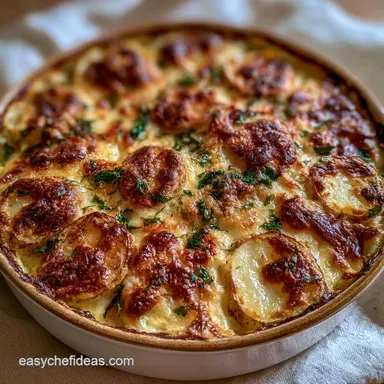
Copycat Ruth's Chris Potatoes Au Gratin: Rich and Creamy
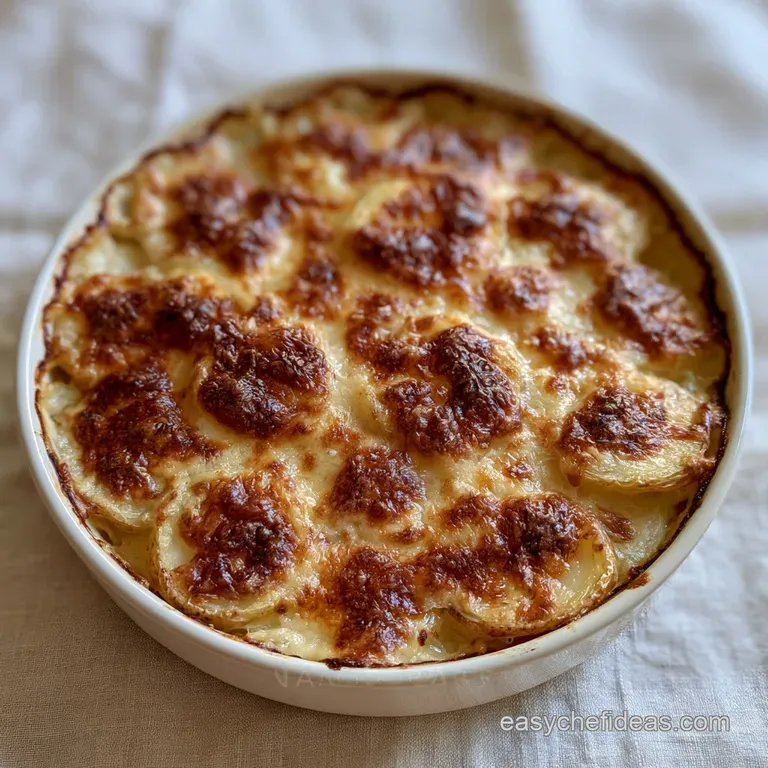
- Time:15 minutes active + 60 minutes baking = Total 1 hour 25 mins
- Flavor/Texture Hook: Shatter crisp topping with a silky, buttery interior
- Perfect for: Holiday dinners, date nights, or a fancy Sunday roast
- Copycat Ruth's Chris Potatoes Au Gratin
- Why This Side Wins Every Time
- Secrets Behind the Velvety Texture
- Everything You'll Need
- Step by Step Cooking Guide
- Solving Common Gratin Glitches
- Troubleshooting Common Issues
- Adjusting the Batch Size
- Debunking Potato Misconceptions
- Storage and Zero Waste
- Perfect Partners for Potatoes
- High in Sodium
- Recipe FAQs
- 📝 Recipe Card
Imagine the sound of a fork breaking through a crust that looks like polished mahogany, followed by that first scent of nutty parmesan and melted butter hitting the air. I remember the first time I had these at a steakhouse; I barely touched my steak because I was too busy obsessing over how the potatoes managed to be both creamy and structural at the same time.
It wasn't just a side dish, it was the main event.
The secret is really in the potato choice. While many people reach for Yukon Golds because they're "buttery," I've found that Russets are the real hero here. They have a higher starch content that slightly breaks down into the sauce, creating a natural thickness that Yukon Golds just can't match.
If you use a waxy potato, you end up with a puddle of cream at the bottom. With Russets, you get a cohesive, nourishing embrace of cheese and starch.
You can expect a dish that balances the heavy richness of cream and three different cheeses with a hint of nutmeg to brighten everything up. This copycat ruths chris potatoes au gratin isn't about being "healthy," it's about that specific, indulgent contrast between the browned top and the tender layers beneath.
It's the kind of comfort food that makes a room go quiet.
Copycat Ruth's Chris Potatoes Au Gratin
This recipe is all about the tension between the rich, salty cheese sauce and the earthy sweetness of the potatoes. I've spent a lot of time playing with the ratios of the cheese blend, and trust me, the mix of Cheddar, Fontina, and Parmesan is what gives it that specific steakhouse depth.
The Fontina provides the melt, the Cheddar provides the punch, and the Parmesan provides the salt and the crust.
When you first pull this out of the oven, the edges will be sizzling and the center will be bubbling. But the biggest mistake you can make is diving in immediately. Letting it rest for 10 minutes is non negotiable.
It allows the sauce to set so you get a clean slice rather than a cheesy landslide on your plate. It's a lesson in patience that pays off in presentation.
I love how this dish brings people together. Whether it's a family gathering or a small dinner party, there's something about a bubbling casserole that feels like a community embrace.
It's a dish that nourishes the soul as much as the stomach, reminding us why we love slow, intentional cooking in a world that's usually too fast.
Why This Side Wins Every Time
The reason this version works where others fail comes down to a few simple physics tricks in the pan.
- Starch Integration: Russet potatoes release more starch during the bake, which binds with the sauce to prevent that annoying liquid separation.
- The Roux Foundation: Starting with a butter and flour roux ensures the sauce stays velvety and doesn't break under high heat.
- Steam Control: Using foil for the first 40 minutes traps moisture, effectively steaming the potatoes until they're tender before the browning phase.
- Cheese Synergy: Combining a hard cheese (Parmesan) with a semi soft cheese (Fontina) creates a topping that shatters and a center that flows.
| Method | Time | Texture | Best For |
|---|---|---|---|
| Classic Bake | 1 hour 25 mins | Layered and Crusty | Dinner Parties |
| Fast Track (Parboiled) | 50 mins | Softer and Creamier | Weeknight Craving |
| Slow Cooker | 4-6 hours | Very Soft/Stew like | Set and Forget |
Secrets Behind the Velvety Texture
Understanding what each part of the recipe does helps you avoid the common pitfalls of home-made gratins.
| Ingredient | Science Role | Pro Secret |
|---|---|---|
| Russet Potatoes | Starch Base | Slice them thin (1/8") for maximum sauce absorption |
| Fontina Cheese | Melting Agent | Provides the "stretch" without overpowering the other flavors |
| Nutmeg | Flavor Bridge | A tiny pinch cuts through the heavy fat of the cream |
| Heavy Cream | Emulsion Stabilizer | Prevents the sauce from curdling at 350°F |
Everything You'll Need
For the best results, don't settle for pre shredded cheese. It's coated in potato starch to prevent clumping, which stops it from melting into that silky consistency we want.
- 2 lbs Russet potatoes, peeled and thinly sliced Why this? High starch content thickens the sauce naturally
- 2 tbsp unsalted butter, melted Why this? Prevents sticking and adds flavor to the base
- 4 tbsp unsalted butter Why this? Forms the base of the roux for stability
- 1/4 cup all purpose flour Why this? Thickens the milk and cream into a sauce
- 2 cups whole milk Why this? Provides the liquid volume for the béchamel
- 1 cup heavy cream Why this? Adds richness and prevents sauce separation
- 8 oz sharp cheddar cheese, shredded Why this? Adds the primary salty, sharp flavor
- 4 oz fontina cheese, shredded Why this? Ensures a smooth, gooey melt
- 4 oz parmesan cheese, freshly grated Why this? Creates the mahogany crust
- 1 tsp kosher salt Why this? Enhances all the dairy notes
- 1/2 tsp black pepper Why this? Adds a subtle bite to balance the richness
- 1/4 tsp nutmeg Why this? The "secret" ingredient that makes it taste professional
Substitution Guide
| Original Ingredient | Substitute | Why It Works |
|---|---|---|
| Fontina Cheese | Gruyere | Similar melting point. Note: Slightly nuttier and more pungent |
| Heavy Cream | Half and Half | Similar fat content. Note: Sauce will be slightly thinner |
| Russet Potatoes | Yukon Gold | Still works. Note: Texture will be waxier and less integrated |
If you're looking for another way to use a similar cheese profile, you might love my Brussels Sprouts Gratin which uses a similar creamy base but with a vegetable twist.
Step by step Cooking Guide
Let's get into the actual process. Accuracy with the potato thickness is the most important part here.
Phase 1: Prepping the Foundation
- Preheat your oven to 350°F (175°C).
- Grease a 9x13 inch baking dish with the 2 tbsp of melted butter, ensuring the corners are well coated.
- Slice the Russet potatoes into rounds approximately 1/8 inch thick. Note: Use a mandoline if you have one for total uniformity.
Phase 2: Crafting the Béchamel Cheese Sauce
- Melt 4 tbsp butter in a saucepan over medium heat.
- Whisk in the flour and cook for 1-2 minutes until it smells slightly nutty but hasn't browned.
- Slowly whisk in the whole milk and heavy cream, simmering until the sauce is thick enough to coat the back of a spoon.
- Remove from heat and stir in the cheddar, fontina, and parmesan until completely smooth.
- Stir in the salt, pepper, and nutmeg.
Phase 3: Assembly and Finishing
- Layer half of the sliced potatoes in the bottom of the dish.
- Pour half of the cheese sauce over the potatoes, spreading it to the edges.
- Repeat with the remaining potatoes and sauce.
- Cover the dish tightly with aluminum foil and bake for 40 minutes.
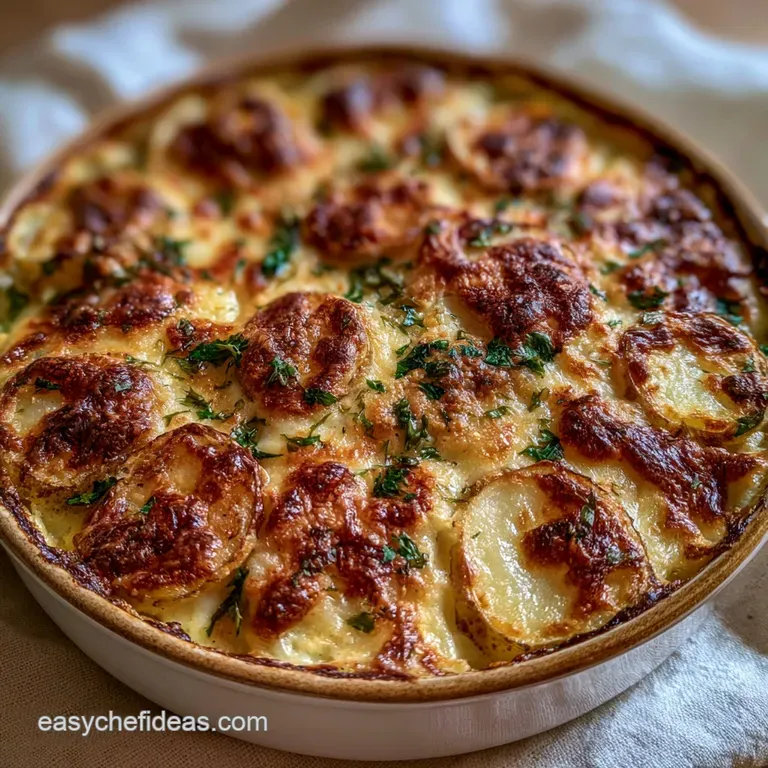
- Remove the foil and bake for another 20 minutes until the top is deep mahogany brown and bubbling.
- Let the casserole rest for 10 minutes before serving.
Chef's Tip: To get that restaurant style finish, grate your Parmesan on the finest setting. The smaller the particle, the more evenly it melts and browns into that signature crust.
Solving Common Gratin Glitches
Even with a solid plan, the oven can be unpredictable. Here's how to handle it.
Troubleshooting Common Issues
| Issue | Solution |
|---|---|
| Why Your Sauce is Watery | This usually happens if the potatoes were sliced too thick or the roux wasn't cooked long enough. If the potatoes are undercooked, they release water instead of absorbing the sauce. |
| Why the Top Burnt Too Fast | If your oven runs hot, the cheese can burn before the potatoes in the middle are tender. This is why the foil step is critical; it protects the top while the center steams. |
| Why the Potatoes are Still Firm | Uneven slicing is the culprit. If some slices are 1/8" and others are 1/4", the thicker ones will stay hard while the thinner ones turn to mush. |
Common Mistakes Checklist
- ✓ Avoid using pre shredded cheese to ensure a velvety melt.
- ✓ Don't skip the 10 minute rest or the sauce will be too runny.
- ✓ Ensure the foil is tightly sealed to prevent premature evaporation.
- ✓ Use Russets specifically for that steakhouse starch level.
- ✓ Don't over mix the sauce once the cheese is in, or it may break.
Adjusting the Batch Size
If you're feeding a crowd or just yourself, you can scale this copycat ruths chris potatoes au gratin, but you have to be careful with the liquids.
Scaling Down (1/2 batch): Use an 8x8 inch baking pan. Reduce the baking time by about 15-20% because the smaller mass heats through faster. Since you'll be using half an egg (if you were adding one, though this recipe doesn't), just whisk it and measure by tablespoon.
Scaling Up (2x batch): Use two 9x13 pans rather than one giant deep dish. If you pile the potatoes too deep, the middle will never cook through. Only increase salt and spices to 1.5x the original amount, as dairy concentrates flavors when scaled.
Lower your oven temperature to 325°F (160°C) and extend the bake time by 15 minutes to ensure the center is tender.
| Option | Pan Size | Temp Adjustment | Time Adjustment |
|---|---|---|---|
| Half Batch | 8x8 inch | None | -15 mins |
| Double Batch | Two 9x13 | -25°F | +15 mins |
Debunking Potato Misconceptions
There are a few things people tell you about au gratin that just aren't true.
The "Soaking" Myth: Many recipes tell you to soak sliced potatoes in water to remove starch. For this specific copycat ruths chris potatoes au gratin, we actually want that starch. It's what makes the sauce cling to the potatoes instead of sliding off.
The "One Cheese" Myth: Some think using only one high-quality cheese is better. In reality, a blend is superior. Using only Parmesan is too salty; using only Cheddar is too oily. The blend creates a balanced flavor and texture profile.
Storage and Zero Waste
These potatoes are incredibly rich, so you'll likely have leftovers.
Storage: Store in an airtight container in the fridge for up to 4 days. The sauce will thicken significantly as it cools, which is normal.
Reheating: To bring back the sizzle, avoid the microwave. Place a portion in a small baking dish, add a teaspoon of milk or cream to loosen the sauce, and bake at 350°F (175°C) for 15 minutes.
This restores the crust without drying out the center.
Zero Waste: If you have leftover potato peels, don't toss them. Toss them in a bit of oil and salt, and air fry them at 400°F (200°C) for 8 minutes for a crispy snack.
Any leftover cheese sauce can be used as a base for a cauliflower bake or a creamy pasta sauce the next day.
Perfect Partners for Potatoes
Because this dish is so rich and buttery, you need sides that provide contrast something acidic, bright, or spicy.
For the full experience, pair this with a steak rubbed in my homemade blackening seasoning to provide a spicy counterpoint to the cream. The heat from the blackened crust cuts right through the velvety cheese sauce.
Alternatively, a crisp green salad with a sharp lemon vinaigrette or roasted asparagus with balsamic glaze works wonders. You want something that "wakes up" the palate between bites of these decadent potatoes.
For a truly nourishing meal, consider adding a side of sautéed spinach with garlic to add some earthy greens to the plate.
High in Sodium
816 mg 816 mg of sodium per serving (35% 35% of daily value)
The American Heart Association recommends that most adults limit their sodium intake to 2,300 mg per day to reduce the risk of hypertension and heart disease.
Tips to Reduce Sodium
-
Omit Added Salt-25%
Completely remove the 1 tsp of kosher salt. The three types of cheese already provide ample sodium for seasoning.
-
Reduce Parmesan-15%
Reduce the parmesan cheese by half or substitute it with nutritional yeast to maintain a nutty flavor with significantly less salt.
-
Swap for Low-Sodium Cheese-15%
Substitute the sharp cheddar with a low-sodium variety or a fresh mozzarella, which naturally contains less salt.
-
Add Fresh Aromatics
Incorporate fresh thyme, rosemary, or parsley to enhance the flavor profile without relying on sodium.
Recipe FAQs
Why are my potatoes still firm after baking?
Slice the Russet potatoes to a uniform 1/8 inch. Uneven slicing is the primary culprit, as thicker pieces won't soften in the allotted time.
Why is my sauce watery?
Cook the roux longer or slice potatoes thinner. If the potatoes are too thick, they release excess water instead of absorbing the cheese sauce.
Is it true I can skip the aluminum foil to save time?
No, this is a common misconception. The foil protects the cheese from burning while the center steams; skipping it causes the top to char before the potatoes are tender.
How to make the cheese sauce?
Melt butter and whisk in flour for 1-2 minutes. Slowly stir in whole milk and heavy cream until thickened, then remove from heat and stir in the shredded cheddar, fontina, and parmesan.
How to reheat leftovers without them drying out?
Bake at 350°F for 15 minutes in a small dish. Add a teaspoon of milk or cream to loosen the sauce and restore the mahogany crust.
How long can I store these in the refrigerator?
Up to 4 days in an airtight container. The sauce will thicken significantly as it cools, which is normal for this recipe.
What is the best side dish to serve with these potatoes?
Pair them with a lean protein or garlic bread. These rich potatoes complement the flavors of garlic butter breadsticks perfectly.
Copycat Ruths Chris Potatoes Au Gratin