Brussels Sprouts Gratin: the Best Cheesy, Crispy Side Dish Recipe
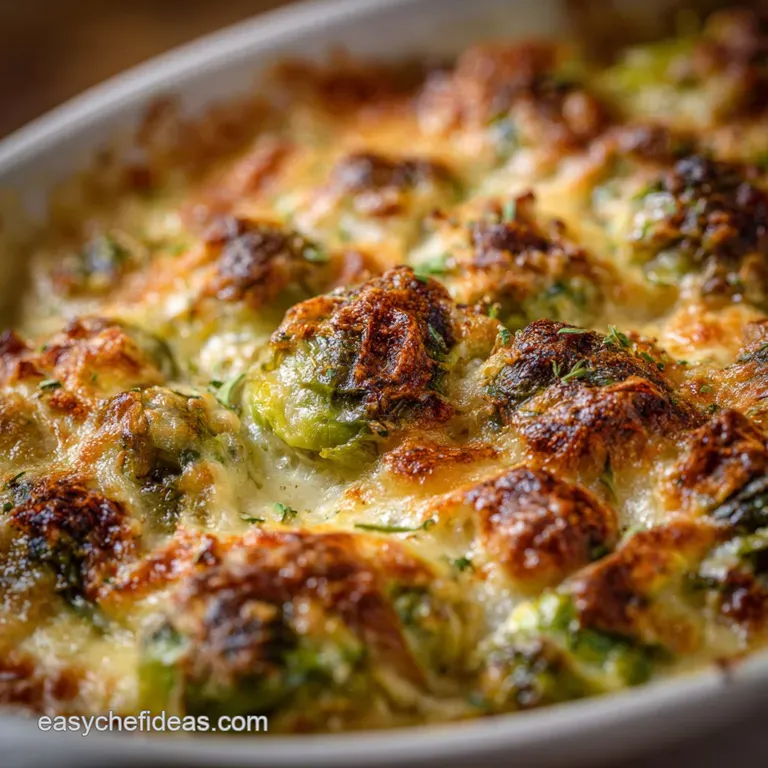
Elevating the Brussels Sprouts Gratin: Why This Recipe Works
Okay, let’s be real. Brussels sprouts often get a terrible rap. I get it. If they’re boiled until grey and mushy, they are genuinely awful. But when done right when they are caramelized, nutty, and swimming in a blanket of sharp, glorious cheese sauce they become the absolute star of the dinner table.
This Brussels sprouts gratin recipe isn’t just good; it’s the recipe you need to permanently convert any sprout hater.
I tried making this dish a million ways back in the day (seriously, my husband has suffered through some horrors). I learned that the magic lies in two non and negotiable steps: managing the moisture and using quality cheese. We’re not aiming for a sad, watery casserole.
We want texture, tang, and that perfect golden crunch on top.
Taming the Bitterness: The Essential Pre and Roast Step
This is where 90% of recipes go wrong. People try to dump raw or par and boiled sprouts into the sauce. What happens? The raw sprouts release massive amounts of water into the béchamel base, diluting the flavor, turning the sauce grainy, and making the whole thing soggy. Nobody wants Brussels sprouts soup.
We have to pre and roast them. We’re aiming for the al dente stage tender but still with a little bite and, crucially, we want that beautiful nutty char. That char is flavor. It tames the natural bitterness that those little green cabbages possess.
If you try to cheat and skip the char, you end up with aggressively sulfurous little cabbages floating forlornly in a puddle of creamy liquid. No thanks. A quick 15 minutes at a high heat gets us exactly where we need to be.
Crafting the Perfect Mornay Sauce Base
The difference between a bland, gluey cheese sauce and a velvety Mornay is all about technique and cheese choice. A Mornay sauce is just a béchamel (butter, flour, milk) with cheese stirred in. Simple, right? But what cheese?
We are using Gruyère and Sharp Cheddar. Gruyère is the secret weapon here. It melts like a dream and brings this incredible, slightly earthy, salty, nutty depth. That’s what stops the rich sauce from becoming too flat. Cheddar gives us that familiar sharpness, the comfort food flavour we crave.
Honestly, don't even bother with low and fat cheese here. It's just not the same. Use whole milk and fresh, real cheese. You deserve it.
Mastering the Mise En Place: Essential Components and Quantities

Mise en place (getting everything prepped before you start cooking) is key for any gratin because the sauce moves fast. You don’t want to be desperately grating cheese while your roux is burning. Trust me on this.
Procurement and Preparation of the Main Produce
We need a hefty amount of Brussels sprouts for this gratin (1.5 pounds), but remember they shrink down a bit in the oven. Look for firm, bright green sprouts. Avoid any that look yellowed or have soft spots.
The trimming process is simple:
- Slice off the very bottom stem end.
- Peel off any loose, yellowed, or damaged outer leaves.
- Slice them all exactly in half lengthwise. (This ensures maximum surface area for roasting, which is critical for that flavor and taming char.)
The Ideal Dairy and Cheese Pairings for Rich Depth
My biggest pro tip for any creamy dish is: grate your own cheese. Always. Pre and shredded cheese is tossed in anti and caking agents usually cellulose or potato starch which stops it from melting smoothly and often leaves the sauce with a weird, gritty finish.
Don’t even look at those pre and shredded bags if you want a silky sauce.
The ratio here is 1 part Gruyère to 2 parts Sharp Cheddar. Gruyère is expensive, but a little goes a long way.
| Cheese Type | Function in Gratin | Why We Use It |
|---|---|---|
| Sharp Cheddar | Sharpness and color | Classic creamy comfort flavor. |
| Gruyère | Nutty depth and melt quality | Silky smooth melting agent. |
Switching Between US Customary and Metric Measures
Because I have readers everywhere, I’ve included both US Customary and metric measures in the ingredient list above. For this recipe, where precision is important (especially the roux ratio of butter to flour), I always recommend using a scale if you are using the metric grams.
Cups are fine for the liquid, but weighing the flour and butter for the roux removes all doubt. Let’s make this foolproof.
Related Recipes Worth Trying
- Skinny Scalloped Potato Gratin: Ultra Creamy low-fat Comfort Side — Our Skinny Scalloped Potato Gratin is the elegant, guilt free version of a classic. Master this healthy scalloped potato bake using low-fat dairy and...
- Maplesoy glazed roasted brussels sprouts Sticky ma: Crispy Umami Side — Maplesoy glazed roasted brussels sprouts Sticky ma transforms sprouts and squash into a gourmet side dish. Get crispy edges with our easy Umami Glaze...
- Alpine Crunch Shaved Brussels Sprout Salad with Grated Egg — Forget soggy slaw This Raw Brussels Sprout Salad with Grated Egg is crunchy tangy and topped with fluffy richness A robust Shaved Brussels Sprout Salad for...
- Healthy Spicy Pork Brussels Bowls with Crispy Ginger Glaze — These Healthy Spicy Pork Brussels Bowls are a cracking low carb dinner ready in 40 mins Crispy sprouts meet fiery Koreaninspired pork mince Perfect for meal...
- Longhorn Steakhouse Brussels Sprouts Recipe Crispy HoneyBalsamic Side — Our foolproof Longhorn Steakhouse Brussels Sprouts Copycat recipe delivers deep char sticky honeybalsamic glaze and smoky bacon Achieve perfect crispiness...
- Longhorn Steakhouse Crispy Brussel Sprouts Sweet Tangy Maple Glaze — Cracking Longhorn Steakhouse Crispy Brussel Sprouts copycat recipe Get that addictive deepfried crunch from the oven Sweet maplebalsamic glaze and bacon...
Executing the Dish: Step and by-Step Method for the Crispiest Gratin
Let’s crack on. We’re working in three clear stages here: sprouts, sauce, assembly.
Stage One: Initial Prep and Roasting the Little Cabbages
This stage is all about maximizing flavor and driving out excess moisture. Preheat that oven to 400°F (200°C). Tossing the sprouts with oil, salt, and pepper is easy, but here’s the hack: place them cut and side down on the sheet pan.
This guarantees maximum contact with the hot metal, resulting in deep, lovely caramelization rather than just steaming.
Roast them for just 15 minutes. They need to be tender and crisp. We are not cooking them through. They’ll soften further later. Pull them out and set them aside while you get the sauce ready.
Stage Two: Building the Velvety Mornay Sauce Base
This is the only slightly tricky part, but if you’ve made gravy, you’ve done a roux.
- The Roux: Melt your butter, whisk in the flour, and cook it down for a couple of minutes until it smells toasty and looks like wet sand. This cooks out the raw flour taste.
- The Milk: Crucial Note Alert. Gently warm your milk first! Don't use cold from the fridge milk. Adding cold liquid to a hot roux can shock the flour, causing it to seize up instantly and form irredeemable lumps. Whisk constantly as you pour the warm milk in, slowly at first, then steady. Keep whisking until it’s thick enough to cling to the back of a spoon.
- The Finish: Take the saucepan off the heat before you add the cheese. The residual heat will melt it beautifully. Stir in the Cheddar and Gruyère along with that tiny grate of fresh nutmeg. Nutmeg is a classical pairing for cheese sauces, brightening the flavor without making the dish taste "spiced."
Stage Three: Layering, Topping, and Achieving Golden Perfection
Time to bring it all together. Spread those beautifully charred Brussels sprouts into your baking dish. Pour that velvety Mornay sauce over everything. Now, the topping.
I use Panko breadcrumbs because they give a far superior crunch compared to standard dried breadcrumbs. Toss the Panko with melted butter this helps them crisp up evenly and deeply golden and sprinkle them over the top. Then, a final dusting of reserved Gruyère.
That Gruyère on top will melt and fuse the Panko into a single, irresistible, crunchy cap.
Bake it until it’s fiercely bubbling around the edges. Usually 20- 25 minutes.
The Final Rest: Why Letting the Gratin Settle Matters
Warning: Serve too soon and you will have a runny mess. The starches in the flour need time to absorb the final moisture and set up, and the cheese needs to cool slightly to firm back up.
Pull the gratin out of the oven and just… walk away for 5 to 10 minutes. It’s hard. I know the smell is incredible. But this rest ensures that when you scoop out a portion, it holds its shape perfectly.
Expert Tips for Mastering the Brussels Sprouts Gratin
Making Ahead: Storage and Reheating Protocols
This Brussels sprouts gratin is actually a surprisingly great make and ahead dish, perfect for Thanksgiving or Christmas when oven space is precious.
You can assemble the entire gratin up to the point of baking (Stages 1, 2, and 3, minus the final bake). Cover it tightly with plastic wrap and refrigerate for up to 24 hours.
When you’re ready to bake, let it sit on the counter for 30 minutes to take the chill off, then bake as directed. You might need an extra 5- 10 minutes of baking time since it’s starting cold.
Reheating leftovers? My preferred method is a covered dish in a 350°F (175°C) oven until warmed through, then uncover for the last five minutes to re and crisp the topping. Microwaving works, but you lose the crispness.
Troubleshooting Common Gratin Issues (Curdling, Separation)
- Lumps in the Sauce: Usually caused by adding cold milk to the hot roux too quickly. If it happens, you can often save it by pushing the sauce through a fine and mesh sieve.
- Curdling/Separation: This happens for two main reasons: 1) You boiled the sauce too vigorously after adding the cheese, or 2) You used low and fat dairy. Cheese hates high heat. Always remove the sauce from the heat before adding the cheese.
- Watery Gratin: You didn’t pre and roast the Brussels sprouts long enough, or they weren’t drained properly. Make sure they are laid out in a single layer on the baking sheet to release their steam.
Customising Your Bake: Variations on Cheese and Toppings
This Brussels sprouts gratin is fantastic as and is, but sometimes you need to shake things up. Here are some quick ideas:
- The Bacon Upgrade: Stir in 4 ounces (115g) of crumbled, crispy bacon or pancetta right when you combine the sprouts and the sauce. Brussels sprouts gratin with bacon is a classic pairing for a reason!
- Cheesy Swap: Swap out the Cheddar for sharp Provolone or Fontina. For a super strong, pungent flavor, try using half Gruyère and half high and quality blue cheese (like a Gorgonzola dolce) for a bold Brussels sprouts gratin with blue cheese.
- Nutty Crunch: Replace the Panko with crushed butter crackers (like Ritz) or add 1/4 cup of chopped walnuts or pecans to the topping for an earthy note.

Recipe FAQs
I haven't got Gruyère; what cheese works well instead of it?
Fontina or Emmental are brilliant melting cheeses that offer a similar nutty flavour profile. A sharp mature Cheddar works in a pinch too, if you fancy it.
Can I make this Brussels Sprouts Gratin ahead of time for a party?
Yes, assemble the gratin (without the Panko topping) up to 24 hours ahead. Keep it covered in the fridge, then add the Panko just before baking for the best crunch.
My cheese sauce is lumpy, help! What's the secret to a smooth béchamel?
The trick is temperature control! Ensure your milk is warm before adding it to the hot roux, and whisk constantly and gradually. This avoids temperature shock and lumps.
Why do I have to pre-roast the sprouts before they go into the sauce?
Pre-roasting is vital! It tames the natural bitterness, sweetens the sprouts, and prevents the gratin from ending up watery. Don't skip this step, mate.
I love bacon. Can I add a little something extra for a savoury kick?
Absolutely! Sauté diced pancetta or thick cut bacon until crisp, and stir the pieces (and a little rendered fat) into the Mornay sauce before assembly. Works a treat.
Brussels Sprouts Gratin With Gruyere

Ingredients:
Instructions:
Nutrition Facts:
| Calories | 299 kcal |
|---|---|
| Protein | 11.0 g |
| Fat | 22.0 g |
| Carbs | 13.0 g |
