Brazilian Lemonade Recipe
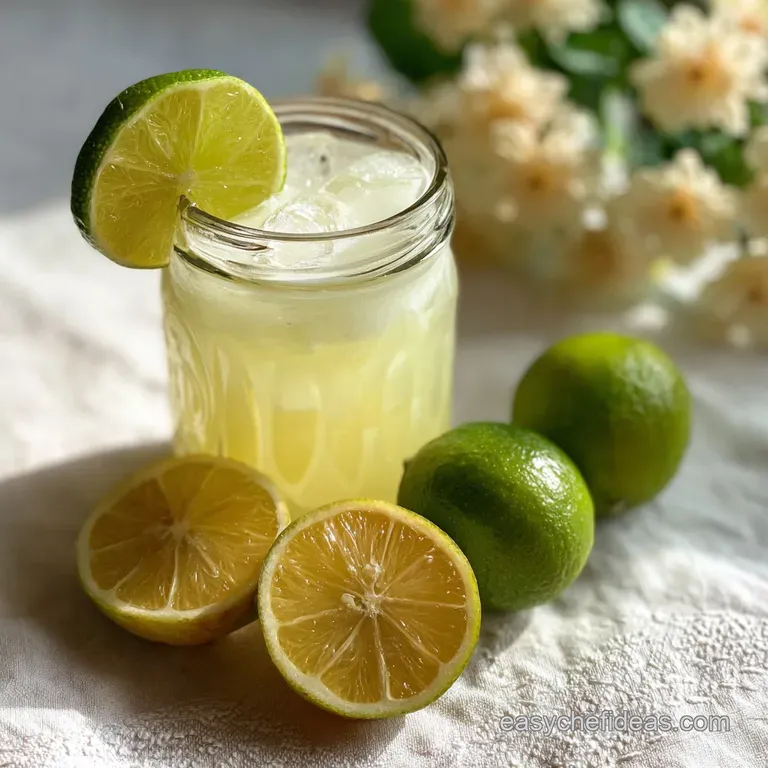
- Create This Refreshing Brazilian Lemonade Recipe Now
- Why This Creamy Drink Works
- Serving Size and Portion Guide
- Component Analysis of the Elements
- Essential Ingredients and Smart Swaps
- Best Tools for Smooth Blending
- Step by Step Blending Instructions
- Fixing Common Flavor Issues Fast
- Scaling This Recipe Up or Down
- Debunking Common Kitchen Myths
- Storing and Keeping Drinks Fresh
- Perfect Foods for This Drink
- Recipe FAQs
- 📝 Recipe Card
Create This Refreshing Brazilian Lemonade Recipe Now
I still remember the first time I sat in a crowded Brazilian steakhouse, the air heavy with the smell of charred picanha and the rhythmic clatter of knives on wood. A server walked by with a pitcher filled with an opaque, frothy, white liquid that looked halfway between a cloud and a milkshake.
I took one sip, and my brain short circuited. It was sharp and punchy like a lime but carried this velvety, rich finish that lingered on the tongue. I spent the next three months trying to recreate it at home, failing miserably because I kept peeling the limes.
The truth is, this drink is a beautiful contradiction. It is bright but heavy, sweet but slightly bitter, and surprisingly complex for something that takes five minutes. If you have ever felt that regular lemonade is just too thin or acidic, this is the drink that will change your mind.
It is not just juice, it is an experience of texture and temperature. We are going to walk through the exact steps to get that frothy head and the right balance of citrus oils without the harshness that ruins a bad batch.
Why This Creamy Drink Works
- Pith Extraction: Pulsing whole limes quickly releases the fragrant oils from the zest without deep diving into the bitter white pith.
- Emulsion Stability: Sweetened condensed milk acts as a stabilizer, binding the lime juice and water into a silky, opaque liquid.
- Temperature Control: Using ice and filtered cold water prevents the friction of the blender blades from warming the lime oil, which can trigger oxidation and bitterness.
- Sugar Suspension: The granulated sugar provides a clean sweetness that balances the dairy fat without making the texture too syrupy.
| Method | Time | Texture | Best For |
|---|---|---|---|
| Pulse Method | 20 seconds | Light, frothy, and zesty | Traditional, clean flavor |
| High Speed Blend | 10 seconds | Thicker and more opaque | Quick prep with high power blenders |
| Hand Pressed | 15 minutes | Thin and very tart | When you lack a blender |
Whether you are hosting a summer barbecue or just need a treat that feels like a vacation, this method is foolproof if you respect the clock. Most people over blend, which is the number one reason their lemonade tastes like a lawn clipping. We will stick to short bursts to keep things bright. If you are looking for a savory companion for this drink, it pairs beautifully with the zesty kick of a Peruvian Green Sauce recipe drizzled over grilled chicken.
Serving Size and Portion Guide
This drink is best served immediately because the emulsion is delicate. If you let it sit, the lime solids will settle, and the bitterness will intensify. I usually find that one batch serves four people perfectly, especially if you use generous amounts of ice in the glasses.
| Servings | Ingredient Adjustments | Container Size | Prep Time |
|---|---|---|---|
| 2 People | 2 limes, 2 cups water, 1/4 cup milk | Small blender jar | 5 minutes |
| 4 People | 4 limes, 4 cups water, 1/2 cup milk | Standard pitcher | 10 minutes |
| 8 People | 8 limes, 8 cups water, 1 cup milk | Work in two batches | 15 minutes |
Component Analysis of the Elements
| Ingredient | Science Role | Pro Secret |
|---|---|---|
| Persian Limes | Provide acid and essential oils | Use thin skinned fruit for less bitter pith |
| Condensed Milk | Creates a creamy emulsion | Chill the can beforehand for a thicker foam |
| Granulated Sugar | Balances the citrus sharpness | Pulse with the water first to ensure it dissolves |
The interaction between the citric acid and the proteins in the condensed milk creates a slight thickening effect, almost like a very loose custard. This is why the drink feels so much more substantial than a standard lemon water sugar mix.
Essential Ingredients and Smart Swaps
Gather your ingredients before you start. Since this is a raw preparation, the quality of your fruit is everything. Look for limes that feel heavy for their size and have smooth, shiny skin.
- 4 large Organic Persian Limes: Choose thin skinned ones. Why this? They contain more juice and have a thinner, less bitter white pith layer.
- Substitute: Key Limes (use 12-15). Note: More labor intensive but offers a floral aroma.
- 4 cups filtered cold water: Keeps the flavor neutral and crisp. Why this? Impurities in tap water can react with the lime oils and dull the color.
- Substitute: Coconut water. Note: Adds a tropical sweetness but alters the traditional profile.
- 1/2 cup granulated sugar: For a sharp, clean sweetness. Why this? It dissolves quickly and provides a neutral canvas for the lime.
- Substitute: Honey or Agave. Note: Will add distinct floral or earthy undertones.
- 1/2 cup sweetened condensed milk: The soul of the recipe. Why this? It provides both sweetness and a velvety texture that plain milk cannot achieve.
- Substitute: Coconut cream (sweetened). Note: Perfect for a dairy-free version with a nutty finish.
- 2 cups fresh ice cubes: Essential for the froth. Why this? Rapid cooling during the second blend creates a stable, micro bubble foam.
- Substitute: Frozen lime juice cubes. Note: Prevents dilution if you drink slowly.
Best Tools for Smooth Blending
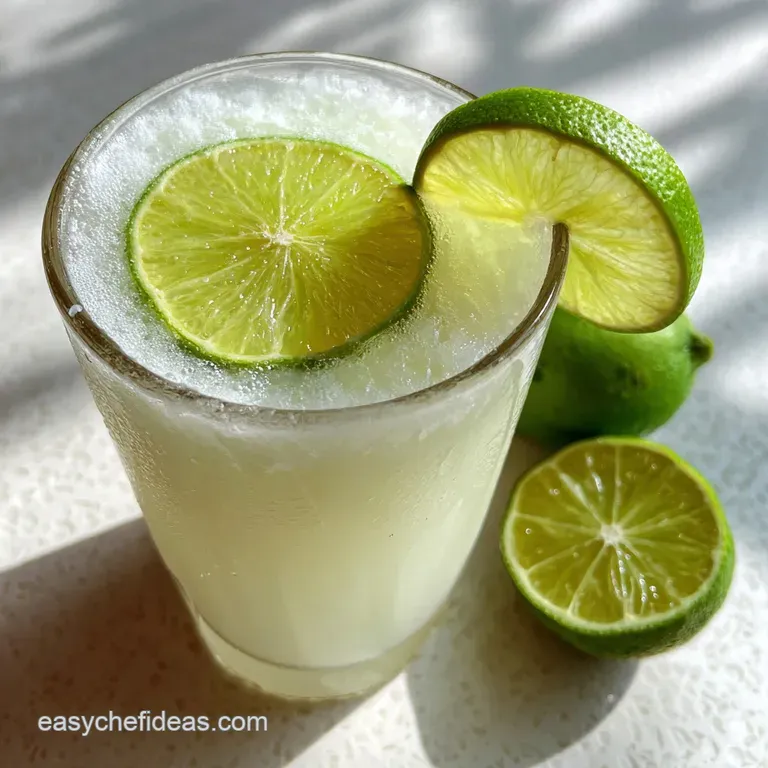
You don't need a professional grade blender, but a powerful motor helps. I use a standard KitchenAid, and it works perfectly. You will also need a fine mesh strainer. Do not skip the straining step, or you will be picking bits of lime zest out of your teeth all afternoon.
A large glass pitcher is ideal for serving so everyone can see that beautiful white foam.
step-by-step Blending Instructions
- Scrub the limes. Wash the 4 Persian limes thoroughly under warm water. Note: Since we use the whole fruit, removing wax and dirt is vital.
- Trim the ends. Slice off the nubby ends of each lime and discard.
- Section the fruit. Cut each lime into eight small wedges.
- Initial blend. Place the lime wedges and 4 cups of filtered water into the blender.
- Pulse with precision. Pulse the blender 5-7 times for about 2 seconds each. Stop when the water looks cloudy and green but chunks of lime remain.
- Strain the base. Pour the mixture through a fine mesh strainer into a pitcher. Discard the solids immediately to stop the bitterness from leaching.
- Clean the jar. Quickly rinse the blender jar to remove any stray pulp or seeds.
- The final emulsion. Pour the lime water back into the blender. Add 1/2 cup sugar, 1/2 cup condensed milk, and 2 cups ice.
- Whip it up. Blend on high for 15 seconds until the top is thick and frothy.
- Serve immediately. Pour into glasses filled with more ice and enjoy the velvety texture.
Fixing Common Flavor Issues Fast
Why is my lemonade bitter?
The most common culprit is over blending. If you run the blender continuously for 30 seconds with the whole limes, you are pulverizing the pith. That white spongy layer is where the bitterness lives. Another reason is letting the drink sit.
The lime oils oxidize quickly, so if it's been an hour, it will taste different.
Why is it separating?
Separation usually happens if the water wasn't cold enough or if the ratio of condensed milk was too low. The milk acts as the glue. Give it a quick stir, but if it has completely split, you might have used too much acid (limes vary in size!).
| Problem | Root Cause | Solution |
|---|---|---|
| Gritty Texture | Sugar didn't dissolve | Pulse sugar with water for 5 seconds before adding limes |
| Weak Flavor | Too much ice | Use 2 cups ice as measured; don't eye ball the volume |
| Too Sweet | Large condensed milk pour | Start with 1/3 cup and taste before adding the rest |
Common Mistakes Checklist ✓ Never use regular yellow lemons; they lack the specific oil profile needed. ✓ Don't skip the wash; organic limes often have a natural wax that tastes soapy. ✓ Avoid the "smoothie" setting; manual pulsing is the only way to control pith extraction.
✓ Strain twice if your mesh isn't very fine to ensure a silky mouthfeel. ✓ Use the drink within 20 minutes for the best flavor and "head" of foam.
Scaling This Recipe Up or Down
When you are making this for a crowd, don't try to double it in one blender jar. The limes need room to move around in the water to be properly "bruised" by the blades. If the jar is too full, the bottom limes get turned to mush while the top ones stay whole. Work in batches.
For a smaller 2 person serving, follow the same pulsing rules but reduce the time by a few seconds.
If you are serving this alongside a heavier meal, like a Chicken Francese Recipe, the acidity in the lemonade acts as a brilliant palate cleanser. For larger parties, I suggest prepping the lime water base (steps 1-7) up to 2 hours early and keeping it in the fridge. Only add the milk and ice right before the guests arrive.
| Premium | Budget | Flavor Impact | Savings |
|---|---|---|---|
| Organic Persian Limes | Standard Limes | Standard can be slightly more acidic | Save $2-3 |
| Filtered Water | Tap Water | Tap may have chlorine notes | Save $1 |
| Name Brand Milk | Store Brand Milk | Negligible difference in fat content | Save $1.50 |
Debunking Common Kitchen Myths
"You must peel the limes to avoid bitterness." This is the biggest myth of all. The flavor of a true Brazilian lemonade recipe comes from the oils in the skin. If you peel them, you just have creamy lime juice, which is fine, but it lacks that "zing" that makes people's eyes light up.
The trick is the pulse, not the peel.
"It's called Brazilian Lemonade because they use lemons in Brazil." Actually, in Brazil, it's often called Limonada Suiça (Swiss Lemonade). The "lemonade" name is a translation quirk.
Brazilians primarily use small, green limes for this, and the "Swiss" part likely refers to the addition of condensed milk, which was popularized by Swiss brands like Nestlé in South America.
Storing and Keeping Drinks Fresh
Honestly, don't even bother trying to store this for the next day. The lime oils will turn, and the milk will start to curdling from the high acid content. It is a "made to order" kind of drink. However, if you have leftovers, you can pour them into popsicle molds.
Frozen Brazilian lemonade pops are a fantastic zero waste way to handle the extra.
If you have extra limes that are starting to go soft, zest them and mix the zest with some sugar to keep in the freezer. You can use that "lime sugar" for your next batch to give it an even bigger aromatic punch. For the leftover condensed milk in the can, it keeps in a sealed container in the fridge for about two weeks. It's great in coffee or as a base for a Pumpkin Spice Latte Recipe if you want to get creative with your morning brew.
Perfect Foods for This Drink
This drink is a star during a heavy barbecue. The creaminess cuts through the fat of grilled meats, while the lime cleanses the tongue. I love serving it with salty appetizers like fried halloumi or even just a bowl of spicy nuts. Because it's quite sweet, it can almost act as a liquid dessert.
If you want to lean into the tropical vibes, try serving it with a side of coconut rice or shrimp skewers. The contrast of the cold, frothy drink against hot, spicy food is what summer dreams are made of.
Trust me on this, once you make a batch of this brazilian lemonade recipe, you will never look at a yellow lemon the same way again. It’s the kind of drink that turns a regular Tuesday into a celebration of culture and flavor.
It nourishes the spirit as much as it cools the body, bringing a little bit of that Brazilian sunshine right into your kitchen.
For a fun twist, if you find yourself with extra pumpkin during the fall, you might find that the creaminess of this drink inspires you to try a Pumpkin Butter Velvety recipe for your morning toast. The world of creamy, emulsified treats is a big one, and this lemonade is the perfect gateway!
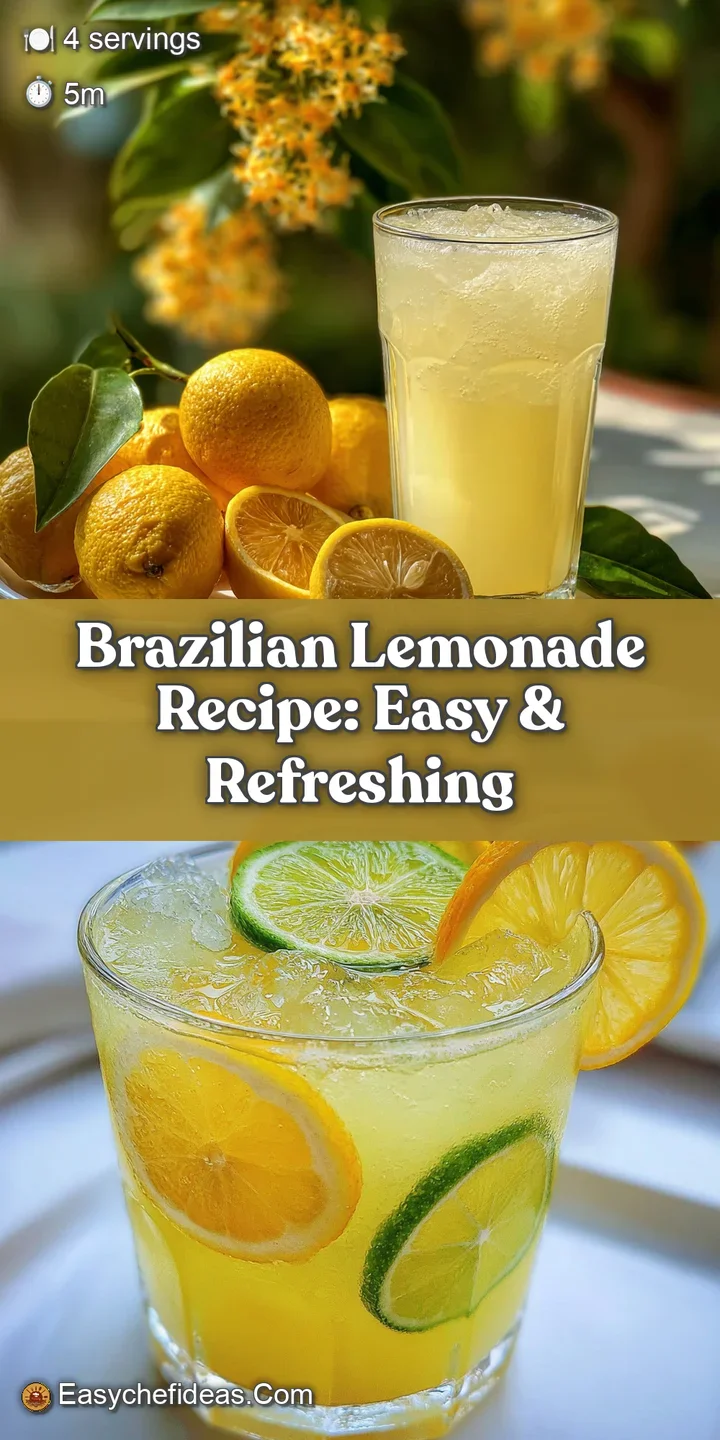
Recipe FAQs
What are the ingredients in Brazilian lemonade?
Key ingredients are limes, water, sugar, and sweetened condensed milk. You'll also need ice for blending. The whole lime, including the peel, is used, which is crucial for the unique flavor.
What makes Brazilian lemonade different?
It's made with whole limes and sweetened condensed milk. This results in a much creamier texture and a more complex, slightly bitter sweet flavor profile compared to traditional lemonade, which uses only lime juice.
How to make Brazilian lemonade not bitter?
Pulse the whole limes briefly in the blender before straining. This extracts the flavorful oils from the peel without over processing the bitter white pith. Blend the lime water base separately from the milk and ice.
What is a traditional Brazilian drink?
Brazilian lemonade (Limonada Suiça) is a very traditional and popular drink. It's enjoyed for its refreshing and creamy taste, often made with limes and condensed milk, and is a staple in many Brazilian households and restaurants.
Can I use regular lemons instead of limes?
No, stick with limes for authentic flavor. While you can technically make a creamy drink with lemons, it won't have the signature zesty and slightly bitter notes characteristic of Brazilian lemonade. If you're looking for a twist on citrus drinks, consider exploring recipes that leverage fruit oils effectively, like The Crispiest Homemade InNOut Animal Style Fries Recipe which also relies on precise flavor extraction.
How long does Brazilian lemonade last?
It's best consumed immediately for optimal flavor and texture. The drink's emulsion can break down over time, and the lime oils can develop a bitter taste. If you have leftovers, consider freezing them into popsicles.
What is the best type of lime for Brazilian lemonade?
Persian limes are generally preferred for their balance of juice and thinner pith. These limes offer a good amount of citrus oil from their peel and are less likely to impart excessive bitterness when pulsed. If you master the technique of whole fruit blending here, you might find similar precision is key in recipes requiring careful ingredient balance, such as in a rich Slow Cooker Bolognese Sauce: Deep Rich Ragu, Easy Crock Pot Dinner.
Brazilian Lemonade Recipe
Ingredients:
Instructions:
Nutrition Facts:
| Calories | 238 kcal |
|---|---|
| Protein | 3.1 g |
| Fat | 3.4 g |
| Carbs | 50.3 g |
| Fiber | 0.4 g |
| Sugar | 48.2 g |
| Sodium | 38 mg |
