The Ultimate Sourdough Doughnut Tangy Light and Cracking Good

The Ultimate Sourdough Donut Experience: Why Tangy Dough Wins
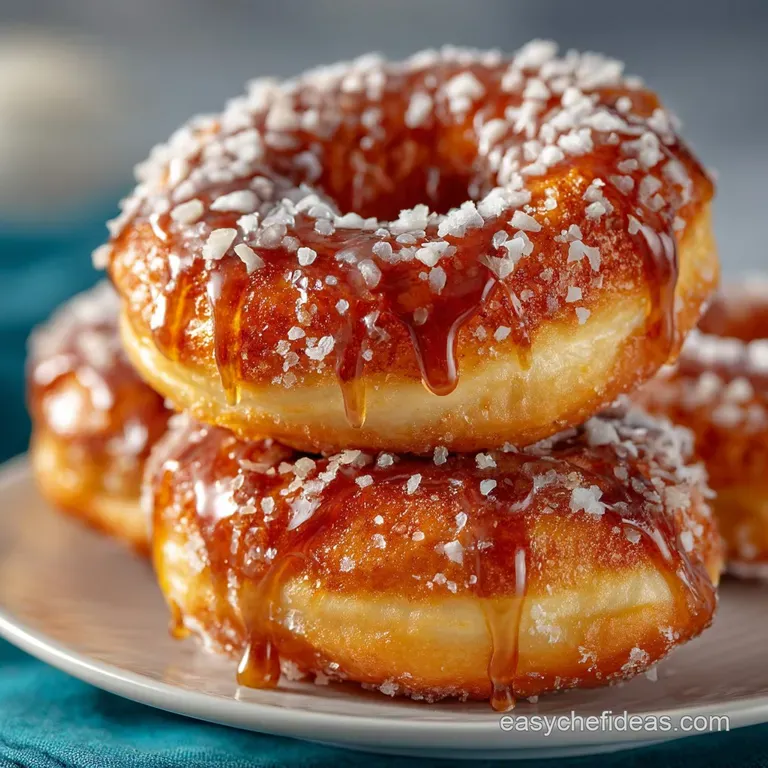
The world of fried dough is vast, but nothing quite compares to the complexity and incredible lightness achieved when using an active starter. This Sourdough Donut recipe takes the classic brioche base rich with butter and eggs and infuses it with a subtle, sophisticated tang, elevating a simple pastry into a gourmet experience.
By leveraging the natural fermentation process, we achieve a depth of flavor that is simply unattainable in quick rise recipes. The slight acidity cuts through the richness of the frying oil and the sweetness of the glaze, creating a perfectly balanced treat that is light, airy, and utterly irresistible.
Decoding the Brioche Crumb: Texture Perfection
The key to a truly magnificent doughnut lies in the crumb structure. Our goal here is not density, but a gossamer light interior that practically melts in your mouth, often referred to as a "brioche crumb." This texture is developed by using high protein strong bread flour (400g) and incorporating significant amounts of enrichment: 2 large eggs and 60g of unsalted, softened butter.
The lengthy kneading process is essential to developing the strong gluten network needed to trap the gases produced by the starter and yeast (5g), resulting in a profound internal airiness.
This meticulous preparation ensures that the finished ring doesn't absorb excess oil during frying, leaving it crisp outside and cloud like inside.
Harnessing the Flavor Power of Cold Proofing
While commercial yeast provides reliable lift, the unique flavor profile of this Sour Dough Doughnut Recipe is built entirely during the cold proofing stage. After the initial bulk fermentation at room temperature (which takes approximately 2– 3 hours with intermittent stretching and folding), the dough is transferred to the refrigerator for a critical 12 18 hour "cold retard." This extended cold rest dramatically slows down the yeast activity while allowing the acetic and lactic acid bacteria in the sourdough culture to flourish.
The result is an intensely flavorful, subtly tangy dough that is far easier to handle and roll out, making the shaping process clean and efficient. Skipping this step is sacrificing the true essence of the sourdough donuts recipe .
The Essential Tool Kit for Frying Success
Achieving that perfect, even golden color and ensuring the centers are cooked through requires precision, which means specific equipment is non-negotiable. While hand kneading is possible, a Stand Mixer with a dough hook is highly recommended for properly incorporating the rich butter into the sticky dough.
However, the most vital piece of kit is the Deep Fry Thermometer . Maintaining the oil temperature at precisely 350°F (175°C) is the single greatest determinant of success. Too cool, and the doughnuts become greasy and dense; too hot, and they burn before the center cooks.
You will also need a sturdy, heavy bottomed pot or Dutch oven, along with a spider strainer for safely retrieving the finished goods.
Gathering Your Components: Quality Ingredients for Superior Dough
Starter Strategy: Using Discard for Deepest Flavor
One of the great joys of this Discard Donut Recipe is its practical use of mature starter. We utilize 100g of 100% hydration sourdough discard. Because this recipe relies on a small amount of commercial yeast for guaranteed rise and structure, the starter's primary role is flavor development, not lift.
Using discard which has a more acidic, pronounced flavor than a recently fed, highly active starter deepens the tanginess beautifully. Ensure your discard has been kept at room temperature for an hour or so before mixing to integrate smoothly into the wet ingredients (150g warm milk, 100g eggs).
Precise Scaling: Why a Digital Scale is Non-Negotiable
Baking, especially enriched dough work, is a science where precision is paramount. While we offer approximate cup measures, true accuracy in this sourdough donuts recipe demands a digital kitchen scale.
Flour, milk, and eggs vary wildly by volume, but sticking to the metric measurements provided such as exactly 400g of strong flour and 7g of fine sea salt guarantees the correct hydration level for a smooth, elastic dough that successfully passes the "windowpane test." Investing in a scale ensures consistency and repeatable, high-quality results every time you attempt to How To Make Sourdough Donuts .
The Right Fats: Selecting Oil for Optimal Frying Temperature
The choice of frying medium is crucial for flavor neutrality and temperature stability. You will need 1.5 to 2 liters of oil, deep enough for the doughnuts to float without touching the bottom. A high smoke point oil, such as rapeseed (canola) oil, is strongly recommended.
These oils can withstand the necessary 350°F (175°C) temperature without breaking down or imparting off-flavors. Using the correct fat ensures a crisp exterior shell that locks out excess grease, maintaining the structural integrity and lightness achieved through the lengthy fermentation process.
Related Recipes Worth Trying
- Crispy Sourdough Demi Baguettes Artisan Bread at Home — Master the secret to homemade baguette recipes with this guide to tangy crispy sourdough demi baguettes Perfect crust guaranteed
- The Ultimate Sourdough Baguette Recipe for Home Bakers — Demystifying the French classic Achieve that iconic crackle and airy crumb with this straightforward sourdough baguette recipe perfect for your next baking...
- The Best Overnight Sourdough Cinnamon Rolls Recipe — Upgrade your weekend brunch with these unbelievably tangy and tender sourdough cinnamon rolls finished with a rich brown butter glaze So worth the overnight...
Mastering the Dough Process: From Mix to Golden Finish
The Initial Development: Creating a Smooth and Elastic Dough
The process begins by activating the 5g of dry yeast in the slightly warmed milk along with a tablespoon of the sugar. Once frothy, this mixture is combined with the eggs and the 100g of sourdough discard. The dry ingredients (400g flour, remaining sugar, and 7g salt) are added next.
Mix on low until a shaggy mass forms, then increase the speed to begin kneading. Once the dough pulls cleanly away from the sides of the bowl after about 5– 7 minutes the incorporation of the 60g of soft butter begins.
Add it one cube at a time, patiently waiting until each piece is fully absorbed. This stage is lengthy, taking another 5– 10 minutes, but it is necessary to achieve the necessary smoothness and elasticity.
Overnight Transformation: The Critical Cold Retard
Following the intense kneading, the dough undergoes its first rise (bulk fermentation) in an oiled bowl at room temperature for approximately 2 hours, performing four essential sets of stretch and folds every 30 minutes to build internal strength.
The real magic, however, happens when the dough moves into its 12 18 hour cold proof in the refrigerator. This overnight transformation is the heart of the How To Make Sourdough Donuts process; it not only develops the sophisticated tanginess but also firms up the enriched dough, making it much easier to roll out to the required 1/2 inch (12 13 mm) thickness without unnecessary stickiness or added flour.
Shaping and Second Proof: Preparing the Rings for the Fryer
Once cold, gently roll the dough onto a lightly floured surface. Use a standard 3 inch (7.5 cm) doughnut cutter and a smaller 1 inch (2.5 cm) cutter for the centers. A crucial professional tip is to place each cut ring (and the resulting sourdough donut holes ) onto individual small squares of parchment paper.
This parchment acts as a sling, preventing you from accidentally deflating the delicate structure when transferring the dough to the hot oil. The cut doughnuts then undergo their final proof, lasting 60– 90 minutes, until they appear slightly puffy and feel light when gently poked.
Deep Fry Mastery: Achieving the Perfect Golden Bloom
With the dough properly proofed, it is time for the final, quick stage. The oil must be heated and strictly maintained at 350°F (175°C). Fry the doughnuts in small batches of 2 or 3 to avoid dropping the oil temperature.
Gently lower the dough into the oil, using the parchment square as a handle, and quickly peel the paper away using tongs. Fry for 60 90 seconds per side until they develop a deep, uniform golden brown color.
Immediately transfer the finished doughnuts and the small sourdough donut holes to a paper towel lined cooling rack to drain off any residual oil.
Maximizing Your Bake: Pro Tips and Flavor Variations
Troubleshooting Common Issues: Why Did My Doughnuts Sink?
If your beautifully proofed sourdough doughnuts collapse or become oily, it almost invariably points to a temperature issue. If the oil is too cold (below 340°F/170°C), the yeast activity stops, and the dough structure struggles to set, causing the fat to soak in and leading to heavy, collapsed results.
Conversely, if the outside burns quickly while the inside remains raw, the oil is too hot (above 360°F/182°C). Other potential issues include over proofing during the final rise; if they become too puffy, the structure may be too weak to withstand the shock of the hot oil.
Finishing Touches: Classic Cinnamon Sugar vs. Tangy Glazes
The slightly tangy nature of the finished Sourdough Donut allows for both classic and more complex finishing styles. For a quick, beloved option, toss the warm doughnuts immediately after draining in a simple mix of granulated sugar and cinnamon.
For a stunning, glossy finish, prepare a simple glaze using 200g of powdered sugar, 30ml of milk, and a teaspoon of vanilla extract. Dip the doughnuts while they are still slightly warm; this allows the sugar to melt slightly, creating a smooth, thin coating that sets perfectly, offering a sweet counterpoint to the subtle sour notes.
Shelf Life and Storage: Keeping Your Sourdough Donuts Fresh
Like most fried pastries, these sourdough delights are best enjoyed within the first few hours of frying. The rich, enriched nature of the dough means they will naturally start to firm up and lose their airy texture quite quickly. Store any leftovers at room temperature, loosely covered.
Placing them in the refrigerator, unfortunately, speeds up the staling process significantly. If you are preparing the sourdough donuts recipe ahead of time, it is highly recommended to complete the cold proofing stage and then fry only the amount you plan to consume immediately.
Creative Flavor Twists: Lemon Zest and Maple Variations
The robust flavor backbone provided by the long fermentation welcomes experimentation. For a bright, springtime twist, incorporate a tablespoon of fresh lemon zest directly into the dough mix alongside the flour.
Alternatively, transform the finishing glaze: replace some of the liquid with pure maple syrup and add a touch of brown butter to the mix for a nutty, complex Brown Butter Maple Glaze.
For those looking for an alternative to frying, while the texture will shift significantly from an airy brioche to a denser, cake like consistency, a Sourdough Donut Recipe Baked can be achieved by baking the rings at 375°F (190°C) for about 12 minutes, making the Sour Dough Donuts Baked an easier, if texturally distinct, proposition.

Recipe FAQs
Crikey, why are we using sourdough starter and commercial yeast? Isn't that overkill?
Not at all! This combination is the genius behind achieving a truly phenomenal enriched dough. The sourdough starter provides that complex, slightly tangy depth of flavour through the long cold proof, while the commercial yeast (crucial for lift) ensures a reliable and predictable rise, overcoming the challenge of heavy enriched ingredients like butter and eggs.
Think of the starter as the flavour builder, and the yeast as the speedy engine getting the lift spot-on.
My Sourdough Donuts came out greasy and heavy, not light and airy. What went wrong, chef?
Ah, a classic frying mishap! This nearly always comes down to the oil temperature being too low below 340°F (170°C). When the oil is cool, the dough cooks slowly and simply absorbs the fat like a sponge.
You absolutely must use a reliable deep fry thermometer and maintain the heat rigorously; 350°F (175°C) is the magic number for a quick cooking, dry exterior and soft centre.
I’m looking for a stronger sour note. How do I get a more noticeable tangy flavour in my bake?
To maximise the distinctive sourdough tang, focus on the cold fermentation stage. Ensure you push the rest period towards the full 18 hours, as the cooler temperature encourages the production of acetic acid, which provides a sharper flavour.
Using unfed starter (discard) rather than a freshly fed starter will also boost the acidity and flavour profile of your final Sourdough Donut.
Is there a way to make these ring doughnuts without deep frying? Can I chuck them in the oven?
While you can certainly bake them, the results will resemble a soft, enriched roll rather than the fluffy, slightly chewy texture of a fried doughnut. If you prefer a healthier option, set your oven to 375°F (190°C) and bake them for 12 15 minutes until golden.
A top tip is to brush them liberally with melted butter immediately upon removing them from the oven to fake that rich, fried mouthfeel.
These are brilliant! But how long do Sourdough Doughnuts actually keep fresh?
Honestly, like all good fried goods, they are best eaten on the day they are made; they lose their light texture quite quickly. If you have leftovers, store them in an airtight container at room temperature for up to two days.
If they feel a bit dry the next day, a quick 10-second burst in the microwave will refresh them beautifully, making the glaze warm and sticky again.
Ultimate Sourdough Donut Recipe
Ingredients:
Instructions:
Nutrition Facts:
| Calories | 403 kcal |
|---|---|
| Protein | 8.2 g |
| Fat | 10.8 g |
| Carbs | 33.1 g |
| Fiber | 2.5 g |
| Sodium | 3470 mg |
