Arroz Con Pollo: Ultimate Saffron Chicken and Rice Recipe

- Capturing the Heart of the Kitchen: A Perfect Arroz Con Pollo
- The Science of Deep Flavor: Why This Recipe Excels
- Essential Components for the Ultimate Arroz Con Pollo
- Mastering the Method: step-by-step Preparation Guide
- Expert Techniques and Troubleshooting for Your Arroz Con Pollo
- Planning Ahead: Storing and Reheating the Dish
- Elevating the Meal: What to Serve Alongside
- Recipe FAQs
- 📝 Recipe Card
Capturing the Heart of the Kitchen: A Perfect Arroz Con Pollo
When that smell hits you, seriously, it’s game over. You know the one: the intoxicating mix of toasty rice, fragrant saffron, and slow cooked tomato that signals deep comfort food is coming right up.
This glorious dish is more than just rice and poultry; it’s a vibrant, soulful celebration, often called arroz con pollo receta in its home territories.
We all need a heavy hitter in our rotation that delivers maximum flavor for minimal fuss. This arroz con pollo recipe is a complete one-pot marvel, designed to feed a crowd easily without making you feel like a short order cook.
It’s cheap, satisfying, and uses simple ingredients you likely already have stashed away in the pantry.
Forget the dry, bland versions you might have tried before. I’m going to walk you through the real secrets the proper technique, the essential sofrito base, and the resting step that makes all the difference.
Get ready, because this is the only way you’ll ever want to make this easy chicken dinner again.
The Science of Deep Flavor: Why This Recipe Excels
I’ve made so many bad batches of chicken and rice, often resulting in either crunchy grains or a starchy, soupy mess, but that stops today. The core logic behind this specific method is maximizing flavor extraction at every stage while rigidly controlling the starch release.
We aren't just boiling the rice; we are building layers.
What Defines a Truly Authentic One-Pot Arroz Con Pollo?
Authenticity here comes down to two things: color and depth. Unlike some hurried recipes, we start by searing the poultry deeply, rendering fat and creating rich, savory fond stuck to the bottom of the pot. That foundation is absolutely critical.
The vibrant color comes from the saffron, of course, but also from fully cooking down the tomato paste and blooming the smoked paprika.
The Difference Between Paella and This Dish's Method
While they look similar and share ingredients, the texture is the main difference. Traditional paella aims for a crisp layer of rice on the bottom, the socarrat , and individual, non-clinging grains.
This arroz con pollo recipe, especially variations like arroz con pollo peruano or arroz con pollo colombiano , leans slightly toward creaminess, though still maintaining structure.
We add a touch more liquid than paella, and while we don’t stir constantly like risotto, the medium grain rice absorbs the liquid to create a wonderful, luxurious cling.
Building the Flavor Foundation: The Essential Sofrito Base
Listen up, friend: Rushing the sofrito is the biggest mistake you can make. The sofrito (our aromatic base of onion, pepper, garlic, and tomato paste) needs time.
You must sauté those vegetables until they are truly soft about 6 to 8 minutes and then cook the tomato paste until it darkens and thickens. Rushing this phase guarantees a thin, watery flavor profile in the final dish.
Starch Control: Achieving the Perfect Creamy Yet-Defined Rice Texture
We use medium grain rice because it strikes that perfect balance; it absorbs flavor like a sponge but still holds its shape. The key technique here is twofold: rinsing the rice to remove excess surface starch, and the critical toast (or sofrito —yes, it’s the same Spanish verb!) step where we sauté the rinsed rice grains briefly in the seasoned fat before adding the liquid.
This slightly seals the grain, helping it stay firm during the long simmer.
Essential Components for the Ultimate Arroz Con Pollo
Don’t skimp on quality here; these ingredients are the stars of the show. If you need to make swaps, no worries, I’ve got you covered we’re home cooks, we adapt!
Selecting the Right Cut of Poultry for Maximum Juiciness
I insist on using bone-in, skin-on thighs and drumsticks . The bone adds deep flavor to the stock, and the fat rendered from the skin is what toasts the rice perfectly. If you try to use boneless, skinless breasts, they will dry out long before the rice is done cooking.
Demystifying Saffron vs. Achiote: Color, Aroma, and Depth
Saffron provides that unmistakable floral aroma and deep golden hue. It’s expensive, yes, but a little goes a very long way, lending huge complexity to your arroz con pollo .
For a more earthy, less costly route, many Latin American recipes rely on achiote (annatto) or bijol powder, which gives a striking yellow orange color without the signature saffron flavor.
Liquid Assets: Choosing the Best Broth and Wine Notes
Always use warm chicken stock; cold liquid drastically lowers the temperature and messes up the rice’s cooking rhythm. The half cup of dry white wine or pale lager isn’t just for taste it’s crucial for deglazing the pot, pulling up all that beautiful, cooked chicken fond .
Spice Cabinet Essentials: Smoked Paprika and Dried Oregano
Use Spanish smoked paprika ( Pimentón ); the smoky sweetness is non-negotiable for this dish’s character. I recommend using high-quality Mediterranean oregano, as its flavor is much more robust than the milder variety.
| Ingredient | Why it's Important | Simple Substitute |
|---|---|---|
| Bone-In Poultry | Flavor and juiciness | Boneless thighs (reduce cook time by 5 min) |
| Medium Grain Rice | Starch absorption balance | Arborio or Paella rice (Calasparra/Bomba) |
| Saffron | Aroma and color | Turmeric + extra Smoked Paprika |
| Dry White Wine | Deglazing and acidity | Pale Lager or extra warm chicken stock |
Mastering the Method: step-by-step Preparation Guide
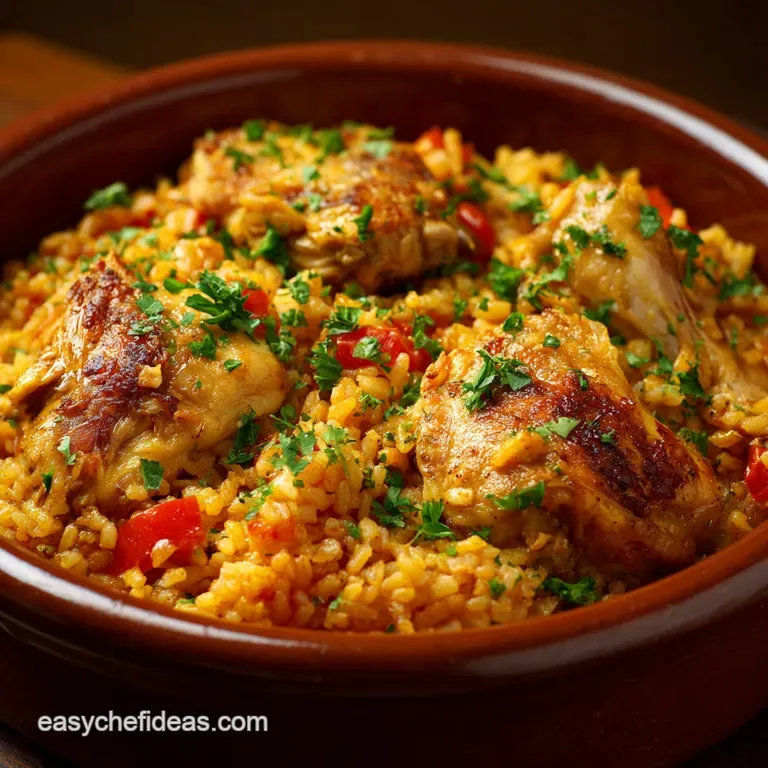
This is a step-by-step breakdown of how we get that award winning arroz con pollo from stove to table. Get your large Dutch oven ready!
Phase 1: BROWNING Achieving Perfect Color and Crust on the Poultry
Pat your chicken pieces absolutely dry before seasoning them; this is the secret to a great sear. Heat your oil until it shimmers, then place the poultry skin side down. Don’t touch it for at least 5 minutes!
You must achieve a deep, golden brown crust ; this protects the skin from getting soggy later when it braises in the rice. Remove the pieces once seared and keep them nearby.
Phase 2: BUILDING Layering Aromatics with the Proper Sofrito Technique
Reduce the heat to medium. Add the diced onions and bell peppers to the flavorful oil left in the pot. Cook until they are super soft, scraping the bottom constantly to incorporate those browned bits. This deglazing action immediately starts adding depth to your sofrito .
When you add the tomato paste, cook it for a full two minutes until it darkens it transforms the flavour, trust me.
Chef's Note: When adding the dried spices like smoked paprika and cumin, stir them directly into the oil for about 30 seconds before adding the liquid. This process, called "blooming," wakes up their essential oils and intensifies their flavor dramatically.
Phase 3: ABSORPTION Simmering the Rice and Incorporating Liquids
After deglazing with the wine, add the rinsed rice and stir it constantly for about two minutes until it's coated in the sofrito base; you should hear a gentle sizzle. Pour in your warmed stock, stir one final time to distribute the grains, and then place the seared poultry pieces back into the pot, skin side up.
Crucially, do not let the rice boil violently. Reduce the heat immediately, cover tightly, and walk away.
Phase 4: RESTING The Crucial Final Step for Texture Development
After the initial simmer time (usually 20 minutes), lift the lid quickly to add the peas and olives, then cover it again and turn the heat off. This resting period is mandatory.
The residual steam gently finishes cooking the top layer of rice and the moisture redistributes evenly, preventing a gummy bottom layer and a crunchy top layer.
Expert Techniques and Troubleshooting for Your Arroz Con Pollo
I learned these tips the hard way (usually by serving crunchy rice to guests), so save yourself the trouble.
How to Prevent Mushy Rice: Timing and Stirring Errors
The number one cause of mushy rice is lifting the lid too early or stirring the rice during the simmering phase. Once the stock goes in and the lid is on, the pot becomes a delicate ecosystem of steam and heat.
Stirring releases starch and drops the temperature; just leave it alone for the full 20 minutes.
Maximizing the Flavor of Your Sofrito (Do Not Rush This Step)
As mentioned, the sofrito is everything. If you skip the step of cooking the tomato paste until it darkens, you end up with a raw, metallic flavor. Cook the vegetables low and slow until they nearly dissolve; they are the backdrop for the rich poultry flavor.
What to Do If the Rice is Dry but Still Firm
If your timer goes off, and the rice is dry but still chalky or firm in the center, don't panic. Quickly add 1/4 cup of boiling water or stock around the edges of the pot (avoid pouring it directly over the poultry skin), replace the lid, and let it rest for another 5 minutes off the heat.
That usually fixes it perfectly.
Planning Ahead: Storing and Reheating the Dish
This dish makes fantastic leftovers, which is essential for busy weeknights!
Fridge Life and Food Safety Guidelines
You can safely store fully cooled Arroz Con Pollo in an airtight container in the fridge for up to 4 days. Make sure you cool it quickly and don't leave it out on the counter.
Best Practices for Freezing Leftovers
Yes, you can freeze it! Though the rice texture may suffer a tiny bit (it tends to get slightly softer), it’s still delicious comfort food. Place individual portions in freezer safe containers once fully cooled. It holds well for up to 3 months. When ready to eat, thaw overnight in the fridge.
How to Reheat
For the best results, use the oven or stovetop. Put the rice in an oven safe dish, sprinkle a tablespoon of stock or water over it, cover tightly with foil, and warm at 325°F (160°C) until piping hot (about 15– 20 minutes).
If you use the microwave, add a tiny splash of water first to reintroduce moisture.
Elevating the Meal: What to Serve Alongside
Since this arroz con pollo is so rich and hearty, it pairs beautifully with something light, crunchy, or slightly acidic to cut through the depth.
Classic Latin Side Dishes That Complement the Richness
I always recommend a simple, crisp green salad dressed with lime and cilantro, maybe similar to the light, fresh ingredients we use in my [Breakfast BLT Salad: Runny Yolk, Crispy Bacon, 30 Minute Recipe] just keep the eggs out of this one! You need that bright acidity to balance the paprika.
- Tostones: Fried, crunchy green plantains are perfect for scooping up the savory rice.
- Avocado Slices: Creamy, cool avocado is always a win against warm, savory flavors.
- Black Beans: A simple side of seasoned black beans, served warm, is a traditional pairing.
And if you’re looking for a delightful, comforting finish to this huge meal? You know I love a good scone. Something a little unexpected, maybe my [Apple Scones with Spiced Glaze Flaky, Buttermilk Autumn Scone Recipe] if it's chilly, or perhaps something chewy and rich like [Chocolate Drizzled Coconut Macaroons: Chewy, Easy, and gluten-free] for a gluten-free sweet bite.
Dinner sorted!
Recipe FAQs
Why is my Arroz Con Pollo either too mushy or too dry?
Overly mushy rice is usually caused by too much stirring after the liquid is added, which releases excess starch. If it's too dry, your heat might be too high during the simmering phase, causing the liquid to evaporate too quickly.
Ensure you use the proper liquid ratio and resist the urge to stir the rice once it starts cooking down.
I don't have saffron. Is there a suitable substitute?
Saffron primarily provides the vibrant color and a subtle floral flavor profile to the dish. For color only, you can use a pinch of turmeric, though it will alter the flavor slightly and should be used sparingly. Alternatively, you can simply rely on the smoked paprika and tomato base for a deep, rich red-orange hue.
Do I have to brown the chicken before adding the liquid?
Yes, browning is crucial for developing deep, complex flavors and rendering some of the fat from the skin into the pot. This process creates a flavorful fond (browned bits) on the bottom, which dissolves when you add the wine or stock, enriching the final taste of the rice.
Skipping this step results in a much blander dish.
Can I use regular long grain rice instead of medium grain rice?
While long grain rice is possible, medium grain (like Valencia or Arborio) is traditionally preferred because it absorbs moisture evenly without becoming overly sticky or prone to breaking. If using long grain, you may need to reduce the cooking time slightly, as it tends to cook faster than medium grain rice.
What is sofrito, and can I prepare it ahead of time?
Sofrito is the essential aromatic foundation of the dish, typically a blend of finely diced onions, peppers, garlic, and sometimes tomatoes, slow cooked in olive oil. You can absolutely prepare a large batch of sofrito ahead of time and store it in the refrigerator for up to a week.
Preparing it in advance significantly reduces the active cooking time needed for the final recipe.
How should I store Arroz Con Pollo leftovers, and is freezing recommended?
Store leftovers in an airtight container in the refrigerator for 3 4 days; reheat gently on the stovetop or in the microwave. While technically freezable, freezing is generally not recommended as the texture of the cooked rice tends to degrade upon thawing, often becoming mushy or brittle.
It is best enjoyed fresh or within a few days.
Can I use boneless chicken pieces instead of bone-in?
You can use boneless chicken, but the cooking time will need to be significantly reduced, and the dish will lose some richness and depth of flavor. Bone-in, skin-on chicken adds crucial fat and marrow to the cooking liquid, which is integral to achieving the authentic, hearty taste of a traditional Arroz Con Pollo.
Ultimate One Pot Arroz Con Pollo
Ingredients:
Instructions:
Nutrition Facts:
| Calories | 610 kcal |
|---|---|
| Fat | 22 g |
| Fiber | 4 g |
