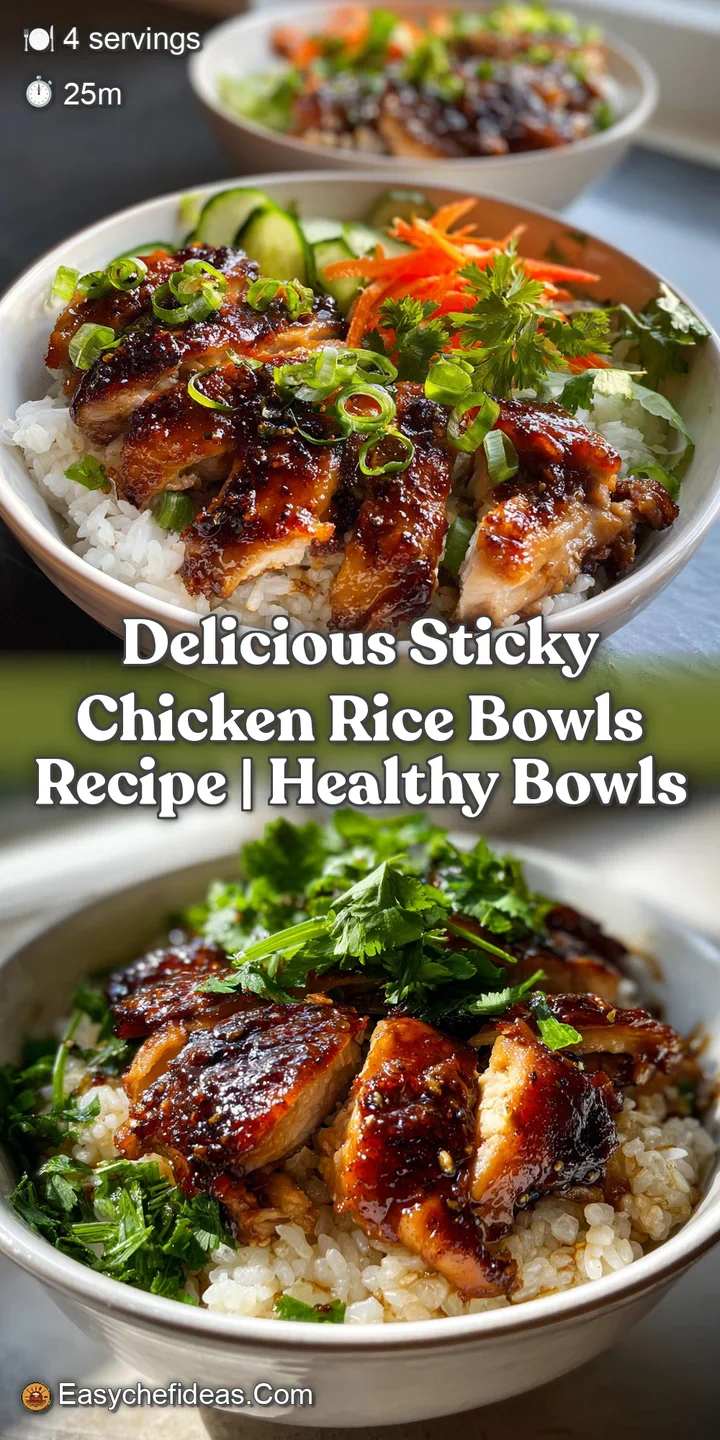
Delicious Sticky Chicken Rice Bowls Recipe
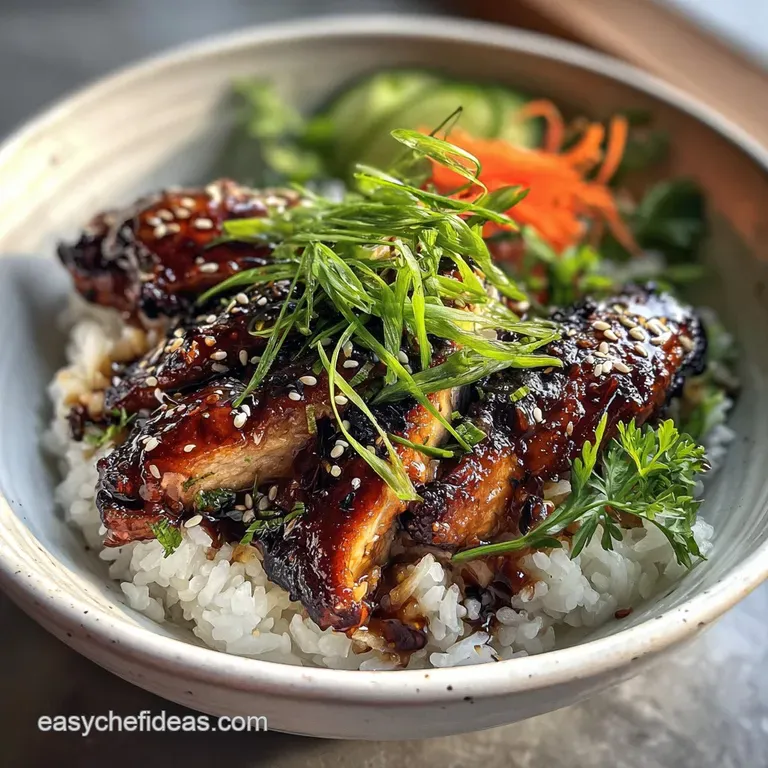
- Time: Active 10 minutes, Passive 15 minutes, Total 25 minutes
- Flavor/Texture Hook: Glossy, umami rich glaze with a tender, velvety bite
- Perfect for: Busy weeknight dinners or vibrant meal prep sessions
- Delicious Sticky Chicken Rice Bowls Recipe
- Why These Flavor Layers Work
- Recipe Specs and Yield Data
- Essential Components for Success
- Necessary Gear for the Kitchen
- Step-by-Step Cooking Technique
- Fixing Common Prep Mistakes
- Flavor Variations and Custom Bowls
- Storage and Zero Waste Methods
- Presentation and Styling Tips
- Professional Tips for Best Results
- Recipe FAQs
- 📝 Recipe Card
Close your eyes and listen for that distinct sizzle as the chicken hits the hot oil, followed by the sharp, citrusy scent of fresh ginger hitting the pan. It is a sensory ritual I look forward to every Tuesday night when our kitchen needs a bit of life and a lot of flavor.
I remember the first time I tried making a version of this years ago, I ended up with a gummy, grey mess because I crowded the pan - a mistake you won't make today.
We are going to build layers of flavor that celebrate a beautiful diversity of ingredients, from the deep saltiness of soy to the floral notes of raw honey. This is not just a quick meal, it is a way to nourish your family with textures that feel indulgent but are actually quite wholesome.
We are ditching the deep fryer for a smart "velveting" technique that keeps the protein juicy without the heavy batter.
Trust me, once you see that sauce bubble and darken into a thick, amber glaze that clings to every 1 inch piece of chicken, you will never look at a takeout menu the same way again. It is about bringing that restaurant quality appeal into your own home, sharing a bowl of something vibrant with the people you love.
Let us get into the science of why this actually works so you can cook with confidence.
Delicious Sticky Chicken Rice Bowls Recipe
The magic of this dish lies in the balance between the crisp exterior of the meat and the syrupy reduction of the glaze. It is a dance of temperatures and timing.
- Maillard Reaction: High heat transforms the proteins and sugars on the surface of the chicken into hundreds of different flavor compounds, creating that savory "browned" taste.
- Starch Gelatinization: The cornstarch coating absorbs moisture from the chicken and, when heated with the liquid sauce, swells to create a thick, glossy binder.
- Emulsification: The fat from the avocado oil blends with the sugars in the honey and the acids in the rice vinegar to create a smooth, stable sauce that won't separate on your plate.
- Acid Balance: Rice vinegar cuts through the density of the honey, brightening the entire palate and ensuring the dish does not feel overly cloying.
Why These Flavor Layers Work
Building flavor is like building a house - you need a solid foundation before you can add the pretty windows. We start with the aromatics because they infuse the oil with a base layer of scent and taste that carries through the entire cooking process.
| Ingredient | Science Role | Pro Secret |
|---|---|---|
| Cornstarch | Moisture Barrier | Dust the chicken just seconds before it hits the pan to prevent gumminess. |
| Raw Honey | Caramelization Agent | Use raw honey for a deeper floral profile and a better glaze "cling." |
| Rice Vinegar | pH Balancer | Provides the necessary acid to soften the chicken fibers slightly. |
| Avocado Oil | Heat Carrier | Its high smoke point allows for a hard sear without the oil breaking down. |
The "velveting" technique we use here is a simplified version of a traditional Chinese method. By coating the chicken in cornstarch and sea salt, we create a protective layer. This layer prevents the protein fibers from tightening up too quickly when they hit the heat, which is why the chicken stays so tender even if you overcook it by a minute or two. For the base, if you are looking for the fluffiest grains, check out this Pot Rice How recipe to get that restaurant style texture every time.
Recipe Specs and Yield Data
To get the results we want, we need to respect the timing. This is a fast moving recipe once the chicken hits the Lodge cast iron skillet or your favorite heavy bottomed pan.
- Chicken size: Exactly 1 inch pieces. Too small and they dry out, too large and the sauce burns before the middle is done.
- Internal Temperature: Aim for 165°F. Use a Thermapen to check a few pieces; it is the only way to be 100% sure.
- Sauce Reduction: The sauce should simmer until it reduces by about a third, appearing like a heavy syrup.
| Feature | Fast Version (This Recipe) | Classic Takeout Version |
|---|---|---|
| Cooking Fat | 2 tbsp avocado oil | Deep fried in vegetable oil |
| Sweetener | 3 tbsp raw honey | High fructose corn syrup |
| Active Prep | 10 minutes | 30+ minutes (batter/fry) |
Essential Components for Success
Gathering your elements before you turn on the stove is vital. This is what we call "mise en place" in the culinary world, but I just call it "sanity insurance."
- Chicken: 1.5 lbs chicken breast, cut into 1 inch pieces. Why this? Lean protein that absorbs the ginger garlic aromatics beautifully. (Sub: Boneless chicken thighs for extra juiciness, though it increases fat).
- Cornstarch: 2 tbsp. Why this? Creates a thin, crispy "skin" that holds the glaze. (Sub: Arrowroot powder, though it can get slightly slimier if cooled).
- Seasoning: 1/2 tsp sea salt and 1/4 tsp cracked black pepper. Why this? Basic seasoning is essential even with soy sauce. (Sub: Himalayan pink salt).
- Oil: 2 tbsp avocado oil. Why this? Neutral flavor and high smoke point. (Sub: Grapeseed oil).
- Soy Sauce: 1/4 cup low sodium soy sauce. Why this? Provides the umami backbone without excessive saltiness. (Sub: Tamari for a gluten-free option).
- Honey: 3 tbsp raw honey. Why this? Natural sweetness that thickens into a glossy coat. (Sub: Maple syrup, though it will be thinner).
- Acid: 1 tbsp rice vinegar. Why this? Adds a mild, fruity tang to balance the sugars. (Sub: Apple cider vinegar).
- Aromatics: 1 tbsp fresh ginger (grated) and 3 cloves garlic (minced). Why this? The cultural soul of the dish. (Sub: 1 tsp ground ginger if desperate, but flavor will be flat).
- Heat: 1 tsp sriracha. Why this? A gentle kick to wake up the taste buds. (Sub: Red pepper flakes).
- The Base: 3 cups cooked jasmine rice. Why this? Floral aroma and the perfect level of stickiness. (Sub: Cauliflower rice for low carb).
- Veggie: 1 cup steamed broccoli florets. Why this? Adds crunch and essential nutrients. (Sub: Snap peas).
- Garnish: 2 green onions and 1 tbsp toasted sesame seeds. Why this? Freshness and texture contrast. (Sub: Cilantro).
Necessary Gear for the Kitchen
You don't need a thousand dollar setup to make a world class bowl. I usually reach for my 12 inch Lodge Cast Iron Skillet because it holds heat like a champion, ensuring the chicken sears rather than steams.
- Large Skillet: A heavy stainless steel or cast iron pan is best for browning.
- Microplane: For grating that fresh ginger into a fine paste that melts into the sauce.
- Whisk: To combine the soy, honey, and sriracha until perfectly smooth.
- Chef's Knife: A sharp blade (like a Wüsthof) makes cubing the chicken effortless.
- Tongs: Essential for flipping individual pieces of chicken to get an even crust.
Chef's Note: If you're using a non stick pan, be careful not to overheat it. Cast iron is much better for getting those crispy, caramelized edges we're looking for.
step-by-step Cooking Technique
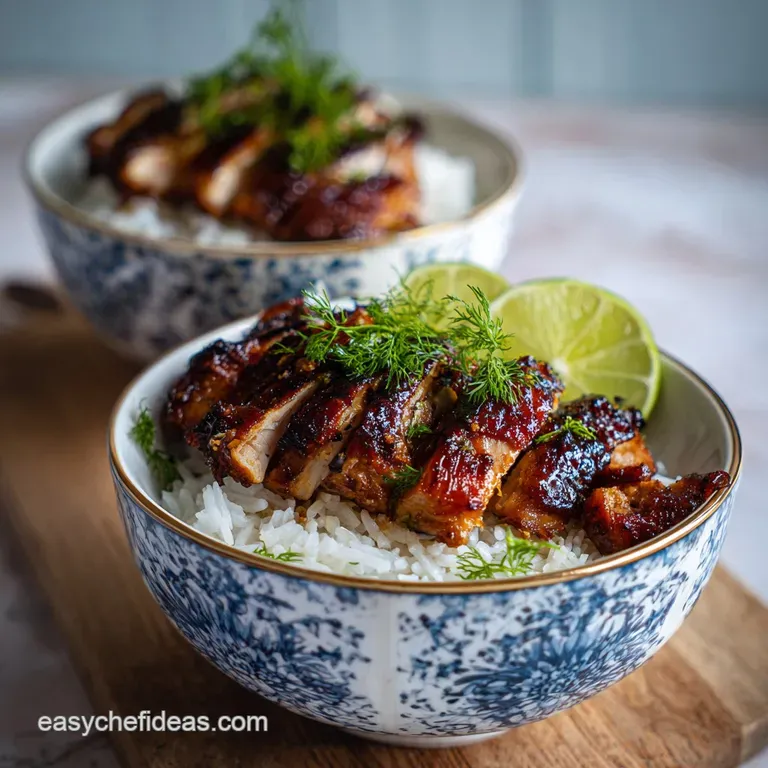
Let's break this down into manageable steps. Remember, the goal is to build those layers of flavor, so don't rush the browning process.
- Prep the chicken. Pat your 1.5 lbs chicken breast dry with paper towels. Note: Excess moisture is the enemy of a good sear.
- Coat the protein. Toss the chicken with 2 tbsp cornstarch, 1/2 tsp sea salt, and 1/4 tsp black pepper in a bowl. Note: Ensure every piece is dusted but not clumpy.
- Whisk the sauce. In a small jar, combine 1/4 cup low sodium soy sauce, 3 tbsp raw honey, 1 tbsp rice vinegar, 1 tbsp ginger, 3 cloves garlic, and 1 tsp sriracha.
- Heat the pan. Add 2 tbsp avocado oil to your skillet over medium high heat until the oil shimmers and barely wisps smoke.
- Sear the chicken. Add chicken in a single layer, leaving space between pieces. Note: Work in batches if your pan is small to avoid "steaming" the meat.
- Brown all sides. Cook for 5-7 minutes until the exterior is golden and a slight crust has formed.
- Deglaze the skillet. Pour the prepared honey soy mixture over the chicken. Note: The liquid will bubble vigorously - this is good!
- Simmer and thicken. Reduce heat to medium and cook for 3-4 minutes until the sauce transforms into a thick, glossy glaze that coats the back of a spoon.
- Steam the greens. While the sauce thickens, quickly steam your 1 cup of broccoli florets until they are bright green and tender crisp.
- Assemble the bowls. Divide 3 cups of jasmine rice into four bowls, top with the chicken and broccoli, and finish with sliced green onions and toasted sesame seeds.
Fixing Common Prep Mistakes
Cooking is a practice, not a destination. Even after years, I sometimes get distracted and let my sauce go a bit too far.
Why Your Chicken Is Not Crispy
If your chicken looks grey and soggy, the pan wasn't hot enough or you crowded it. When pieces touch, they release steam, which prevents the cornstarch from crisping up.
Why the Sauce Is Too Salty
Using regular soy sauce instead of low sodium can make this dish overwhelming. If it happens, add a squeeze of fresh lime juice or an extra tablespoon of honey to balance the salt.
| Problem | Cause | Fix | Pro Tip |
|---|---|---|---|
| Burnt Sauce | Heat was too high | Add a splash of water | Turn off heat before adding honey |
| Rubbery Meat | Overcooked breast | Cook to 165°F | Use a digital thermometer |
| Clumpy Glaze | Starch not mixed | Whisk sauce before adding | Use a cold liquid base |
If you find yourself making these chicken bowls often and want to mix up the flavor profile, you might enjoy the Mediterranean vibes of this Healthy Greek Chicken recipe for a different kind of nourish ing meal.
Flavor Variations and Custom Bowls
The beauty of a bowl based meal is that it serves as a canvas for your cravings. We can lean into different cultures just by swapping a few key aromatics.
- Tropical Twist: Swap the rice vinegar for lime juice and add 1/2 cup of fresh pineapple chunks during the last 2 minutes of simmering. The enzymes in the pineapple further tenderize the meat.
- Spicy Korean Style: Replace the sriracha with 1 tbsp of Gochujang (Korean chili paste). It adds a fermented depth that is incredibly satisfying.
- Low Carb "Keto" Bowl: Use cauliflower rice as the base and replace the honey with a keto friendly maple syrup substitute. Be aware: the sauce won't get quite as "sticky" without the real sugars.
If you want more crunch, add crushed peanuts.
If you want more heat, double the sriracha.
If you want it vegan, use extra firm pressed tofu.
Storage and Zero Waste Methods
This recipe is a champion for meal prep because the glaze actually protects the chicken from drying out in the fridge.
- Fridge: Store in airtight containers for up to 3 days. Keep the rice and chicken together so the rice can soak up any extra sauce.
- Freezer: You can freeze the cooked chicken in its sauce for up to 2 months. Thaw overnight in the fridge before reheating.
- Zero Waste: Don't throw away those broccoli stalks! Peel the woody exterior, slice the tender core into coins, and sauté them right along with the chicken. They have a lovely, sweet flavor similar to water chestnuts.
- Leftover Rice: If you have leftover jasmine rice, it is the absolute best base for fried rice the next day. The dryness of day old rice is exactly what you need for a non mushy result.
Presentation and Styling Tips
We eat with our eyes first, especially when we are sharing a meal with our community. A little effort in plating makes a Tuesday night feel like a celebration.
- The Bowl Choice: Use shallow, wide bowls rather than deep ones. This allows you to see all the colorful components - the white rice, green broccoli, and amber chicken - at once.
- Color Blocking: Place the rice on one side, the broccoli on the other, and pile the glossy chicken right in the middle.
- The Garnish Pop: Don't just sprinkle the sesame seeds; think of them as a finishing touch. A heavy dusting of green onions provides a sharp contrast to the dark sauce.
- Texture Contrast: If you have some extra Rice Paper Recipes on hand, you could even serve some crispy fried rice paper shards on top for a restaurant style "shatter" effect.
Professional Tips for Best Results
After making this dozens of times, I have picked up a few unconventional tricks that make a massive difference.
- Freeze the ginger: Keep your ginger root in the freezer. It makes it ten times easier to grate on a Microplane, and you don't even have to peel it - the skin is so thin it just disappears.
- The Honey Trick: Spray your measuring spoon with a tiny bit of avocado oil before scooping the honey. It will slide right off the spoon without any sticky residue left behind.
- The Resting Period: Let the chicken sit for 2 minutes after you turn off the heat. The sauce will continue to thicken and "set" as it cools slightly, giving you that iconic sticky finish.
Searing Does Not Seal Juices
Many people think searing meat "seals in the juices." This is a myth. Moisture loss actually increases at high temperatures. We sear purely for the Maillard reaction - that deep, savory flavor and the beautiful crust that makes the chicken so satisfying to eat.
Washing Rice Is Optional
While some claim you must wash jasmine rice to remove arsenic or starch, it really depends on the texture you want. For this dish, a light rinse helps the grains stay separate, but if you like a clumpier "sticky" rice, you can skip it. Just ensure your water to rice ratio is accurate.
Fresh Ginger Is Mandatory
You might be tempted to use ground ginger from the spice cabinet. Don't. The chemical composition is entirely different. Fresh ginger contains gingerol, which provides a sharp, spicy heat, while dried ginger contains zingerone, which is milder and sweeter.
For a dish where ginger is a star, the fresh root is non negotiable for that vibrant, nourishing flavor.
When you bring this to the table, you're not just serving a meal; you're sharing a bit of culinary craft that respects the ingredients and the process. Enjoy every glossy, ginger spiked bite!
Recipe FAQs
Can I use chicken thighs instead of chicken breast?
Yes, but adjust cooking time. Thighs are fattier and more forgiving, meaning they stay juicy even if you slightly overcook them, though they will require a minute or two longer to achieve that beautiful glaze coverage.
Why is my sauce thin and not "sticky"?
No, the sauce needs more time to reduce. The cornstarch requires the liquid to simmer vigorously so the starch granules can swell and thicken the mixture into a syrup. Continue simmering until the sauce coats the back of a spoon.
Can I prepare the glaze mixture ahead of time?
Yes, this is highly recommended. Whisking the soy sauce, honey, vinegar, and aromatics together beforehand saves precious minutes during the active cooking phase, ensuring your chicken doesn't overcook waiting for the sauce. If you are enjoying preparing flavor bases ahead, look at how we use acid balance in My Savory Peanut Satay Recipe: Perfect Skewers with Creamy Dipping Sauce for similar flavor building techniques.
What is the ideal rice base for this recipe?
Jasmine rice cooked perfectly yields the best texture. You want a slightly separate, floral grain to contrast the heavy glaze. Follow the guidelines in Perfectly Fluffy Rice on the Stove: My Easy Guide to Success for ideal fluffiness.
How do I stop the chicken from steaming instead of searing?
No, you must not crowd the pan. Searing requires high, direct heat hitting the surface of each piece; if the chicken touches, the moisture they release turns the cooking environment into a steamer, resulting in grey, soft meat instead of a flavorful crust.
Can I make this gluten-free?
Yes, substitute Tamari for soy sauce. Tamari functions almost identically to low-sodium soy sauce but is brewed without wheat, making it a perfect, direct swap for keeping the umami foundation intact.
Is the cornstarch coating necessary for the texture?
Yes, it creates the signature velvety coating. The light dusting of cornstarch absorbs some moisture during the sear and then gelatinizes in the glaze, giving the chicken that recognizable glossy 'velvet' texture characteristic of good takeout style dishes.
Sticky Chicken Rice Bowls
Ingredients:
Instructions:
Nutrition Facts:
| Calories | 605 kcal |
|---|---|
| Protein | 57 g |
| Fat | 14.6 g |
| Carbs | 52.2 g |
| Fiber | 2.1 g |
| Sugar | 13.8 g |
| Sodium | 541 mg |
