Southwest Chicken Skillet: Our Speedy, Easy One-Pan Weeknight Meal
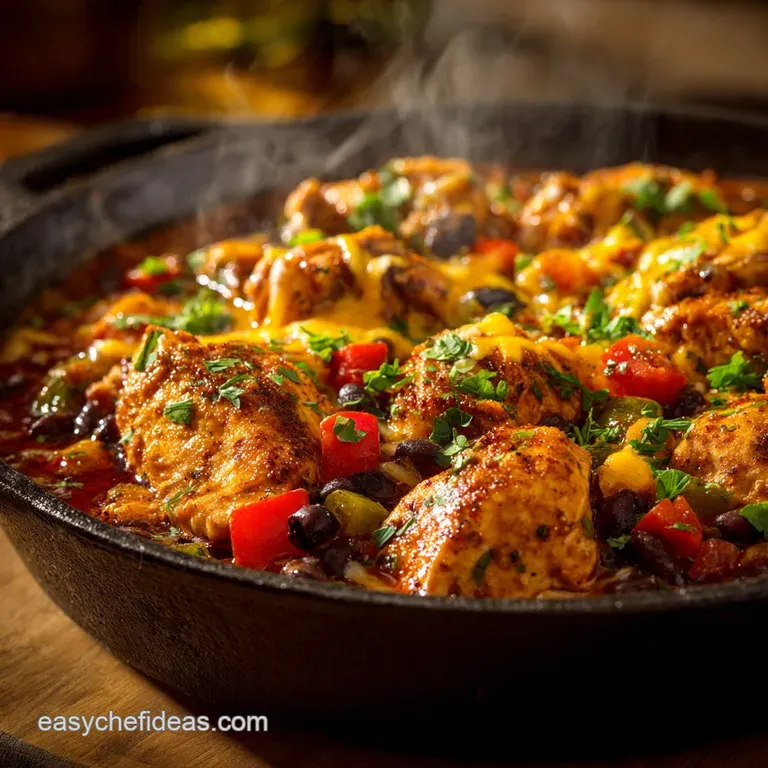
- Mastering the One-Pan Southwest Chicken Skillet
- Culinary Science: Why the Skillet Method Delivers Maximum Flavor
- Essential Components for Your Southwest Chicken Skillet
- How to Make Southwest Chicken Skillet Step-by-Step
- Chef’s Secrets: Troubleshooting and Elevating Your Skillet
- Make Ahead and Storage Guide
- What to Serve Alongside This Vibrant Skillet Dish
- Recipe FAQs
- 📝 Recipe Card
Mastering the One-Pan Southwest Chicken Skillet
That smell. Oh my gosh, you know what I’m talking about. When the chili powder and cumin hit the hot oil and start to bloom, the entire kitchen transforms instantly. It’s smoky, a little spicy, and seriously addictive. You instantly know dinner is going to be truly epic.
Life is hectic, right? This entire [Southwest Chicken Skillet recipe] is a true weeknight lifesaver. It hits all the high notes of flavour while being shockingly easy and requiring minimal clean-up.
You can get this stunning, flavour packed meal on the table in under 45 minutes, often even faster, making it perfect for busy nights when you might normally order takeout.
I’ve tested this skillet approach a hundred times to figure out the absolute fastest way to get maximum flavour out of simple ingredients. Forget fiddly steps; we are going to do the skillet method properly, layering those authentic Tex-Mex notes perfectly.
Let’s crack on and make the best, easiest [southwest chicken skillet] you’ve ever had.
Culinary Science: Why the Skillet Method Delivers Maximum Flavor
What Makes a Skillet Dish a Weeknight Winner?
The magic of the skillet is simple efficiency. Cooking everything in one pan means you build flavor on flavour, capturing every savory brown bit left behind by the searing process. This is the difference between a decent dinner and a spectacular one.
Plus, one-pan means one item to wash, and honestly, that’s my favourite part of any weeknight recipe.
The Tex-Mex Flavor Profile: Chili, Cumin, and Lime
We rely heavily on chili powder and cumin for that essential earthy warmth. The chili provides the base and colour, while cumin adds that distinct, smoky depth. Crucially, the final squeeze of fresh lime juice at the end cuts through the richness, balancing the heat and making the entire dish taste incredibly vibrant and fresh.
Gear Up: Essential Tools for Skillet Cooking
While any large, heavy bottomed frying pan will work, a 12 inch cast iron skillet is the undisputed MVP here. Cast iron holds heat like a champion, ensuring your chicken gets a deep, consistent sear. If you’re looking to invest in proper, flavour building gear, start here.
The Maillard Reaction: Searing the Chicken for Depth
I know you want to throw everything into the pan at once, but trust me, we have to sear the cubed chicken first. Searing creates the Maillard reaction that chemical process that gives you that beautiful, deep brown crust and complex, savory flavour.
Don't skip this step even though the chicken won't be cooked through yet; we finish it in the sauce later.
Building the Pan Sauce: Liquid Gold from the Residue
When you remove the seared chicken, you will notice little browned bits stuck to the bottom of the pan that is gold, my friend. When we add the onions and peppers, they absorb those savoury bits while they soften.
Then, adding the canned diced tomatoes helps "deglaze" the pan, creating a rich, flavourful sauce base instantly.
Texture Contrast: Creamy Beans vs. Crisp Peppers
A great skillet dish needs dynamic texture. We want the chicken to be tender and the sauce to be rich, but we need some crunch. The slightly firm bell peppers and the hearty, creamy black beans ensure every bite is interesting. This contrast is what makes the dish feel like a proper meal, not just a stew.
Essential Components for Your Southwest Chicken Skillet
The secret to this easy southwest chicken skillet is high impact ingredients that require minimal prep. I always use canned black beans and frozen sweet corn because they are the definition of convenience.
Ingredient Swaps for Dietary Needs
I know cooking is about flexibility; no one wants to run to the store for one thing. If you need a substitute, I've got you covered.
| Component | Standard Ingredient | Viable Substitution | Chef’s Note |
|---|---|---|---|
| Protein | Chicken Breasts | Boneless, skinless Chicken Thighs | Thighs stay moister during the simmering stage. |
| Legumes | Canned Black Beans | Canned Kidney Beans or Pinto Beans | Ensure they are rinsed thoroughly to remove excess sodium. |
| Cheese | Monterey Jack | Sharp Cheddar or Pepper Jack | Pepper jack adds a nice heat kick. |
| Aromatic | Yellow Onion | Red Onion or Shallots | Red onion offers a slightly sharper flavour, great for contrast. |
| Spice Base | Chili Powder | Smoked Paprika + Cayenne (2:1 ratio) | Use smoked paprika if you want a deeper, almost BBQ flavour. |
The Right Cut: Choosing and Prepping the Chicken
I usually cube boneless, skinless chicken breasts into 1 inch pieces; they cook evenly and quickly. If you prefer a richer texture, use thighs instead. They are more forgiving if you accidentally simmer the skillet a little too long!
Spice Blend Breakdown: Achieving Authentic Tex-Mex Heat
Our simple spice blend chili powder, cumin, oregano, salt, and pepper does heavy lifting. The key is to divide the blend. Use two-thirds to coat the chicken for searing, and save the last third to "bloom" with the garlic and onions.
This layering of spices achieves a far more complex flavour than simply dumping it all in the liquid later. It's an easy step that drastically improves your cooking.
Pantry Staples: Black Beans, Corn, and the Cheese Layer
Rinsing the black beans is essential; it removes the starchy, murky liquid and minimizes excess sodium. Frozen sweet corn is perfect because it thaws quickly in the skillet and adds a little sweetness that cuts the acidity of the tomatoes.
Finally, we finish with shredded Monterey Jack for its fantastic melt it creates a creamy, cheesy blanket over the entire dish.
How to Make Southwest Chicken Skillet step-by-step
Preparation Steps
- Chop and Cube: Dice the onion, slice the bell peppers, mince the garlic, and cube your chicken into roughly 1 inch pieces.
- Season the Star: Combine the spices in a small bowl. Toss the chicken cubes with the oil and two-thirds of the spice mix. Save the rest!
Cooking Process
- Sear the Chicken (Phase 1): Heat your large skillet over medium high heat until the oil is shimmering. Add the seasoned chicken, being careful not to crowd the pan. Sear until deeply browned on two sides, about 4- 6 minutes total, then remove it immediately and set it aside.
- Aromatics and Spice Bloom (Phase 2): Reduce the heat to medium. Add the onions and peppers to the skillet. Cook, stirring occasionally and scraping up the browned chicken bits from the pan bottom, until they soften (about 5- 7 minutes). Add the garlic and the remaining spice blend; cook for 1 minute until you can really smell those spices.
- Simmer and Build (Phase 3): Pour in the undrained diced tomatoes, the rinsed black beans, and the frozen sweet corn. Stir everything well, ensuring all the flavour on the bottom of the pan is incorporated. Bring the mixture to a gentle simmer.
- Return and Finish: Nest the seared chicken back into the sauce. Reduce the heat to low, cover the skillet, and let it bubble for 8– 10 minutes. The chicken should be perfectly cooked through.
- Melt and Garnish: Remove the cover, stir in the fresh lime juice, and sprinkle the shredded cheese evenly over the top. Cover the pan again for 2– 3 minutes until the cheese is beautifully melted and gooey. Garnish heavily with fresh chopped coriander and serve immediately.
Expert Tips for Success
Chef's Note: If you are using pre-cooked chicken (like leftover rotisserie chicken), skip the initial searing step. Just add the raw vegetables and spices as directed, build the sauce, and then stir in the pre-cooked chicken in step 7 to warm through for the last 5 minutes of simmering. It makes this meal even faster!
Common Mistakes to Avoid
Chef’s Secrets: Troubleshooting and Elevating Your Skillet
Preventing Dry Chicken: Timing is Everything
This is the biggest mistake people make: overcooking the chicken. Because we cube the chicken small, it cooks very fast. We sear it initially just to build colour, and then we only need about 10 minutes max of gentle simmering in the sauce.
If you simmer longer than 10 minutes, the chicken will dry out. Always check the temperature (165°F/74°C) before adding the cheese.
How to Intensify the Smoky Chili Flavor
If you love that deep, campfire esque flavour, add 1/2 teaspoon of smoked paprika when you bloom the spices in Phase 2. This works wonders and gives you a flavour profile similar to my Crock Pot Chicken Taco Chili: The Best Set-It and Forget-It Recipe without having to wait all day.
Solving the Soggy Skillet Problem
If your sauce seems too thin after the simmer, don't panic! Remove the chicken with a slotted spoon, turn the heat up to medium high, and let the sauce boil rapidly for 3– 5 minutes. This reduces the liquid beautifully. Once thickened, return the chicken and finish with the cheese.
make-ahead and Storage Guide
Best Methods for Refrigerating Leftovers
The [southwest chicken skillet dinner] makes fantastic leftovers. Cool the skillet thoroughly first, then transfer it into an airtight container. It keeps beautifully in the fridge for up to 4 days. When storing, I like to keep any toppings (like sour cream or avocado) separate and add them fresh when reheating.
Can You Freeze Southwest Chicken Skillet? (And How)
Yes, you can absolutely freeze it, which makes this an excellent meal prep contender. Freeze the full recipe before you add the final cheese layer. Transfer the cooled mixture to a freezer safe container, leaving about an inch of headspace. It will keep well for up to 3 months.
Reheating Without Losing Texture
The key to reheating is gentle heat. Thaw overnight in the fridge if frozen. Reheat portions in the microwave until hot, or for the best texture, reheat in a small saucepan over medium low heat. Stir occasionally until bubbling. Only add fresh cheese after the mixture is fully reheated. If you're looking for another recipe that handles reheating well, you might enjoy my OnePot Chicken and Artichoke Cavatappi Creamy Lemon Herb Weeknight Meal next week!
What to Serve Alongside This Vibrant Skillet Dish
This meal is hearty enough to stand alone, but a little something extra takes it to the next level.
- Rice Base: Serve it over fluffy white rice or my quick cilantro lime rice recipe (I'll blog that soon!).
- Simple Greens: A big bowl of crisp shredded iceberg lettuce works well, providing a cool contrast.
- The Best Toppings: Set out bowls of sour cream, sliced avocado or guacamole, and a few wedges of fresh lime. You could also offer warm tortillas, transforming the skillet into instant fajitas!
- For the Soup Lovers: If you're planning a massive comfort feast, this skillet pairs perfectly before or after a lighter soup course, perhaps something creamy like the Chicken Gnocchi Soup: The Ultimate Creamy Tuscan Comfort Classic .

Recipe FAQs
Why is my chicken tough or dry, and how can I prevent this?
This is usually a result of overcooking or using chicken pieces that were not uniform in size. Ensure you slice your chicken breast pieces evenly, and check the internal temperature early; they are done immediately upon reaching 165°F (74°C).
If you are using thighs, they are more forgiving but still benefit greatly from a quick rest before they are stirred into the final skillet mixture.
Can I use ground beef or shrimp instead of chicken breasts in this recipe?
Absolutely. Ground beef should be browned and drained first, then follow the seasoning steps as written for the chicken. Shrimp also works exceptionally well, but should only be added for the final 3-4 minutes of cooking time, as it cooks much faster than chicken and will become rubbery if overcooked.
I don't have black beans. What is a suitable substitution for the skillet?
Pinto beans are the best alternative, as they provide a similar earthy flavor and creamy texture that complements the Tex-Mex spices. Alternatively, kidney beans or even canned, drained chickpeas can work if you prefer a slightly firmer bite.
Always ensure all canned substitutions are rinsed and drained thoroughly before adding them to the skillet.
How should I store leftovers, and is this dish freezer friendly?
Store leftovers in an airtight container in the refrigerator for up to three days. Reheat gently in a skillet over medium low heat, adding a splash of water or broth to prevent the chicken from drying out during the reheating process.
This dish is generally not recommended for freezing, as the dairy and corn tend to change texture negatively upon thawing.
What type of skillet is best for cooking this one-pan meal?
A large (10 inch or 12 inch) cast iron skillet is ideal, as it retains heat superbly and provides excellent searing for the chicken. If you prefer a lighter option, a heavy bottomed, oven safe stainless steel or non-stick skillet works perfectly as well.
Just ensure your chosen pan is wide enough to cook the ingredients without crowding.
How can I increase or decrease the overall heat level of the Southwest Skillet?
To increase the heat, add a pinch of cayenne pepper to the spice rub or include a diced jalapeño (seeds and membranes intact) when sautéing the peppers. To decrease the heat, simply omit any chili powder or hot sauce specified.
Using sweet or smoked paprika instead of a spicy chili powder offers flavor depth without the intensity.
Can I make this Southwest Skillet dairy-free or vegan?
Yes, you can easily omit the cheese for a dairy-free dish that remains rich in flavor from the spices and lime. To make it entirely vegan, substitute the chicken with firm tofu or cubed sweet potato and ensure you use a vegan sour cream or cashew cream for richness at the end.
There are also many high-quality vegan cheese substitutes available if you require the melt factor.
Speedy Southwest Chicken Skillet Dinner
Ingredients:
Instructions:
Nutrition Facts:
| Calories | 313 kcal |
|---|---|
| Protein | 20.4 g |
| Fat | 10.1 g |
| Carbs | 35.0 g |
