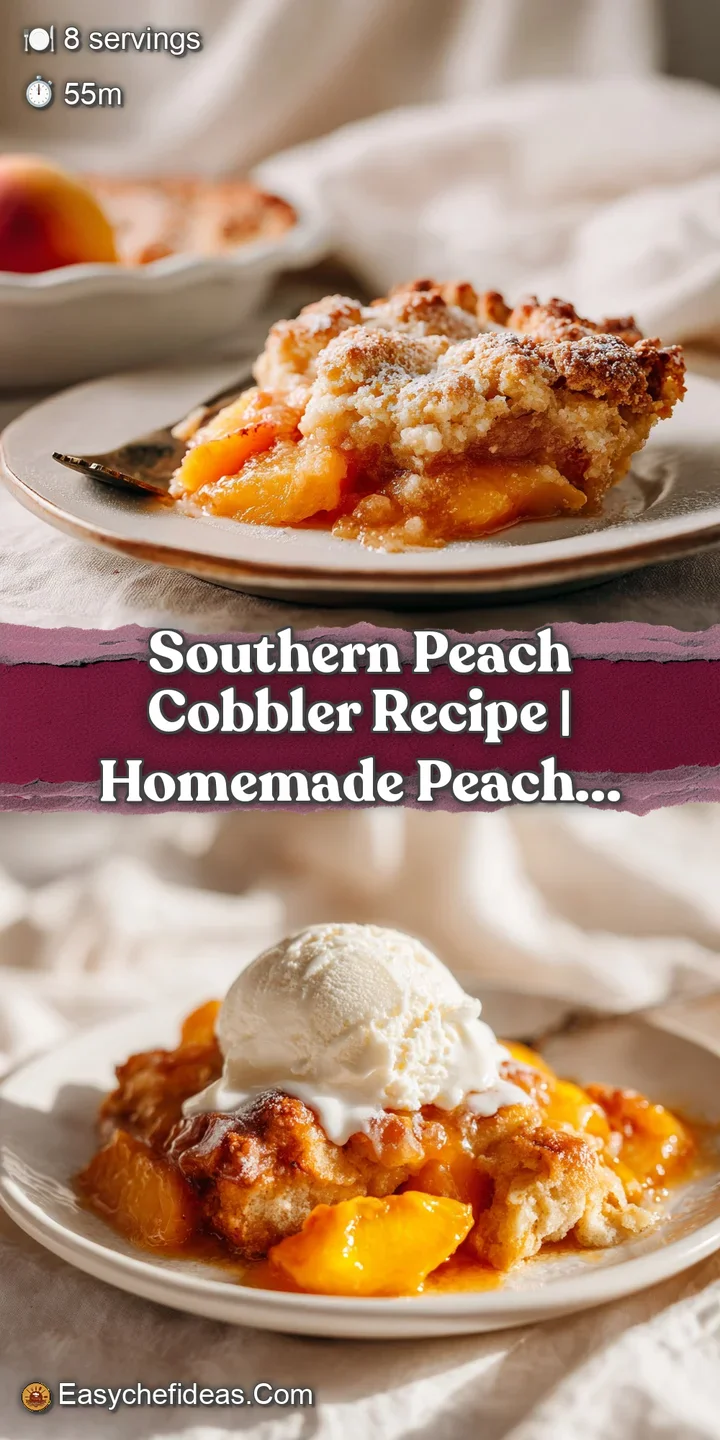
Southern Peach Cobbler: Crispy and Jammy
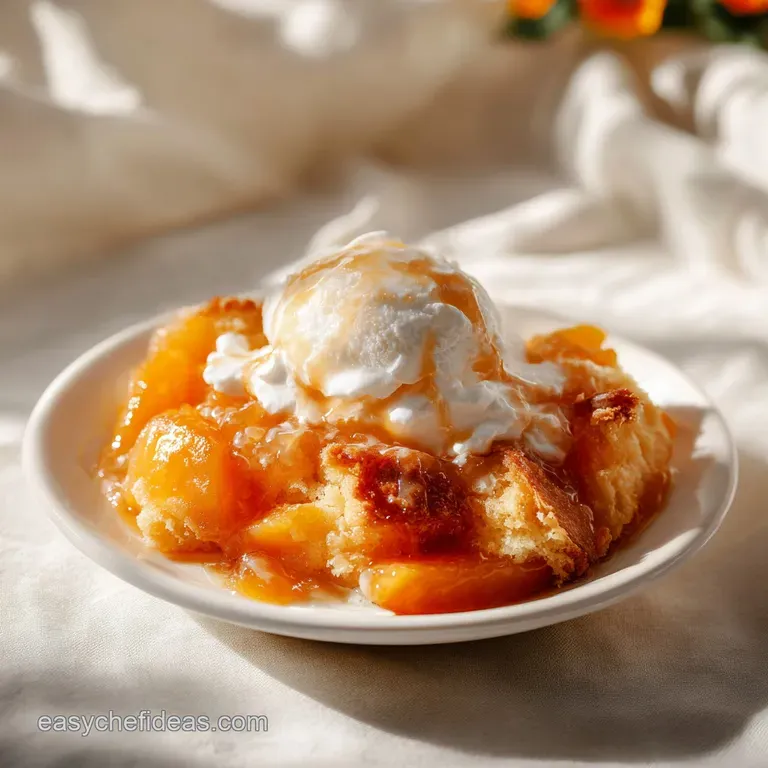
- Time: Active 15 minutes, Passive 45 minutes, Total 60 minutes
- Flavor/Texture Hook: Shattering sugar crust with jammy peaches
- Perfect for: Seasonal summer gatherings or cozy Sunday nights
- A Simple, Seasonal Peach Cobbler Recipe
- The Truth About Fruit Ripe
- Timing Your Golden Bake
- Choosing Your Stone Fruit
- Necessary Tools for Baking
- Step-by-Step Cobbler Creation
- Avoiding Common Baking Fails
- Flavor Swaps and Tweaks
- Keeping Your Cobbler Fresh
- Plating for Visual Impact
- Recipe FAQs
- 📝 Recipe Card
A Simple, Seasonal Peach Cobbler Recipe
The kitchen smells like a humid August afternoon in the best way possible. There is a specific, heavy aroma that fills the air when sliced peaches meet cinnamon and coconut sugar a scent that feels thick, sweet, and nostalgic.
As I slide the heavy baking dish into the oven, the first few minutes are quiet, but soon, the juices begin to bubble up around the edges, creating a rhythmic, low sizzle. It is the sound of summer fruit breaking down into a concentrated, velvety syrup.
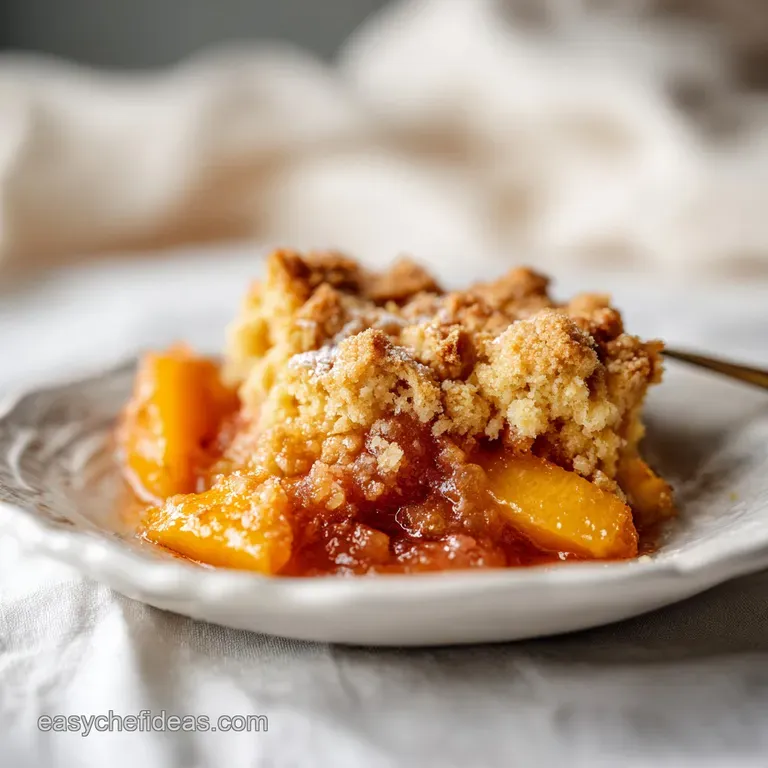
I remember the first time I tried the boiling water method for the topping. I was skeptical; pouring water over flour felt like a recipe for a gummy disaster. But as I watched the crust transform from a pale dough into a deep mahogany brown with a texture that literally shatters when your spoon hits it, I knew I’d never go back.
There is no delicate rolling of pastry here, just a rustic, craggy landscape of golden dough that catches all those bubbling fruit juices in its crevices.
This is the kind of dessert that demands to be eaten warm, preferably with a melting scoop of vanilla bean ice cream that turns into a silky sauce against the heat of the fruit. We are looking for that specific contrast: the cold cream against the hot, spiced peaches and the crunch of the sugar dusted crust.
It’s not about precision or looking like it came from a factory; it’s about the raw beauty of seasonal fruit and a crust that has some serious character.
The Truth About Fruit Ripe
Before we even touch a measuring cup, we have to talk about the fruit. This dish succeeds or fails based on the integrity of your peaches. If they are hard as baseballs, no amount of sugar will save them. You want fruit that gives slightly under your thumb not mushy, but yielding.
When you slice them, the juices should naturally run down the blade of your knife.
Osmotic Draw: Adding coconut sugar and lemon juice to the peaches draws out their natural moisture before baking. This 15 minute resting period, known as maceration, creates a pre thickened syrup that prevents the cobbler from becoming watery in the oven.
Starch Activation: The cornstarch mixed into the fruit only begins its work once the juices reach a simmer. It binds the peach nectar into a glossy, velvety coating that clings to every slice.
Hot Water Crust: Pouring boiling water over the butter and flour partially gelatinizes the starches instantly. This creates a unique crumb that is both tender on the bottom and crisp on top, rather than a traditional dense biscuit.
Leavening Reaction: The baking powder reacts twice first when it hits the warm water and again under the high heat of the oven, ensuring the "cobbles" of dough rise and stay airy.
| Method | Time | Texture | Best For |
|---|---|---|---|
| Standard Oven | 45 minutes | Shattering crust, jammy fruit | Traditional gatherings |
| Air Fryer | 25 minutes | Extra crispy top, firmer fruit | Small batches (halve recipe) |
| Convection | 35 minutes | Even browning, very flaky | Rapid results |
Choosing the right method depends on how much time you have and the texture you crave. While the air fryer is excellent for a quick fix, the 45 minute bake in a conventional oven allows the flavors to truly meld and the cornstarch to fully hydrate, resulting in that mouthwatering, thickened syrup we all love.
Timing Your Golden Bake
When you are scanning your pantry, remember that each component plays a structural role. We aren't just adding things for flavor; we are building a foundation that can support 1 kg of juicy fruit without collapsing.
I’ve found that using sea salt instead of standard table salt provides tiny pops of brightness that cut through the richness of the melted butter.
| Component | Science Role | Pro Secret |
|---|---|---|
| Fresh Peaches | Acid and moisture provider | Leave skins on for color and fiber |
| Cornstarch | Viscosity stabilizer | Mix with sugar first to prevent lumps |
| Boiling Water | Starch gelatinization | Must be "rolling boil" for best crust |
| Coconut Sugar | Hygroscopic sweetener | Adds a deep, toasted caramel note |
I once tried to skip the maceration step because I was in a rush. The result was a lake of thin, peach flavored water at the bottom of the dish. Now, I let those peaches sit for exactly 15 minutes while the oven preheats.
It’s the difference between a soggy mess and a structured, bakery quality dessert.
Choosing Your Stone Fruit
For this recipe, we are using specific quantities to ensure the fruit to crust ratio is balanced. Using 1 kg of peaches might seem like a lot, but they shrink significantly as they release their moisture.
- 1 kg fresh peaches, sliced: Look for Freestone varieties if possible; they pull away from the pit easily. Why this? Provides the structural bulk and natural sweetness of the dish.
- Substitute: 1 kg frozen peaches (thaw and drain slightly).
- 0.25 cup coconut sugar: This adds a hint of molasses flavor. Why this? Low glycemic option that provides a darker, richer syrup color.
- Substitute: 0.25 cup packed light brown sugar.
- 1 tbsp fresh lemon juice: Essential for balance. Why this? Brightens the fruit and prevents the peaches from browning too quickly.
- Substitute: 1 tbsp apple cider vinegar.
- 1.5 cups all purpose flour: The base of our cobbles. Why this? Provides enough protein for structure without being "bread y".
- Substitute: 1.5 cups 1 to-1 gluten-free flour blend.
- 6 tbsp unsalted butter, melted: For that mouthwatering richness. Why this? Coats the flour particles to ensure a tender, melt in-your mouth crumb.
- Substitute: 6 tbsp melted coconut oil (solidifies faster, slightly crunchier).
- 0.5 cup boiling water: The "secret" ingredient. Why this? Triggers the unique texture of the hot water crust.
- Substitute: 0.5 cup boiling hot black tea for a spiced undertone.
Necessary Tools for Baking
You don't need a professional kitchen to pull this off, but a few specific items make the process much smoother. I personally love using a glass 9x13 inch baking dish because it allows you to see the juices bubbling at the bottom, so you know exactly when the cornstarch has done its job.
A large mixing bowl is vital for tossing the peaches without bruising them. You want enough space to move them around freely. For the topping, a medium bowl and a sturdy whisk work best. When it comes to the "boiling water" step, use a teakettle or a small saucepan to get the water to a true, rolling boil.
If it’s just lukewarm, the crust won't develop that specific shattering quality we are after.
Finally,, a simple kitchen scale can be a huge help. Measuring 1 kg of peaches is more accurate than "about 6 peaches," as sizes vary wildly. If you have a microplane, use it for the nutmeg freshly grated nutmeg has a volatile oil content that pre ground spices simply can't match.
step-by-step Cobbler Creation
- Heat the oven to 190°C (375°F). Ensure your rack is in the center position for even browning.
- Prep the fruit. In a large bowl, toss the 1 kg sliced peaches with 0.25 cup coconut sugar, 1 tbsp lemon juice, 1 tsp cinnamon, nutmeg, and 1 tbsp cornstarch.
- Wait for the syrup. Let the mixture macerate for 15 minutes. Note: This allows the sugar to draw out the juices, creating the base for your sauce.
- Transfer to dish. Pour the peaches into an ungreased 9x13 inch baking dish. Spread them into an even layer to ensure consistent cooking.
- Whisk dry ingredients. In a separate bowl, combine 1.5 cups flour, 2 tsp baking powder, and 0.5 tsp sea salt.
- Create crumbs. Stir in the 6 tbsp melted butter. Mix until coarse crumbs form that look like wet sand.
- Add boiling water. Pour 0.5 cup boiling water over the flour mixture. Stir gently until a thick, spoonable dough forms, but do not overwork it.
- Top the fruit. Drop spoonfuls of batter over the peaches. Leave gaps between the dough so steam can escape, preventing a soggy middle.
- Sugar topping. Sprinkle the remaining 1 tbsp sugar and 0.5 tsp cinnamon over the dough.
- Bake the cobbler. Place in the oven for 40-45 minutes until the crust is mahogany brown and juices are bubbling.
Avoiding Common Baking Fails
One of the biggest heartbreaks is pulling a cobbler out and finding it's essentially a peach soup. This usually happens if the fruit wasn't ripe enough to release juice or if the cornstarch wasn't properly distributed.
Why Your Cobbler Is Soggy
If the crust feels damp or mushy, it’s often because the dough was dropped in one solid sheet rather than in individual "cobbles." Those gaps are essential; they act like little chimneys, allowing the steam from the fruit to escape.
Without them, the steam gets trapped under the crust, steaming the dough from the bottom up.
| Problem | Root Cause | Solution |
|---|---|---|
| Thin, watery sauce | Cornstarch didn't reach temp | Bake until juices are thick and bubbling rapidly |
| Doughy, raw middle | Overcrowded pan | Ensure gaps between dough drops for steam |
| Burnt top, raw fruit | Oven rack too high | Move to middle rack and tent with foil |
- ✓ Pat fresh peaches dry only if they are dripping wet; some surface moisture is fine.
- ✓ Ensure your baking powder is fresh (it should fizz when dropped in hot water).
- ✓ Don't skip the lemon juice; the acidity is required to balance the sugars.
- ✓ Let the cobbler rest for at least 10 minutes after baking to set the juices.
- ✓ Use a true rolling boil for the water, not just hot tap water.
Flavor Swaps and Tweaks
If you want to move away from the classic profile, this peach cobbler recipe is incredibly forgiving. I’ve seen people add a handful of fresh raspberries or blackberries to the mix, which adds a beautiful tartness and a vibrant purple streak to the syrup.
| Servings | Ingredient Adjustments | Pan Size | Cook Time |
|---|---|---|---|
| 4 People | 0.5 kg peaches, 0.75 cup flour | 8x8 inch square | 35 minutes |
| 8 People | 1 kg peaches, 1.5 cups flour | 9x13 inch rectangle | 45 minutes |
| 16 People | 2 kg peaches, 3 cups flour | Two 9x13 dishes | 50 minutes |
When scaling up, I always suggest using two separate pans rather than one giant one. This ensures the heat can penetrate the center of the fruit layer effectively. If you try to bake a double layer of peaches in a deep dish, the bottom fruit will turn to mush before the crust is done.
For another seasonal treat, you might enjoy the textures in my Bake Apple Cobbler, which uses a similar fruit forward approach. If you find yourself with extra peaches, they also make a mouthwatering filling for Classic Apple Turnovers with just a few minor adjustments to the spice levels.
Keeping Your Cobbler Fresh
This dessert is best on day one, but it holds up surprisingly well if you handle it correctly. The crust will naturally soften as it sits in the fridge, absorbing some of those spiced juices.
Storage: Keep leftovers in the fridge for up to 4 days. Cover it loosely with foil rather than plastic wrap to help prevent the crust from becoming completely soft. For longer storage, you can freeze the baked cobbler for up to 3 months. Thaw it in the fridge overnight before reheating.
Zero Waste: If you have peach peels left over, don't toss them! Simmer them with a bit of sugar and water to make a quick peach simple syrup for iced tea. Any leftover "crumbs" from the bottom of the pan are incredible swirled into morning yogurt or oatmeal.
Reheating: Avoid the microwave if you want to save the crust. Instead, pop a serving into a 175°C (350°F) oven for 10 minutes. This will re crisp the topping and get the juices flowing again without making the dough rubbery.
Plating for Visual Impact
We eat with our eyes first, and while a cobbler is inherently rustic, a few small touches can make it look like a restaurant level dessert. The contrast between the dark mahogany crust and the bright orange peaches is already stunning, but we can take it further.
Simple Level
Scoop a generous portion into a shallow bowl. Ensure you get plenty of the thickened syrup. A simple dusting of powdered sugar over the top right before serving adds a nice matte finish to the glossy crust.
Polished Level
Serve in individual ramekins. This ensures everyone gets an equal amount of "corner" crust which we all know is the best part. Top with a neat quenelle of whipped cream and a small sprig of fresh mint. The green against the orange is a classic, mouthwatering color combination.
Restaurant Level
Place a warm square of cobbler in the center of a wide, dark plate. Drizzle a small amount of crème anglaise around the base. Add a few fresh, uncooked peach slices on top for a texture contrast, and finish with a sprinkle of crushed toasted pecans for a nutty, earthy crunch that balances the sweetness.
| Plating Level | Main Garnish | Secret Touch |
|---|---|---|
| Simple | Powdered sugar | Serve in a warm bowl |
| Polished | Fresh mint | Use individual ramekins |
| Restaurant | Crème anglaise | Add fresh peach slices |
The goal isn't to hide the rustic nature of the dish but to celebrate it. The "shatter" of the crust is the star of the show, so make sure your plating doesn't bury it under too much liquid.
If you follow these steps, you’ll have a dessert that looks just as good as it tastes, capturing the very essence of the season in every bite. Enjoy the sizzle, the aroma, and most importantly, that first crunch.
Recipe FAQs
What are the most common mistakes when making peach cobbler?
Overmixing the batter is the biggest error. If you stir the flour and butter mixture too much after adding the boiling water, the dough becomes tough instead of light and fluffy.
How do you make a 3 ingredient cake mix cobbler?
This recipe does not use cake mix. For the best results, use the provided ratios of all-purpose flour, baking powder, and melted butter to create a classic, from scratch topping that captures the authentic texture of traditional cobbler.
What ingredients are in peach cobbler?
You need fresh peaches, coconut sugar, lemon juice, cinnamon, nutmeg, cornstarch, flour, baking powder, salt, melted butter, boiling water, and granulated sugar. These core components provide the necessary acidity, thickening power, and structure for a perfect bake.
Is peach cobbler better with frozen or canned peaches?
No, stick with fresh peaches. Frozen or canned varieties often release too much excess water, which prevents your fruit juices from thickening properly into a rich, syrupy base.
How to ensure the cobbler crust is perfectly brown?
Bake at 375°F for the full 40-45 minutes. If you enjoyed mastering this browning technique, the same principle of heat management applies when creating a deep color in cupcakes.
Is it true you must use a preheated baking dish?
No, this is a common misconception. You can simply spread the macerated peach mixture directly into an ungreased room temperature dish before topping it with your prepared dough.
How to tell when the cobbler is finished baking?
Look for deep mahogany crust and bubbling fruit. The edges should be dark, and you must see active, thick juices bubbling up through the gaps in your dough to ensure the cornstarch has fully activated.
Southern Peach Cobbler Recipe
Ingredients:
Instructions:
Nutrition Facts:
| Calories | 246 kcal |
|---|---|
| Protein | 3.7 g |
| Fat | 9.2 g |
| Carbs | 38.7 g |
| Fiber | 2.5 g |
| Sugar | 17.4 g |
| Sodium | 265 mg |
