Velvety, Smoke-Infused Black Eyed Peas
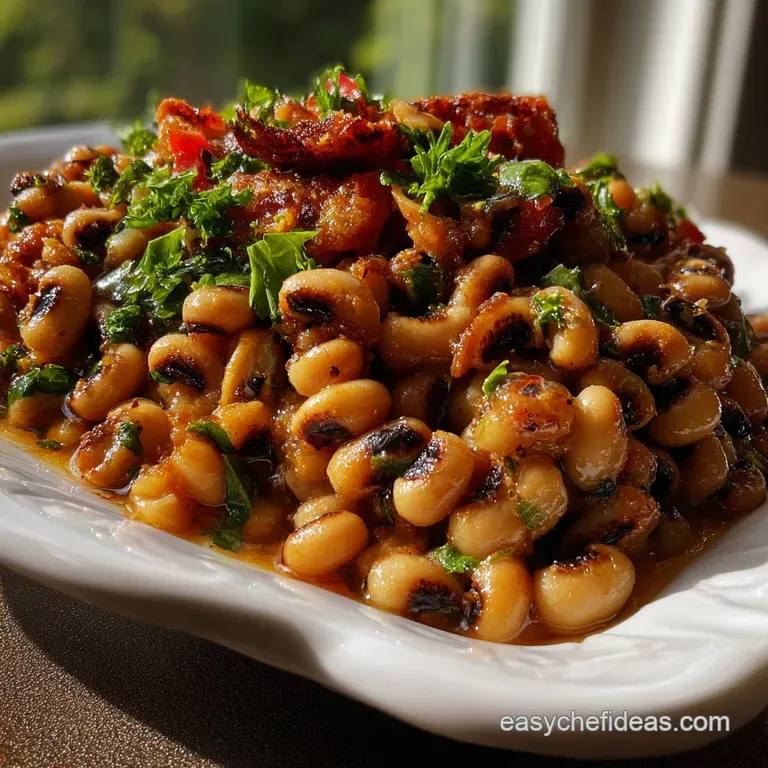
- Effort/Time: 2 hours (15 mins active prep)
- Flavor Hook: Smoky, umami-rich pot liquor with a peppery finish
- Perfect for: New Year's traditions or soul-warming Sunday suppers
- Unlocking the Cultural Legacy of Southern Black Eyed Peas
- The Culinary Physics Behind Earthy Legumes and Smoky Fats
- Mastering the Two-Hour Timeline for Velvety Bean Perfection
- Selecting Your Arsenal: The Foundations of Southern Flavor
- Essential Tools for Achieving the Perfect Pot Liquor
- The Aromatic Journey: A Step-by-Step Sensory Guide
- Why Your Beans Are Hard: Troubleshooting Texture and Taste
- ⚗️ The Scaling Lab: The Physics of Multiplication
- Creative Adaptations for Diverse Diets and Ingredient Swaps
- Zero-Waste Storage Hacks and Long-Term Flavor Preservation
- Elevating the Bowl: Traditional and Modern Serving Aesthetics
- Debunking Kitchen Folklore Surrounding Legume Preparation
- Recipe FAQs
- 📝 Recipe Card
Unlocking the Cultural Legacy of Southern Black Eyed Peas
Have you ever stood in a kitchen where the air feels heavy with the scent of hickory smoke and simmering onions? That specific fragrance represents more than just a meal; it is a sensory bridge to generations of communal cooking and shared history.
I remember the first time I realized that black eyed peas weren't just a side dish, but a vessel for deep, complex nourishment that anchors a table like nothing else can.
The secret to a truly transformative Southern Black Eyed Peas Recipe lies in the patience of the simmer. We aren't just boiling vegetables; we are performing a slow extraction of gelatin from bone and marrow.
This process creates a "pot liquor" so rich and velvety that it demands a piece of crusty bread for dipping. It is a dish that celebrates global diversity while remaining firmly rooted in the soul of Southern hospitality.
When we approach cooking black eyed peas, we must respect the legume's unique structure. Unlike larger beans, these gems have a thinner skin that requires gentle heat to prevent bursting.
By following this guide, you will move beyond basic preparation into the realm of culinary engineering, ensuring every bite is infused with the essence of smoked ham and perfectly balanced spices.
The Culinary Physics Behind Earthy Legumes and Smoky Fats
Understanding the molecular changes during the simmer is what separates a mediocre pot from the best black eyed peas recipe.
- Collagen Hydrolysis: Smoked ham hocks release gelatin over time, which coats the tongue and provides a luxurious mouthfeel that water alone cannot achieve.
- Starch Gelatinization: As the peas hydrate, starch granules swell and eventually burst, thickening the surrounding liquid into a natural gravy.
- Pectin Breakdown: The cell walls of the peas soften as heat breaks down pectin, but adding salt too early can reinforce these walls, leading to a "tough" exterior.
- Aromatic Volatilization: Sautéing the "holy trinity" (onion, celery, pepper) in bacon drippings creates new flavor compounds through the Maillard reaction before the liquid is even added.
Mastering the Two-Hour Timeline for Velvety Bean Perfection
Timing is everything when you want to avoid a mushy mess. While some prefer the set-it and forget-it nature of an oven, the stovetop provides the agitation necessary to release starches for a thicker broth.
For a successful Southern style black eyed peas experience, we aim for a gentle "smile" on the surface of the water just a few bubbles breaking rather than a violent boil.
Stovetop vs. Oven Preparation
| Feature | Stovetop Method | Dutch Oven (Oven) |
|---|---|---|
| Texture | Creamier broth due to constant convection | Individual peas remain more intact/distinct |
| Control | Easy to adjust liquid and seasoning mid-way | Superior heat retention and "even" cooking |
| Aroma | Fills the house with immediate smoky fragrance | Concentrated flavors due to sealed environment |
If you are coordinating a large meal, perhaps pairing these with a hearty Beef Lo Mein recipe for a fusion style feast, the stovetop allows you to monitor the texture more closely. However, if you want X (perfectly whole beans), do Y (use the oven at 325°F). If you want X (thick, gravy like liquor), do Y (stovetop with occasional stirring). If you want X (maximum smoke infusion), do Y (simmer the hocks for 30 minutes before adding the peas).
Selecting Your Arsenal: The Foundations of Southern Flavor
To create black eyed peas that resonate with authentic flavor, you must start with high-quality components. Using Lodge Cast Iron or a heavy bottomed Le Creuset Dutch Oven ensures that heat distribution remains constant, preventing the bottom layer from scorching while the top stays hard.
Ingredient Chemistry Breakdown
| Ingredient | Chemical/Physical Role (Science) | The Pro Secret (Why This Matters) |
|---|---|---|
| Dried Black Eyed Peas | High protein legume with starch rich core | Needs 1 lb dried to 6 cups stock for ideal hydration ratio |
| Smoked Ham Hocks | Source of fat, sodium, and connective tissue | Collagen breaks down into gelatin for a silky "pot liquor" |
| Bacon Drippings | Rendered animal fat with high smoke point | Adds a secondary layer of cured meat complexity |
| Chicken Stock | Liquid base with pre-existing amino acids | Depth of flavor is 10x higher than using plain water |
- 1 lb dried black eyed peas
- Why this? Dried beans offer superior texture and nutrient density over canned versions.
- 2 large smoked ham hocks
- Why this? The bone-in marrow provides essential minerals and natural thickeners.
- 2 tbsp bacon drippings
- Why this? Fat carries the fat-soluble compounds in paprika and cayenne for better distribution.
- 6 cups chicken stock
- Why this? Provides a savory backbone that enhances the earthiness of the peas.
Essential Tools for Achieving the Perfect Pot Liquor
You don't need a professional kitchen, but a few specific tools will make your blackeyed pea recipes much more consistent. I always reach for my KitchenAid 6 Quart Dutch Oven because the heavy lid traps steam, creating a pressurized environment that speeds up the softening of the legumes without requiring a pressure cooker.
- Fine mesh Strainer: Essential for the initial rinse to remove dust and debris.
- Wooden Spoon: Preferred for stirring to avoid breaking the delicate skins of the peas.
- Chef's Knife (Wüsthof 8 inch): Necessary for a fine dice on the celery and peppers to ensure they melt into the sauce.
- Fat Separator: Useful if your ham hocks are exceptionally fatty and you prefer a leaner broth.
The Aromatic Journey: A step-by-step Sensory Guide
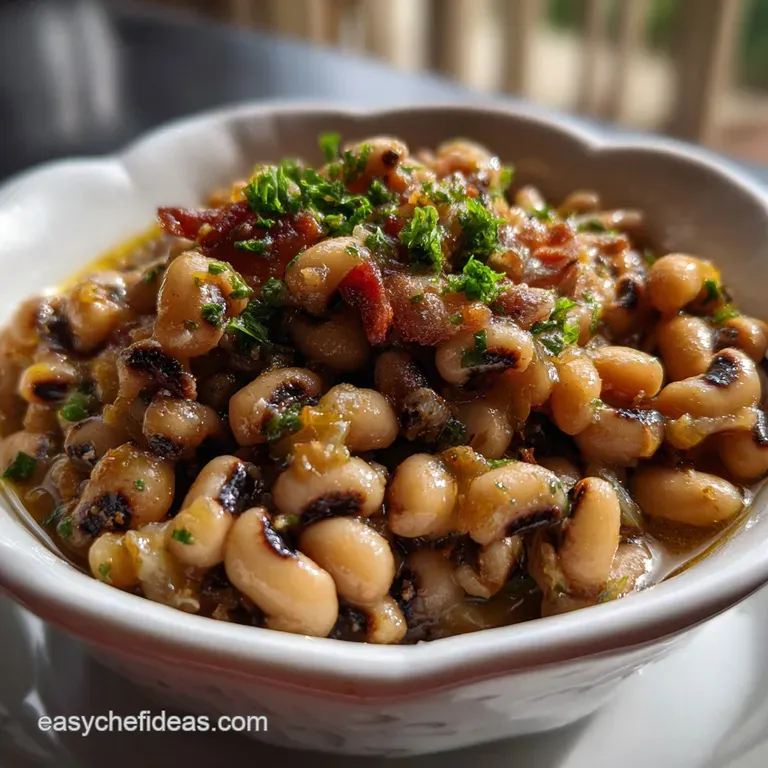
This process is designed to maximize the fresh black eyed peas recipe experience by layering flavors chronologically. Follow these steps for a result that nourishes both the body and the soul.
- Sort the 1 lb dried black eyed peas on a white plate to find stones. Note: Natural legumes often contain field debris.
- Rinse the peas under cold water until the water runs clear and the "dusty" smell vanishes.
- Melt 2 tbsp bacon drippings in a Dutch oven over medium heat until it shimmers and wisps of smoke appear.
- Sauté diced onion, celery, and bell pepper for 6 minutes until the onion turns translucent and the sharp sulfur smell shifts to a sweet, caramelized aroma.
- Add 4 cloves minced garlic and cook for 1 minute until the fragrance is pungent but not browned.
- Nestle 2 large smoked ham hocks into the vegetables and pour in 6 cups chicken stock. Note: This starts the collagen extraction process.
- Stir in 1 tsp smoked paprika, 1/2 tsp cayenne, 1 tsp kosher salt, and 1 tsp black pepper.
- Incorporate the sorted peas and 2 dried bay leaves until the liquid barely covers the legumes.
- Simmer covered for 1 hour 30 mins until the peas are tender but not bursting and the liquid has thickened to a syrupy consistency.
- Rest the pot for 10 minutes off the heat until the sizzle stops and the flavors marry.
Chef's Note: For an unconventional depth, add a teaspoon of instant espresso powder. It won't taste like coffee, but it will intensify the smoky, earthy notes of the ham hocks.
Why Your Beans Are Hard: Troubleshooting Texture and Taste
Nothing is more frustrating than waiting two hours for black eyed peas only to find them crunchy. This usually stems from a chemical reaction rather than just "under cooking."
The Science of "Hard Seed"
If your peas remain hard after hours of simmering, you likely have "hard seeds" or have introduced acids too early. High mineral content in "hard water" can also react with the bean skins, creating a barrier that prevents water from entering the starch center.
| Problem | Root Cause | The Fix | Pro Protocol |
|---|---|---|---|
| Gritty Texture | Old beans or hard water minerals | Add 1/4 tsp baking soda | Soda raises pH, softening the pectin walls |
| Thin, Watery Broth | Low starch release | Mash 1/2 cup of peas | Reintroduces internal starches to emulsify liquid |
| Excessive Saltiness | Ham hock over reduction | Add a peeled potato | The potato starch absorbs excess salt via osmosis |
⚗️ The Scaling Lab: The Physics of Multiplication
When you are preparing black eyed peas southern dishes for a crowd, the math isn't as simple as 1+1.
- The 1.5x Spice Rule: If doubling the recipe to 2 lbs of peas, only use 1.5x the cayenne and smoked paprika. Capsaicin and smoke compounds accumulate non-linearly; you can easily overwhelm the palate.
- The Evaporation Paradox: If you use a wider pot for a double batch, your surface area increases significantly. You must monitor liquid levels more closely, as evaporation happens faster, potentially leaving the top layer of peas dry and undercooked.
- Thermal Mass & Thermodynamics: A 2 lb batch has a much higher thermal mass. When you turn off the heat, the internal temperature will remain above 200°F for significantly longer. Pull the peas 5 10 minutes earlier than you think, as carry over cooking will finish the softening process in the pot.
- Pan Crowding: Do not try to sauté double the vegetables in a small pot. The moisture release will drop the temperature below 300°F, steaming the onions instead of caramelizing them. Cook aromatics in batches if necessary.
Creative Adaptations for Diverse Diets and Ingredient Swaps
We believe in the power of culture and diversity in the kitchen. If you need to adapt this black eyed peas masterpiece for different dietary needs, these swaps maintain the integrity of the dish. For those looking for a different starch profile, learning how to create recipe styles with black beans and rice can offer a similar comfort.
| Original Ingredient | Substitute | Why It Works |
|---|---|---|
| Ham Hocks | Smoked Turkey Wings | Lower fat but provides similar collagen and smoke |
| Bacon Drippings | Avocado Oil + Liquid Smoke | High smoke point; liquid smoke mimics the cured flavor |
| Chicken Stock | Mushroom Broth | High in glutamates, providing the "umami" lost without meat |
| Yellow Onion | Leeks (white parts) | Offers a subtler, more buttery sweetness |
Zero Waste Storage Hacks and Long Term Flavor Preservation
Proper storage is a cornerstone of a sustainable kitchen. Black eyed peas are actually better on the second day because the starches continue to hydrate and the fat-soluble spices distribute more evenly through the liquid.
- Fridge
- 4 5 days in an airtight container. The broth will likely turn into a gel; this is a sign of high-quality gelatin.
- Freeze
- 6 months. Freeze in muffin tins for individual portions, then transfer to a freezer bag.
- Reheat
- Warm over low heat on the stove. Add 1/4 cup of water or stock to loosen the gelatinized broth back into a silky liquid.
Part B - Zero Waste Philosophy: Don't discard the ham hock bones. Transform: Simmer them a second time with vegetable scraps to make a "remouillage" (second stock).
Science: Even after the first simmer, the bones contain deep marrow flavor and residual calcium that enriches a secondary broth. Similarly, save your celery leaves. Transform: Use them as a fresh garnish.
Science: The leaves contain higher concentrations of Vitamin C and a bright, peppery flavor that cuts through the heavy fat of the dish.
Elevating the Bowl: Traditional and Modern Serving Aesthetics
Presentation is the final act of love in cooking. To showcase your black eyed peas, consider the contrast of colors. The mahogany colored broth and ivory peas benefit from a pop of vibrant green.
- The Classic Southern Spread: Serve in wide, shallow bowls to allow the pot liquor to pool around a central mound of fluffy white rice.
- The Better Than-Dining Out Garnish: Top with finely sliced scallions and a drizzle of hot sauce infused honey. The sweetness balances the smoke, while the vinegar in the hot sauce cuts the richness of the bacon fat.
- Texture Contrast: Serve with a side of skillet cornbread. The "shatter" of a crisp crust against the velvety beans creates a perfect tactile experience.
Debunking Kitchen Folklore Surrounding Legume Preparation
There are many myths in the world of blackeyed pea recipes that can lead a cook astray. Let's look at the science.
- Myth: You must soak black eyed peas overnight. → Truth: Unlike kidney beans, black eyed peas are small and thin skinned. Soaking can actually lead to a mushy texture and loss of flavor; a direct simmer is often superior for structural integrity.
- Myth: Adding salt at the beginning makes beans tough. → Truth: While excessive acid (like tomatoes) can toughen skins, a moderate amount of salt actually helps the beans cook more evenly by allowing the sodium ions to displace magnesium and calcium in the skins.
- Myth: Canned peas are the same as dried. → Truth: Canned peas are processed at high heat and pressure, which destroys the delicate starch-to-protein ratio. They lack the ability to create a thick, collagen rich pot liquor.
By mastering these techniques, you aren't just making a meal; you are preserving a tradition. Whether it's your first time cooking black eyed peas or your hundredth, the focus on science and sensory cues will ensure a pot that nourishes your community every single time. For more bold flavors, don't forget to try our Cajun Kick Homemade recipe to spice up your next kitchen adventure.

Recipe FAQs
Are black eyed peas similar to regular kidney beans?
No. They require less soaking time. Black eyed peas have thinner skins than large, dense beans, making long overnight soaks unnecessary and potentially detrimental to final texture.
What is the purpose of soaking ham hocks first?
To release initial fat and flavor compounds. This initial fat renders into the pot base, establishing the necessary flavor foundation before the peas absorb the liquid.
Why do my black eyed peas taste too salty?
Smoked meat releases salt unevenly during long reduction. If you loved the slow extraction process here, observe how that same principle applies to rendering fats in our Cuban Style Black Beans: The Chefs Authentic Frijoles Negros Recipe.
- Add one large, peeled Russet potato
- Simmer for 20 minutes, then remove potato
- Use less salt in initial seasoning next time
Is it better to use dried or canned black eyed peas?
Dried peas produce superior pot liquor. Canned legumes have been pre-cooked and stabilized, meaning they cannot release the starches necessary to form the velvety, thick broth characteristic of true Southern style.
What is the ideal simmering temperature?
Maintain a gentle simmer, 205°F range. A vigorous, rolling boil breaks the delicate skins prematurely, releasing all starch too quickly and preventing the gelatin from coating the exterior evenly.
Can I substitute smoked turkey wings for ham hocks?
Yes, but expect less fat. Turkey wings provide adequate smoke flavor and collagen, similar to how poultry substitutes add depth in other dishes, such as our Slow Cooker Chicken Black Bean Tacos Set-It-and-Forget-It Dinner. You may need to add extra bacon fat to compensate for richness.
Myth: Peas must be cooked until they are completely mushy.
Myth: You must cook black eyed peas until they are completely mushy.Reality: For the best texture, stop cooking when the peas are tender but still hold their shape; excessive cooking causes them to break down entirely into a paste.
Smoked Black Eyed Peas Recipe
Ingredients:
Instructions:
Nutrition Facts:
| Calories | 285 kcal |
|---|---|
| Protein | 18 g |
| Fat | 6 g |
| Carbs | 36 g |
| Fiber | 9 g |
| Sugar | 3 g |
| Sodium | 840 mg |
