Slow Cooker Beef Bourguignon: Velvety Red Wine Sauce
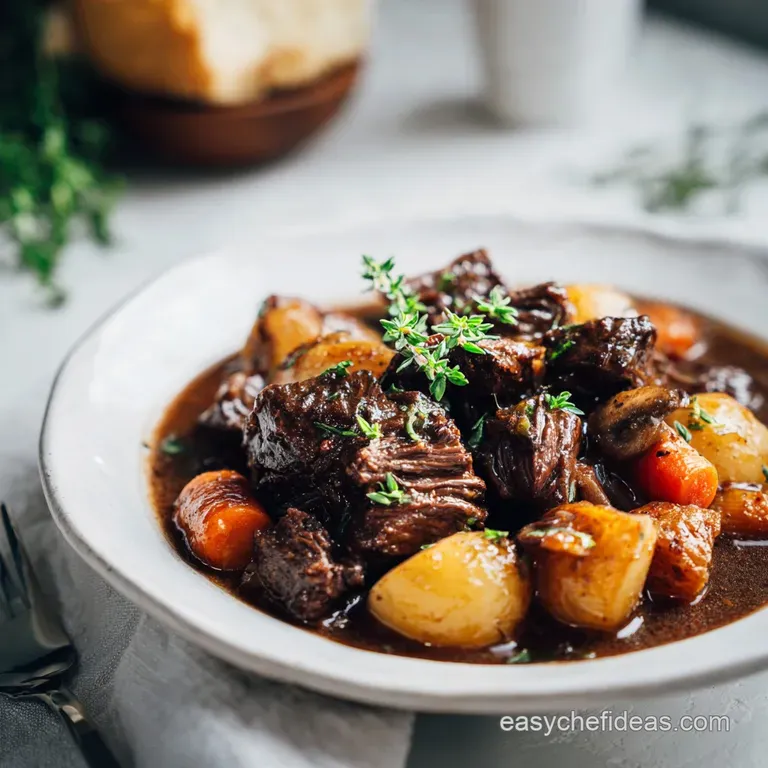
- Time: Active 30 mins, Passive 8 hours, Total 8 hours 30 mins
- Flavor/Texture Hook: Velvety red wine sauce with melt in-the mouth beef
- Perfect for: Cozy Sunday dinners or effortless cold weather entertaining
- Flavor Secrets for Slow Cooker Beef Bourguignon
- The Science of Collagen Breakdown
- Component Analysis and Flavor Roles
- Essential Components for This Recipe
- Vital Kitchen Tools Required
- Executing The Perfect Braise
- Fixing Common Cooking Errors
- Adapting Quantities for Different Needs
- Debunking Traditional Braising Tales
- Recipe Swaps and Tweaks
- Keeping Leftovers Fresh Longer
- Ideal Sides for Pairing
- High in Sodium
- Recipe FAQs
- 📝 Recipe Card
Flavor Secrets for Slow Cooker Beef Bourguignon
The first time I attempted this, the sizzle of diced bacon hitting a cold pan was my first mistake. I learned quickly that starting with a cold pan helps the fat render out slowly, creating a crispy base that flavors every subsequent layer.
I remember the kitchen filling with that heavy, intoxicating aroma of Pinot Noir mingling with thyme, a scent so thick you could almost taste the French countryside before the lid even went on the cooker.
It was a rainy Tuesday, and by the time 6:00 PM rolled around, the house smelled like a professional kitchen, and the beef had reached that specific state where a fork just glides through it without resistance.
We often think of French cooking as intimidating, but this version is honest and forgiving. You don't need a culinary degree to understand that browning the meat is non negotiable for that deep mahogany color.
I've sat through enough "grey" stews to know that the extra ten minutes spent at the stove makes the difference between a bland pot of meat and a rich, glossy braise. This is nourishment in its purest form, meant to be shared with friends and a thick loaf of crusty bread to catch every last drop of that velvety sauce.
The Science of Collagen Breakdown
Connective Tissue Transformation: Low and slow heat converts tough collagen into gelatin, which thickens the sauce and gives the beef its signature "shred ability."
Acidic Tenderization: The tannins and acidity in the red wine help break down muscle fibers while balancing the richness of the rendered bacon fat.
Maillard Reaction: Searing the beef at high heat creates new flavor molecules that the slow cooker simply cannot produce on its own.
Aromatic Infusion: The enclosed environment of the cooker traps volatile aromatic compounds, forcing herb and garlic flavors deep into the protein.
| Beef Thickness | Internal Temp | Rest Time | Visual Cue |
|---|---|---|---|
| 2 inch cubes | 195°F (90°C) | 10 mins | Meat pulls apart easily |
| 1.5 inch cubes | 190°F (88°C) | 10 mins | Fork slides in with zero resistance |
| 3 inch chunks | 200°F (93°C) | 15 mins | Connective tissue appears translucent |
The timing in a slow cooker is quite flexible, but hitting these internal temperatures ensures the gelatin has fully melted. If you pull the meat too early, it will be "done" but chewy; patience is the secret ingredient that makes it truly succulent.
Component Analysis and Flavor Roles
| Ingredient | Science Role | Pro Secret |
|---|---|---|
| Beef Chuck | Primary Protein | Choose a "choice" grade with heavy white marbling for maximum moisture. |
| Red Wine | Solvent & Acid | Use a dry wine you would actually drink; the flavor concentrates as it cooks. |
| Tomato Paste | Umami Booster | Sauté it with the garlic to remove the "tinny" raw taste before adding liquids. |
| Pearl Onions | Structural Texture | Use frozen onions to save time; they hold their shape better than chopped whites. |
Essential Components for This Recipe
The beauty of this dish lies in the quality of your base. While some recipes suggest throwing everything in raw, we know better. Each element below plays a specific role in the final harmony of the sauce.
- 1.36 kg (3 lbs) Beef Chuck Roast: Trimmed and cut into 5 cm (2 inch) cubes. Why this? Chuck has the perfect fat to lean ratio for long, slow braising.
- Substitute: Beef Shin or Oxtail. Both provide excellent gelatinous results.
- 115 g (4 oz) Center cut Bacon: Diced. Why this? Provides the foundational smoky fat for searing the beef.
- Substitute: Pancetta. It offers a similar saltiness without the heavy smoke.
- 475 ml (2 cups) Dry Red Wine: Pinot Noir or Burgundy preferred. Why this? The classic French choice for a bright, fruity acidity.
- Substitute: Cabernet Sauvignon for a bolder, more tannic finish.
- 475 ml (2 cups) Low sodium Beef Bone Broth: Why this? Bone broth adds more body and mouthfeel than standard stock.
- Substitute: Dark chicken stock. Surprisingly, it adds great depth without being too heavy.
- 450 g (1 lb) Carrots: Peeled and cut into thick diagonal chunks. Why this? Thick cuts prevent them from turning into mush over 8 hours.
- Substitute: Parsnips. They add a spicy, earthy sweetness.
- 450 g (1 lb) Frozen Pearl Onions: Thawed. Why this? They provide whole bites of onion sweetness without the prep work.
- Substitute: Shallots halved lengthwise.
- 450 g (1 lb) Crimini Mushrooms: Halved. Why this? They absorb the wine sauce like little sponges.
- Substitute: Button mushrooms or torn Oyster mushrooms.
- 30 ml (2 tbsp) Tomato Paste: Why this? Thickens and adds a rich, savory bass note to the sauce.
- Substitute: Sun dried tomato pesto for a punchier flavor.
- 3 cloves Garlic: Minced.
- Substitute: 1 tsp garlic powder in a pinch (but fresh is far superior).
- 15 ml (1 tbsp) Fresh Thyme leaves:
- Substitute: 1 tsp dried thyme.
- 2 Dried Bay Leaves:
- Substitute: 1 fresh bay leaf.
- 30 ml (2 tbsp) Cornstarch & 30 ml (2 tbsp) Cold water: For the final slurry.
- Salt and Black Pepper: To taste.
Vital Kitchen Tools Required
You don't need a gadget filled kitchen, but a heavy bottomed skillet is essential for the initial sear. I recommend a cast iron pan because it holds heat like a champ, ensuring the beef actually browns rather than steams.
Of course, you'll need your slow cooker (6 quart size is ideal for this volume) and a sharp chef's knife for those carrots.
Using a slow cooker for this is much easier than the stovetop version, similar to the logic behind a Foolproof Crockpot Beef recipe where the machine does all the heavy lifting while you're at work.
Executing The Perfect Braise
- Render the bacon. Place the diced bacon in a cold skillet, then turn the heat to medium. Cook until crispy and the fat has coated the pan. Remove bacon with a slotted spoon, leaving the fat behind.
- Sear the beef. Increase heat to medium high. Season the beef cubes with salt and pepper. Brown them in batches in the bacon fat until a deep brown crust forms. Note: Do not crowd the pan or the meat will steam instead of sear.
- Sauté aromatics. Lower the heat to medium. Add the tomato paste and garlic to the remaining fat. Stir for 60 seconds until the garlic is fragrant and the paste turns dark red.
- Deglaze the pan. Pour 1 cup of the red wine into the hot skillet. Scrape the bottom vigorously with a wooden spoon to release the "fond" (the brown bits).
- Assemble the cooker. Place the seared beef, bacon, carrots, and pearl onions into the slow cooker. Pour the skillet liquid over the top.
- Add remaining liquids. Pour in the rest of the wine and the beef bone broth. Add the thyme and bay leaves.
- The long simmer. Cover and cook on LOW for 8 hours or HIGH for 4 hours until the beef is fork tender. Note: I always recommend the LOW setting for a better texture.
- Sauté the mushrooms. About 30 minutes before serving, sauté the mushrooms in a separate pan with a little butter until golden and "squeaky". Add them to the slow cooker.
- Thicken the sauce. Whisk the cornstarch and cold water together. Stir the slurry into the slow cooker.
- Final finish. Cook on HIGH for an additional 15 minutes until the sauce is glossy and coats the back of a spoon. Taste and adjust salt or pepper as needed.
Fixing Common Cooking Errors
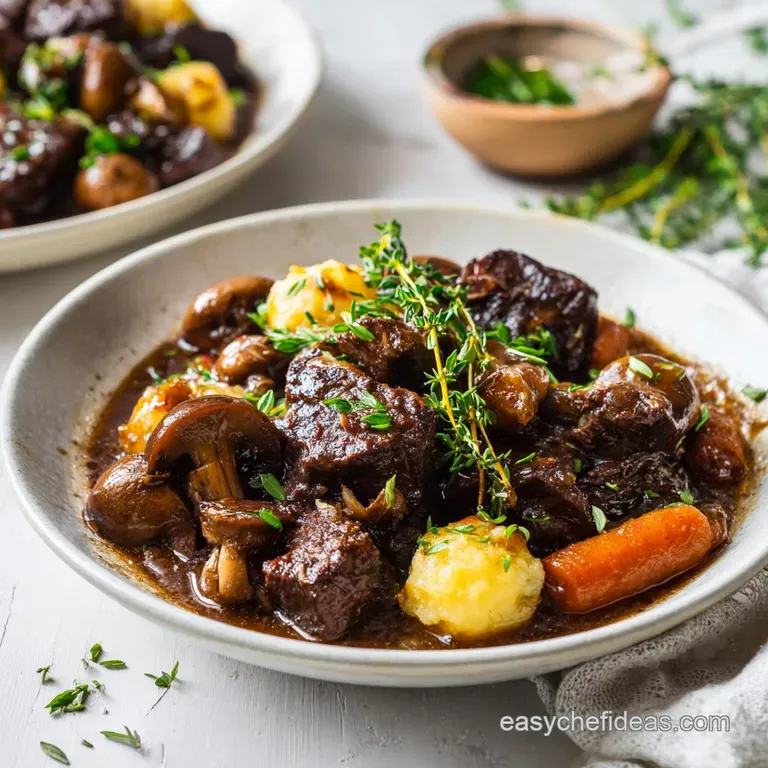
One of the biggest heartbreaks is opening the lid after 8 hours to find a watery, thin liquid instead of a rich gravy. This usually happens if the vegetables released more moisture than expected. Don't panic; it's easily fixed with a quick simmer or an extra hit of slurry.
Why Your Sauce Is Thin
If your sauce looks more like a soup, the most likely culprit is either skipping the deglazing step or not using enough thickening agent at the end. The vegetables, especially mushrooms if added too early, can also dilute the intensity.
| Problem | Root Cause | Solution |
|---|---|---|
| Meat is tough | Under cooked collagen | Cook for another 60 mins on LOW. It needs more time to melt. |
| Sauce is bitter | Cheap wine or burnt garlic | Stir in a teaspoon of sugar or honey to balance the tannins. |
| Greasy surface | Too much bacon/beef fat | Skim the top with a wide spoon or use a fat separator. |
Common Mistakes Checklist
- ✓ Never skip browning the beef; it’s the primary source of the deep flavor profile.
- ✓ Use room temperature meat if possible to ensure an even, rapid sear.
- ✓ Don't add the mushrooms at the start; they turn rubbery and grey over 8 hours.
- ✓ Always whisk cornstarch with cold water; adding it directly to hot liquid creates lumps.
- ✓ Remove the bay leaves before serving - nobody wants to crunch on a dried leaf.
Adapting Quantities for Different Needs
If you are making this for a smaller crowd, perhaps a slow cooker beef bourguignon for 2, you can easily halve the ingredients. However, I suggest using a smaller 3 quart slow cooker so the liquid level remains high enough to cover the meat.
If you use a large cooker for a half batch, the liquid will evaporate too quickly and may scorch.
For large parties, you can double the recipe, but keep the salt and spices at about 1.5 times the original amount. You can always add more salt later, but you can't take it out! If you enjoy this style of hearty meal prep, you might also like the simplicity of a Beef Mince Lentil recipe which scales up beautifully for big families.
Debunking Traditional Braising Tales
One common myth is that you must use an expensive bottle of wine. In reality, once the alcohol burns off and the wine reduces, the nuances of a $50 bottle are lost. A decent, mid range "table wine" is perfect.
Another misconception is that searing "seals in the juices." Science shows that searing actually dries out the surface of the meat slightly, but we do it anyway because the Maillard reaction creates complex flavors that are essential for an authentic slow cooker beef bourguignon.
| Fresh Ingredients | Shortcut Version | Flavor Impact |
|---|---|---|
| Fresh Pearl Onions | Frozen Thawed Onions | Negligible; saves 30 mins of peeling. |
| Fresh Thyme Brigs | Dried Thyme | Slightly less "bright" but still earthy and deep. |
| Homemade Bone Broth | store-bought Stock | Noticeable loss in mouthfeel/gelatin; add a pinch of gelatin powder to fix. |
Recipe Swaps and Tweaks
If you're looking for a slow cooker beef bourguignon no wine version, replace the wine with an equal amount of beef broth plus two tablespoons of balsamic vinegar and a teaspoon of Worcestershire sauce. This provides the necessary acidity and depth without the alcohol.
For those following specific diets, this dish is naturally quite healthy, but you can swap the bacon for smoked turkey bacon or omit the cornstarch for a thinner, paleo friendly broth.
If you are a fan of these flavors but want a different protein, the technique is very similar to preparing a Corned Beef Brisket recipe, where long term moisture management is the key to success.
- The Keto Friendly Twist: Omit the carrots and pearl onions; replace with radishes and extra mushrooms. Use xanthan gum instead of cornstarch.
- The Alcohol Free Alternative: Use extra beef broth mixed with red wine vinegar (about 45ml vinegar per 500ml broth).
- The Spicier Version: Add a pinch of red pepper flakes or a teaspoon of smoked paprika to the aromatics.
Keeping Leftovers Fresh Longer
This is one of those rare dishes that actually tastes better the next day. As the mixture cools, the beef reabsorbs the seasoned sauce, making it incredibly moist. Store it in an airtight container in the fridge for up to 4 days.
For long term storage, this freezes like a dream for up to 3 months. Just be aware that the carrots may become slightly softer upon reheating. When you're ready to eat, thaw it overnight in the fridge and reheat gently on the stovetop.
If the sauce has thickened too much in the freezer, a splash of water or broth will bring back that velvety texture. For zero waste, take any leftover sauce and use it as a base for a rich noodle soup the following day.
Ideal Sides for Pairing
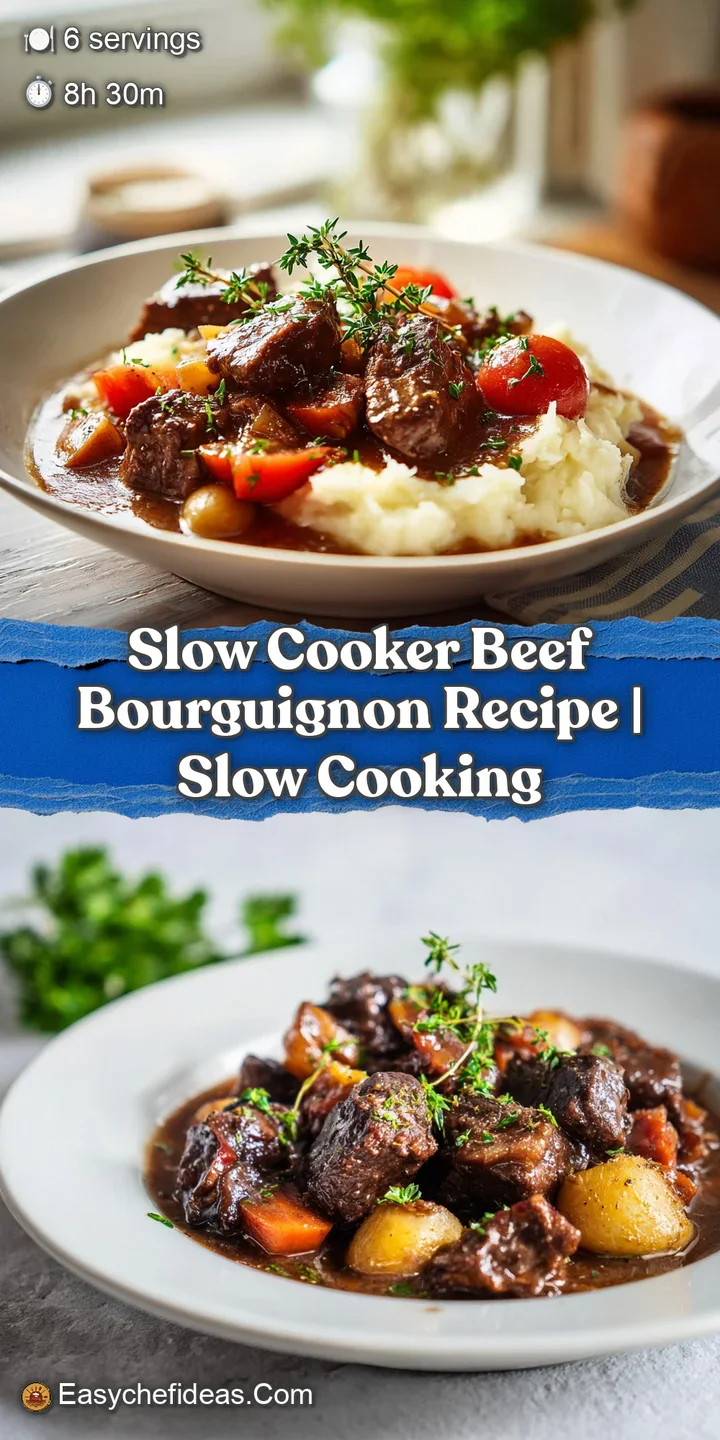
To honor the richness of the best slow cooker beef bourguignon, you need something to soak up the sauce. A pile of garlic chive mashed potatoes is the classic choice, but don't overlook a wide pappardelle noodle or even a simple bowl of buttered polenta.
Mashed Parsnips
For a twist on the classic potato, try mashing boiled parsnips with a bit of heavy cream. Their natural sweetness cuts through the tannins of the red wine sauce perfectly.
The Sourdough Sponge
Nothing beats a thick slice of toasted sourdough rubbed with a raw garlic clove. It acts as a sponge for the mahogany sauce, ensuring not a single drop of that hard earned flavor goes to waste.
If you’re feeling adventurous, a side of roasted Brussels sprouts with a drizzle of honey provides a lovely bitter sweet contrast to the savory beef.
High in Sodium
845 mg mg of sodium per serving (37% % of daily value)
The American Heart Association recommends limiting sodium intake to no more than 2,300mg per day for most adults.
Tips to Reduce Sodium in Your Beef Bourguignon
-
Lower Sodium Broth-30%
Ensure you are using low-sodium beef bone broth. Check the label and choose a broth with the lowest sodium content available. Using a 'no salt added' broth gives you even more control over the sodium level.
-
Reduce Bacon-25%
Bacon contributes a significant amount of sodium. Reduce the amount of bacon by half (2 oz) or consider substituting it with a lower sodium alternative like pancetta, using only 1 oz for flavor.
-
Control Added Salt-25%
Omit adding any additional salt during cooking. Taste the dish after cooking and only add a small amount of salt if absolutely necessary. Remember that the broth and bacon already contain sodium.
-
No-Salt Tomato Paste-15%
Tomato paste can be a sneaky source of sodium. Purchase no-salt added tomato paste and adjust seasonings as needed to enhance the overall taste.
-
Herb Power!
Enhance the flavor of your beef bourguignon with a generous amount of fresh herbs and spices such as thyme, bay leaves, garlic, and black pepper. Experiment with other herbs like rosemary or parsley to add depth without sodium.
Recipe FAQs
Can I make Beef Bourguignon in a slow cooker?
Yes, absolutely. The slow cooker is perfect for mimicking the long, gentle braise required for authentic Bourguignon.
What is the difference between beef stew and Beef Bourguignon?
Beef Bourguignon is a specific French stew defined by its ingredients. Classic Bourguignon requires bacon (lardon), red Burgundy wine, mushrooms, and pearl onions; standard stew is more general.
What cut of meat should you use for Beef Bourguignon?
Beef chuck roast is the ideal choice. It contains the right balance of fat and connective tissue (collagen) which breaks down during the long cooking time, resulting in tender beef and a rich sauce.
What is the secret of Beef Bourguignon?
The secret is proper searing and patience. You must aggressively brown the meat before adding liquid to develop the deep mahogany flavor base through the Maillard reaction.
How long should the beef cook on LOW in the slow cooker?
Cook on LOW for 8 hours or until the beef is completely fork tender. Hitting an internal temperature near 195°F ensures the collagen converts fully into gelatin, creating that silky mouthfeel.
Can I skip searing the beef if I use a slow cooker?
No, skipping the sear is the biggest mistake you can make. While the slow cooker handles the tenderness, only the initial high heat sear creates the complex flavor compounds necessary for authentic Bourguignon depth.
What is the best way to thicken the sauce after cooking?
Use a cornstarch slurry whisked into cold water, then simmer briefly. Stir the slurry into the cooker during the last 15 minutes of cooking until the sauce achieves a glossy consistency that coats the back of a spoon.
Slow Cooker Beef Bourguignon
Ingredients:
Instructions:
Nutrition Facts:
| Calories | 642 kcal |
|---|---|
| Protein | 54 g |
| Fat | 23 g |
| Carbs | 21 g |
| Fiber | 4 g |
| Sugar | 7 g |
| Sodium | 845 mg |
