Slow Braised Beef Roast with Cranberry
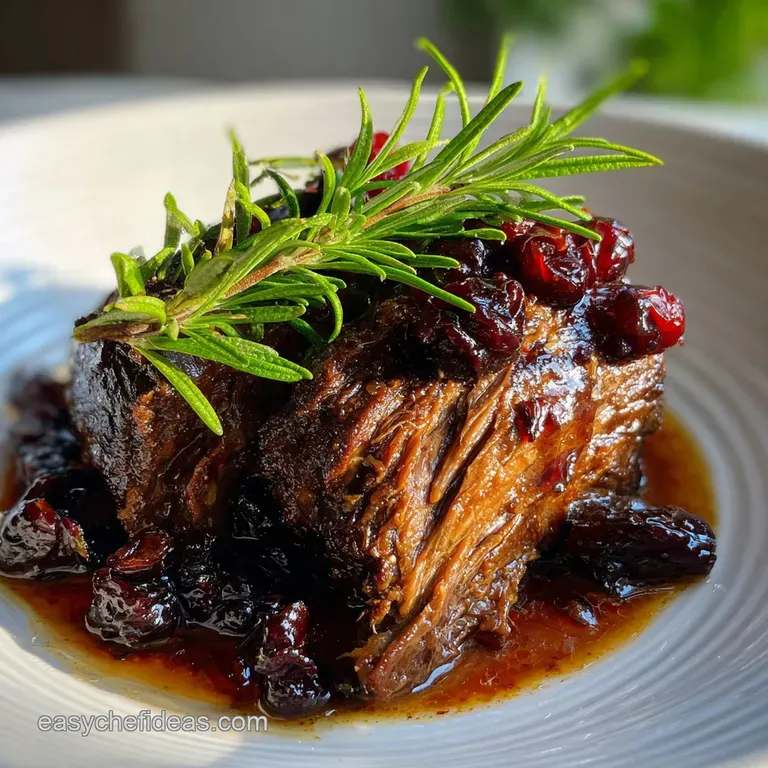
- Time: Active 25 minutes, Passive 3 hours 30 mins, Total 3 hours 55 mins
- Flavor/Texture Hook: Velvety, fork tender beef with a sticky, tart sweet glaze
- Perfect for: Holiday centerpieces or a cozy Sunday family dinner
- Creating the Perfect Slow Braised Beef Roast with Cranberry
- The Science of Why This Works
- Critical Recipe Specs for Planning
- The Component Analysis for Maximum Flavor
- Essential Tools for a Professional Finish
- Step-by-Step Guidance for Culinary Success
- Solving Common Problems with Ease
- Adjusting the Recipe for Any Table Size
- Flavor Variations to Try for Every Season
- How to Store and Keep Fresh
- How to Serve and Enjoy with Community
- Recipe FAQs
- 📝 Recipe Card
Creating the Perfect Slow Braised Beef Roast with Cranberry
Have you ever walked into a house and been hit by that specific aroma of searing beef mixed with woody herbs? It's the kind of smell that feels like a warm hug. Honestly, for the longest time, I struggled with roasts. They’d come out dry, or the sauce would be one note and boring.
Then I started playing with the contrast of sharp fruit and deep umami, and everything changed.
This recipe features a tender, slow braised beef roast elevated by a vibrant cranberry balsamic glaze and aromatic rosemary. It is the absolute king of Sunday dinners. We’re talking about a piece of meat that you can practically eat with a spoon, bathed in a sauce that hits every corner of your palate sweet, savory, tangy, and rich.
It’s about taking humble ingredients and giving them enough time to transform into something world class.
I remember the first time I served this to my community of friends during a particularly chilly November. The room went silent the moment the platter hit the table. There is something about the way the cranberries pop and melt into the balsamic vinegar that creates a mahogany colored sauce you’ll want to drink.
Don't worry about it being too "fruity"; the rosemary and garlic keep it firmly in the savory realm. Let's get into how we make this happen.
The Science of Why This Works
The secret to this dish isn't just luck; it's chemistry working in your favor to break down tough fibers into silk. We are using low heat over a long duration to manipulate the structure of the meat while simultaneously building a complex flavor profile through reduction.
- Collagen Conversion: At temperatures between 160°F and 180°F, tough connective tissue (collagen) melts into gelatin, creating that velvety mouthfeel we love.
- Maillard Reaction: Searing the beef at high heat first creates hundreds of new flavor compounds that a slow cooker alone simply cannot replicate.
- Acidic Tenderization: The balsamic vinegar acts as a gentle marinade during the braise, further softening the protein fibers while balancing the heavy fats.
- Pectin Release: Cranberries are high in natural pectin, which thickens the braising liquid into a glossy, restaurant quality glaze without needing cornstarch.
| Thickness of Cut | Internal Temp for Shredding | Rest Time | Visual Cue |
|---|---|---|---|
| 2-3 inches | 205°F | 20 minutes | Meat pulls apart with a fork |
| 4+ inches | 205°F | 30 minutes | Bone (if present) wiggles free |
| Sliced style | 190°F | 15 minutes | Firm but yields to a knife |
Choosing the right cut of meat is the most important decision you'll make today. I always go for a 3.5 lbs Beef Chuck Roast because the fat marbling is superior for long cooks. If you prefer a leaner result, you might look at our Foolproof Crockpot Beef recipe for comparison, but for this specific balsamic version, that chuck fat is essential for the sauce.
Critical Recipe Specs for Planning
When you are planning a meal that takes nearly four hours, you need to know exactly what you’re getting into before you start the stove. This isn't a "convenience" meal; it's a slow cooked labor of love that rewards patience with incredible depth.
The recipe yields 8 servings, making it ideal for a larger gathering or for those of us who live for the "leftover transformation" the next day. Since we are using fresh or frozen cranberries, you can make this year round, though it feels most at home when the leaves are turning.
| Feature | Fresh Ingredient Method | Shortcut/Canned Method | Impact on Final Dish |
|---|---|---|---|
| Cranberry Base | Fresh/Frozen Whole Berries | Canned Berry Sauce | Fresh is tart; canned is often cloyingly sweet. |
| Braising Liquid | Beef Bone Broth | Water + Bouillon | Bone broth adds gelatin and a richer mouthfeel. |
| Sweetener | Pure Maple Syrup | Brown Sugar | Maple adds a woody, complex undertone. |
If you find yourself short on time but still want that deep beefy flavor, you can always supplement your pantry with The Butchers Rich recipe as a base, but for this Slow Braised Beef Roast with Cranberry, the homemade glaze is the star of the show.
The Component Analysis for Maximum Flavor
Every single ingredient in this pot has a specific job to do, from the 2 tsp Kosher salt that seasons the core of the meat to the 3 sprigs Fresh rosemary that provides the aromatic backbone.
- 3.5 lbs Beef Chuck Roast: The heavy lifting protein.
- 1.5 cups Fresh or frozen cranberries: Provides the "shatter" of acidity.
- 0.75 cup Balsamic vinegar: The dark, syrupy base of our glaze.
- 0.5 cup Beef bone broth: The liquid medium for heat transfer.
- 0.25 cup Pure maple syrup: Balances the sharp vinegar.
- 4 cloves Garlic, smashed: Adds a background hum of savory heat.
| Ingredient | Science Role | Pro Secret |
|---|---|---|
| Balsamic Vinegar | Acid Catalyst | Use a mid tier vinegar; the high end stuff loses its nuance when boiled for 3 hours. |
| Beef Bone Broth | Liquid Emulsifier | Always use unsalted or low sodium to control the final seasoning levels. |
| Avocado Oil | High Smoke Point | This allows for a hard sear without the oil burning and turning bitter. |
For the seasoning, don't be shy with the 1 tsp Coarsely ground black pepper. It provides a crust that holds onto the glaze later. If you're looking for a different way to use these pantry staples, you might enjoy my Beef Mince Lentil recipe which also utilizes the power of slow simmered aromatics to nourish the family.
Essential Tools for a Professional Finish
You don't need a kitchen full of gadgets, but a few specific items will make your life significantly easier when tackling a Roast with Cranberry.
Chef's Tip: If you don't have a heavy Dutch oven, a deep cast iron skillet (like a Lodge) can work for the sear, but you'll need to transfer everything to a tightly covered baking dish for the oven phase.
- Heavy bottomed Dutch Oven: This is non negotiable for even heat distribution. A 5 to 7 quart size is the sweet spot for a 3.5 lb roast.
- Tongs: Sturdy, long handled tongs are better than a fork for flipping meat; a fork pierces the surface and lets juices escape.
- Digital Meat Thermometer: This is the only way to know for sure if your beef has reached that magical 205°F for easy shredding.
- Fine Mesh Strainer: If you want a velvety, smooth sauce, you'll want to strain out the spent rosemary sprigs and garlic bits at the end.
step-by-step Guidance for Culinary Success
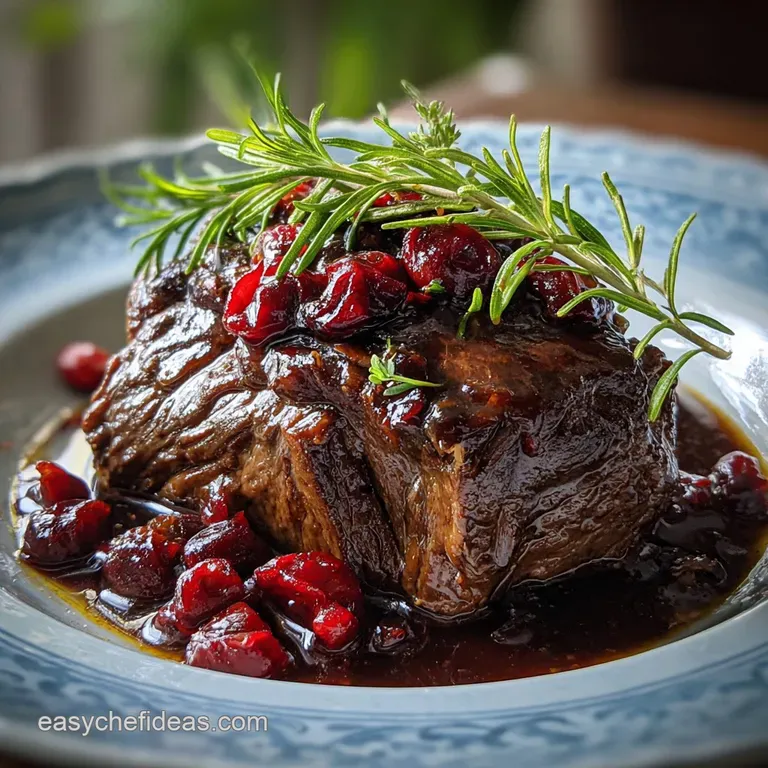
Right then, let's get cooking. The goal here is a deep mahogany crust and a sauce that coats the back of a spoon. Follow these steps closely, especially the searing part it's where all the flavor lives.
- Prep the meat. Pat the 3.5 lbs Beef Chuck Roast bone dry with paper towels. Note: Moisture on the surface creates steam, which prevents a proper crispy sear.
- Season aggressively. Rub the 2 tsp Kosher salt and 1 tsp Coarsely ground black pepper into every nook and cranny of the beef.
- over High heat sear. Heat 2 tbsp Avocado oil in your Dutch oven over medium high heat. Brown the beef for 5-6 minutes per side until a dark, caramelized crust forms.
- Aromatic base. Toss in the 4 cloves Garlic, 3 sprigs Fresh rosemary, and 2 sprigs Fresh thyme for 60 seconds until the kitchen smells like an herb garden.
- Deglaze the pan. Pour in the 0.75 cup Balsamic vinegar. Use a wooden spoon to scrape up all those brown bits (the fond) from the bottom. Note: This is where the deepest flavor is hidden.
- Build the braise. Add the 0.5 cup Beef bone broth, 0.25 cup Pure maple syrup, 1 tbsp Worcestershire sauce, and 1.5 cups cranberries.
- The long simmer. Cover tightly and move to a 325°F oven. Bake for 3 hours to 3 hours 30 mins until the meat yields completely to a fork.
- Reduce the sauce. Remove the meat and herbs. Simmer the liquid on the stovetop for 10 minutes until it transforms into a thick, glossy glaze.
- The final rest. Return the meat to the pot or pour the sauce over it. Let it sit for 15 minutes before serving. Note: Resting allows the proteins to reabsorb the juices.
Solving Common Problems with Ease
Even the best cooks run into a hiccup now and then. The most common "fail" with a Roast with Cranberry is usually related to temperature or timing. If your meat is tough, it simply hasn't spent enough time in the heat to let the collagen melt.
For Meat That Is Still Tough
If you poke the beef and it feels bouncy or rubbery, it’s not done. Every cow is different, and some roasts just have more stubborn connective tissue. Put the lid back on and give it another 30-45 minutes. You cannot rush the science of protein denaturation.
For a Sauce That Is Too Acidic
Balsamic vinegar can vary wildly in sugar content. If your sauce tastes too sharp or "vinegary," don't panic. Add another tablespoon of maple syrup or a knob of cold butter at the very end. The fat in the butter will coat your tongue and mellow out the acidic bite.
| Problem | Root Cause | Solution |
|---|---|---|
| Meat is dry | Oven temperature was too high | Slice it thin and submerge it in the glaze for 20 mins to rehydrate. |
| Sauce is watery | Not enough reduction time | Simmer uncovered on high heat for 5-8 more minutes. |
| Berries didn't pop | Heat was too low | Gently press them against the side of the pot with a spoon. |
- ✓ Skipping the sear
- You lose about 50% of the flavor depth without that initial browning.
- ✓ Using a "lean" roast
- Eye of round or sirloin tip will turn into shoe leather; stick with chuck.
- ✓ Checking the pot too often
- Every time you lift the lid, you lose valuable steam and heat.
- ✓ Straining the sauce too early
- Let the herbs steep in the liquid while the meat rests.
Adjusting the Recipe for Any Table Size
Scaling a braise is a bit more nuanced than doubling a salad. Because of the way liquid evaporates, you can't just multiply everything by two and expect the same results.
If you are scaling DOWN for a smaller 1.5 lb roast, use a smaller pot. If the pot is too large, the liquid will spread too thin and evaporate before the meat is tender. Reduce your cooking time by about 25%, but always rely on the fork tender test rather than the clock.
If you are scaling UP for a massive holiday dinner (like two 4 lb roasts), do not double the salt immediately. Start with 1.5x the salt and spices. You'll need to sear the meat in batches to avoid overcrowding the pan, which would lower the temperature and cause the meat to steam instead of brown.
Use about 10% less liquid than a straight double, as a larger volume of meat releases more of its own juices.
Flavor Variations to Try for Every Season
While the Cranberry Balsamic Glaze and Rosemary combination is my personal favorite, this technique is a canvas for your own creativity. The culture of braising is global, and you can nourish your family with many different profiles.
For a Classic Holiday Pairing
Swap the balsamic for a dry red wine (like a Cabernet) and replace the maple syrup with brown sugar. Add a few strips of orange zest to the pot. The orange and cranberry combo is a festive classic that never fails to impress.
For a Modern Bright Twist
If you want something a bit more avant garde, try using pomegranate juice instead of bone broth and garnish with fresh mint at the end instead of rosemary. It keeps the tart sweet profile but feels lighter and more "spring like."
If you want a different experience:
- For more spice: Add a teaspoon of red pepper flakes to the braising liquid.
- For more depth: Swap half the balsamic for a dark stout beer.
- For more crunch: Garnish with toasted walnuts or pecans just before serving.
How to Store and Keep Fresh
One of the best things about a Slow Braised Beef Roast with Cranberry is that it's the gift that keeps on giving. In fact, many people (myself included) think it tastes even better the second day because the flavors have had time to fully marry.
Storage: Keep leftovers in an airtight container in the fridge for up to 4 days. Make sure the meat is submerged in the glaze to keep it from drying out.
Freezing: This dish freezes beautifully. Place the meat and sauce in a freezer safe bag, squeezing out as much air as possible. It will stay fresh for up to 3 months. To reheat, thaw in the fridge overnight and warm gently on the stovetop or in a 300°F oven.
Zero Waste Tip: Don't you dare throw away that leftover braising liquid! It is concentrated liquid gold. Use it as a base for a hearty vegetable soup, or freeze it in ice cube trays to drop into your next gravy or stew for an instant hit of umami and acidity.
How to Serve and Enjoy with Community
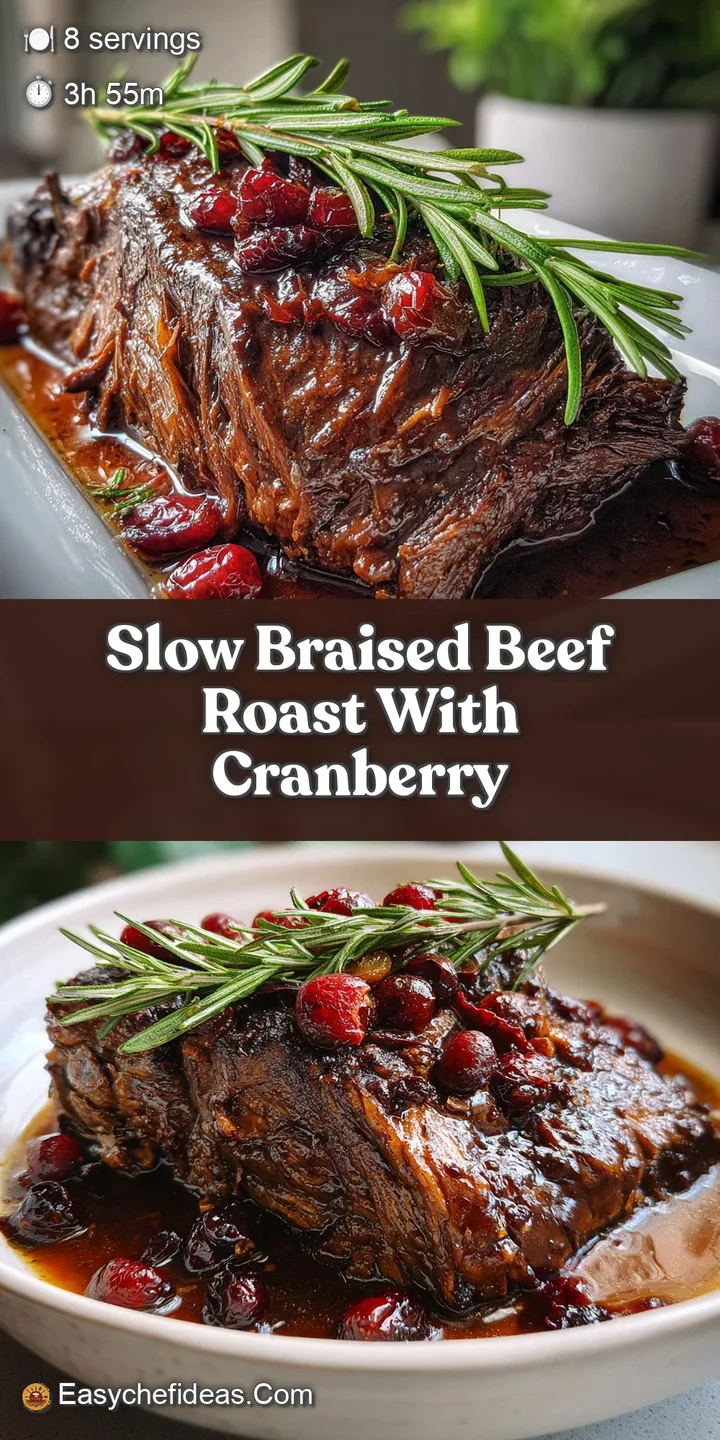
The presentation of this dish is half the fun. I love to serve it family style on a large, warmed platter. Place the roast in the center, shred it slightly with two forks to show off that texture, and then pour the glossy glaze over the top.
Pair this with something that can soak up that incredible sauce. A velvety mashed potato is the traditional choice, but a creamy polenta or even some crusty sourdough bread works wonders.
Since the dish is quite rich, I always suggest a simple side of roasted Brussels sprouts or a bitter green salad with a light vinaigrette to cleanse the palate.
When you bring this to the table, you're not just serving food; you're sharing a piece of culinary craft. The contrast of the dark, savory beef against the bright, popping red of the cranberries is a visual feast that sets the tone for a wonderful evening.
Enjoy every bite, and remember the best ingredient in any slow cooked meal is the time you spent making it.
Recipe FAQs
Can I use a different cut of beef for this recipe?
Yes, but chuck roast is ideal. Cuts with more marbling, like chuck, break down best during long braising to create a tender, moist result and a richer sauce. Leaner cuts may become dry.
How long should I braise the beef?
Braise until fork tender, typically 3 to 3.5 hours. The exact time depends on the thickness and cut of your roast. Internal temperature should reach around 205°F for optimal shredding.
My sauce is too thin. How can I thicken it?
Simmer the liquid uncovered on the stovetop. After removing the beef, continue to cook the braising liquid over medium high heat for about 10-15 minutes, allowing it to reduce and thicken into a glossy glaze.
Is it necessary to sear the beef before braising?
Yes, searing is crucial for flavor development. This step creates the Maillard reaction, forming hundreds of new flavor compounds that contribute significantly to the final depth and richness of the roast and sauce.
Can I make this ahead of time?
Absolutely, it's even better made ahead. Braise the beef up to two days in advance, cool, and refrigerate it in its sauce. The flavors deepen overnight, and you can gently reheat it on the stovetop or in the oven.
What are the best side dishes for this roast?
Mashed potatoes or polenta are perfect for soaking up the sauce. For a refreshing contrast, serve with a simple green salad or roasted vegetables. This pairs beautifully with Velvety Homemade Mushroom Gravy Easy Rich From Scratch for an extra layer of savory goodness.
Why are my cranberries not popping and bursting?
Ensure they are cooked long enough at a sufficient temperature. The pectin in cranberries needs time and heat to release and thicken the sauce. If they seem stubborn, you can gently press them with the back of a spoon towards the end of cooking.
Slow Braised Beef Roast
Ingredients:
Instructions:
Nutrition Facts:
| Calories | 584 kcal |
|---|---|
| Protein | 34.2 g |
| Fat | 33.1 g |
| Carbs | 13.9 g |
| Fiber | 1.2 g |
| Sugar | 10.8 g |
| Sodium | 615 mg |
