Braised Short Rib Recipe: Velvety Finish
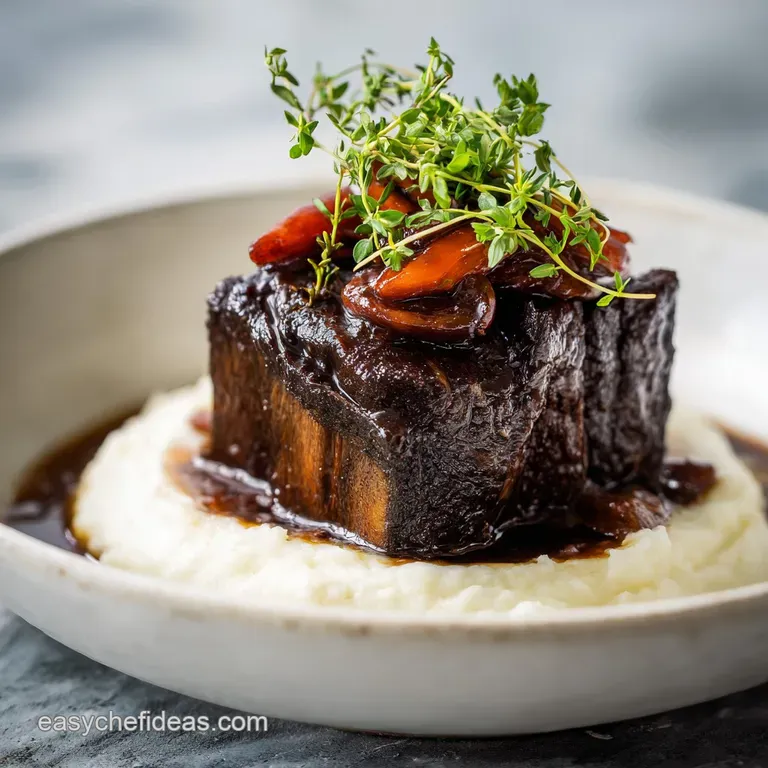
- Time: Active 20 minutes, Passive 2 hours 30 mins, Total 2 hours 50 mins
- Flavor/Texture Hook: Velvety, melt in-your mouth beef with a glossy, wine infused glaze.
- Perfect for: Slow Sunday family gatherings or a cozy, community centered dinner party.
- Build Deep Flavor With This Short Rib Recipe
- Essential Specs for Your Braise
- The Science of the Braise
- Gathering the Best Braising Elements
- Required Tools for Succulent Meat
- Mastering the Layered Cooking Process
- Fixing Common Braising Obstacles
- Adapting for Every Dietary Need
- Guidelines for Scaling Your Pot
- Deciphering Common Braising Myths
- Smart Storage and Reheating Tips
- Perfect Pairings for Your Meal
- High in Sodium
- Recipe FAQs
- 📝 Recipe Card
Build Deep Flavor With This Short Rib Recipe
The first time I really understood the soul of this short rib recipe was on a rainy Sunday when the wind was rattling the windowpanes. I remember the specific "thwack" of the bone hitting the heavy cast iron, followed by a fierce sizzle that filled the kitchen with an aroma so savory it felt like a hug.
There’s something deeply primal about browning 4.5 lbs bone in beef short ribs, watching that raw red surface transform into a dark, crusted mahogany.
As I stirred in the tomato paste and watched the red wine swirl into the browned bits at the bottom of the pot, the kitchen transformed. It wasn't just about making dinner; it was about creating a sense of home. This isn't a dish you rush.
It's a dish that asks you to slow down, to nourish your community, and to appreciate how simple aromatics like carrots and celery can create such incredible depth. Trust me, once you see that meat pulling away from the bone with nothing but a gentle nudge of a fork, you'll never look at a "quick" meal the same way again.
Essential Specs for Your Braise
Cooking beef this way is a lesson in patience and heat management. We aren't just heating meat; we are fundamentally changing its structure. When you follow this braised short rib recipe, you are participating in a global tradition of slow cooking that spans across every culture that prizes the nourishment of the whole animal.
It is a beautiful way to bring people together around a single, steaming pot.
- Low and Slow: Keeping the temperature steady at 325°F (160°C) allows the meat to soften without becoming stringy or dry.
- Collagen Conversion: The long cook time turns tough connective tissue into rich, silky gelatin, giving the sauce its natural body.
- The Maillard Effect: That initial hard sear on the beef provides the foundational umami that defines the entire flavor profile of the dish.
- Liquid Gold: Using beef bone broth adds a layer of mineral richness and depth that standard stock simply cannot match.
| Thickness | Internal Temp | Rest Time | Visual Cue |
|---|---|---|---|
| 2 inch (English Cut) | 205°F | 20 mins | Meat pulls from bone |
| 1.5 inch (Flanken Cut) | 200°F | 15 mins | Fat is translucent |
| Boneless | 195°F | 10 mins | Fork twists easily |
While the oven provides the most consistent heat for this short rib recipe, you can adapt the method for different lifestyles. If you find yourself short on active time during the day, using a Foolproof Crockpot Beef recipe is a fantastic alternative that still delivers that signature tenderness without you having to mind the stove.
The Science of the Braise
Connective Tissue Liquefaction: Slow heat at 160°C breaks down the triple helix structure of collagen into gelatin. This process requires moisture and time, creating that distinctive velvety mouthfeel that defines a great short rib recipe.
| Component | Science Role | Pro Secret |
|---|---|---|
| 4.5 lbs Short Ribs | Source of gelatin | Keep the bones in for more flavor and structure. |
| 375 ml Red Wine | Acidic tenderizer | Use a dry wine to prevent the sauce from being cloying. |
| 2 tbsp Tomato Paste | Umami booster | Caramelize it until it turns dark brick red for depth. |
| 2 cups Bone Broth | Mineral richness | Look for broth that gels when cold; that's the good stuff. |
The key to a successful braise is finding the right balance between the heavy fats of the beef and the bright acidity of the wine. When these elements simmer together, they emulsify into a sauce that coats the back of a spoon. It is a scientific dance of fat, acid, and heat that nourishes the body and the spirit.
Gathering the Best Braising Elements
To get the most out of this recipe, your ingredients need to be as fresh as possible. We are looking for 4.5 lbs bone in beef short ribs, specifically English cut (the thick rectangular blocks).
Look for meat with heavy marbling; those white flecks of fat are exactly what will render down to keep the meat succulent during the long stay in the oven.
- 4.5 lbs bone in beef short ribs: English cut is preferred for its meaty ratio.
- 2 tsp kosher salt & 1 tsp coarse black pepper: Essential for the initial crust.
- 2 tbsp vegetable oil: A high smoke point oil is necessary for a hard sear.
- 2 large yellow onions, 3 large carrots, 2 celery stalks: The classic "mirepoix" foundation.
- 6 cloves garlic, smashed: Adds a pungent, earthy base note.
- 2 tbsp tomato pasteWhy this? It provides a concentrated savory "backbone" to the entire sauce.
- 375 ml dry red wine: Cabernet Sauvignon or Pinot Noir works best.
- 2 cups beef bone broth: For a richer, more nourishing liquid.
- Fresh herbs (3 thyme sprigs, 2 rosemary sprigs, 2 bay leaves): For that woody, aromatic finish.
| Original Ingredient | Substitute | Why It Works |
|---|---|---|
| Red Wine (375 ml) | Pomegranate Juice | Provides acidity and tannins. Note: Slightly sweeter outcome. |
| Beef Bone Broth | Mushroom Broth | High in natural glutamates for deep savory flavor. |
| Vegetable Oil | Ghee or Tallow | Adds a nutty, rich aroma and handles high heat perfectly. |
If you happen to have leftovers or want to try a different style of rib, you might enjoy comparing this to an Oven Baked Beef recipe, which uses a dry heat method followed by a glaze. It’s a completely different texture, more akin to traditional BBQ, but just as satisfying for a weekend meal.
Required Tools for Succulent Meat
Having the right gear makes the process seamless and helps you avoid the common mistake of steaming the meat instead of searing it. A heavy bottomed vessel is your best friend here because it holds heat consistently, which is vital when you're adding cold meat to a hot pan.
- Large Dutch Oven: A 6 quart cast iron pot (like a Le Creuset or Lodge) is the gold standard for braising.
- Stainless Steel Tongs: You need a sturdy grip to flip these heavy ribs without splashing hot oil.
- Fine Mesh Strainer: For getting that professional, silken finish on your sauce at the end.
- Kitchen Twine: Helpful for tying your herb bundle so you don't have to fish out stray leaves later.
Chef's Tip: Freeze your tomato paste in 1 tablespoon dollops on a parchment lined tray. Once frozen, pop them in a bag. It’s way better than letting half a can go fuzzy in the back of the fridge.
Mastering the Layered Cooking Process
- Season the beef. Pat the 4.5 lbs bone in beef short ribs completely dry with paper towels, then coat generously with 2 tsp kosher salt and 1 tsp black pepper. Note: Dry meat sears; wet meat steams.
- Sear the meat. Heat 2 tbsp vegetable oil in your Dutch oven over medium high heat. Sear the ribs for 3-4 minutes per side until a dark, crusty bark forms. Work in batches to avoid crowding.
- Sauté the aromatics. Remove the meat and toss in your chopped onions, carrots, and celery. Cook for 6-8 minutes until the onions are translucent and golden.
- Develop the base. Stir in the 6 smashed garlic cloves and 2 tbsp tomato paste. Cook for 2 minutes, stirring constantly until the paste turns a deep mahogany color.
- Deglaze the pan. Pour in the 375 ml red wine. Use a wooden spoon to scrape every single browned bit (the fond) off the bottom until the liquid reduces by half.
- Combine the liquids. Return the ribs to the pot, bone side down. Pour in 2 cups beef bone broth and add your thyme, rosemary, and bay leaves.
- Enter the oven. Cover the pot tightly and slide it into a preheated 325°F (160°C) oven.
- The long simmer. Bake for 2 hours 30 mins until the meat is tender and yields to a fork.
- The sauce finish. Remove the meat and herbs. Strain the liquid through a fine mesh sieve, then simmer the sauce on the stovetop for 5-10 minutes until it is thick and velvety.
| Method | Time | Texture | Best For |
|---|---|---|---|
| Oven Braise | 2 hours 30 mins | Silky & falling apart | Maximum flavor depth |
| Stovetop | 3 hours | Very soft, slightly shredded | Monitoring closely |
| Instant Pot | 50 mins | Tender but less "crust" | Busy weeknights |
Fixing Common Braising Obstacles
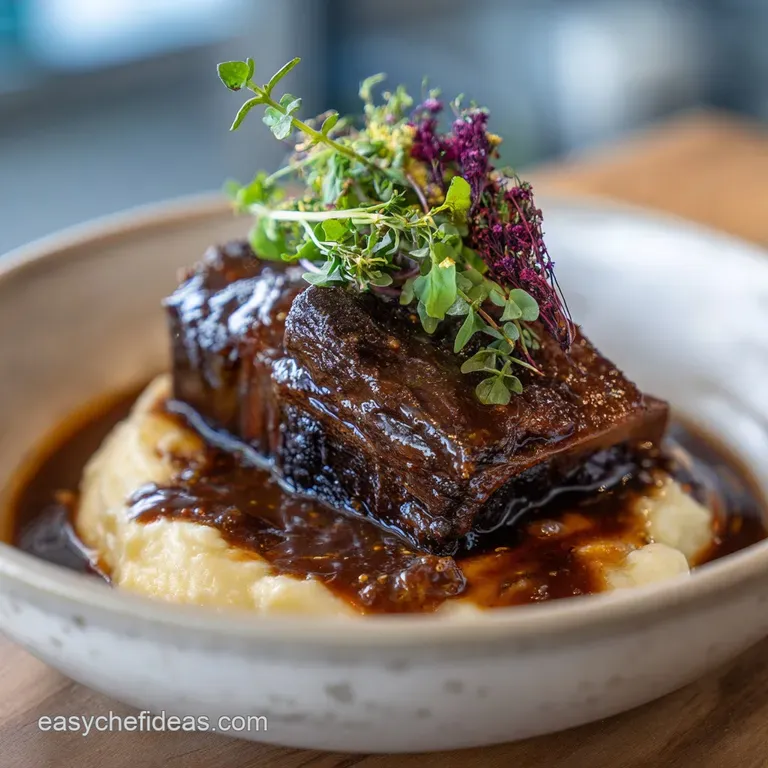
Even the most seasoned cooks run into hiccups with a short rib recipe. The most common issue is usually related to the texture of the meat or the thickness of the finishing sauce. Remember, these are forgiving cuts, but they do require you to pay attention to the visual and tactile cues rather than just the clock.
Meat Remains Too Tough
If your meat is still resisting the fork after 2 hours 30 mins, it simply hasn't spent enough time in the "collagen melting zone." This often happens if the oven temperature is a bit low or the ribs are particularly thick.
Don't panic; just put the lid back on and give it another 30 minutes.
The Sauce Stays Thin
A watery sauce is usually the result of too much broth or not enough reduction time at the end. If your sauce isn't coating the meat properly, remove the beef and boil the liquid vigorously. This concentrates the flavors and thickens the natural gelatins.
| Problem | Root Cause | Solution |
|---|---|---|
| Greasy Sauce | Fat didn't emulsify | Chill the sauce and skim the solid fat off the top. |
| Tough Meat | Short cook time | Simmer for an extra 30 mins until fork tender. |
| Burned Bottom | Heat was too high | Add a splash of broth and don't scrape the burned bits. |
Common Mistakes Checklist
- ✓ Never skip the searing step; it’s where 80% of your flavor comes from.
- ✓ Don't submerge the meat entirely; the tops should peak out to get a bit of roasted flavor.
- ✓ Always use a heavy, tight fitting lid to prevent the braising liquid from evaporating.
- ✓ Let the meat rest in the sauce for at least 15 minutes before serving to reabsorb juices.
- ✓ Resist the urge to peek; every time you open the lid, you lose valuable heat and moisture.
Adapting for Every Dietary Need
This recipe is naturally quite inclusive, but there are always ways to tweak it to fit your specific table. Whether you're looking for an easy short rib recipe for a weeknight or a specific cultural twist, the foundation remains the same: high-quality meat and a patient simmer.
- Low Carb / Keto: Replace the carrots with radishes (which lose their peppery bite and become like potatoes when braised) and skip the tomato paste if you're being very strict.
- gluten-free: This recipe is naturally gluten-free as long as your beef bone broth is certified. Avoid using flour to thicken the sauce; the reduction method is better anyway.
- Alcohol Free: Use a mix of beef broth and a splash of balsamic vinegar or verjus to provide that necessary acidic lift without the wine.
The Korean Short Rib Twist
To turn this into a korean short rib recipe, swap the red wine for a mixture of soy sauce, pear puree, and brown sugar. Add ginger and toasted sesame oil to the aromatics. It creates a sweet and salty profile that is absolutely addictive when served over white rice.
Slow Cooker Short Ribs Adaptation
For a set it and forget it version, sear the meat and sauté the veggies as usual, then dump everything into your slow cooker. Cook on "Low" for 7-8 hours. It won't have the same reduction in the sauce, so you'll definitely want to thicken the liquid in a pan on the stove before serving.
Guidelines for Scaling Your Pot
When you're feeding a larger community or just want to prep for the week, scaling this dish is relatively straightforward. However, you can't just double everything blindly, especially the liquids and spices.
- To Double (8 servings): Use 9 lbs of ribs. Increase the salt and spices to only 1.5x the original amount to avoid over seasoning. You will likely need to sear the meat in three or four batches.
- To Half (2 servings): Use 2.25 lbs of ribs. Use a smaller pot so the liquid still comes halfway up the sides of the meat. Reduce the cook time by about 20 minutes and check for doneness early.
- If you want X, do Y:
- If you want a thicker sauce, whisk in a "beurre manié" (equal parts softened butter and flour) at the end.
- If you want a smokier flavor, add a teaspoon of smoked paprika or a dash of liquid smoke.
- If you want a cleaner finish, chill the entire pot overnight and remove the hardened fat disc the next day.
Deciphering Common Braising Myths
There are a few "old wives' tales" in the kitchen that can actually hinder your progress. Let's clear those up so you can cook with confidence.
Myth: Searing "seals in" the juices. Science shows that seared meat actually loses slightly more moisture than unseared meat. However, we sear for the Maillard reaction the chemical reaction between amino acids and reducing sugars that creates hundreds of flavor compounds.
We sear for taste, not for moisture.
Myth: You must boil the wine to "cook off" the alcohol. While boiling reduces the raw alcohol bite, it's impossible to remove 100% of it through simmering. Most of it evaporates, but the real reason we reduce the wine is to concentrate the sugars and acids, giving the sauce structure.
Smart Storage and Reheating Tips
One of the greatest things about any short rib recipe is that it actually tastes better the next day. The proteins relax, and the flavors in the sauce have time to fully meld and penetrate the meat. It is the ultimate meal prep dish for anyone who values a nourishing, high protein dinner.
- Fridge Storage: Keep the ribs submerged in their sauce in an airtight container. They will stay fresh for up to 4 days.
- Freezing Guidelines: These ribs freeze beautifully. Place the meat and sauce in a freezer safe bag, removing as much air as possible. They’ll last for 3 months. Thaw in the fridge overnight before reheating.
- Zero Waste Tip: Don't toss those braised veggies or the leftover sauce! Blend the carrots and onions into the remaining liquid to create a thick, rustic gravy for poutine or to toss with pappardelle pasta the next day.
- Reheating: Always reheat gently. Place the ribs and sauce in a covered pan over medium low heat. Adding a splash of water or broth helps loosen the sauce without overcooking the meat.
Perfect Pairings for Your Meal
Serving these ribs is all about finding a balance to that rich, heavy beef. You want something that can soak up the velvety sauce but also something bright to cut through the fat. It’s about creating a complete plate that feels like a celebration of culture and flavor.
- Creamy Polenta or Mashed Potatoes: These are the classic "vessels" for that incredible red wine reduction. Make sure they are seasoned well with butter and salt.
- Gremolata: A quick mix of parsley, lemon zest, and minced garlic sprinkled over the top provides a necessary "shatter" of freshness against the deep, heavy braise.
- Roasted Root Vegetables: While there are carrots in the pot, serving some honey glazed parsnips on the side adds a nice textural contrast.
This short rib recipe isn't just a list of instructions; it's a gateway to a more intentional way of cooking. It’s about the steam on your glasses, the laughter of friends around a table, and the quiet satisfaction of a bone wiped clean. I hope this dish brings as much warmth to your home as it has to mine.
Happy braising!
High in Sodium
925 mg mg of sodium per serving (40% of daily value)
The American Heart Association recommends limiting sodium intake to no more than 2,300mg per day for most adults.
Tips to Reduce Sodium in Your Short Ribs
-
Low-Sodium Broth-30%
Replace the regular beef bone broth with a low-sodium or no-salt added version. This will significantly reduce the overall sodium content of the dish.
-
Reduce Added Salt-25%
Reduce the amount of kosher salt by half, using only 1 tsp instead of 2 tsp. Taste and adjust after cooking.
-
Fresh Herbs Boost
Enhance the flavor with additional fresh herbs like thyme and rosemary, or add other herbs like oregano or parsley. Herbs add flavor without adding sodium.
Recipe FAQs
What's the best way to cook short rib of beef?
Braising in a Dutch oven in the oven is the best method. This technique provides consistent, enveloping heat to slowly break down the tough collagen into tender gelatin, achieving a melt-in-your mouth texture.
What's the secret to flavorful short ribs?
The secret is a hard, deep sear followed by caramelizing the tomato paste. You must achieve a dark mahogany crust on the beef for foundational umami; the tomato paste adds essential savory depth when cooked down until brick red.
Do short ribs get more tender the longer you cook them?
Yes, up to a point, provided they remain moist. The connective tissue (collagen) needs sufficient time, typically over 2 hours at low heat, to convert fully into smooth gelatin.
What is the 3 2 1 method for beef short ribs?
The 3-2-1 method is primarily for smoked ribs and doesn't directly apply to oven braising. For braised ribs, focus on achieving an internal temperature around 200°F where the meat yields easily to a fork, often taking about 2.5 to 3 hours.
Can I substitute red wine if I am avoiding alcohol?
Yes, you can use a non-alcoholic substitute for acidity. Use a combination of beef broth and balsamic vinegar to mimic the sweet tart balance, similar to the acidic component we balance in Traditional Chimichurri Sauce recipe for brightness.
Should I use bone-in or boneless short ribs for braising?
Bone-in English cut short ribs are highly recommended. The bones provide flavor and structure, adding minerals and gelatin to the braising liquid that simply isn't present in boneless cuts.
How long should I sear the short ribs before braising?
Sear the ribs for 3 to 4 minutes per side until a dark, rich crust forms. Resist the temptation to move them early; that crust is the Maillard reaction, which builds the essential flavor foundation for the entire dish.
Silken Short Rib Recipe
Ingredients:
Instructions:
Nutrition Facts:
| Calories | 748 kcal |
|---|---|
| Protein | 52 g |
| Fat | 49 g |
| Carbs | 12 g |
| Fiber | 3 g |
| Sugar | 5 g |
| Sodium | 925 mg |
