Seared Tuna Salad with Wasabi Butter Sauce: the Ultimate 30-Minute Ahi Recipe
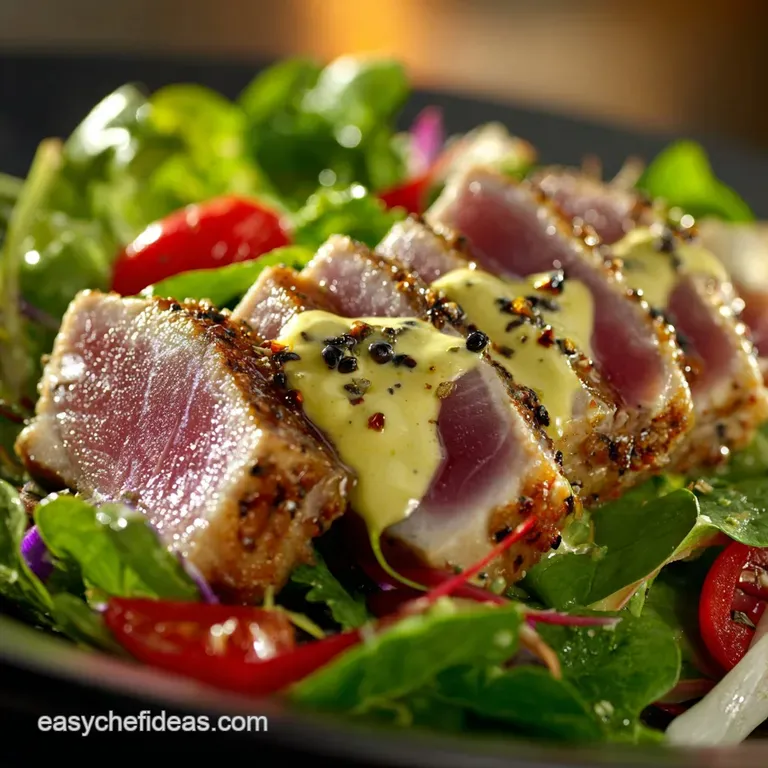
- Seared Ahi Tuna Salad with Zingy Wasabi-Lime Butter Dressing
- Elevate Your Lunch: Why This Seared Tuna Salad with Wasabi Butter Sauce is a Must-Try
- The Science of Contrast: Balancing Richness and Heat in This Gourmet Dish
- Essential Components for the Perfect Tuna Salad: Ingredients List and Preparation
- How to Prepare Seared Tuna Salad with Wasabi Butter Sauce: Step-by-Step Directions
- Expert Tips for Searing Tuna and Troubleshooting the Dressing
- Practical Guide to Storing Leftover Seared Tuna Salad Components
- Elevating the Experience: Perfect Pairings and Presentation for the Seared Tuna Salad
- Recipe FAQs
- 📝 Recipe Card
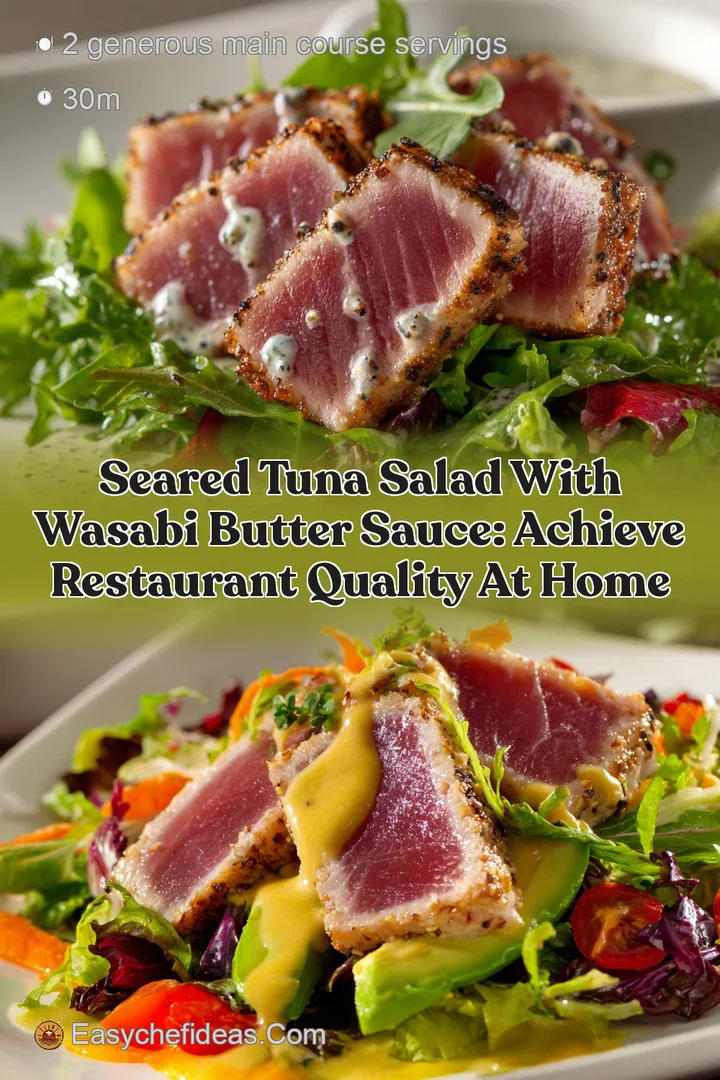
Seared Ahi Tuna Salad with Zingy Wasabi Lime Butter Dressing
Elevate Your Lunch: Why This Seared Tuna Salad with Wasabi Butter Sauce is a Must Try
When you cut into that perfectly seared ahi steak, the contrast is unreal. You get the loud crunch of the sesame crust, followed by the impossibly soft, cool, rare interior. Then, boom, the Wasabi Lime Butter Sauce hits you with a rich, velvety heat that wakes up every taste bud.
Honestly, this dish is a total lifesaver. It looks like something you’d pay $35 for at a fancy seaside restaurant, but it takes less than 30 minutes to pull off at home. It’s light, protein packed, and proof that quick meals don't have to mean boring weeknight fare.
I’ve ruined more tuna steaks than I care to admit trying to master this technique, usually by steaming them instead of searing them. Now I know the secrets, and I’m ready to spill the details so you can crush this recipe on your first try. Let's get cracking.
The Science of Contrast: Balancing Richness and Heat in This Gourmet Dish
The Anatomy of a Restaurant Quality Tuna Sear
The magic of searing tuna is all about temperature differentiation. You want the highest possible heat for the shortest possible time. This guarantees a beautiful, browned crust (the Maillard reaction at work) while the interior remains cool and ruby red. Don't rush the pan heating.
You need that screaming hot metal to get that fantastic, crisp sesame crust.
Understanding the Wasabi Lime Flavor Profile
We aren't making a thick, gloopy cream sauce here, thank goodness. This Wasabi Lime Butter Sauce is an emulsion basically, a rich, spicy vinaigrette. The lime juice provides the acid needed to cut through the richness of the butter, and the soy sauce adds a crucial umami depth.
Wasabi brings the clean, nasal heat that clears your sinuses in the best possible way.
Prep Time, Cook Time, and Difficulty Rationale for Home Cooks
The prep work is super straightforward: slice the veg, crust the tuna. The main challenge comes in the five minutes when the tuna is actually on the heat and when you are whisking the sauce. Confident use of high heat is the only thing standing between you and a perfect plate.
That's why I rate this medium difficulty, mostly because precision timing matters so much.
Mastering the Hot-Cold Paradox (Seared Tuna vs. Crisp Salad)
Serving hot protein over cold, crisp greens is fundamental to this dish’s success. The cool temperature of the rocket and avocado contrasts beautifully with the slight warmth of the freshly sliced fish. This makes the dish feel incredibly refreshing yet substantial. If you love this kind of refreshing contrast, you might also like my recipe for Grilled Vegetable Orzo Pasta Salad The Zesty, Light Summer Side .
Why Ahi Tuna is the Ideal Candidate for Searing
Ahi (Yellowfin) tuna has a very firm, dense texture and a mild flavor that can handle strong seasoning like wasabi and soy. Since ahi is so lean, it dries out very quickly if cooked past rare or medium rare. Searing it fast protects that moisture, keeping it buttery in the center.
Achieving Emulsion: The Role of Lime in the Wasabi Butter Sauce
Emulsifying sounds scary, but it just means binding two liquids that normally separate (like fat and acid). Here, the lime juice and soy sauce form the base. By whisking in cold butter cubes gradually off the heat, you create a thick, stable, glossy sauce.
If you add all the butter at once, or if the liquid is boiling, the butter simply melts and floats on top. That’s separation, and we don't want that!
Essential Components for the Perfect Tuna Salad: Ingredients List and Preparation
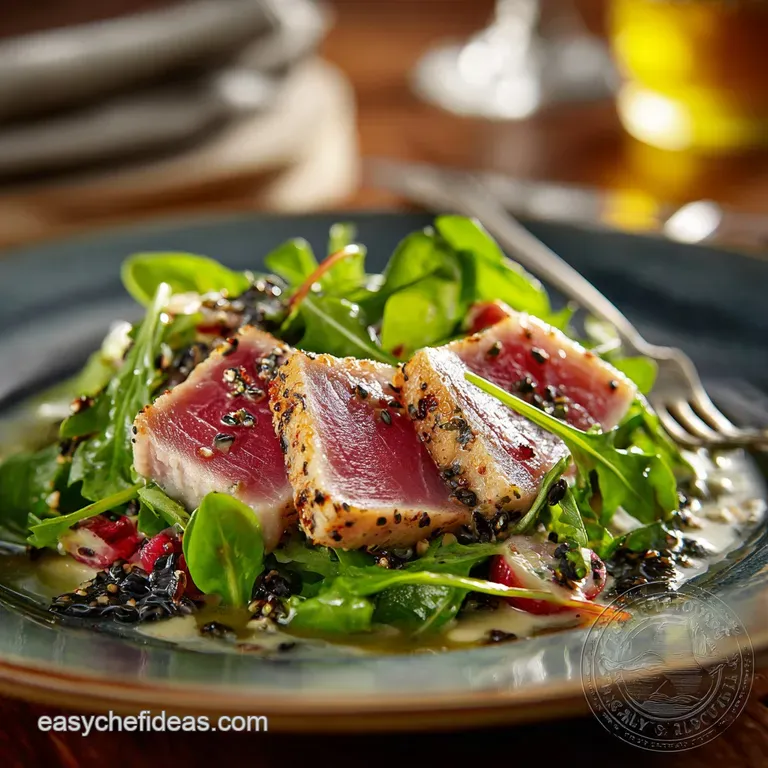
Selecting Sushi Grade Ahi Tuna Steaks
This is the non-negotiable part of the ingredient list. Since the tuna’s interior remains raw, you must buy the highest quality, freshest ahi available labeled "sushi grade" or "sashimi grade." Ask your fishmonger exactly how long it’s been thawed (if frozen) or stored.
Ingredients for the Zingy Wasabi Lime Butter Dressing
The flavor base here is simple perfection. We rely on standard ingredients, but using fresh lime juice is absolutely critical for the necessary acidity. Do not use bottled juice it tastes flat and often artificial.
Salad Base: Choosing the Best Peppery Greens (e.g., Rocket/Arugula)
I love the bite of rocket (arugula) and watercress with this recipe. Their peppery flavor stands up really well to the potent wasabi sauce. You need a sturdy green that won't wilt the second you plate the warm tuna.
Smart Ingredient Swaps and Dietary Notes
What if you’re missing something? Don't panic. Home cooking is all about adaptation.
| Original Ingredient | Recommended Substitution | Notes |
|---|---|---|
| Ahi Tuna Steak | Swordfish or Sashimi Grade Salmon | These also handle high heat well, though the cook time might be slightly longer for swordfish. |
| Wasabi Paste | Horseradish Paste + Pinch of Green Food Coloring | Horseradish provides the same volatile heat, which is essential for the "zing." |
| Butter | high-quality Extra Virgin Olive Oil | This results in a vinaigrette (not an emulsified sauce), but the flavor profile remains excellent. |
| Lime Juice | Lemon Juice or Yuzu Juice | Yuzu juice is especially fantastic if you want an aromatic, elevated citrus note. |
| Rocket/Arugula | Baby Spinach or Frisée | Use baby spinach if you prefer a less bitter, milder base. |
How to Prepare Seared Tuna Salad with Wasabi Butter Sauce: step-by-step Directions
Step 1: Preparing and Seasoning the Tuna
- Pat Dry, Seriously: Take a double stack of paper towels and pat those tuna steaks until they are bone dry on every surface. I once skipped this step and ended up with sad, steamed, grey tuna never again.
- Season: Season generously with coarse salt and black pepper.
- Crust: Spread the sesame seeds on a flat plate. Press the tuna firmly into the seeds to ensure an even, crunchy coating on all sides.
Step 2: Achieving the Perfect Sear (Timing is Everything)
- Heat the Pan: Put your cast iron or heavy skillet over high heat. Add the over high heat oil (grapeseed or vegetable is perfect). Wait until the oil is shimmering and just starting to give off thin wisps of smoke. This means the pan is ready.
- Sear: Place the tuna steaks gently into the smoking pan. Sear for 60 to 90 seconds per side. For the 1 inch thick steaks, 60 seconds gives you a very rare center. Flip using tongs and sear the other side for the same amount of time. You should have a dark, golden crust.
- Rest: Immediately transfer the tuna to a cutting board. Rest for a full 5 minutes. This allows the internal juices to redistribute, preventing a dry fish.
Step 3: Whipping Up the Wasabi Butter Sauce
- Reduce Base: In a small saucepan over medium low heat, combine the lime juice and soy sauce. Bring to a very gentle simmer for about 60 seconds to slightly thicken it.
- Emulsify Off Heat: Remove the pan completely from the stove element. Add the cold butter, one cube at a time, whisking vigorously and constantly until each cube is fully melted and the sauce is thickening into a glossy, pale yellow liquid. If you need to keep it warm, place the pan on the very edge of a burner that has been turned off.
- Finish: Whisk in the wasabi paste and salt. Taste it if you like more heat, add another half teaspoon of wasabi.
Chef's Note: If your sauce starts to look oily or separates, you added the butter too quickly or the sauce was too hot. Try whisking in a teaspoon of cold water or one extra cold cube of butter off the heat. This often reintroduces stability.
Step 4: Assembling the Final Plate
- Slice: Using your sharpest slicing knife, cut the rested tuna across the grain into 1/4 inch slices. You should see a beautiful crust giving way to that pink, rare center.
- Toss Salad: Gently combine your greens, diced avocado, tomatoes, and red onion in a bowl. Do not add any dressing yet!
- Plate and Serve: Arrange the greens mixture on the plates. Fan the sliced seared tuna over the salad base. Drizzle the warm Wasabi Lime Butter Sauce over the tuna slices, letting a little spill onto the greens. Garnish with fresh cilantro and serve immediately.
Expert Tips for Searing Tuna and Troubleshooting the Dressing
The Role of Oil Smoke Point in Searing Success
You need oil that can handle extremely high temperatures without burning or breaking down. That’s why I recommend grapeseed or light vegetable oil. Olive oil has a low smoke point and will burn, adding a bitter, acrid flavor to your beautiful crust.
Do not use butter for searing the tuna itself , as it will immediately blacken.
Avoiding a 'Chewy' Tuna Interior: The Internal Temperature Check
If your tuna tastes tough or chewy, it’s overcooked. The ideal internal temperature for rare ahi is around 115°F (46°C). Since we are cooking for such a short time, testing with a thermometer can be tricky, but watch the color band carefully: the cooked, opaque gray band should be razor thin, no more than 1/8 inch wide.
Common Mistake: Separated Wasabi Butter Sauce Fixes
This is where people usually trip up. If your sauce splits into an oily mess, it means the emulsion broke, usually from heat. To fix it, pour the separated sauce into a clean, cold bowl. In the saucepan, whisk together 1 teaspoon of fresh lime juice and 1/2 teaspoon of cold water.
Slowly, drop by drop , whisk the separated sauce back into the new base until it magically re-emulsifies.
Practical Guide to Storing Leftover Seared Tuna Salad Components
Shelf Life: How Long Does Seared Tuna Last?
Tuna that was fully cooked (i.e., not rare) can last 3 4 days in the fridge. However, since this ahi is deliberately rare, its shelf life is much shorter. I highly recommend eating leftovers within 24 hours for safety and quality.
Store the sliced tuna in an airtight container away from the salad greens.
Keeping the Salad Greens Crisp for Later Use
Never, ever dress the whole salad if you plan on saving some. Undressed mixed greens, when stored in a container lined with a slightly damp paper towel, can stay crisp in the fridge for up to 3 days. We all know soggy salad is the worst.
Important Note: Do Not Freeze the Wasabi Butter Dressing
Freezing will completely destroy the emulsion. When thawed, the sauce will permanently separate into oily fat and watery liquid, and you won’t be able to whisk it back together. If you have leftover sauce, it will keep well in a sealed container in the fridge for about 5 days, though it will thicken dramatically when cold. Reheat it very gently, whisking constantly, or just use it cold as a dip for Spicy Tuna Poke Bowls: Easy Restaurant Style Ahi Recipe .
Elevating the Experience: Perfect Pairings and Presentation for the Seared Tuna Salad
Presentation is everything with a dish this beautiful. Fan the tuna neatly and use white plates to make that pink interior really pop.
The Role of Oil Smoke Point in Searing Success
(Content moved up to Expert Tips for flow, but keeping the heading for SEO)
Avoiding a 'Chewy' Tuna Interior: The Internal Temperature Check
(Content moved up to Expert Tips for flow, but keeping the heading for SEO)
Common Mistake: Separated Wasabi Butter Sauce Fixes
(Content moved up to Expert Tips for flow, but keeping the heading for SEO)
Shelf Life: How Long Does Seared Tuna Last?
(Content moved up to Storage for flow, but keeping the heading for SEO)
Keeping the Salad Greens Crisp for Later Use
(Content moved up to Storage for flow, but keeping the heading for SEO)
Important Note: Do Not Freeze the Wasabi Butter Dressing
(Content moved up to Storage for flow, but keeping the heading for SEO)
Recipe FAQs
What does "sushi grade" tuna mean, and is it essential for this recipe?
Yes, using high-quality "sushi grade" or "sashimi grade" tuna is absolutely essential because the fish is intentionally left rare or raw in the center. This designation means the fish has been handled and flash frozen according to specific guidelines to ensure parasitic safety for raw consumption.
Always purchase your tuna from a reputable fishmonger and plan to sear and eat it the same day for maximum freshness.
My seared tuna came out grey and dry instead of rare and pink. What went wrong?
The most common error is overcooking the tuna by using too low of heat or leaving it on the pan for too long. Ensure your skillet is screaming hot (medium high to high heat) and use a neutral oil with a high smoke point.
The goal is a swift, hard crust: sear the tuna for only 30 to 60 seconds per side, depending on thickness, then immediately remove it from the heat and slice it thinly.
The Wasabi Lime Butter Dressing separated after I made it. How do I fix or prevent separation?
This dressing is an emulsion, which makes separation common, especially if the ingredients are added too quickly or are not kept at the same temperature. To fix a separated sauce, whisk in a tablespoon of cold water or a tiny dollop of Dijon mustard into the mixture to help re-emulsify the fats.
To prevent this, ensure your lime juice is slowly whisked into the melted butter and whisk constantly as the sauce slightly cools, maintaining the creamy texture.
Can I prepare the tuna ahead of time, or is this best served immediately?
Seared tuna is highly perishable and truly only shines when served fresh, immediately after searing. If absolutely necessary, you can sear the tuna up to 30 minutes ahead of time, slice it, and cover it loosely in the refrigerator.
However, the texture will degrade upon chilling; for the best culinary experience, sear the tuna while the guests are seated.
I cannot find Ahi tuna. Are there other fish I can substitute in this recipe?
While Ahi (Yellowfin) tuna is ideal, you could substitute it with other dense, fleshy fish suitable for searing, such as Swordfish or even high-quality Arctic Char. Alternatively, Scallops can be seared quickly and served atop the salad for a lighter option.
If you prefer a cooked protein, thinly sliced grilled chicken breast or firm tofu can adopt the sesame crust beautifully, though they lose the delicacy of the rare tuna.
What is the best way to slice the seared tuna for presentation?
First, always allow the tuna loin to rest for 3 to 5 minutes after searing to let the juices redistribute, which prevents a dry edge. Use a very sharp chef's knife or slicing knife and cut the loin into slices approximately ¼ inch thick.
Cutting slightly on the bias (at an angle) increases the surface area and provides a more elegant presentation that showcases the perfect contrast between the crust and the pink center.
Seared Tuna Salad Wasabi Butter Dressing
Ingredients:
Instructions:
Nutrition Facts:
| Calories | 643 kcal |
|---|---|
| Protein | 58.4 g |
| Fat | 34.6 g |
| Carbs | 32.6 g |
