Onepot Chicken and Artichoke Cavatappi: the Ultimate Lemon-Herb Weeknight Dinner

- The Weekday Wizard: Why You Need This One-Pot Chicken and Artichoke Cavatappi
- The Science of One-Pot: Flavor Infusion and Perfect Texture
- Essential Components for Your Lemon-Herb Cavatappi
- Cooking Method: Your Guide to the Best One-Pot Chicken and Artichoke Cavatappi
- Troubleshooting and Expert Secrets for Flawless Results
- Practical Kitchen Guide: Storing and Reheating
- The Perfect Pairing: What to Serve with Lemon-Artichoke Pasta
- Recipe FAQs
- 📝 Recipe Card
The Weekday Wizard: Why You Need This One-Pot Chicken and Artichoke Cavatappi
When the lemon hits the searing garlic and oregano, you know exactly what kind of comfort you’re in for. This dish smells like a sunny vacation mixed with the cozy promise of a giant blanket on the couch.
It’s rich, bright, and utterly impossible to stop eating, especially when that perfectly twisted cavatappi pasta is swimming in a velvety sauce.
Look, weeknights are brutal; who has time for three separate pans and twenty minutes of scrubbing? This One-Pot Chicken and Artichoke Cavatappi recipe is a true lifesaver for busy humans.
You seriously just throw everything into one big, beautiful Dutch oven, walk away for a bit, and come back to a complete meal ready in under 45 minutes.
I’ve made every pasta mistake known to humankind, but this method is foolproof because the pasta cooks right in the stock, releasing pure starch magic. We’re talking about an easy Cavatappi recipe that tastes like it took all day.
Now, let’s crack on and get this gorgeous One Pot Lemon Herb Chicken Pasta cooking.
The Science of One-Pot: Flavor Infusion and Perfect Texture
45 Minutes Flat: Maximum Flavor, Minimum Effort
The speed here isn't a fluke; it's a strategic process. By cubing the chicken into smaller, uniform pieces, we drastically reduce the cooking time, ensuring it cooks quickly and evenly alongside the pasta.
We sear the chicken first to build that crucial base flavor, then we utilize the residual heat and the high surface-area cavatappi to create a rapid, high impact sauce. This focus on efficiency makes it the ultimate Weeknight One Pot Chicken Recipe.
The Bright, Sun-Kissed Flavors of the Mediterranean Pantry
This dish is totally inspired by healthy pasta meals found along the Italian coast. Artichokes bring a lovely tangy, slightly acidic note that cuts through the creaminess of the sauce. Coupled with fresh lemon juice and dried oregano, we achieve that classic, clean eating balance without anything feeling heavy.
It feels decadent, yet surprisingly light.
Dietary Flexibility: Naturally Nut-Free and Soy-Free
We use standard pantry ingredients here, which is great for minimizing risks if you're serving a crowd with dietary concerns. Because we rely on heavy cream and Parmesan for richness, we skip the need for nut-based thickeners or soy alternatives (unless you're seeking a dairy-free version, of course).
It's a fantastic default meal when you need something universally satisfying.
The Starch Release: Achieving the Creamiest Sauce Naturally
This is the whole genius of the one-pot method! When you cook the dry pasta directly in the stock, the starch particles slough off the pasta surface and dissolve into the hot liquid.
This natural starch acts as a powerful thickening agent, giving you an incredibly creamy sauce without needing to make a flour based roux. You just get pure, velvety goodness that hugs every twist of the cavatappi.
Layering Aromatics: The Lemon Herb Foundation
We start strong by searing the chicken in butter and oil, leaving behind a delicious layer of fond (those brown bits on the bottom of the pot). We build upon this foundation by sautéing onions and garlic directly into that fat, maximizing the flavor profile before the liquid even goes in.
The final squeeze of fresh lemon juice at the end brightens everything up, making the whole One Pot Chicken Artichoke Pasta sing.
Preventing Dryness: Achieving Juiciness in the Chicken
I used to just dump raw chicken into the pot with the pasta, and it always came out strangely rubbery. Don't do that. We sear the chicken until it’s beautifully golden brown before the liquid goes in, which helps lock in moisture.
Since we are using chicken thighs in this recipe, their higher fat content makes them extremely forgiving, ensuring juicy, tender results every time.
Essential Components for Your Lemon Herb Cavatappi
| Component | Key Ingredient | Why We Use It | Substitution Suggestion |
|---|---|---|---|
| Protein | Chicken Thighs (Boneless, skinless) | Higher fat content guarantees tenderness. | Use pre-cooked, sliced Italian sausage (add at the simmering stage) or boneless, skinless chicken breast (reduce simmering time by 2- 3 minutes). |
| Pasta | Cavatappi | High surface area and ridges for sauce clinging. | Penne Rigate or Rigatoni are the best alternatives; choose ridged pasta. |
| Tang | Marinated Artichoke Hearts | The brine adds acidity and flavor depth. | Drained, sliced jarred roasted red peppers (for a sweeter depth) or a handful of chopped sun-dried tomatoes. |
| Liquid | Low-Sodium Chicken Stock | The cooking medium that becomes the sauce. | Vegetable Stock is perfectly fine, though it will slightly reduce the richness. |
| Cream | Heavy Cream | Provides luxurious mouthfeel and thickness. | Full fat coconut milk (will impart a subtle coconut flavour) or Crème Fraîche . |
Required Pantry and Fresh Items Checklist
You probably have most of these on hand already! We need good olive oil, garlic (four cloves, please, don't skimp!), dried oregano, and that beautiful, essential lemon. Don't forget that finishing touch of fresh parsley; it’s non-negotiable for color and freshness.
Preparing the Poultry: Choosing Breast or Thigh Cuts
I am fiercely loyal to chicken thighs for this dish. Why? Thigh meat is far more forgiving than breast meat in a over high heat, high moisture environment like a one-pot dish. It holds its juiciness, even if you stir it a lot.
If you absolutely must use chicken breast, make sure your cubes are uniform, and remove them promptly as soon as they are fully opaque, or they will dry out.
Marinated vs. Frozen Artichoke Hearts
Go for the marinated jarred hearts! Seriously. The liquid (brine) that they come packed in is liquid gold for flavor. Drain the hearts, but reserve a tablespoon of that brine to stir in at the end with the lemon juice for an extra savory kick.
Frozen artichokes are okay, but they definitely lack that beautiful, acidic punch we want.
Cavatappi Alternatives: Can I Use Penne or Rotini?
Yes, but choose wisely. We need a shape that has ridges and twists (a high surface area) to grab that creamy, starchy sauce we are working so hard to create. Penne Rigate or Rigatoni are excellent swaps.
Avoid thin, smooth pasta like linguine or spaghetti; they tend to clump easily in one-pot methods and don’t deliver that essential starch release as effectively.
Cooking Method: Your Guide to the Best One-Pot Chicken and Artichoke Cavatappi
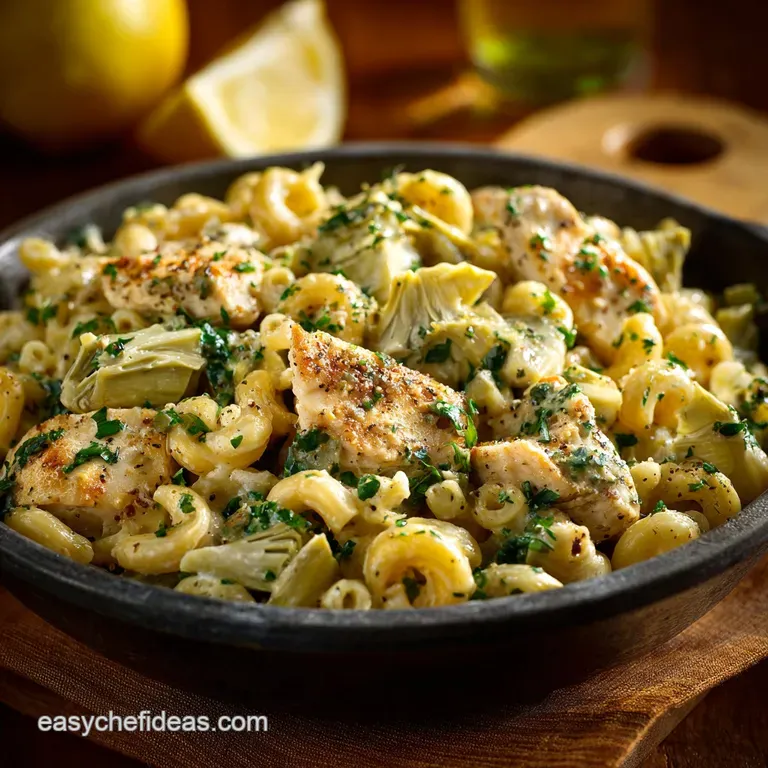
Browning the Chicken: Building the Flavor Base
This is step one, and it is crucial. Heat your Dutch oven over medium high heat with the butter and oil. You need a nice, sizzling surface. Add the seasoned chicken thighs and let them sit, undisturbed, for a good three to four minutes until a rich golden crust forms.
You’re not cooking them through you're just creating flavour. Remove the seared chicken to a plate, leaving all those crispy brown bits behind for the aromatics.
The Simmering Stage: Liquid Ratios and Timing the Cavatappi
This is the magic stage. Once you've sautéed the onions, garlic, and herbs, pour in your hot chicken stock. Hot stock is absolutely non-negotiable here. Adding cold liquid will immediately drop the temperature and cause the pasta to cook unevenly, sometimes resulting in a gluey texture.
Once boiling, stir in the cavatappi, the artichokes, and the chicken. Reduce to a steady simmer and cook for 12– 15 minutes, stirring every 60 seconds, especially toward the end.
Chef's Note: You must stir this pasta frequently! It prevents the starch from sticking to the bottom of the pot and ensures maximum starch dispersal into the sauce, guaranteeing that creamy consistency.
Finishing Touches: Cheese, Acidity, and Herb Activation
When the cavatappi is just shy of al dente and the sauce is thick and luxurious, turn off the heat. Stir in the heavy cream and the Parmesan cheese immediately. This residual heat will melt the cheese perfectly without making the cream break or curdle. Finally, stir in the fresh lemon juice and the fresh parsley.
Fresh herbs need only seconds of heat to "activate," so adding them last keeps their color bright and their flavor punchy.
Troubleshooting and Expert Secrets for Flawless Results
Why Is My Sauce Too Runny (or Too Thick)?
If your sauce is too runny after 15 minutes, the heat might have been too low, preventing proper starch release, or you might have used too much liquid. Simply turn the heat back up and simmer vigorously, stirring constantly, for 2 3 more minutes. If it’s too thick, it’s an easy fix!
Stir in an extra splash (1/4 cup) of hot chicken stock or water until it reaches your desired consistency.
The Importance of Deglazing the Pot
Remember those brown bits we left behind when searing the chicken? When you add the onions, make sure you scrape the bottom of the pot with your wooden spoon while they sauté. This process is called deglazing, and it lifts all that deeply caramelized flavor right into the base of your sauce.
Skipping this step means sacrificing HUGE amounts of flavor.
Resting Time: Letting the Cavatappi Fully Absorb the Sauce
You just finished cooking and you're ready to serve, right? Hold up! Let the pasta rest off the heat for five minutes before dishing it out. During this time, the pasta continues to soak up any remaining liquid, resulting in a significantly creamier and more flavorful sauce.
Practical Kitchen Guide: Storing and Reheating
Fridge Life: Safely Storing Leftover Chicken Cavatappi
This One-Pot Chicken and Artichoke Cavatappi keeps beautifully! Store any leftovers in an airtight container in the refrigerator for up to 3 to 4 days. Because it’s dairy based and contains poultry, I wouldn't push it past day four.
Bringing Back the Creaminess: Adding Moisture When Reheating
Pasta, particularly one-pot pasta, turns into a solid block of cement when it cools because the starch continues to absorb liquid. To reheat, scoop a serving into a microwave safe dish or a small saucepan. Add 1 to 2 tablespoons of extra liquid either milk, heavy cream, or chicken stock before heating.
Heat gently, stirring frequently, until creamy and hot throughout.
Freezing Tip: Is It Worth It?
Honestly? I wouldn't. The pasta texture fundamentally changes after freezing and thawing, often becoming mushy. While it’s technically safe to freeze (up to 3 months), the quality loss means you won't get that wonderful creamy texture back. Stick to fridge storage for maximum deliciousness.
The Perfect Pairing: What to Serve with Lemon Artichoke Pasta
Simple Greens: Crisp Side Salads and Vinaigrettes
Because the pasta is rich and hearty, a simple, acidic side salad makes the perfect contrast. I love pairing this with a crisp mixture of rocket (arugula) and thinly sliced fennel, dressed very lightly with olive oil and white wine vinegar. If you’re craving something warm, try my recipe for Butternut Squash with Bacon and Parmesan: Ultra Crispy Roasted Side Dish — the salty crunch of the bacon is surprisingly lovely next to the tangy artichoke.
Crumbly Textures and Wine Pairings
Set out a basket of crusty bread, maybe some good focaccia, for mopping up every last bit of that amazing sauce. For drinks, a light, dry Italian white wine like Pinot Grigio or an unoaked Sauvignon Blanc is spot on. If you're feeling a bit more adventurous with your weeknight meal, sometimes I skip the pasta entirely and make the sauce for a quick BBQ Chicken Quesadilla: Ultimate Crispy Weeknight Dinner Recipe for a totally different kind of comfort food evening. Enjoy, chef!
Recipe FAQs
Is the One-Pot Lemon Herb Chicken and Artichoke Cavatappi a genuinely healthy meal option?
Yes, this recipe is relatively healthy, especially when using lean chicken breast and low-sodium stock. It offers a good balance of protein, complex carbohydrates, and vegetables from the artichokes and herbs. To maximize health benefits, use whole wheat cavatappi and focus on fresh ingredients.
Can I use Orzo or a similar small pasta shape instead of Cavatappi in this one-pot method?
Absolutely, orzo is a wonderful substitute, though it cooks faster than cavatappi. If substituting, monitor the liquid level carefully, and start checking for doneness about 5 minutes earlier than the recipe specifies.
Using orzo will create a dish similar to a "One Pot Chicken Tomato Orzo" or a rice like pilaf texture.
My pasta absorbed all the liquid quickly, and the dish seems dry. How can I troubleshoot this?
A rapid boil or inconsistent heat can cause the liquid to evaporate too quickly. Always keep the pot covered while simmering and cook over medium low heat. If the pasta is still firm (al dente) but the liquid is gone, simply add 1/4 to 1/2 cup of extra warmed stock or water until the desired creaminess is achieved.
Can I turn this One-Pot Cavatappi recipe into a baked casserole similar to a Chicken Artichoke Feta Casserole?
Yes, you can transition this to a baked dish for a crisper top. Cook the chicken and sauce separately, slightly undercook the pasta, then combine everything in a baking dish. Top with extra feta or mozzarella and bake at 375°F (190°C) for 15 minutes, or until the cheese is melted and bubbly.
What is the best way to store and reheat leftovers? Can I freeze this dish?
Store leftovers in an airtight container in the refrigerator for up to 3 days. To reheat, add a splash of chicken stock or milk to the portion before microwaving or heating gently on the stovetop, as the pasta will absorb moisture upon cooling.
Freezing is not recommended, as the pasta texture often becomes mushy upon thawing.
I don't have chicken; can I use sausage or make this dish vegetarian?
Absolutely, sliced pre-cooked Italian sausage works wonderfully; add it during the last 10 minutes of simmering to warm through. For a vegetarian option, substitute the chicken with chickpeas, white beans, or sliced mushrooms, and use vegetable stock in place of chicken stock.
Which type of artichoke hearts works best: marinated, frozen, or canned in water?
Canned artichoke hearts packed in water are the simplest, just ensure they are drained and rinsed well. If using marinated hearts, they will add a richer, tangier flavour, but reduce the added salt in the recipe to compensate for the brine.
Frozen artichoke hearts should be thawed and squeezed dry before adding to the pot.
Onepot Chicken And Artichoke Cavatappi Recipe
Ingredients:
Instructions:
Nutrition Facts:
| Calories | 247 kcal |
|---|---|
| Protein | 10.2 g |
| Fat | 9.7 g |
| Carbs | 29.7 g |
