Summer Zucchini Rollatini with Ricotta and Spinach Lowcarb
- The Magic of Low-Carb Comfort: Why Zucchini Rollatini Works
- Conquering the Courgette: The Secret to Perfect, Water-Free Rolls
- Gathering Your Filling and Foundation: Essential Zucchini Rollatini Components
- Step-by-Step Assembly: Crafting the Ideal Summer Courgette Bake
- Meal Prep and Storage Strategy for Zucchini Rollatini
- Elevating Your Meal: Serving Suggestions and Wine Pairings
- Recipe FAQs
- 📝 Recipe Card
The Magic of Low-Carb Comfort: Why Zucchini Rollatini Works
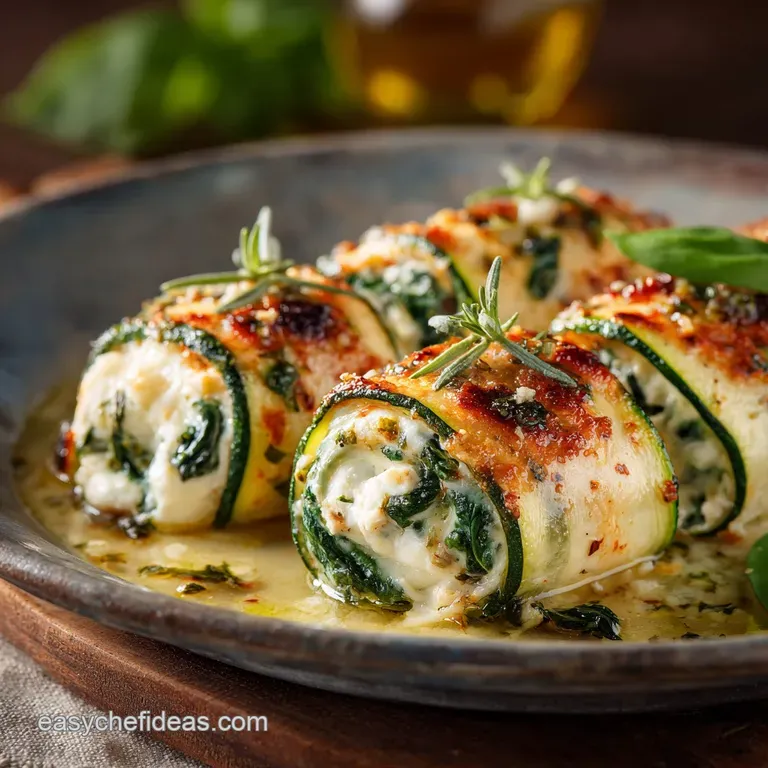
Zucchini Rollatini is a truly elegant solution for enjoying classic Italian baked dishes without the heavy starch load. It beautifully transforms fresh, seasonal courgettes into delicate "pasta" sheets that cradle a rich, creamy filling.
This creative approach delivers deep comfort food flavor while keeping the meal satisfyingly light and focused on vegetables.
This fantastic Zucchini Rollatini bypasses the need for high carb pasta, making it a stellar choice for modern diets. It captures the comforting spirit of traditional bakes, offering a wonderful balance of texture and robust flavor.
The result is a satisfying, nutrient dense main dish that feels both indulgent and remarkably fresh.
Conquering the Courgette: The Secret to Perfect, Water Free Rolls
The single biggest hurdle in creating an excellent zucchini rollatini recipe is expertly managing the water naturally held within the vegetable. If improperly prepped, this excess moisture will inevitably dilute your vibrant tomato sauce and turn the final dish into a watery mess.
The ultimate secret lies in a precise salting and drying process that makes the courgette strips pliable and robust enough for secure rolling. This crucial attention to detail elevates simple Zucchini Rolls from merely adequate to truly exceptional.
Defining the Dish: Rollatini vs. Manicotti
Rollatini is fundamentally an Italian American term that translates to "small rolls," typically referring to thin slices of vegetable wrapped around a savory cheese filling. This structure contrasts sharply with dishes like manicotti or cannelloni, which rely on pre-made, high starch tubular pasta shells.
The advantage of using zucchini is that you create an inherently low-carb and naturally gluten-free main course, achieving delicious structure without relying on flour.
Dietary Benefits: A Lightened Italian Classic
Swapping heavy pasta for zucchini strips significantly reduces the carbohydrate count, making this one of the best Veggie Dishes for those following specific dietary plans.
Since we use creamy whole milk ricotta and plenty of fresh vegetables, the resulting dish is rich in protein and essential nutrients. It achieves that desired hearty, savory texture without the post meal heaviness often associated with baked starches.
The Essential Tool for Ultra Thin Slicing
Achieving perfectly uniform, pliable slices is non-negotiable for successful rolling and even cooking. A mandoline slicer is the most highly recommended piece of equipment for creating strips consistently around 1/8 inch (3 mm) thick.
While a very sharp knife can be used, the mandoline ensures precision; slices that are too thick will remain stiff and difficult to roll, while those too thin will simply tear when handled.
Gathering Your Filling and Foundation: Essential Zucchini Rollatini Components
Choosing the Right Size and Type of Zucchini
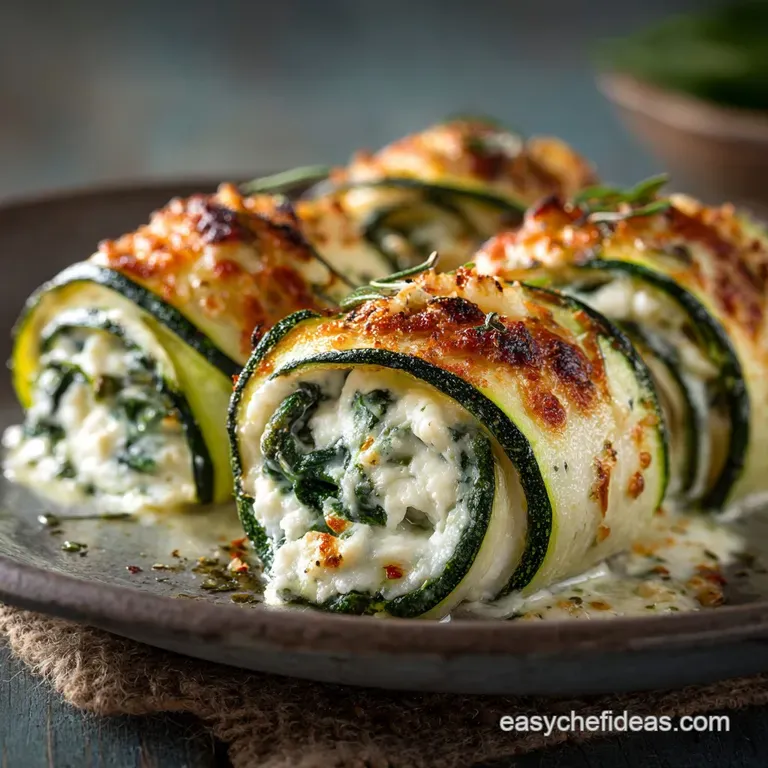
When selecting your courgettes, look for four to five medium-to-large specimens that are very straight and wonderfully firm, totalling around 1.2 kg. Straight vegetables yield long, even strips that are ideal for rolling, significantly minimizing slicing waste.
You should actively avoid overly large, bulbous zucchini because their centers tend to be seedy and far too watery for this delicate preparation.
Optimizing the Ricotta Filling for Maximum Creaminess
For the absolute smoothest and richest outcome, always choose whole milk ricotta cheese, ideally ensuring it is well drained before mixing. The filling for this zucchini rollatini with spinach and ricotta also crucially requires the 10 oz block of thawed spinach to be pressed until completely dry.
We incorporate one egg as a fundamental binder to ensure the creamy mixture sets up properly and holds its shape during the oven bake.
Sauce Selection: Marinara vs. Simple Crushed Tomato Base
A high-quality, pre-made marinara sauce, utilizing about 24 oz, provides a fantastic foundation and saves valuable preparation time. If you decide to use a simpler crushed tomato base, be sure to season it thoroughly with fresh garlic and dried herbs to match the savory richness of the ricotta.
We divide the sauce into thirds, using the majority for the bottom layer to prevent sticking and the final third over the top to keep the mozzarella delightfully moist.
Related Recipes Worth Trying
- Crispy Parmesan Zucchini Meatballs Recipe The Secret to NoFail Firmness — Master these delicious nongummy Zucchini Meatballs This healthy recipe uses a simple draining trick for a crisp crust and tender flavourpacked interior...
- Best Fried Zucchini Recipe Crispy Panko Perfection — The best Best Fried Zucchini Recipe youll ever try Doubledredged for extra crispiness these panko fried zucchini slices are the perfect summer treat Get the...
- Easy pan-fried Zucchini A Crispy Golden Delight — Craving Easy pan-fried Zucchini A Get golden crispy zucchini bites in minutes This simple recipe is perfect as a healthy side or tasty appetizer Get the...
step-by-step Assembly: Crafting the Ideal Summer Courgette Bake
The Critical Salting and Draining Phase
After slicing your courgette strips exactly 1/8 inch thick, arrange them in a single layer on a cooling rack or paper towels and sprinkle them generously with coarse kosher salt. Let these strips rest undisturbed for a full 30 minutes; you will visibly observe the moisture begin to weep out onto the surface.
Next, lightly rinse the strips under cool water to remove the excess salt, then pat them absolutely bone dry using a clean kitchen towel before lightly brushing with olive oil.
Whipping Up the Robust Spinach Ricotta Mixture
Before beginning the mixture, ensure your thawed spinach is pressed firmly until every last drop of water is removed; this vigorous squeeze is absolutely non-negotiable for success.
Combine the thoroughly dried spinach, 15 oz of well drained whole milk ricotta, finely grated Parmesan, the egg, fresh basil, and all the specified seasonings until the filling is uniform.
Once mixed, chilling this creamy preparation for just 10 minutes helps it firm up beautifully, which makes the subsequent rolling process much cleaner and significantly easier.
Rolling Technique: Filling and Securing the Delicate Slices
To begin rolling the Zucchini Rollatini , take one dried, oil-brushed zucchini strip and spoon 1 to 2 tablespoons of the robust ricotta mixture near one end. Gently but very firmly roll the strip into a compact, secure log around the filling.
Place the finished zucchini roll into the sauce lined baking dish, ensuring the seam is facing straight down to prevent any possible unraveling during the heat of the oven.
Layering and Baking for Golden Perfection
Spread two-thirds of your prepared marinara sauce into a 9x13 inch baking dish, creating a necessary moist bed similar to what you would establish for a Zucchini Lasagna .
Arrange all the completed rolls snugly side-by-side, then top with the remaining marinara sauce, and sprinkle with 1 cup of shredded low-moisture mozzarella. Bake the dish covered tightly with foil at 375°F (190°C) for 25 minutes, then remove the foil for the final 10 to 15 minutes until the cheese is beautifully golden and the sauce is merrily simmering.
Meal Prep and Storage Strategy for Zucchini Rollatini
This excellent Zucchini Rollatini is ideal for preparing ahead of a busy schedule. You can successfully assemble the entire dish including the sauce and the top layer of mozzarella up to 24 hours in advance and simply store it tightly wrapped in the refrigerator until baking time.
If you choose to freeze the assembled dish, be sure to bake it only from a completely thawed state to ensure the texture of the zucchini remains as firm as possible. Avoid freezing fresh, raw zucchini strips entirely, as the high water content will inevitably destroy the vegetable’s structure upon thawing.
Elevating Your Meal: Serving Suggestions and Wine Pairings
Making This Dish Ahead: Chilling vs. Freezing Advice
For immediate convenience, assembling and chilling the rolls overnight is your best strategy; this allows the filling to meld beautifully. When baking from a chilled state, add about 10 minutes to the covered baking time to account for the starting temperature.
Freezing is certainly possible for long term storage, but remember the quality is slightly diminished; always thaw overnight in the refrigerator before baking normally.
Reheating Leftovers Without Becoming Soggy
The key to achieving successful reheating results is applying gentle, controlled heat to manage residual moisture. Portioned leftovers reheat best in a traditional oven or a high-quality toaster oven set to 300°F (150°C) for approximately 15 minutes, which gently heats the center without boiling the underlying sauce.
Avoid using a microwave if possible, as the quick, intense heat will aggressively release more water from the zucchini, leading to an undesirable watery base.
Flavor Variations: Adding Sausage or Roasted Red Peppers
For those who crave a heartier texture, consider browning savory Italian sausage and mixing a modest amount into the ricotta filling for added depth and protein. Alternatively, you can achieve a sophisticated, smoky note by incorporating finely chopped roasted red peppers directly into the spinach and ricotta mixture before rolling.
For a completely zucchini rollatini vegan option, simply substitute the traditional dairy components with a well made cashew ricotta and your preferred plant based mozzarella shreds.
Nutritional Snapshot: Calories and Carb Count
This Zucchini Rollatini with ricotta provides excellent nutritional value while fitting neatly into most low-carb eating plans. Based on an estimate of four generous main course servings, each portion typically contains between 380 and 420 calories.
With roughly 16 grams of total carbohydrates and a solid 28 grams of protein per serving, it offers a deeply satisfying and truly nutrient dense primary dish.
Recipe FAQs
How do I stop my Zucchini Rollatini from turning into a soggy mess?
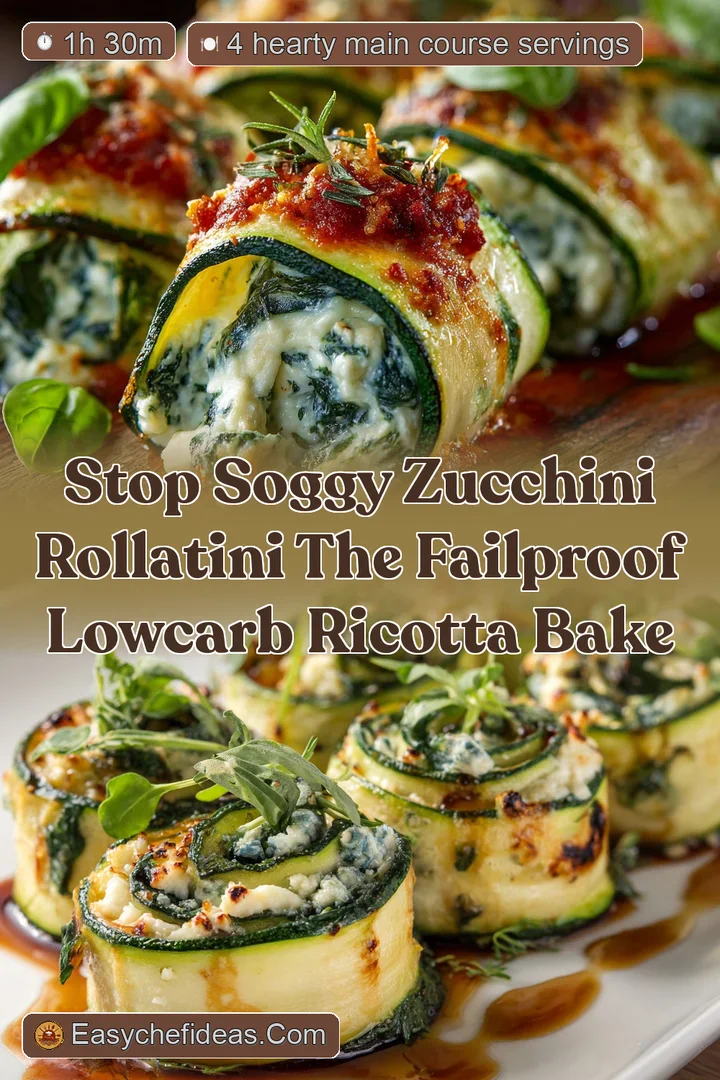
A soggy rollatini is a right faff, isn't it? The secret lies in the crucial salting and the vigorous drying you must pat those slices bone dry with kitchen towels after rinsing, otherwise, the zucchini will weep buckets in the oven.
I’m not keen on ricotta; what’s a good swap for the filling?
Absolutely! Well drained full fat cottage cheese works brilliantly as a substitute; just ensure you squeeze out any excess liquid, much like you would with the spinach, to keep the filling firm enough for rolling.
Do I really need a mandoline, or can I manage making the rolls with just a sharp knife?
While a very sharp knife works, if you’ve got the budget for the bit of kit, a mandoline is a brilliant investment here, ensuring every slice is uniformly 1/8 inch thick this guarantees even cooking and prevents the courgette strips from snapping when you roll them.
Can I prep these Zucchini Rollatini rolls ahead of time for a dinner party?
Yes, you can assemble the entire dish completely up to 24 hours ahead of time; cover it tightly and keep it chilled, but remember to add an extra 10 to 15 minutes to the overall baking time since it’s going into the oven cold.
Is this dish genuinely low-carb, and how does it compare to a classic Italian pasta bake?
Yes, this is a brilliant low-carb choice because you’ve swapped out high carb pasta for vegetables; this results in a significantly lighter meal, making it a guilt free alternative to traditional manicotti or lasagna.
Lowcarb Zucchini Ricotta Rollatini
Ingredients:
Instructions:
Nutrition Facts:
| Calories | 1922 kcal |
|---|---|
| Protein | 34.8 g |
| Fat | 41.4 g |
| Carbs | 59.0 g |
| Fiber | 20.8 g |
| Sodium | 10531 mg |
