Microwave Baked Potato: Fluffy Results Fast

- The Perfect Microwave Baked Potato: Fluffy Inside, Ready in a Flash
- Ditching the Wait: The Ultimate Guide to the Speedy Spud
- Key Components: Selecting the Best Spud for Microwave Baking
- Prep to Plate: Step-by-Step Method for the Fluffiest Microwave Baked Potato
- Achieving Fluffiness: The Science Behind a Perfectly Steamed Interior
- Troubleshooting the Tubers: Chef's Tips for Consistency and Quality
- Handling Leftovers: Storage and Reheating Baked Potatoes Safely
- Building the Perfect Meal: Versatile Toppings and Serving Ideas
- Recipe FAQs
- 📝 Recipe Card
The Perfect Microwave Baked Potato: Fluffy Inside, Ready in a Flash
By Chef [Your Name]
There is nothing better than slicing into a steaming hot spud and watching the fluffy white clouds escape, signaling ultimate comfort food. This reliable method for a Microwave Baked Potato delivers that perfect texture every single time, without the hour long commitment of waiting for your oven to preheat and slowly work its magic.
Seriously, why wait?
We’ve all been there: 7 PM, starving, zero prep time left in the tank. This speedy spud method is an absolute lifesaver, transforming a humble tuber into a completely satisfying meal base faster than you can open a can of beans. It's dirt cheap, incredibly fast, and requires minimal cleanup.
Stop settling for dense, rubbery microwave attempts that taste sad and dry. I’ve refined the process over years of hungry experimentation and these specific steps matter. Let’s crack on and master the art of the perfect, fluffy Microwave Baked Potato .
Ditching the Wait: The Ultimate Guide to the Speedy Spud
The first time I served a fluffy, steaming spud that cooked in under 15 minutes, my partner was genuinely confused. How could it be this good? The key isn't magic; it’s aggressively managing moisture and understanding how steam works in the microwave environment.
We are purposefully using high power radiation to cook the potato’s interior rapidly while simultaneously softening the skin for the fluffiest result possible.
Why the Microwave Spud Often Gets a Bad Rap
People usually fail because they cook the potato slowly, or they don’t puncture the skin properly. Slow cooking at low power allows the moisture inside the potato to evaporate too gradually, creating a dense, sometimes chewy texture around the edges instead of soft steam.
If you don't vent the potato, the internal pressure builds, and you get that horrific, explosive mess. That is simply not the way to make a glorious Microwave Baked Potato .
From Raw to Ready: The Timeline Advantage Over Conventional Baking
A traditional baked potato takes a minimum of 60 to 90 minutes in the oven, depending on its size. This method gets you a fully cooked, fluffy potato in 10 to 18 minutes, total.
That speed difference makes the Microwave Baked Potato an essential weeknight hack, allowing us to pivot quickly when dinner plans suddenly shift. Think of the energy savings, too; your kitchen stays cool, and your electric bill doesn't weep.
Essential Gear Checklist for Preparing Perfect Potatoes
You really don't need much specialized gear here, which is why I love this recipe. You definitely need a sturdy fork or skewer for piercing do not skip that step, ever. Beyond that, a reliable microwave oven, preferably 1000W or higher, is the main event.
Ensure your plate is genuinely microwave safe; my mum once melted a questionable plastic dish making a quick spud, so trust me, check the label!
Key Components: Selecting the Best Spud for Microwave Baking
The foundation of any great potato dish is, obviously, the potato itself. You can't start with a waxy, new potato and expect a fluffy result; it simply won’t happen. We are looking for starch, starch, and more starch.
Choosing the Right Potato Variety (Russets are Recommended)
For the absolute fluffiest, fluffiest Microwave Baked Potato , you must choose a high starch variety like a Russet (in the US) or a Maris Piper (in the UK). These starchy potatoes break down beautifully during cooking, yielding that light, dry, and mealy texture everyone loves.
Waxy varieties hold their shape and density, leading to a gluey interior we want clouds, not concrete.
Optimizing Skin Texture: The Importance of Fat (Oil/Butter) and Salt Ratios
The oil and salt combination does two critical things. First, the oil helps transfer heat quickly to the skin and prevents the immediate drying out of the potato fibers. Second, the coarse sea salt draws out some surface moisture while creating a lovely, savory crusty finish, even if you’re only relying on the microwave.
If you don't have olive oil, a little melted butter works wonderfully and adds extra flavor.
Minimal Ingredients, Maximum Impact: The Foundation of Flavor
The ingredient list for the perfect Microwave Baked Potato is ridiculously short, which means quality really shines through. Don't skimp on the salt use coarse salt, not finely ground table salt, for a better textural experience.
If you need a substitution for the olive oil, rapeseed oil or even a light vegetable oil works just as well. The goal here is moisture retention on the exterior combined with rapid interior cooking.
Prep to Plate: step-by-step Method for the Fluffiest Microwave Baked Potato
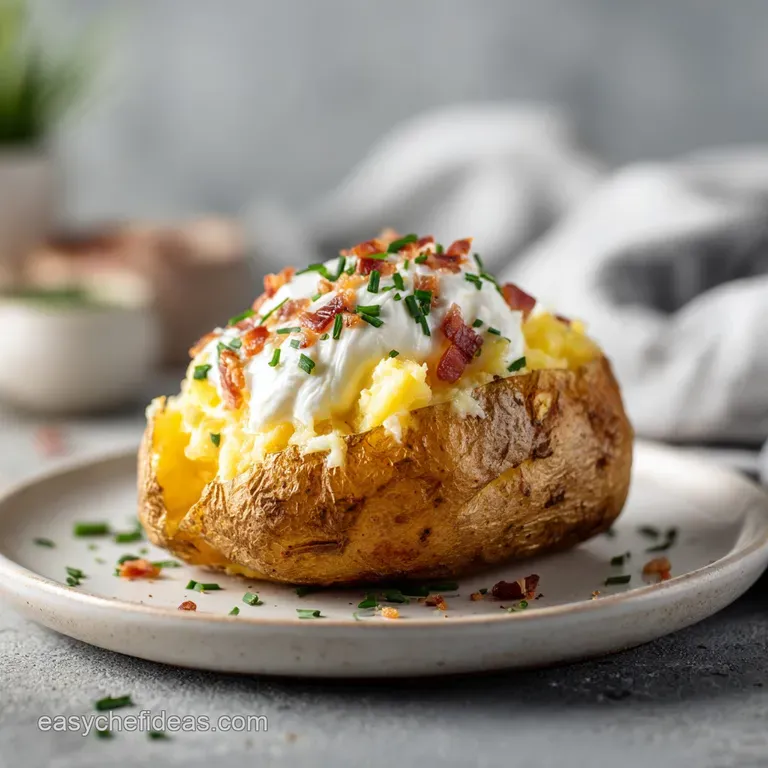
This process ensures that steam is released safely and efficiently, resulting in that light, airy texture we crave. Following these exact Microwave Baked Potato instructions will guarantee success.
Preparation: Cleaning, Drying, and Piercing Technique
Thoroughly scrub your potato under cold running water to remove any soil; remember, you are eating that skin! The next step is non-negotiable: Pat the potato completely dry using a paper towel. A damp surface generates exterior steam too quickly, leading to that dreaded rubbery texture.
Use a fork or sharp skewer to pierce the potato deeply, about eight to ten times, hitting all sides. This is the ultimate preventative measure against a potato explosion inside your machine.
The Primary Cook: Positioning and Timing Adjustments
Rub the potato with oil and generously season with coarse salt and pepper. Place it directly on the microwave plate, or use a paper towel underneath if you’re concerned about mess. Cook on High (100% power) for 4 minutes.
Flip the potato (use tongs, it’s hot!) and cook for an additional 4 to 6 minutes. Always base your Microwave Baked Potato time on the size of the potato; if it's enormous, increase the total time slightly.
The Essential Resting and Fluffing Step
When the potato is tender, remove it immediately. Let it rest for 2 minutes. This resting period allows the steam to redistribute and finish cooking any slightly firm spots. Do not skip the rest.
When rested, cut a long slit across the top and squeeze the potato gently from the ends to open it up. Then, use a fork to rapidly pierce and fluff the exposed flesh. This action traps air, making it light and ready for toppings.
This is how you guarantee a truly fluffy Microwave Baked Potato .
The Post Microwave Trick for Taut Skin
If you are like me and occasionally miss the crackly skin of an oven spud, there is a simple hack. After you complete the initial microwave cooking and resting steps, transfer the potato to an air fryer set at 400°F (200°C) or a hot conventional oven for 3 to 5 minutes.
This quick blast dries the skin rapidly, giving it a taut, slightly crisp finish without drying out the already perfectly cooked interior. It’s the ultimate Microwave Baked Potato hack for texture!
Achieving Fluffiness: The Science Behind a Perfectly Steamed Interior
When you cook a high starch potato quickly in a microwave, the internal water molecules heat up incredibly fast, turning to steam. Since we pierced the skin, that steam can exit without rupturing the potato. The quick heating causes the starch granules to swell and gelatinize.
By cooking fast, we prevent the exterior moisture from migrating inward and making the potato dense. When you slice and fluff the cooked potato, you break apart those gelatinized starch cells, resulting in a cloud like, dry texture that is the hallmark of a Perfect Microwave Baked Potato .
Troubleshooting the Tubers: Chef's Tips for Consistency and Quality
There’s nothing worse than biting into what you thought would be a creamy center only to find a hard lump. We are aiming for consistent perfection every single time. Here are my best Microwave Baked Potato tips .
The Role of Pricking: Steam Vents vs. Explosions
It sounds dramatic, but pricking the potato is truly about safety and texture control. Steam is powerful. If you don't give it controlled escape routes, the internal pressure will build until the weakest point gives way usually resulting in a violent eruption.
You need those little vents to allow the pressure to equalize, guaranteeing a safe cooking environment and a fully steamed interior.
Moisture Management for Tender Results
If your Fluffy Microwave Baked Potato comes out a little dry, it might be due to your microwave’s strength or the size of your spud. Try the damp paper towel trick next time.
Wrapping the oiled potato loosely in a slightly damp paper towel during the first half of cooking traps a small amount of external moisture, leading to a softer, more tender skin and retaining internal steam better.
Why Size and Shape Affect Cook Time
Consistency matters, especially when cooking multiple spuds. If you cook one tiny potato and one huge potato simultaneously, the tiny one will be rubbery and overcooked before the large one is even halfway done. For the best result, select potatoes that are uniform in weight and shape.
If you must cook vastly different sizes, cook them separately to ensure the Microwave Baked Potato time is correct for each.
Testing for Perfect Doneness (Internal Temperature Check)
If you have a quick read thermometer, use it! A perfectly cooked potato should register between 208°F and 212°F (98°C 100°C) in the center. If you don't have a thermometer, gently squeeze the potato (using tongs!) or slide a thin knife into the center.
It should slide in without any resistance, like sinking into softened butter.
Avoiding the Dreaded Rubbery Skin
Rubbery skin is usually a sign that the potato cooked too long at a medium temperature, or that it was cooked unevenly and took too much time to complete. We are looking for high heat and quick cooking for this Microwave Baked Potato .
If you cook on low power, the surface moisture slowly evaporates, and the skin turns leathery. Always cook on 100% power unless your microwave is excessively high wattage (over 1200W).
The Power Level Adjustment for Even Cooking
I use 100% power for almost the entire cook time. Some older or lower wattage microwaves (under 700W) struggle to maintain the high heat needed. If your potato is consistently cooking unevenly, try rotating it halfway through the process, but keep the power high.
This method for a Microwave Baked Potato relies on fast, intense heat to steam the interior quickly.
Handling Leftovers: Storage and Reheating Baked Potatoes Safely
Leftover baked potatoes, even the speedy microwave versions, are fantastic, but they require careful handling due to bacteria concerns. The danger zone is room temperature; don't leave cooked potatoes out on the counter.
Store any remaining baked potato in an airtight container in the fridge immediately after cooling (within two hours of cooking). They will keep well for 3 to 4 days. Freezing a cooked potato is possible, but honestly, the texture suffers a lot, becoming watery and slightly gritty upon thawing. I avoid it.
To reheat, the microwave is surprisingly not the best option because it can make the reheated flesh tough. Instead, slice the leftover potato in half, place it cut-side down in a hot frying pan with a little butter or oil, and heat until the skin is crispy and the center is warmed through.
Alternatively, wrap the Microwave Baked Potato halves in foil and bake in a 350°F (175°C) oven for about 15 minutes.
Building the Perfect Meal: Versatile Toppings and Serving Ideas
This versatile Microwave Baked Potato is the ideal blank canvas for almost any meal. Whether you need a side dish to go alongside your perfectly flaky Baked Salmon: 20 Minute Lemon Herb Flaky Salmon Recipe or you need a hearty main course, the spud delivers.
My all-time favorite way to serve it is detailed in my comprehensive guide, Baked Potato Toppings: The Great British Spud Upgrade . Seriously, go check it out for some killer inspiration.
For a fast weeknight meal, pair this fluffy spud with simple sour cream, chives, and sharp cheddar. If you’re feeling decadent, treat it like a base for chili or pulled pork.
Even a simple side of cottage cheese and fresh cracked pepper turns this humble Microwave Baked Potato into a satisfying lunch. It's the ultimate quick comfort food.

Recipe FAQs
Why is piercing the potato essential before microwaving?
Piercing the potato multiple times (usually 6-8 deep jabs with a fork) is crucial for safety and texture management. It allows the intense steam and pressure built up inside the starchy vegetable to escape safely during the cooking process.
If not pierced, the pressure can cause the potato to explode inside the microwave, resulting in a dangerous and very messy situation.
My microwaved potato turned out rubbery and dry. What went wrong?
A rubbery or tough texture usually indicates the potato was severely overcooked, leading to excessive moisture loss and the breakdown of starches near the skin. To prevent this, always test the internal temperature (it should reach 205°F to 212°F) and use the recommended resting time, which allows the retained steam to finish cooking the center.
Make sure you are using a damp paper towel or lightly oiled skin to help trap necessary moisture during cooking.
Can I achieve a crispy skin using only the microwave method?
No, the microwave's cooking action relies on steam and moisture, which softens the skin rather than crisping it. To get that desirable crispy skin, finish the potato immediately after microwaving: rub the skin with oil and salt, then place it under a high broiler or in a hot toaster oven for 3 to 5 minutes until the skin crackles.
What type of potato is best for microwaving?
Russet potatoes (also known as Idaho potatoes) are the ideal choice for this recipe. Their high starch content and low moisture level break down perfectly during heating, guaranteeing a fluffy, dry, and airy interior structure.
Avoid waxy varieties like red bliss or new potatoes, as they will turn dense and slightly gummy when microwaved.
How should I adjust the cooking time when cooking multiple potatoes at once?
Microwaves heat less efficiently when packed, so you must increase the cooking time significantly, typically by 50% to 75% for two medium potatoes. When cooking more than two, arrange them in a circle around the edge of the plate and ensure you pause halfway through to rotate and flip them, promoting more uniform cooking.
Is it safe to freeze cooked baked potatoes?
While technically possible, freezing a fully cooked baked potato is not recommended for quality reasons. Upon thawing, the high moisture content of the flesh tends to separate, leading to a grainy, watery, and unappetizing texture.
If you need to meal prep, it is better to slightly undercook the potato and then freeze it whole, finishing it in a conventional oven later.
Should I wrap the potato in plastic wrap or aluminum foil before microwaving?
Never use aluminum foil in the microwave, as this creates a serious fire and machine damage hazard. If you want to trap extra moisture for steaming, use a sheet of microwave safe plastic wrap with a small vent hole poked in it, or use a paper towel that has been lightly dampened with water.
Fluffy Microwave Baked Potato Hack

Ingredients:
Instructions:
Nutrition Facts:
| Calories | 270 kcal |
|---|---|
| Fat | 3 g |
| Fiber | 7 g |
