Yaki Udon: Savory Noodle Stir Fry
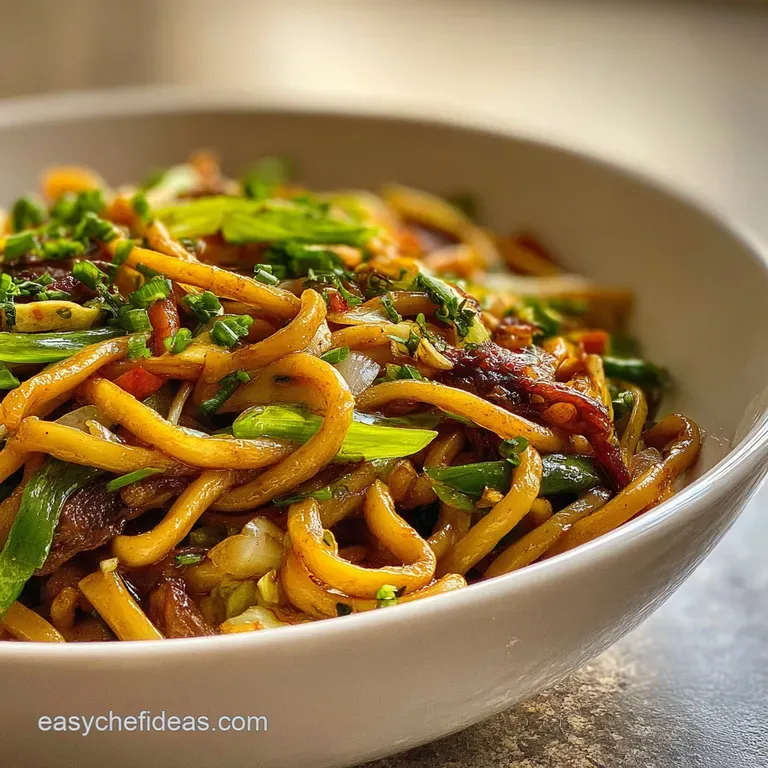
- Time: Active 10 minutes, Passive 0 minutes, Total 20 minutes
- Flavor/Texture Hook: Charred, chewy, and deeply savory
- Perfect for: Soul nourishing weeknight dinners or a quick introduction to Japanese style stir fries
- Mastering the Art of Smokey Yaki Udon
- The Physics of the Noodle Bounce
- Essential Methods for Noodle Success
- Vital Specs for Noodle Success
- The Essential Elements for Umami
- Necessary Gear for Pan Searing
- Step-by-Step Noodle Sauté Guide
- Fixing Common Stir Fry Issues
- Nourishing Variations for Diverse Needs
- Smart Storage and Freshness Tips
- Plating and Cultural Serving Ideas
- Dispelling Kitchen Myths
- Very High in Sodium
- Recipe FAQs
- 📝 Recipe Card
Mastering the Art of Smokey Yaki Udon
Picture this: it’s a Tuesday night, the rain is drumming against the window, and your kitchen is filled with the sharp, sweet scent of mirin hitting a hot pan. That first sizzle when the chicken touches the oil sends a plume of savory steam upward, immediately followed by the earthy, woodsy aroma of sliced shiitake mushrooms.
This isn’t just about putting food on the table; it's about the way the soy sauce caramelizes against the thick, bouncy noodles, creating those charred, slightly sweet bits that we all fight over.
I used to think that achieving that specific street stall flavor required a jet engine wok and years of training. Honestly, I spent far too many nights overcooking my noodles into a gummy mess because I followed generic advice. But then I learned the secret of the frozen noodle and the dry heat sear.
We aren't just boiling things here; we are building layers of culture and nourishment. When you toss those thick noodles into the pan, they should "sing" a high pitched crackle that tells you the edges are crisping while the center stays velvety and supple.
This recipe for Yaki Udon is my go to when I need to feel grounded. It's a dish that celebrates the diversity of textures the snap of julienned carrots, the tender bite of chicken, and that unmistakable "koshi" (the bounce) of the udon.
We’re going to focus on the science of the sear and the aroma of the sauce, ensuring every slurp is as rewarding as the last. Trust me, once you see how the dashi powder blooms in the heat, you’ll never look at a plain noodle the same way again.
The Physics of the Noodle Bounce
Starch Retrogradation: Using frozen udon noodles allows the starch to remain tightly packed until the moment of stir frying, preserving that signature elastic "snap" rather than becoming mushy.
The Maillard Reaction: High heat triggers a chemical reaction between the amino acids in the chicken and the granulated sugar in the sauce, creating complex, savory flavor compounds and a deep brown crust.
| Method | Texture Result | Best For |
|---|---|---|
| Frozen Udon | Bouncy and elastic | Traditional Yaki Udon |
| Pre cooked (Vacuum) | Soft and slightly dense | Quick meal prep lunches |
| Dried Udon | Flat and chewy | Soups or cold salads |
The difference between a soggy stir fry and a restaurant quality dish often comes down to moisture management. If you boil your noodles for too long, they lose their structural integrity before they even hit the pan.
By using the frozen to pan method or a very brief blanching, you ensure the noodles act like a sponge, soaking up the Yaki Udon Sauce Recipe without losing their soul.
Essential Methods for Noodle Success
When we talk about Japanese stir fry, we have to talk about balance. The Best Yaki Udon isn't just about heat; it’s about the timing of the aromatics. I’ve found that starting with a cold oil and yellow onions allows the sugars to release slowly, providing a foundation of sweetness that balances the saltiness of the oyster sauce.
But what about the cabbage? You want to hear it "shatter" when you bite into it. If you add it too early, it turns into a limp, watery mess that dilutes your sauce.
Chef's Tip: To get a truly professional finish, freeze your chicken for 20 minutes before slicing. This allows you to get those paper thin strips that sear in seconds, mimicking the texture of high end teppanyaki.
Another trick I swear by is adding the green onions in two stages. Throw the white parts in with the yellow onions to build a savory base, then toss the green tops in at the very final second. This preserves their bright, peppery aroma and provides a visual pop against the dark, glazed noodles. If you’re looking for a different noodle experience, you might also enjoy the thinner, wheat based snap of a Sizzling Yaki Soba recipe, but for today, we are all about that thick udon chew.
Vital Specs for Noodle Success
| Component | Science Role | Pro Secret |
|---|---|---|
| Dark Soy Sauce | Provides pigment and deep molasses notes | Do not over reduce or it becomes bitter |
| Dashi Powder | Acts as an umami catalyst | Add directly to the sauce to bloom the flavor |
| Mirin | Lowers the boiling point of the sauce for faster glazing | Use "Hon Mirin" for a cleaner, fermented sweetness |
| White Pepper | Adds a sharp, floral heat without the grit | Toast it briefly in the dry pan before adding oil |
Understanding the "why" behind these ingredients helps you nourish your community with better food. For instance, the dashi powder isn't just "fish flakes"; it's a concentrated source of glutamates that makes the chicken taste "meatier" and the cabbage taste "sweeter." It’s the invisible thread that ties the whole dish together.
The Essential Elements for Umami
To make The Best Yaki Udon, you need ingredients that work in harmony. We aren't just throwing things in a pan; we are layering flavors that reflect a deep culinary culture.
- 400g Frozen Udon Noodles: Why this? Frozen noodles preserve the "koshi" texture much better than shelf stable or dried versions.
- Substitute: 400g fresh udon (reduce boiling time to 30 seconds).
- 200g Chicken Breast: Why this? Lean protein that absorbs the savory sauce quickly without adding excess grease.
- Substitute: Thinly sliced pork belly or firm tofu blocks.
- 2 tbsp Dark Soy Sauce: Why this? This is primarily for that rich, mahogany color and a hint of caramel sweetness.
- Substitute: 1.5 tbsp Light soy sauce + 0.5 tsp molasses.
- 1 tbsp Oyster Sauce: Why this? Adds thickness and a complex, briny depth that salt alone cannot provide.
- Substitute: Vegetarian mushroom stir fry sauce for a meat free version.
- 4 Shiitake Mushrooms: Why this? These provide a "velvety" texture and an intense earthy aroma when seared.
- Substitute: Cremini or button mushrooms (note: less intense flavor).
- 2 cups Green Cabbage: Why this? The high water content provides steam to finish the noodles while remaining crunchy.
- Substitute: Bok choy or Napa cabbage.
I often think about how these ingredients represent a global pantry. While this is an Authentic Yaki Udon at its heart, the ability to swap in what you have makes it a versatile tool for any home cook. If you have leftovers, you can even lean into a Beef Udon Noodles recipe for a heavier, heartier variation that uses similar sauce principles.
Necessary Gear for Pan Searing
You don't need a high tech kitchen to master this. However, the vessel you choose dictates the texture of your Vegetable Yaki Udon. A large carbon steel wok is the gold standard because it reacts instantly to flame changes.
If you’re like me and mostly cook on a standard stovetop, a heavy bottomed cast iron skillet is actually a secret weapon. It holds heat so well that when you drop in those cold vegetables, the temperature doesn't plummet, which prevents steaming.
Beyond the pan, a pair of long wooden chopsticks or "saibashi" is essential. They allow you to untangle the udon noodles without breaking them, which is a common tragedy when using a stiff spatula.
You want to keep those long strands intact in many cultures, long noodles symbolize a long life, so treat them with respect! Finally, a small glass bowl for pre mixing your sauce is a must.
Stir frying happens fast; if you're fumbling with bottle caps while the garlic is scorching, you've already lost the battle.
step-by-step Noodle Sauté Guide
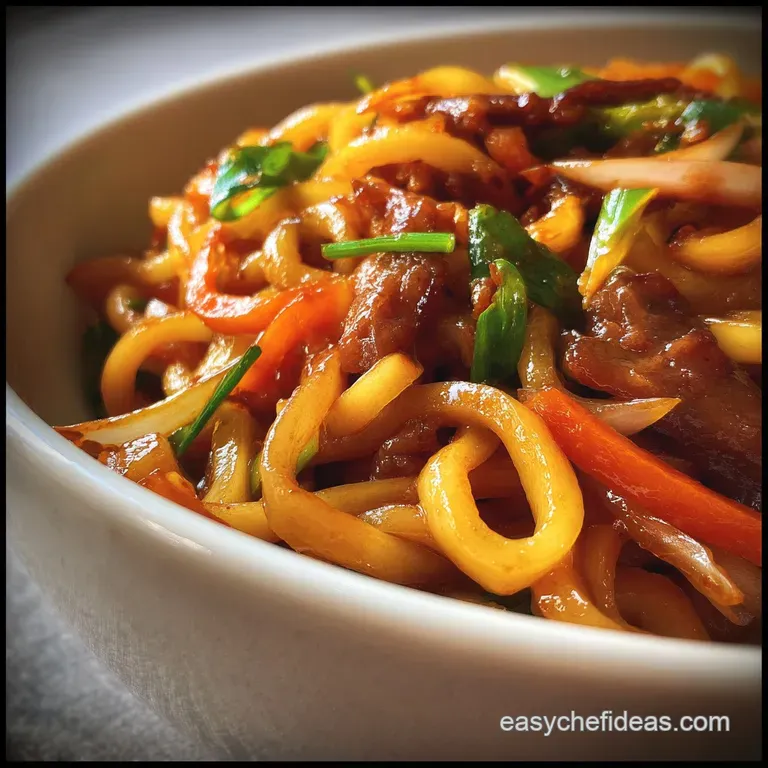
- Whisk the sauce. Combine 2 tbsp dark soy, 1 tbsp light soy, 1 tbsp oyster sauce, 1 tbsp mirin, 1 tsp sugar, 0.5 tsp dashi powder, and 0.25 tsp white pepper. Note: Mixing now prevents the sugar from clumping in the hot pan.
- Prep the noodles. Place 400g frozen udon in a bowl of hot water for 2 minutes until they just barely separate. Note: Do not over soak or they will lose their bounce.
- Sear the chicken. Heat 1 tbsp oil in a wok over high heat and add 200g sliced chicken until the edges turn golden and opaque.
- Sauté aromatics. Toss in 0.5 sliced yellow onion and the white parts of 2 green onions until they smell sweet and translucent.
- Cook the vegetables. Add 2 cups chopped cabbage, 1 julienned carrot, and 4 sliced shiitakes until the cabbage begins to wilt at the edges.
- Incorporate noodles. Drain the udon and add them to the wok, tossing vigorously until they are coated in the pan juices.
- Sauce application. Pour the sauce mixture over the noodles and turn the heat to its highest setting.
- The over High heat Toss. Stir fry for 2 minutes until the sauce thickens and glazes every strand.
- The Final Sizzle. Add the green onion tops and toss for 30 seconds until you hear a sharp crackling sound.
- Plating. Transfer to a warm plate immediately to stop the cooking process and prevent sogginess.
There is a specific moment in step 8 where the smell changes. It goes from the "raw" scent of soy sauce to something deeply toasted and nutty. That is your cue that the sugars have caramelized. If you wait too long, the noodles will start to stick and tear. If you're looking for a similar technique but with a fun twist, our Osaka Tonpeiyaki My recipe uses a similar over high heat approach for its pork and cabbage filling.
Fixing Common Stir Fry Issues
One of the most frequent frustrations I hear is about "mushy noodles." This usually happens because there's too much moisture in the pan. If your cabbage is very wet or your heat isn't high enough, the vegetables will boil instead of sear. To fix this, always pat your vegetables dry after washing.
If you see liquid pooling at the bottom of the wok, move everything to the sides to create a "well" in the center, allowing the liquid to evaporate faster.
Why Your Noodles are Breaking
If your udon strands are snapping into short pieces, you are likely being too aggressive with your spatula. Udon is delicate when hot. Instead of "stirring," think of the motion as a "lifting and folding." Use tongs or long chopsticks to gently aerate the noodles.
This allows steam to escape and ensures the sauce reaches every nook and cranny without compromising the noodle's structural integrity.
| Problem | Root Cause | Solution |
|---|---|---|
| Bland Flavor | Dashi powder didn't dissolve | Bloom dashi in the mirin/soy mixture before adding |
| Soggy Cabbage | Overcrowded pan | Cook in two batches or use a larger pan for better airflow |
| Sticky Noodles | Too much sugar or low heat | Add a splash of water and increase heat to "loosen" the glaze |
Common Mistakes Checklist:
- ✓ Never boil frozen udon; a quick soak in hot water is all they need.
- ✓ Pat the chicken completely dry before searing to ensure a proper Maillard crust.
- ✓ Ensure the wok is "smoking hot" before the first drop of oil touches it.
- ✓ Don't skip the white pepper; it provides a floral depth that black pepper lacks.
- ✓ Measure the dark soy sauce carefully; too much will make the dish look "burnt" and taste overly metallic.
Nourishing Variations for Diverse Needs
Food is a way to nourish our bodies and honor our communities, and that means making recipes that work for everyone. If you’re looking for an Easy Yaki Udon that fits a vegan lifestyle, simply swap the chicken for extra firm tofu or "meaty" king oyster mushrooms.
Replace the oyster sauce with a mushroom based stir fry sauce and use a kombu based dashi instead of the traditional bonito version. The result is an Authentic Vegetable Yaki Udon that doesn't sacrifice any of that deep umami flavor.
For those watching their sodium, I recommend using a low sodium light soy sauce and increasing the amount of fresh ginger or garlic. This provides "aromatic heat" which tricks the palate into feeling satisfied without the extra salt. If you find yourself craving a bit more spice, a dollop of chili crisp or a sprinkle of shichimi togarashi at the end adds a wonderful layer of complexity. If you enjoy these types of adaptations, check out our Chicken Yakitori Recipe for another way to play with Japanese flavor profiles.
Smart Storage and Freshness Tips
While How to make Yaki Udon is a fast process, the leftovers are surprisingly resilient. You can store this in an airtight container in the fridge for up to 3 days.
The noodles will continue to absorb the sauce, becoming even more flavorful, though they will lose a bit of that initial "bounce." When reheating, avoid the microwave if possible. A quick toss in a hot skillet with a teaspoon of water will "revive" the starch and bring back that silky texture.
Zero waste is a huge part of the way I cook. If you have leftover cabbage cores or carrot peels, don't toss them! You can simmer them with a bit of ginger and water to create a light vegetable base for a future soup. Leftover udon can also be chopped up and added to an omelet for a fusion breakfast that's incredibly filling. If you're a fan of preserved snacks, you might see how these same savory flavors are concentrated in a TERIYAKI BEEF JERKY recipe.
Plating and Cultural Serving Ideas
To truly honor the culture behind this dish, presentation matters. In Japan, the way food looks is as important as how it tastes. I love to serve this in a shallow, wide bowl that allows the steam to rise freely.
Garnish with a generous handful of katsuobushi (bonito flakes) if you have them watching them "dance" in the heat of the noodles is a sensory experience that never gets old. A sprinkle of toasted sesame seeds adds a nutty crunch that contrasts beautifully with the velvety noodles.
- For a dinner party: Serve in individual black ceramic bowls to make the colors of the carrots and cabbage pop.
- For a casual lunch: Top with a fried egg; the runny yolk creates an unctuous, creamy sauce when mixed with the savory udon.
- The "If you want X, do Y" list:
- If you want a smokier flavor, use a torch to char the cabbage before adding the noodles.
- If you want it heartier, double the mushrooms and add sliced bell peppers.
- If you want it more "street style," add a squeeze of Japanese mayo and some pickled red ginger (beni shoga).
Dispelling Kitchen Myths
One of the biggest myths is that you must use a wok to get "wok hei" (the breath of the wok). While a wok helps, that smokey flavor is actually the result of oil droplets atomizing in high heat and the rapid caramelization of sugars.
You can achieve a very similar effect in a heavy stainless steel pan or cast iron skillet by ensuring you don't overcrowd the surface. Let the ingredients sit for 30 seconds without stirring to get that initial char.
Another misconception is that udon must be boiled like Italian pasta. Udon is already cooked before it's frozen; you are simply rehydrating and warming it. Boiling it for 8-10 minutes like dried spaghetti will result in a disintegrated mess. Think of it more like "tempering" the noodle.
By treating it gently, you preserve the diversity of its texture soft on the outside, but with a resilient, nourishing core. This is the heart of Japanese "B grade gourmet" unpretentious, soulful, and absolutely slurpable.
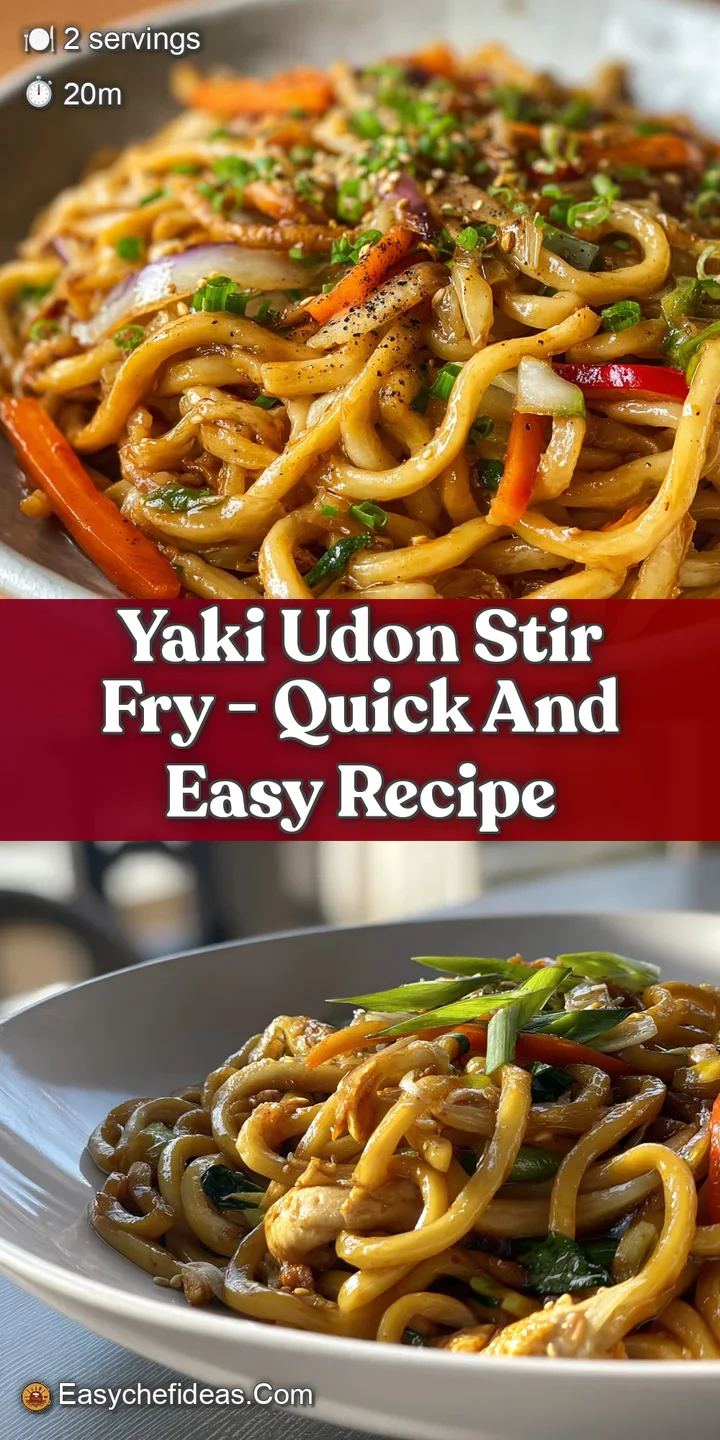
Very High in Sodium
1845 mg mg of sodium per serving (80% of daily value)
The American Heart Association recommends limiting sodium intake to about 2,300mg per day.
Tips to Reduce Sodium in Your Udon Noodle Dish
-
Reduce Soy Sauce-25%
Soy sauce is a major contributor to the sodium content. Reduce both dark and light soy sauce by 50% or substitute with low-sodium soy sauce or tamari to significantly lower the sodium levels.
-
Limit Oyster Sauce-20%
Oyster sauce is very high in sodium. Reduce the amount used by half, or substitute with a homemade sauce made with mushroom broth and a touch of molasses for a similar umami flavor.
-
Skip Dashi Powder-15%
Dashi powder often contains added sodium. Eliminate it entirely and enhance the broth with fresh shiitake mushrooms and a longer simmering time to extract their natural flavors.
-
Unprocessed Chicken-10%
Ensure the chicken breast is fresh and unprocessed, as some pre-cut or marinated chicken can have added sodium.
-
Choose Noodles Wisely-10%
Check the sodium content of your frozen udon noodles. If possible, select a low-sodium brand or rinse the noodles after cooking to remove excess sodium.
-
Flavor with Herbs & Spices
Enhance the flavor with fresh herbs and spices like ginger, garlic, and chili flakes to compensate for the reduced sodium. Experiment with different combinations to find your favorite flavor profile.
Recipe FAQs
Can I use shelf stable, pre-cooked udon instead of frozen?
Yes, but blanch them briefly first. Shelf stable udon often needs a quick 30-second dip in boiling water to relax the starch before stir frying; otherwise, they can become stiff.
How much heat should I use when stir frying the noodles?
Use the highest heat possible once the noodles are added. This high temperature flash fries the sauce onto the noodles, creating the desired charred exterior without overcooking the center, a technique central to achieving that authentic chew.
What is the best substitute for oyster sauce if I want to keep it vegetarian?
Use a high-quality vegetarian mushroom stir fry sauce. This substitute provides the necessary savory depth and viscosity; if you enjoyed mastering the flavor balancing technique here, see how we apply similar principles in our Roasted Brussels Sprouts recipe.
Is it true that you must use a wok to achieve authentic "wok hei" flavor?
No, this is a common misconception. While a wok is ideal, you can achieve a similar result using a heavy cast iron or stainless steel skillet by ensuring it’s screaming hot and not overcrowding the pan.
How do I prevent the cabbage from becoming soggy and watery in the pan?
Add the cabbage near the end and cook it quickly over high heat. The goal is to wilt it just enough so it releases minimal moisture while retaining a satisfying crunch.
What is the purpose of adding dashi powder directly to the sauce?
It amplifies the umami flavor immediately upon contact with heat. Dashi powder contains concentrated glutamates that bloom instantly when heated, making the entire dish taste richer and more savory, similar to how we concentrate flavors in our Chicken Teriyaki recipe.
Should I boil the udon noodles before adding them to the stir fry?
No, only thaw them briefly. Since frozen udon is pre-cooked, you should only soak them in hot water for about two minutes until they separate; over boiling removes the necessary chewiness (koshi).
Easy Yaki Udon Stir Fry
Ingredients:
Instructions:
Nutrition Facts:
| Calories | 598 kcal |
|---|---|
| Protein | 43.4 g |
| Fat | 10.6 g |
| Carbs | 74.5 g |
| Fiber | 4.8 g |
| Sugar | 8.2 g |
| Sodium | 1845 mg |
