Sunshine in a Scoop Effortless Rich Mango Gelato
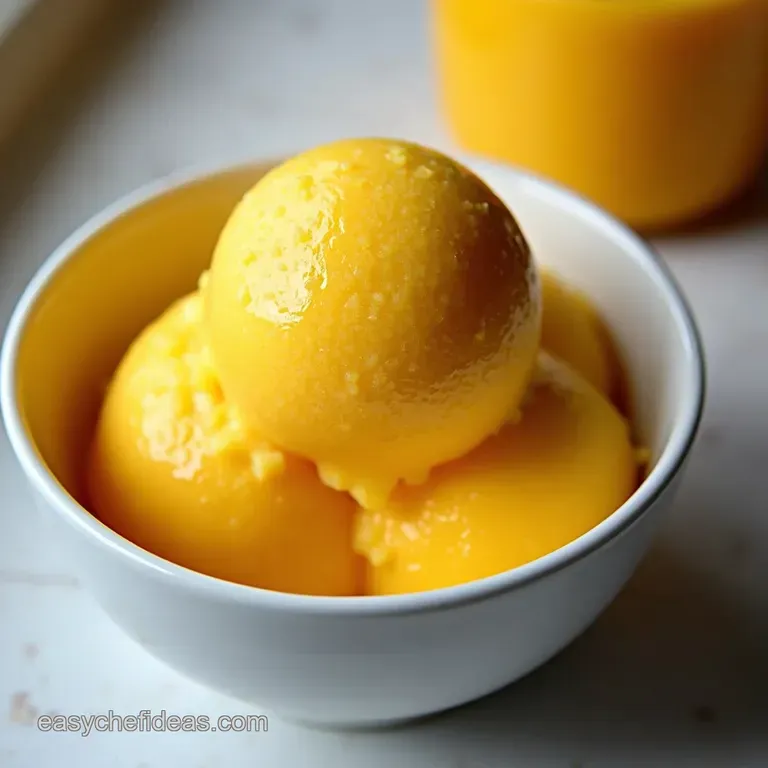
- Why This Homemade Mango Gelato Will Revolutionize Your Dessert Game
- Chasing Creaminess: The Science Behind True Italian Texture
- Sourcing Perfection: What Goes Into Superior Mango Gelato
- Crafting the Base: Blending Your Way to Flavor
- Churning Secrets for Restaurant-Quality Results
- Troubleshooting and Advanced Techniques for Artisanal Results
- Maximizing Enjoyment: Serving and Storage Insights
- Frequently Asked Questions
- 📝 Recipe Card
Why This Homemade Mango Gelato Will Revolutionize Your Dessert Game
There are frozen desserts, and then there is gelato . If you’ve ever been transported back to a sun-drenched Italian piazza simply by the texture of a perfectly scooped dessert, you know the difference: less air, richer flavour, and a melt-in-your mouth silkiness that ice cream rarely achieves.
Our Mango Gelato recipe is designed not just to replicate that experience but to enhance it using the unparalleled sweetness of peak season tropical fruit. Forget laborious, egg-heavy custards; this approach focuses on purity, making the Creamy Gelato Recipe accessible even to beginner cooks.
We are aiming for that bright, sunny taste that defines a perfect summer day, captured in a wonderfully dense, luscious frozen form.
Chasing Creaminess: The Science Behind True Italian Texture
The magic of true gelato lies in its density and temperature. Traditionally, gelato is churned slower than ice cream, incorporating less air (lower overrun). This results in a product that is denser and delivers a more immediate and intense flavour impact upon hitting your palate.
Achieving this level of smoothness in your Homemade Gelato hinges on managing water content and fat balance precisely.
Ditching the Ice Crystals for Silky Smooth Bliss
The primary enemy of great frozen dessert is the dreaded ice crystal. Large crystals mean a gritty, hard texture. Our Simple Gelato Recipe tackles this by using a high concentration of dissolved solids sugar, milk solids, and fruit which naturally interfere with the water’s ability to freeze into large structures.
By using a rich dairy component balanced against a high volume of fruit purée, we ensure that even when fully hardened, this dessert remains easy to scoop and melts beautifully without becoming watery.
This focus on density is what separates a good frozen treat from truly exceptional Mango Gelato Homemade .
The Tropical Secret: Why Alphonso Mangoes Matter
You cannot make transcendent Mango Gelato without transcendent mangoes. While any sweet, ripe mango will suffice, if you have access to Alphonso or Kent varieties, use them. These types are prized for their deep orange flesh, low fibre content, and intense, honeyed sweetness.
Because this recipe intentionally minimizes added sugar to let the fruit dominate, the quality of your raw ingredient is paramount. The vibrancy you taste is a direct reflection of the fruit’s natural sugars and oils.
Zero Eggs, Maximum Flavor Impact
Many traditional dessert bases rely on egg yolks for emulsification and richness. While delicious, egg tempering can intimidate home cooks. This particular Easy Gelato Recipe achieves remarkable creaminess by utilizing a cooked simple syrup base combined with ample heavy cream and whole milk.
This combination provides the necessary milk fat and sugar structure to yield a velvety texture comparable to a custard base, but without any of the complexity. This allows us to focus entirely on How To Make Mango Gelato that tastes purely of sun-ripened fruit.
Sourcing Perfection: What Goes Into Superior Mango Gelato
To craft a dessert worthy of its Italian inspiration, every component must be chosen with intention. Since we are aiming for a vibrant, non-custard base, the interplay between the fruit, the sugar, and the dairy dictates the final success of your Mango Gelato Recipe .
The Core Trio: Mango, Dairy, and Sweetener Breakdown
For the fruit component, plan on using about four large, very ripe mangoes to yield roughly three cups of purée. To balance this sweetness and brighten the tropical notes, a tablespoon of fresh lime juice is crucial; it cuts through the richness beautifully.
The dairy blend requires one cup each of whole milk and heavy cream. Using full fat milk is non-negotiable, as the fat content directly translates to a softer mouthfeel. Sweetness is achieved by dissolving 200g (1 cup) of granulated sugar into 120ml (1/2 cup) of water to create a smooth simple syrup.
This method ensures the sugar is fully integrated before chilling, preventing grainy spots in your final product. A tiny pinch of salt acts as a flavour amplifier for the mango.
Essential Equipment for Achieving Gelato Glory
While this is an Easy Gelato Recipe , it does require specialized machinery. A high powered blender is needed to achieve a completely lump free mango purée a critical step for achieving a seamless texture. Most importantly, you will need an ice cream maker (churner).
Whether it’s a compressor model or one requiring a pre-frozen bowl, the churning process is necessary to incorporate the right amount of air and freeze the mixture to that perfect soft serve consistency.
Enhancing the Tropical Notes: Optional Flavor Boosters
While this recipe emphasizes pure mango, you can subtly enhance the profile. A small splash of high-quality vanilla extract added to the dairy mix deepens the overall sweetness perception.
For those who enjoy a hint of spice, a quarter teaspoon of freshly grated nutmeg or a half teaspoon of ground cardamom stirred into the warm simple syrup before cooling adds an aromatic complexity that pairs wonderfully with mango.
Related Recipes Worth Trying
- Easy NoChurn Mango Ice Cream Recipe Taste of the Tropics — Skip the machine and make this foolproof Homemade Mango Ice Cream Its intensely fruity unbelievably creamy and a perfect 4ingredient Mango Ice Cream Recipe
- The Ultimate Creamy Homemade Mango Ice Cream Recipe — Make the most lush Homemade Mango Ice Cream using a classic custard base for velvety texture This easy mango ice cream recipe is sunshine in a tub
- Foolproof Creamy Mango Ice Cream Recipe No Custard Needed — Make the best homemade mango ice cream without a machine This easy recipe delivers unbelievably creamy mango ice cream with just 4 ingredients Perfect for...
Crafting the Base: Blending Your Way to Flavor

The process begins by isolating the fruit flavour. Thoroughly blend your peeled and chopped ripe mangoes with the lime juice until the mixture is utterly smooth. If you notice any fibrous strands, run this purée through a fine mesh sieve; this step is what truly elevates the texture to artisanal levels.
Next, prepare your simple syrup by gently heating the sugar and water until every crystal is dissolved no need to boil aggressively, just ensure clarity. Once dissolved, immediately whisk this warm syrup into your cold milk and heavy cream, stirring until everything is homogenous.
Finally, gently fold the mango purée into the chilled dairy mixture. The result is your vibrant, ready-to-chill Mango Gelato base.
Churning Secrets for Restaurant Quality Results
The time spent before churning is often more important than the churning itself. Patience here guarantees success.
Preparing the Mango Puree Base Perfectly
After combining the fruit and dairy, you must achieve a foundational chill. This base mixture must reach refrigerator temperature (around 40° F or 4° C) before it even considers entering the churning machine.
Any residual warmth will result in soft serve that takes too long to freeze, leading to larger ice crystals. We recommend a minimum of four hours, but planning this dessert a day ahead, allowing the base to rest overnight, is the pathway to the creamiest possible outcome.
Chilling Protocol: The Non-Negotiable Pre-Churn Rest
This resting period is vital for hydration and flavour melding. During this time, the milk proteins and sugars fully integrate, allowing the base to freeze more efficiently when agitated.
On top of that,, if you plan on attempting a Vegan Mango Gelato version using coconut cream, this rest period is even more critical for ensuring the coconut fat stabilizes correctly within the mixture.
Running Your Machine: Optimal Churn Settings
Ensure your ice cream maker bowl is frozen rock solid (if applicable) or that your machine is pre-chilled according to its manual. Pour the deeply chilled base into the running machine. Churning typically takes 20 to 30 minutes.
You are looking for a consistency that mimics thick, spoonable soft serve it should cling firmly to the sides of the dasher. If you are using a specific appliance like the Mango Gelato Ninja Creami , follow its specific freezing and re-spinning protocol, but generally, the initial freezing stage mimics the long chill time described above.
Do not over churn; the gelato will harden further later.
The Final Freeze: Hardening Your Freshly Made Mango Gelato
Once the churning is complete, immediately transfer the soft product into an airtight, freezer safe container. To combat the formation of surface ice crystals during hardening, press a layer of plastic wrap or parchment paper directly onto the surface of the gelato before sealing the lid.
This prevents moisture loss and condensation buildup. Place this container in the coldest part of your freezer for a minimum of two hours to allow it to firm up to a scoopable texture.
Troubleshooting and Advanced Techniques for Artisanal Results
Even with the best intentions, sometimes the texture isn't quite right. If your Mango Gelato Homemade turns out too icy, it generally means one of two things: either the base wasn't cold enough before churning, or you didn't have enough dissolved solids (sugar/fat) to interfere with the freezing water.
To fix an overly hard batch, see the serving suggestions below. For advanced texture control, consider adding a small amount (one teaspoon) of glucose syrup or corn syrup alongside the granulated sugar in the base mixture; these invert sugars are phenomenal at maintaining softness straight from the freezer.
Maximizing Enjoyment: Serving and Storage Insights
Gelato, by its nature, is served slightly warmer than standard ice cream, which is why that initial 5-10 minute temper on the counter is essential. This slight warming unlocks the full flavour profile and returns the product to its intended silky texture.
Flavor Twists: Unexpected Pairings for Your Next Batch
To experiment beyond the basic Mango Gelato Recipe , try folding in additions during the last two minutes of churning. A handful of finely chopped candied ginger adds a surprising warmth.
Alternatively, a drizzle of high-quality balsamic glaze swirled in just before the final freeze offers a complex, tangy counterpoint to the sweet fruit.
Shelf Life Secrets: Keeping Your Gelato Fresh
When stored properly in a sealed container with plastic wrap pressed against the surface, this Homemade Gelato will maintain excellent quality for up to three weeks. After that, while it remains safe to eat, the flavour may begin to dull slightly as volatile aromatics escape.
Quick Fixes for Gelato That's Too Hard or Too Soft
If your Mango Gelato freezes rock solid overnight, do not attempt to blast it with heat! Instead, simply let it sit on the counter for 10 to 15 minutes, depending on your kitchen temperature.
If, unexpectedly, the churned product is too soft after the standard hardening time, it might be due to a slightly warmer freezer setting or the addition of alcohol in a variation. In this case, return it to the freezer for another hour, ensuring the plastic wrap is tightly sealed.
Frequently Asked Questions
My homemade Mango Gelato came out icy rather than creamy. What did I do wrong?
That's a common pitfall, usually down to two things: chilling or sugar content. The base mix must be bone chillingly cold before churning ideally overnight or it won't freeze smoothly.
Secondly, ensure your sugar ratio is correct, as sugar acts as an antifreeze; without enough, you'll get ice crystals, not that lovely, smooth texture.
Can I make this delicious Mango Gelato recipe without an ice cream machine?
Technically, you can freeze it, but it won't achieve that authentic, silky gelato texture. If you must proceed without a churner, freeze the mixture in a shallow dish and whisk it vigorously every 30 minutes for the first three hours.
This manual agitation breaks up the ice crystals, though it’s still not as good as the machine's aeration.
Which type of mangoes work best for the most authentic flavour?
If you can get your hands on them, Alphonso mangoes are the absolute gold standard they’re intensely sweet and buttery, just like the ones you’d find on holiday in Goa! If those are hard to source, look for very ripe Ataulfo (sometimes called Honey) or Kent varieties.
The fruit must be perfectly ripe; under ripe mangoes will taste sour and watery in the final product.
How long can I store this Mango Gelato in the freezer before the texture goes downhill?
For the best quality, aim to eat it within two weeks. Always use an airtight container and press plastic wrap directly onto the surface before sealing the lid; this prevents freezer burn and ice buildup.
Gelato tends to harden up like a brick when stored too long, but a 10-minute sit on the counter usually brings it back to scoopable perfection.
I want to make this dairy-free. What’s the best substitution for the milk and cream?
For a brilliant dairy-free alternative that keeps the richness, use full fat coconut cream, ensuring you use the thick, solidified cream from the top of the can rather than the watery part underneath. This mimics the fat content of heavy cream quite well.
Remember to taste as you go, as coconut cream can sometimes add its own flavour profile.
Easy Eggless Mango Gelato

Ingredients:
Instructions:
Nutrition Facts:
| Calories | 3006 kcal |
|---|---|
| Protein | 33.7 g |
| Fat | 63.9 g |
| Carbs | 178.1 g |
| Fiber | 8.7 g |
| Sodium | 2175 mg |
