Seoul Sizzler the Doublefried Crispy Korean Chicken with Sticky Gochujang Glaze
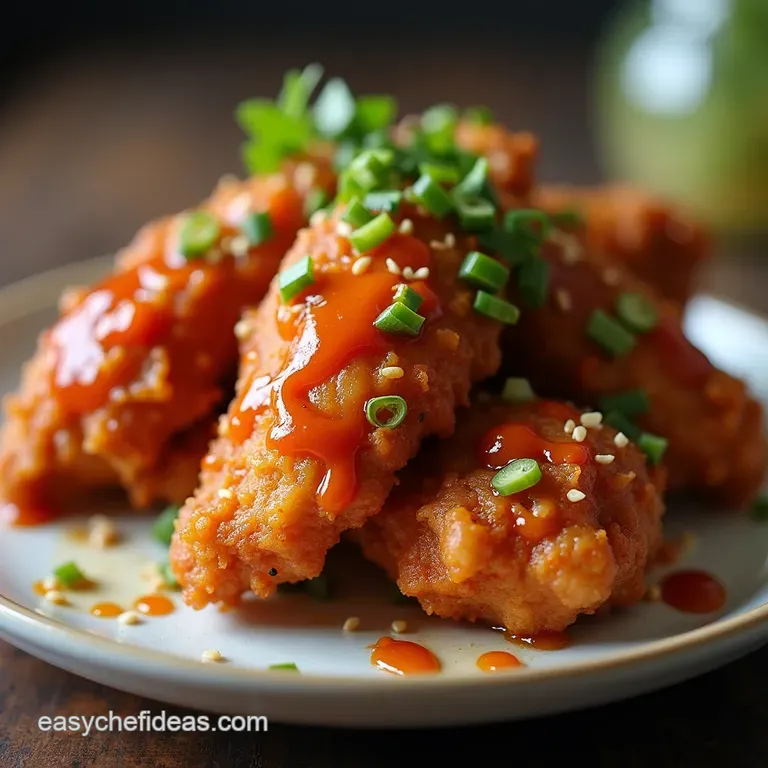
- Unlocking the Secret to World-Famous Texture: Why Double-Frying Reigns Supreme
- Beyond the Takeout: Understanding Authentic Korean Chikin Mastery
- Assembling Your Korean Kitchen Arsenal: Essential Components
- Phase One: Preparing the Chicken for Maximum Crunch Absorption
- The Double-Fry Dance: Mastering Temperature for Flawless Results
- Glazing Techniques: Ensuring Even Coating Without Soggy Spots
- Elevating Your Feast: Suggested Pairings and Side Dishes
- Troubleshooting and Long-Term Success for Your Fried Chicken
- Recipe FAQs
- 📝 Recipe Card
Unlocking the Secret to World Famous Texture: Why Double Frying Reigns Supreme
The quest for the perfect piece of poultry ends here. If you’ve ever wondered how the legendary Korean Fried Chicken or Chikin —maintains that stunning, almost weightless crunch that defies sogginess, the answer lies in a simple but crucial technique: the double fry method.
This process isn't just an added step; it’s the architectural foundation of this dish. Think of the first fry as cooking the interior and setting the structure of the crust, followed by the second, hotter fry which drives out any residual moisture, resulting in a shatteringly thin, golden exterior.
This dedication to texture is what separates truly authentic Crispy Korean Fried Chicken from standard fried fare.
Beyond the Takeout: Understanding Authentic Korean Chikin Mastery
When you sit down to create this dish, you are aiming for something significantly different from Southern style fried chicken. Authentic Korean Chikin emphasizes a lighter, thinner coating.
While many associate the dish with massive, heavily breaded pieces, the true magic often lies in coatings that adhere thinly to the meat, allowing the flavour of the marinade and the glaze to truly shine through.
This entire process from the careful preparation of the poultry to the final glaze toss is designed to deliver an experience that is simultaneously light and incredibly satisfying.
Whether you're making Crispy Korean Fried Chicken wings or boneless thighs, this mastery transforms simple ingredients.
The Impossibly Thin Crust: Our Technique Explained
The key to that delicate, almost lacquered crust relies heavily on the starch used in the coating. Unlike many Western recipes that rely heavily on wheat flour for bulk, our approach leans heavily on potato starch. This single ingredient prevents the batter from becoming heavy or doughy.
When combined with ice-cold water, it creates a thin slurry that crisps up beautifully during the initial cook. This technique ensures that the resulting crust is airy and brittle, rather than thick and bready.
Flavor Profile Deep Dive: Sweet, Spicy, and Savory Harmony
The profile of this iconic dish is a masterclass in balance. It marries savory depth from the marinade with a glaze that sings with a symphony of sweetness, tang, and controlled heat. The backbone of this flavour punch is gochujang (Korean chilli paste), which provides depth beyond mere heat.
When this glaze adheres to the ultra crisp crust, you get a flavour combination that is both complex and incredibly moreish this is what elevates a simple plate of fried chicken into the Korean Fried Chicken recipe sticky sweet spicy benchmark.
What Makes This Recipe the Definitive Guide to Crispy Korean Fried Chicken?
This comprehensive guide distills the necessary technical knowledge specifically the precise temperature staging required for the double fry and pairs it with simple, flavour forward components. We provide clear guidelines on starch ratios, marinade resting times, and achieving that perfect glaze viscosity.
Whether you plan to serve this layered creation in a classic platter or build an extraordinary Korean Fried Chicken sandwich or Crispy Korean Fried Chicken burger , the foundation provided here ensures textural success every time.
Assembling Your Korean Kitchen Arsenal: Essential Components
Success in this arena demands the right tools and ingredients, particularly concerning the coating and the finishing sauce. Getting your prep correct before the oil even heats up is crucial, as the frying process moves quickly once started.
Having all components measured and ready ensures smooth execution, especially when dealing with hot oil.
The Perfect Batter Blueprint: From Starch to Shatter
The Crispy Korean Fried Chicken batter is intentionally thin and runny. We rely on a mix where potato starch dominates the all-purpose flour. The inclusion of baking powder acts as a small lift agent, but the primary goal is a thin coating that seals the moisture in without adding weight.
Using ice-cold water shocks the starches upon hitting the hot oil, contributing directly to the final crunch factor.
Procuring the Right Poultry and Marinade Fundamentals
For the best results, use chicken wings or boneless thighs cut into manageable, uniform pieces. Uniformity ensures even cooking. The marinade is designed to be subtle but effective, relying on standard pantry staples like soy sauce, fresh ginger, and garlic.
This step is critical because it seasons the meat deep within, contrasting beautifully with the punchy glaze applied later.
Crafting the Sticky Gochujang Glaze: Sauce Component Checklist
The glaze is where the iconic Yangnyeom flavour profile truly emerges. You will need your gochujang , balanced perfectly with honey or corn syrup for viscosity, soy sauce for saltiness, and a touch of rice vinegar for necessary brightness.
Everything is combined and briefly simmered until syrupy. This sauce must be ready to toss immediately after the second fry.
Essential Tools for Achieving Peak Crispness
You cannot effectively execute this recipe without a dedicated thermometer. A deep fry or candy thermometer is non-negotiable for monitoring the two distinct oil temperatures required for the double fry process.
Plus,, a heavy bottomed pot like a Dutch oven is ideal for maintaining stable oil temperature when batches of chicken are introduced. Finally, ensure you have a wire rack set over a baking sheet ready for immediate draining.
Phase One: Preparing the Chicken for Maximum Crunch Absorption
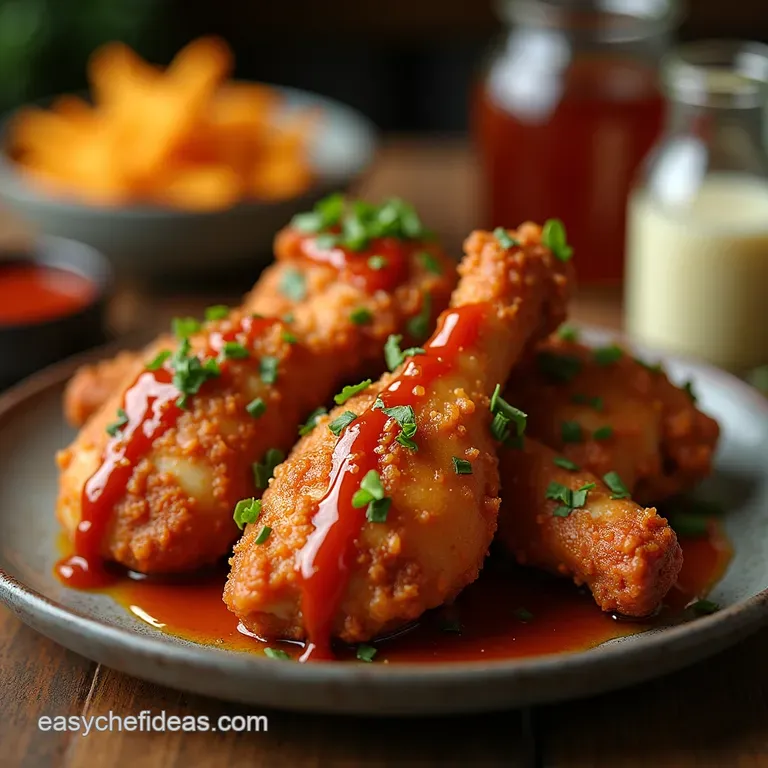
Before any frying takes place, the chicken must be marinated. Combine your chicken pieces with the soy sauce, grated ginger, minced garlic, and black pepper. This low-and-slow flavour infusion is necessary for internal seasoning.
After mixing thoroughly, the chicken must chill for a minimum of one hour, though an overnight rest yields superior results. Resting allows the salt and aromatics to permeate the muscle fibers, ensuring that even the meat itself is flavourful, not just the coating.
Related Recipes Worth Trying
- Seoul Sensation Ultimate DoubleFried Crispy Yangnyeom Korean Chicken — Achieve that famous shatteringly crisp texture with our foolproof doublefry method for the best Crispy Yangnyeom Korean Fried Chicken at home The sauce is...
- DoubleDipped Perfection The Ultimate Crispy Korean Fried Chicken Recipe — Achieve shatteringly crisp Korean Fried Chicken wings at home using the nonnegotiable doublefry technique This authentic Korean Fried Chicken recipe...
- The Best Southern Fried Okra Recipe Crispy Never Slimy — Learn how to make truly crispy Southern Fried Okra using cornmeal This easy deep fried okra recipe guarantees a perfect crunch every time Get the secrets
The Double Fry Dance: Mastering Temperature for Flawless Results
This two-stage frying process is the core technique that separates the merely good from the truly extraordinary. Temperature accuracy dictates whether your Crispy Korean Fried Chicken becomes greasy and heavy or light and airy.
Marinating Secrets: Infusing Flavor Before Frying
The marinade not only seasons but also slightly tenderizes the chicken surface. However, excess marinade dripping into the oil will cool it down rapidly and cause splattering. Before dredging, gently shake off any large pools of marinade from the chicken pieces.
The Crucial First Fry: Setting the Foundation for Crispiness
Begin by heating your neutral oil to the lower temperature: 325° F ( 160° C) . This temperature cooks the chicken through without burning the exterior. Working in small batches, dip the marinated pieces into the thin batter, allowing excess to drip off naturally.
Fry these pieces for approximately five to six minutes. They should emerge pale and cooked, but not deeply golden. Immediately remove them to the wire rack. The critical step here is the five minute rest period, allowing internal steam to escape, preparing the crust to accept maximum heat in the next stage.
The Second Fry: Achieving Golden Perfection and Optimal Texture
Once the chicken has rested, crank the oil temperature up to a much hotter 375° F ( 190° C) . Return the pieces to the oil in small batches. This second fry lasts only one to two minutes per batch.
The high heat instantly re-crisps the surface, driving off surface moisture left from the first fry and achieving that signature light, golden brown shatter. Remove them swiftly once golden and place them back on the rack to drain while you prepare to sauce them.
Glazing Techniques: Ensuring Even Coating Without Soggy Spots
The final stage demands speed. The ideal texture relies on the chicken being hot and the glaze being warm and slightly viscous.
In a small saucepan, combine the gochujang , soy sauce, rice vinegar, honey/syrup, brown sugar, minced garlic, and water. Bring this mixture to a gentle simmer over medium heat, stirring continuously until it thickens enough to lightly coat the back of a spoon.
This quick reduction concentrates the sugars and flavours.
Transfer the piping hot, twice fried chicken into a large, clean bowl. Pour the warm glaze over the top. You must toss rapidly and deliberately to ensure every piece receives a thin, even layer of the sticky coating. Serve instantly onto a platter, topped with toasted sesame seeds and fresh scallions.
Elevating Your Feast: Suggested Pairings and Side Dishes
While this Crispy Korean Fried Chicken stands proudly as the main event, the intensity of the flavour profile demands bright, cooling contrasts. A simple, crisp vinegar based Asian slaw provides the perfect acidic cut through the sweetness and richness of the fried coating.
Alternatively, quick pickled radishes or cucumbers offer a palate cleanser between bites. For a true Korean experience, serve alongside rice and perhaps a side of kimchi for extra tang.
Troubleshooting and Long Term Success for Your Fried Chicken
Even expert cooks run into hiccups. If your chicken feels greasy after frying, the oil temperature was likely too low during the first fry, meaning the crust absorbed oil instead of crisping up. If the glaze seems too thick, thin it slightly with a tablespoon of water while simmering.
Remember, this dish is best eaten immediately.
Storage Wisdom: Keeping Your Crispy Korean Fried Chicken Amazing
If you find yourself with leftovers, understand that the characteristic crispness diminishes rapidly. Store uneaten, unglazed chicken in an airtight container in the refrigerator for up to two days. To reheat, skip the microwave entirely it steams the crust.
Instead, spread the chicken on a wire rack set on a baking sheet and reheat in a 400° F ( 200° C) oven for 8– 10 minutes until the exterior is crisp again. Glazed pieces should be eaten the day they are made.
Alternative Glazes: Exploring Soy-Garlic and Honey Butter Variations
If the sweet and spicy profile isn't what you crave, the beauty of this double fried base is its versatility. You can easily substitute the spicy glaze with a Soy-Garlic reduction, substituting the Gochujang with equal parts soy sauce, mirin, minced ginger, and garlic simmered down until sticky.
Another wildly popular alternative is the Honey Butter glaze, which focuses on sweetness balanced with quality butter melted into a honey base.
The Science of Starch: Why Potato Starch is Non-Negotiable
To reiterate the importance of the coating: Potato starch is non-negotiable for achieving this specific texture. While rice flour can be substituted for part of the potato starch, the high starch content in potato flour gelatinizes rapidly when exposed to heat, forming that thin, durable, non-porous barrier that locks moisture in and guarantees maximum crunch.
It’s the scientific key to the world renowned texture of Crispy Korean Fried Chicken .
Recipe FAQs
Korean fried chicken Yangnyeom chikin Tteok bokki Bulgogi
To achieve that signature, shatteringly crisp crust on your Korean fried chicken, the secret lies in the double frying technique and the batter ingredients, utilizing potato starch for a delicate, non-greasy texture.
Ensure your oil temperature is carefully managed for both frying stages to lock in moisture while maximizing crunch. For the best results, marinate the chicken for at least one hour to deeply flavor the meat before dredging and frying.
Korean crispy fried chicken recipe
For that signature thin, shatteringly crisp crust, use a batter primarily composed of potato starch mixed with a little all-purpose flour; this combination yields minimal gluten development, which is key to the texture.
After the initial fry, let the chicken rest for at least 10 minutes before the second fry at a slightly higher temperature to ensure maximum crispness without absorbing excess oil.
Store leftover fried chicken uncovered in the refrigerator; reheating in a 400°F oven or air fryer is far superior to microwaving for reviving the crunch.
Korean fried chicken batter
For that signature shatteringly crisp crust, the secret lies in using potato starch or a mix of all-purpose flour and cornstarch for the batter, ensuring a light coating. Never overcrowd the fryer; cooking in small batches maintains the oil temperature crucial for crispness.
Store leftovers uncovered in the refrigerator for up to two days, briefly reheating in a hot oven (400°F/200°C) to restore the crunch.
Easy Korean fried chicken recipe
For that essential shatteringly crisp crust, utilize a batter heavily featuring potato starch; this starch is the secret to that delicate, non-greasy crunch in your Crispy Korean Fried Chicken.
Ensure your oil temperature is meticulously managed, frying once at a lower temperature (around 325°F/160°C) and then again at a higher temperature (around 375°F/190°C) just before serving to perfectly crisp the exterior.
Store leftovers uncovered in the refrigerator; reheating is best done in a hot oven or air fryer rather than a microwave to resurrect that glorious crispness.
Korean fried chicken recipe gochujang
For achieving that legendary shatteringly crisp crust on your Crispy Korean Fried Chicken, using a batter primarily based on potato starch is key, as it yields a lighter, more delicate crunch than wheat flour alone.
Ensure your oil temperature is carefully managed during the double fry process; the first fry cooks the chicken through at a lower temperature, and the second, hotter fry sets the final, perfect crispness.
Store leftover glazed chicken in the refrigerator for up to three days, though note the crust will soften slightly upon reheating.
Best Korean fried chicken recipe
For that shatteringly crisp texture central to excellent Crispy Korean Fried Chicken, a light batter relying on potato starch or cornstarch is key, avoiding heavy flour mixes. Always double fry: the first fry cooks the chicken through at a lower temperature, and the second, hotter fry crisps that crust perfectly.
Store cooled, unglazed leftovers in the refrigerator, reheating briefly in an oven or air fryer to restore crunch before saucing.
Doublefried Korean Chicken
Instructions:
Nutrition Facts:
| Calories | 600kcal |
|---|---|
| Fat | 40g |
| Fiber | 1g |
