Dense Bean Salad: Mediterranean Style
- Mastering a Truly Satisfying Dense Bean Salad
- Why This Flavor Layering Works
- Essential Metrics and Preparation Timing
- Selecting Quality Ingredients and Substitutes
- Tools for Efficient Salad Prep
- Assembly and Flavor Infusion Steps
- Solving Common Texture Issues
- Adapting for Different Dietary Needs
- Safe Storage and Quality Maintenance
- Creative Serving and Pairing Ideas
- Recipe FAQs
- 📝 Recipe Card
Mastering a Truly Satisfying Dense Bean Salad
The sharp, vinegary scent of red wine vinegar hitting the garlic always takes me back to my grandmother’s sun drenched kitchen. I remember the rhythmic thud thud thud of her knife against the wooden board as she diced peppers with a speed that defied her age.
She used to say that a salad wasn't just a side dish; it was a way to nourish the soul and bring the community together around a single bowl. That first bite where the creamy cannellini meets the sharp snap of a Persian cucumber is a sensory experience that stays with you long after the meal is over.
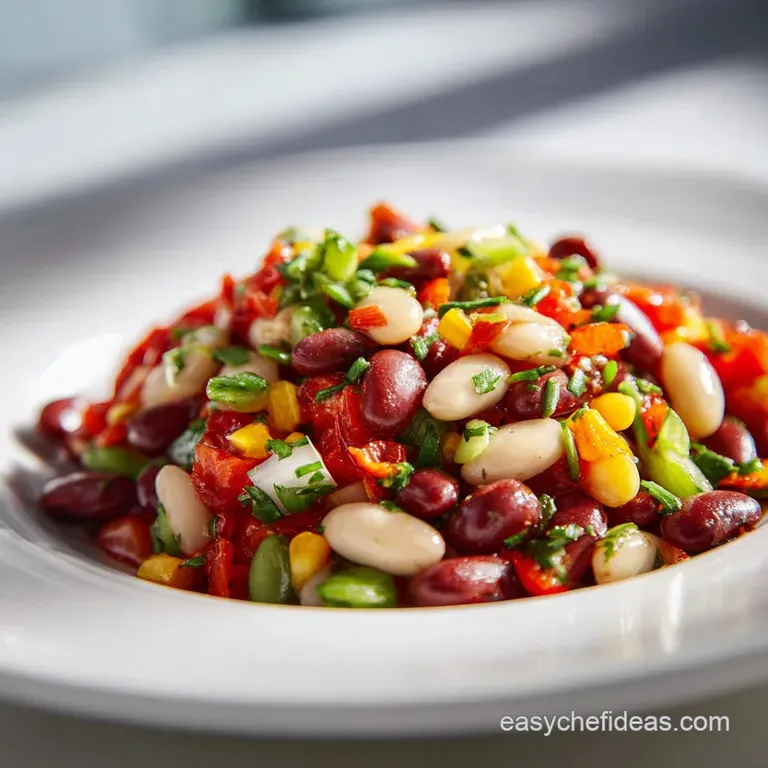
I used to think that a bean salad was just a sad, soggy afterthought at a barbecue, but this version changed everything for me. It’s all about the architecture of the bite. By layering textures from five different legumes and balancing them with the salty punch of feta and the concentrated sweetness of sun dried tomatoes, we create something substantial.
This isn't just a side; it's a meal prep hero that actually tastes better on day three because of the way the flavors marinate.
Why This Flavor Layering Works
- Osmotic Flavor Infusion: Salt and acid in the dressing draw moisture out of the vegetables while forcing the aromatics deep into the porous skins of the beans.
- Pectin Reinforcement: The acidity of the red wine vinegar reacts with the pectin in the bean skins, helping them maintain a firm, satisfying "pop" rather than turning to mush.
- Emulsion Stability: Using Dijon mustard acts as a bridge between the oil and vinegar, ensuring every bean is coated in a velvety film rather than sitting in a puddle of oil.
- Textural Contrast: Combining high starch legumes with high moisture aromatics like cucumbers prevents "palate fatigue" by varying the resistance of each bite.
| Preparation Style | Total Time | Texture Profile | Best For |
|---|---|---|---|
| Fast Assembly | 15 minutes | Sharp, bright, crunchy | Immediate lunch needs |
| Marinated Classic | 4 hours 20 mins | Deep, integrated, mellow | Potlucks and meal prep |
| Overnight Soak | 12 hours | Velvety, soft, earthy | Maximum flavor absorption |
When you choose the marinated approach, the red onion loses its aggressive bite and transforms into something much softer and sweeter. This is similar to the patience required when preparing our Mother In Laws recipe, where the vinaigrette needs time to truly sing. Taking that extra hour to let the components mingle makes a world of difference in the final depth of the dish.
Essential Metrics and Preparation Timing
| Component | Science Role | Pro Secret |
|---|---|---|
| Red Wine Vinegar | Protein Denaturation | Use a high-quality aged version for a smoother acid profile. |
| Chickpeas | Structural Foundation | These provide the most "shatter" and bite among the five beans. |
| Sun dried Tomatoes | Umami Concentration | Chopping them finely ensures their intense flavor reaches every forkful. |
| Extra Virgin Olive Oil | Flavor Carrier | The fat holds onto the oregano and garlic oils, coating the palate. |
The key to a successful Dense Bean Salad lies in the preparation of the legumes themselves. While canned beans are incredibly helpful, they require a thorough rinsing to remove the excess starch and metallic tang from the canning liquid.
This simple act ensures the dressing remains clear and vibrant rather than cloudy and thick.
Selecting Quality Ingredients and Substitutes
To make the best dense bean salad recipe, you need to focus on the variety of the legumes. Each one brings a different nutritional profile and mouthfeel to the table.
We use a combination of Chickpeas, Cannellini, Dark Red Kidney beans, Great Northern beans, and Black eyed peas to cover the full spectrum of texture and color.
- Chickpeas (1 can/15 oz): These provide a nutty flavor and a firm bite. Why this? They hold their shape better than any other bean during long marination.
- Substitute: Garbanzo beans (same thing) or lupini beans for a higher protein count.
- Cannellini Beans (1 can/15 oz): Known for their creamy, velvety interior. Why this? They provide a soft contrast to the crunchier vegetables.
- Substitute: Navy beans or butter beans (though butter beans are much larger).
- Dark Red Kidney Beans (1 can/15 oz): These add a bold color and a meaty texture. Why this? Their thick skins prevent them from breaking down in the dressing.
- Substitute: Light red kidney beans or pinto beans.
- Great Northern Beans (1 can/15 oz): Mild and delicate. Why this? They act as a flavor sponge for the Dijon based dressing.
- Substitute: Any small white bean will work perfectly here.
- Black eyed Peas (1 can/15 oz): These bring an earthy, almost smoky undertone. Why this? They add visual interest and a unique flavor profile to the mix.
- Substitute: Field peas or even green lentils if you want more texture.
- Persian Cucumbers (3 units): These have thinner skins and fewer seeds than English cucumbers. Why this? They stay crunchy for days without releasing too much water.
- Substitute: English cucumber, but scoop out the watery seeds first.
- Feta Cheese (60g): Adds a salty, tangy creaminess. Why this? It bridges the gap between the acidic dressing and the starchy beans.
- Substitute: Goat cheese for more tang or firm tofu for a vegan version.
Tools for Efficient Salad Prep
While this is an easy dense bean salad, having the right tools makes the process much more enjoyable. A sharp chef's knife is non negotiable for getting that fine mince on the red onion. If you find dicing tedious, a manual vegetable chopper can be a real time saver.
For the dressing, I always recommend a small glass jar with a tight fitting lid rather than a bowl and whisk; shaking the dressing creates a much tighter emulsion that won't separate as easily.
You will also need a large colander for rinsing the beans. I prefer stainless steel because it doesn't retain odors from the canning liquid. A massive mixing bowl larger than you think you need is essential for tossing everything together without spilling precious feta crumbles over the side.
If you are making this as a dense bean salad meal prep option, grab some glass airtight containers. Glass is superior to plastic here because the vinegar won't etch the surface over time.
Assembly and Flavor Infusion Steps
- Rinse the legumes. Empty all five cans into a large colander and spray with cold water until the water runs completely clear and foam free. Note: This removes excess sodium and that "canned" flavor.
- Drain thoroughly. Let the beans sit in the colander for 5 minutes, shaking occasionally. Note: Water is the enemy of a good dressing; it dilutes the flavor.
- Dice the aromatics. Finely mince the red onion and dice the bell peppers into 1cm squares. Note: Consistent sizing ensures you get every flavor in a single bite.
- Slice the cucumbers. Quarter the Persian cucumbers lengthwise and then slice into thick triangles. Look for a crisp, snapping sound as you cut.
- Chop the extras. Rough chop the sun dried tomatoes and the fresh flat leaf parsley.
- Create the emulsion. In a jar, combine 120ml olive oil, 60ml red wine vinegar, 15g Dijon mustard, grated garlic, oregano, salt, and pepper. Shake vigorously for 30 seconds until opaque and thick.
- Combine the base. Place the drained beans and all chopped vegetables into your largest mixing bowl.
- Add the creamy elements. Sprinkle in the 60g of crumbled feta and the chopped sun dried tomatoes.
- Dress the salad. Pour the velvety vinaigrette over the top and toss gently with a large spoon until every bean glistens.
- Chill and set. Cover and refrigerate for at least 30 minutes. Taste again before serving; you might need a tiny pinch more salt as the beans absorb the dressing.
Solving Common Texture Issues
The Salad Tastes "Flat" or Dull
This usually happens when the acidity is out of balance with the starch. Beans are incredibly heavy on the palate, and they require a surprising amount of salt and vinegar to "wake up." If it tastes boring, don't just add salt add a squeeze of fresh lemon or another teaspoon of vinegar.
The acid acts like a spotlight, highlighting the individual flavors of the peppers and herbs.
Excessive Liquid in the Bowl
If your salad is swimming in a puddle, it’s likely from the cucumbers or the beans weren't dried enough. To prevent this, always use Persian cucumbers which have lower water content.
If you are using standard cucumbers, salt them in a separate bowl for 10 minutes and drain the liquid before adding them to the salad. This keeps the dense bean salad dressing from becoming a watery soup.
| Problem | Root Cause | Solution |
|---|---|---|
| Soggy Vegetables | Excessive moisture in cucumbers | Use Persian cucumbers or de seed English varieties. |
| Bland Beans | Lack of marination time | Allow at least 1 hour for the beans to absorb the dressing. |
| Separated Dressing | Poor emulsion technique | Always include mustard; it acts as the chemical binder. |
Chef's Note: If you're in a rush, you can skip the marination, but I highly recommend dicing the onions even smaller so they distribute more evenly without overpowering the dish.
- ✓ Always rinse canned beans until the "bubbles" stop forming.
- ✓ Dry the beans with a clean kitchen towel for maximum dressing adhesion.
- ✓ Use flat leaf parsley instead of curly for a softer texture and better flavor.
- ✓ Grate the garlic into the dressing rather than mincing to avoid raw chunks.
Adapting for Different Dietary Needs
This healthy dense bean salad is naturally gluten-free and vegetarian, making it a fantastic option for diverse crowds. If you need a plant based version, simply omit the feta or swap it for a salty vegan alternative.
For a Mediterranean bean salad recipe twist, you could add kalamata olives or marinated artichoke hearts.
If you are looking for more protein, this salad acts as a perfect bed for grilled chicken or even the technique found in our Seared Tuna Salad recipe. The wasabi notes in that dish would actually play quite well with the earthy flavors of the black eyed peas. For those following a low FODMAP diet, you can omit the garlic and onion and use a garlic infused olive oil instead to keep the flavor profile intact without the digestive distress.
Safe Storage and Quality Maintenance
One of the reasons this is the best dense bean salad recipe for busy people is its longevity. Unlike leafy salads that wilt within hours, this dish thrives in the fridge. Store it in a glass airtight container for up to 5 days.
The beans will continue to soak up the dressing, so you may find that you want to add a tiny splash of vinegar or oil on day four to loosen things up.
For a zero waste approach, don't toss the liquid from the sun dried tomato jar! That oil is packed with concentrated tomato flavor and can be used as part of the 120ml of olive oil called for in the dressing.
Plus,, the liquid from the chickpeas (aquafaba) can be saved and used as a vegan egg substitute in baking or for making a light, airy chocolate mousse.
Creative Serving and Pairing Ideas
This salad is incredibly versatile. I love serving it as a main dish with a side of warm pita bread or crusty sourdough. The bread is perfect for mopping up the leftover dressing at the bottom of the bowl. If you want a more substantial meal, try serving it alongside our Cauliflower Gnocchi Recipe. The soft, pillowy gnocchi provides a wonderful textural contrast to the crunch of the salad.
- The Picnic Staple: Since there's no mayo, it's safe to sit out at room temperature for longer than a potato salad.
- The Power Bowl: Top it with a jammy 6 minute egg and a scoop of avocado for a lunch that will keep you full until dinner.
- The Taco Filler: Drain the excess liquid and use the beans as a fiber rich filling for vegetarian tacos, topped with a bit of lime and cilantro.
The beauty of this dish is how it encourages a sense of nourishment and community. It’s a large format recipe that invites people to scoop, share, and enjoy. Whether you're making it for a week of solo lunches or a big family gathering, it’s a testament to how simple, wholesome ingredients can be transformed into something truly special through the art of layering flavors.
Enjoy the process, and don't be afraid to make it your own!
Recipe FAQs
Are dense bean salads actually healthy?
Yes, they are excellent sources of fiber and plant protein. The density comes from the high legume content, which supports satiety and digestive health, making them much more robust than a typical green salad.
What is a dense bean salad?
A salad characterized by a high ratio of cooked beans to liquid/vegetables, often bound by a thick, oil-based vinaigrette. The "dense" nature refers to the substantial, hearty texture that allows it to be eaten as a satisfying main course rather than just a light side.
What is the Amish three bean salad?
It is a sweet and sour bean salad typically made with green beans, wax beans, and kidney beans in a vinegar sugar dressing. Our dense version differs because it uses a mix of five legumes and relies on savory/herbal notes instead of high sugar content for flavor balance.
Why is it called dense bean salad?
The name refers to the lack of leafy greens and the high concentration of starchy, structural beans. This robust composition results in a texture that resists wilting and offers significant bite resistance, unlike lighter, water filled salads.
How do I prevent my dense bean salad from tasting watery after marinating?
Drain all components thoroughly and allow them to sit for at least five minutes post rinse. Excess moisture dilutes the dressing, preventing the acid and salt from properly penetrating the beans; mastering this dehydration step is crucial for flavor concentration, similar to the initial steps in our Golden Standard Crispy recipe.
Can I make this salad ahead of time for meal prep?
Yes, it absolutely improves when made ahead of time, ideally 4 to 24 hours in advance. The longer the beans sit in the vinaigrette, the more the flavors marry and deepen, transforming the dish into something richer and smoother.
Is it true that rinsing canned beans eliminates all the sodium?
No, rinsing significantly reduces surface sodium but does not remove the sodium absorbed internally during canning. You should still account for the sodium content in your overall daily intake, although rinsing is vital to remove the starchy liquid that clouds the dressing.
Dense Bean Salad Recipe
Ingredients:
Instructions:
Nutrition Facts:
| Calories | 512 kcal |
|---|---|
| Protein | 18.6 g |
| Fat | 24.8 g |
| Carbs | 52.4 g |
| Fiber | 14.8 g |
| Sugar | 4.2 g |
| Sodium | 785 mg |
