Seoul Sensation the Ultimate Doublefried Crispy Yangnyeom Korean Chicken
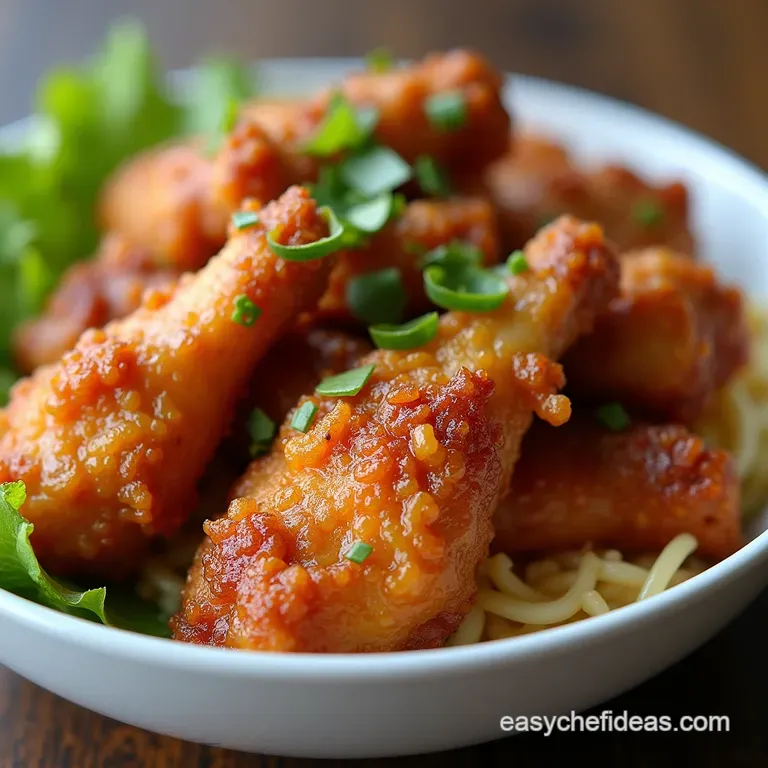
- Unveiling the Secret to Seoul's Signature Crunch
- Why This Double-Fry Method Redefines Korean Fried Chicken
- Essential Components for Next-Level Crispy Yangnyeom Korean Fried Chicken
- The Two-Stage Frying Technique for Unbeatable Crispness
- Constructing the Tangy, Spicy Yangnyeom Coating
- Troubleshooting and Storage Secrets for Leftover Glory
- Elevating Your Crispy Yangnyeom Korean Fried Chicken Experience
- Recipe FAQs
- 📝 Recipe Card
Unveiling the Secret to Seoul's Signature Crunch
There is a universal truth among food lovers: Korean Fried Chicken, or Chikin , is in a league of its own. It’s more than just fried poultry; it’s an engineering marvel of texture and flavour.
We aren't talking about a thick, doughy breading here; we are aiming for that hyper thin, shatteringly crisp exterior that maintains its integrity even when drenched in that signature sticky, complex glaze.
Crafting the perfect Crispy Yangnyeom Korean Fried Chicken requires precision, patience, and a deep understanding of frying dynamics. This recipe, which yields enough for 4 hungry diners as a main course, breaks down the science behind achieving that coveted crunch and balances it with the iconic sweet spicy tang of the Yangnyeom sauce.
It's a dish that demands respect, but rewards the diligent home cook tenfold.
Why This Double Fry Method Redefines Korean Fried Chicken
The absolute cornerstone of this entire preparation hinges on the double fry method . This technique is non-negotiable if you seek authenticity. The first fry cooks the chicken slowly, gently rendering fat and ensuring the meat inside is perfectly tender.
Then, we allow a brief resting period crucial for moisture redistribution before the second, aggressive fry at a much higher temperature. This second blast causes any remaining surface moisture to instantly vaporize, creating those tiny, brittle pockets that define the texture.
When executed correctly, the result is a crust that sings when you bite into it, offering a satisfying contrast to the sticky sauce coating.
The Anatomy of Perfect Yangnyeom Flavor Profile
Yangnyeom , meaning "seasoned," refers to the vibrant sauce that brings this dish to life. It’s a symphony played between contrasting notes: the deep, savoury warmth of Gochujang (Korean chili paste) provides the heat, which is expertly balanced by the sharp tang of rice vinegar and the deep sweetness derived from honey or maple syrup.
We layer in aromatics like fresh garlic and ginger, finishing with a drizzle of toasted sesame oil to provide an earthy, nutty aroma. This sauce adheres beautifully to the craggy surfaces of the double fried crust, creating a perfect synergy of texture and taste.
Setting Expectations: A Showstopper Dish
While the time commitment is around 1 hour 45 minutes total, factoring in the minimum one hour needed for marination, this is not a weeknight speed dinner. This is a weekend project, a culinary statement piece.
The difficulty level leans toward Medium, primarily because success hinges on temperature control during the frying stages. However, with a reliable thermometer and focused attention, anyone can master the technique required for true Crispy Yangnyeom Korean Fried Chicken .
Mastering the Iconic Exterior Texture
The texture itself starts long before the chicken hits the oil. We rely on a specific blend of starches rather than relying solely on flour. Potato starch is the powerhouse ingredient here; it gelatinizes differently than wheat flour, resulting in a lighter, less doughy, and significantly crispier coating that resists sogginess much longer.
We combine this powerhouse starch with a small amount of all-purpose flour and baking powder, then mix it with ice-cold water to form a thin, almost shaggy batter, designed to cling lightly to the protein.
Essential Components for Next Level Crispy Yangnyeom Korean Fried Chicken
To prepare for this flavour journey, gather your components carefully. We are using about 2 lbs (900g) of chicken wings or drumettes, cut into manageable pieces. These need a flavour infusion starting with a marinade combining grated fresh ginger, minced garlic, sea salt, black pepper, a tablespoon of low-sodium soy sauce, and a splash of sake or mirin to begin the tenderization process.
Allowing this to rest in the refrigerator for at least 60 minutes allows the seasonings to penetrate beyond the surface.
Curating the Perfect Glaze: Yangnyeom Sauce Components
The sauce components must be ready to go before the chicken finishes its second fry. For our signature glaze, we need a quarter cup each of Gochujang and honey (or maple syrup) to establish the base heat and sweetness.
Supplement this with 2 tablespoons of soy sauce for depth, 2 tablespoons of rice vinegar for that vital tang, two finely minced garlic cloves, a half teaspoon of grated ginger, and one tablespoon of packed brown sugar for complex sweetness.
The final, non-negotiable addition is a teaspoon of sesame oil, stirred in off the heat.
The Chicken Marinade: Building Deep Flavor Foundations
As noted, the marinade is the first layer of flavour. It’s critical that after marinating, the chicken is only briefly drained we want the surface slightly damp so the dry dredge adheres properly, but not swimming in excess liquid. This dampness is essential for building that protective, starchy shell.
Dry Dredging Agents for Maximum Shatter
The dry coating is a specific mixture of 1 cup of potato starch and a half cup of standard all-purpose flour, with 1 teaspoon of baking powder whisked in. After the marinade, the chicken is thoroughly coated in this dry mix, ensuring every crevice is covered.
Shake off any major excess before proceeding to the wet batter.
Tools of the Trade: Fryer Setup and Prep Gear
A heavy bottomed pot, like a Dutch oven, is ideal for maintaining stable oil temperature. Above all else, invest in a reliable deep fry thermometer; eyeballing the temperature of the oil is the fastest route to greasy, undercooked chicken.
Ensure you have a wire rack set over a baking sheet ready to receive the cooked pieces, allowing maximum airflow for draining excess oil immediately after removal from the heat.
Related Recipes Worth Trying
- DoubleDipped Perfection The Ultimate Crispy Korean Fried Chicken Recipe — Achieve shatteringly crisp Korean Fried Chicken wings at home using the nonnegotiable doublefry technique This authentic Korean Fried Chicken recipe...
- The Best Southern Fried Okra Recipe Crispy Never Slimy — Learn how to make truly crispy Southern Fried Okra using cornmeal This easy deep fried okra recipe guarantees a perfect crunch every time Get the secrets
- The Ultimate Crispy Southern Fried Okra Recipe No Slime — Master the art of perfect Southern Fried Okra This easy recipe guarantees a shatteringly crisp coating every time A musttry for your side dish rotation
The Two-Stage Frying Technique for Unbeatable Crispness

The choreography of the two-stage frying is what sets this chicken apart. Stage one is all about gentle cooking. Heat your 6 cups of frying oil canola, peanut, or vegetable work well to precisely 325° F ( 160° C) .
Introduce the battered chicken pieces in small batches; overcrowding will cause the oil temperature to plummet. Fry these for about 6 to 8 minutes until they are pale gold and cooked through (aiming for an internal temperature of 165° F/ 74° C).
Remove them and let them drain on the rack for a full 10 minutes. This rest allows the internal structure to firm up and the surface moisture to evaporate slightly.
Then, increase the oil temperature significantly to 375° F ( 190° C) for the second, crucial blast of heat, frying again for just 2 to 3 minutes until they reach a deep, glorious golden brown and achieve that signature brittle texture.
Constructing the Tangy, Spicy Yangnyeom Coating
Once the chicken is glistening and perfectly crisp from its second fry, we move swiftly to the coating phase. Speed is essential here, as the residual heat from the chicken will begin to soften the sauce immediately, so you want to work quickly to coat and serve.
Preparing the Chicken for Its Initial Oil Bath
After dredging in the dry mix, the chicken is quickly dipped into the thin, icy-cold water batter. This wet layer activates the starch and flour, creating those distinctive crunchy bubbles when it hits the heat. Ensure the batter layer is thin a thick layer leads to soggy results.
Executing the Crucial Second Fry Blast
This high heat second fry is your crispness insurance policy. It rapidly dries the exterior crust created in the first fry, locking in the crunch. Monitor the thermometer closely; you want that temperature spike to be immediate and consistent for those final 2 to 3 minutes.
Simmering the Glaze to Sticky Perfection
While the chicken rests between fries, the sauce must be prepared. Combine all Yangnyeom ingredients (except sesame oil) in a small saucepan. Bring this mixture to a gentle simmer for about 3 to 4 minutes, stirring constantly, until it visibly thickens slightly.
Remove it from the heat source and stir in the fragrant sesame oil immediately.
The Final Tossing: Ensuring Every Piece is Coated
Transfer the piping hot, double fried chicken into a large, clean mixing bowl. Drizzle about two-thirds of your prepared sauce over the top. Toss rapidly and decisively until every piece is lightly and evenly slicked with the glaze. Too much sauce, or too slow a toss, invites sogginess.
Serve without delay to experience the texture as intended.
Troubleshooting and Storage Secrets for Leftover Glory
The main challenge with Crispy Yangnyeom Korean Fried Chicken is moisture migration, especially once the sauce is applied. If your chicken seems undercooked after the first fry, resist the urge to crank up the heat; you risk burning the exterior before the inside cooks.
Instead, lower the heat slightly and extend the first fry by a minute or two. If your sauce seems too thin after simmering, continue to cook it down for an extra minute; it will thicken further as it cools slightly.
Keeping the Crunch Alive: Storage Solutions
If you anticipate leftovers, a critical decision must be made before saucing. Store the plain, double fried, unglazed chicken pieces in an airtight container in the refrigerator.
When reheating, the best method is to lay them on a wire rack over a baking sheet and bake them in a hot oven ( 400° F/ 200° C) for about 8– 10 minutes until the skin re-crisps. Only apply the sauce right before serving the leftovers.
Alternative Heat Levels: Adjusting the Spice Quotient
The heat comes predominantly from the Gochujang. To dial down the spice for a milder palate, reduce the Gochujang quantity by half and replace the missing volume with extra honey or a tablespoon of ketchup for body.
Conversely, for an intense experience, add a teaspoon of Gochugaru (Korean chili flakes) to the dry coating mixture to bake in underlying heat that complements the glaze.
Serving Suggestions Beyond the Basic Plate
While traditional pairings include crisp Kimchi, consider serving this decadent dish alongside palate cleansers. Quick pickled daikon radish (Danmuji) offers a sharp, vinegary snap that cuts beautifully through the richness of the fried chicken and the sweetness of the sauce.
A light, vinegar based slaw offers another textural counterpoint.
Nutritional Notes on This Indulgent Preparation
It is important to acknowledge that this preparation, due to the deep frying necessary for the signature crispness, is rich in fat and calories (estimated around 650 750 kcal per serving). The sodium content is also elevated due to the soy sauce and Gochujang used in both the marinade and the sauce.
Enjoying this masterpiece is best done in moderation, savouring every textural contrast and bold flavour note.
Elevating Your Crispy Yangnyeom Korean Fried Chicken Experience
To truly honour the legacy of Seoul’s street food vendors, garnish your finished plate generously. A final sprinkle of toasted white sesame seeds adds visual appeal and a subtle nutty aroma. A light dusting of finely chopped scallions also adds a fresh, oniony bite that contrasts nicely with the sticky glaze.
This preparation is an indulgence, a truly satisfying culinary adventure where crunch meets complex flavour, guaranteeing that your Crispy Yangnyeom Korean Fried Chicken will be the star of any gathering.

Recipe FAQs
Why is my Crispy Yangnyeom Korean Fried Chicken soggy and not shatteringly crisp like I see online?
The main culprit is often skipping the crucial double fry method! You must fry once at a lower temperature (around 325°F/160°C) to cook the chicken through, let it rest for 10 minutes, and then fry again quickly at a higher temperature (375°F/190°C) to drive out moisture and lock in that crunch.
Also, make sure you’re using potato starch in your coating mix!
Can I make the Yangnyeom sauce ahead of time, and how long does it last in the fridge?
Absolutely, making the sauce ahead is a cracking idea as it allows the flavours to meld nicely. You can certainly store it in an airtight container in the fridge for up to a week; just give it a gentle reheat on the hob before tossing, as it will thicken when chilled.
Remember to stir in that teaspoon of sesame oil right after you take it off the heat, not before!
I’m worried about the spice level of Gochujang; what’s a good substitution if I want less heat in my Yangnyeom?
If you find Gochujang a bit too fiery, you can tone it down by swapping half of the required amount for tomato paste or even sweet chilli sauce though the authentic flavour profile will shift slightly.
Alternatively, you can use a milder Gochujang variety or simply reduce the amount called for and add a touch more honey or brown sugar to compensate for the lost body.
Can I use chicken breasts or thighs instead of wings/drumettes for this recipe?
You can, but you’ll need to adjust the frying times significantly to avoid drying out the breast meat. If using boneless thigh or breast pieces, cut them into uniform 1 inch nuggets so they cook evenly.
Be extra vigilant during the first fry, checking the internal temperature to ensure they reach 165°F (74°C) without overdoing it before the second crisping fry.
What’s the best way to store leftovers of this crispy chicken, and can I reheat it to regain the crunch?
Honestly, Korean fried chicken is best eaten fresh it’s a bit like eating chips (fries) the next day! If you must store it, keep it in the fridge for no more than two days, ideally with a paper towel to absorb condensation.
To reheat, the oven or an air fryer is your best mate; avoid the microwave, which will guarantee sogginess. Set your oven to 400°F (200°C) for about 8 10 minutes until crisp again.
Crispy Yangnyeom Chicken

Instructions:
Nutrition Facts:
| Calories | 700kcal |
|---|---|
| Fat | 42g |
| Fiber | 2g |
