Roast Potatoes at 400 with Garlic and Herbs
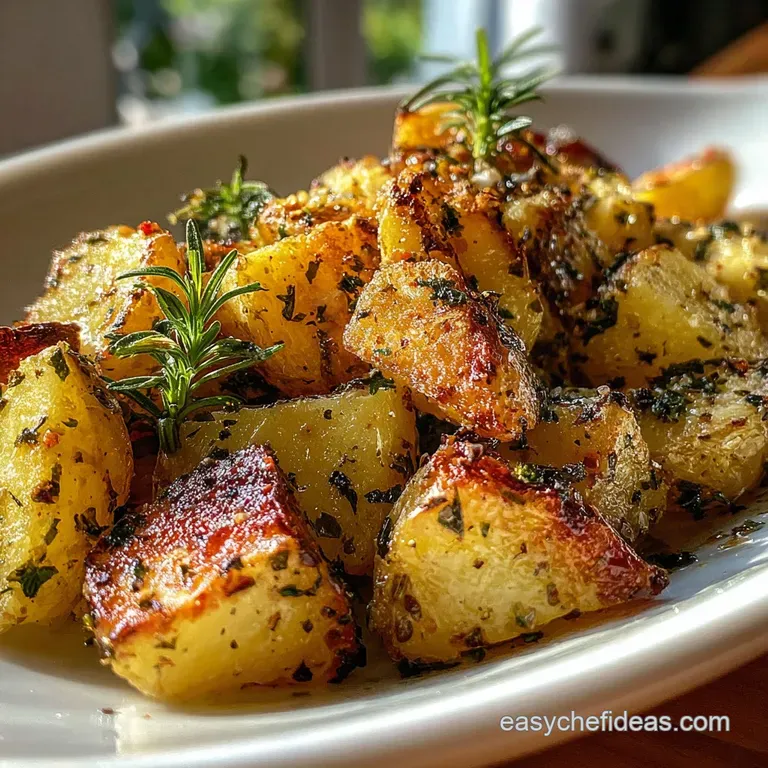
- Time: Active 15 minutes, Passive 45 minutes, Total 1 hour
- Flavor/Texture Hook: Shatter crisp exterior with a velvety, cloud like center
- Perfect for: Sunday roast, holiday gatherings, or a comforting family dinner
- Science Behind the Golden Crunch
- Vital Stats for Roasted Success
- Essential Herb and Potato Components
- Kitchen Tools for Shattering Skins
- Steps to Golden Potato Bliss
- Fixing Common Roasting Failures
- Creative Flavor and Diet Swaps
- Preserving and Refreshing Your Leftovers
- Community Favorites to Serve Alongside
- Recipe FAQs
- 📝 Recipe Card
Right then, let's talk about why we’re aiming for 400 degrees. It’s the sweet spot where the Maillard reaction that beautiful browning process happens fast enough to crisp the skin before the inside turns to mush.
We’ve all been there, staring through the oven glass, waiting for that golden hue to appear. This recipe isn't about rushing; it's about respecting the process of heat and salt.
We’re using Yukon Golds here because they offer a beautiful diversity in texture waxy enough to hold their shape but starchy enough to fluff up. When we toss them in that garlic infused oil, we're not just coating them; we're creating a layer of flavor that sinks into every nook and cranny.
Honestly, once you hear that first crunch, you’ll never go back to just tossing raw spuds in a pan.
Science Behind the Golden Crunch
The Physics of the Pectin Breakdown: Adding baking soda raises the pH of the water, which breaks down the potato's pectin more efficiently than plain water. This creates a starchy "fuzz" on the surface that, once roasted, dehydrates into a structurally sound, shattered crust.
- Alkaline Environment: This specifically weakens the cellular walls on the very outside of the potato chunk.
- Starch Gelatinization: Par boiling allows the starch to swell and burst, creating a thick paste.
- Surface Area Maximization: Roughing up the edges increases the space available for the oil to sit and fry the potato in the oven.
- Evaporative Cooling: Letting the steam escape after draining ensures the potatoes aren't holding excess internal moisture that leads to sogginess.
| Method | Total Time | Texture | Best For |
|---|---|---|---|
| Oven Roast | 60 mins | Shatter crisp shell, fluffy center | Large crowds, hands off cooking |
| Stovetop Pan Fry | 25 mins | Evenly browned, denser bite | Small portions, side dishes |
| Air Fryer | 35 mins | Very dry crisp, less oily | Health conscious, small batches |
When choosing your method, consider the ritual of the meal. The oven roast allows the aroma of rosemary and garlic to fill your home, building anticipation among your community. It’s a slower process that rewards patience with a depth of flavor that stovetop versions often lack.
Vital Stats for Roasted Success
To ensure your potatoes reach that legendary status, we need to focus on a few precision checkpoints. If you’re using a different variety of potato, the starch content will change how they react to the baking soda, so stick to Yukon Golds or Russets if you want that specific velvety to crunchy contrast.
| Component | Science Role | Pro Chef Secret |
|---|---|---|
| Baking Soda | Breaks down pectin | Don't skip this; it's the "crust catalyst" for the shatter effect. |
| Extra Virgin Olive Oil | Heat conductor and flavor | Use high-quality oil; it provides the rich, fatty mouthfeel we crave. |
| Yukon Gold Potatoes | Balanced starch/moisture | Their natural buttery flavor means you need less salt for impact. |
Chef's Tip: Freeze your minced garlic and rosemary in a little bit of the oil for 10 minutes before adding it to the roasting pan. This prevents the garlic from burning during the initial over high heat phase while still infusing the potatoes with a deep, earthy essence.
Essential Herb and Potato Components
Selecting your ingredients is an act of love for those you’re feeding. Look for potatoes that feel heavy for their size and have no green tint on the skin. This greening is a sign of solanine, which can be bitter and ruin the sweet, earthy profile we’re building.
- 3 lbs Yukon Gold or Russet potatoes: Why this? They provide the necessary starch for a thick, crispy crust.
- Substitute: Red potatoes (though they won't be as fluffy inside).
- 2 liters water: Why this? Enough volume to keep the potatoes submerged for even cooking.
- Substitute: Vegetable stock for a deeper savory note.
- 1 tbsp sea salt: Why this? Essential for seasoning the potato from the inside out.
- Substitute: Himalayan pink salt.
- 1/2 tsp baking soda: Why this? The key to breaking down the surface pectin.
- Substitute: None (this is purely for the chemical reaction).
- 1/3 cup extra virgin olive oil: Why this? Provides the fat needed for high temp roasting.
- Substitute: Beef tallow or duck fat for a richer, traditional flavor.
- 6 cloves garlic, minced: Why this? Provides the pungent, aromatic backbone.
- Substitute: 2 tsp garlic powder (add only in the last 5 minutes).
- 2 tbsp fresh rosemary, chopped: Why this? Adds a piney, woodsy aroma that defines the dish.
- Substitute: 1 tbsp Dried herbs for roast potatoes like thyme or oregano.
- 1 tsp kosher salt: Why this? For final seasoning and crunch.
- Substitute: Flaky sea salt (like Maldon).
- 1/2 tsp freshly cracked black pepper: Why this? Adds a subtle heat and floral note.
- Substitute: White pepper for a milder, more cohesive look.
Kitchen Tools for Shattering Skins
You don't need a professional kitchen to make these, but the right tray makes a massive difference. Avoid glass or ceramic dishes; they don't conduct heat quickly enough to get that immediate sizzle when the potatoes hit the pan. A heavy duty rimmed baking sheet is your best friend here.
- Large pot (4 quart or larger)
- Rimmed metal baking sheet (dark metal absorbs more heat)
- Colander for draining and shaking
- Large mixing bowl
- Chef's knife and cutting board
- Sturdy spatula for flipping
If you find your potatoes aren't getting that deep brown color, it might be your pan. I used to use a light colored aluminum sheet, but switching to a seasoned cast iron or a darker steel tray was a total change. It’s similar to the technique used in The Secret to recipe where heat distribution is everything for sugar caramelization.
Steps to Golden Potato Bliss
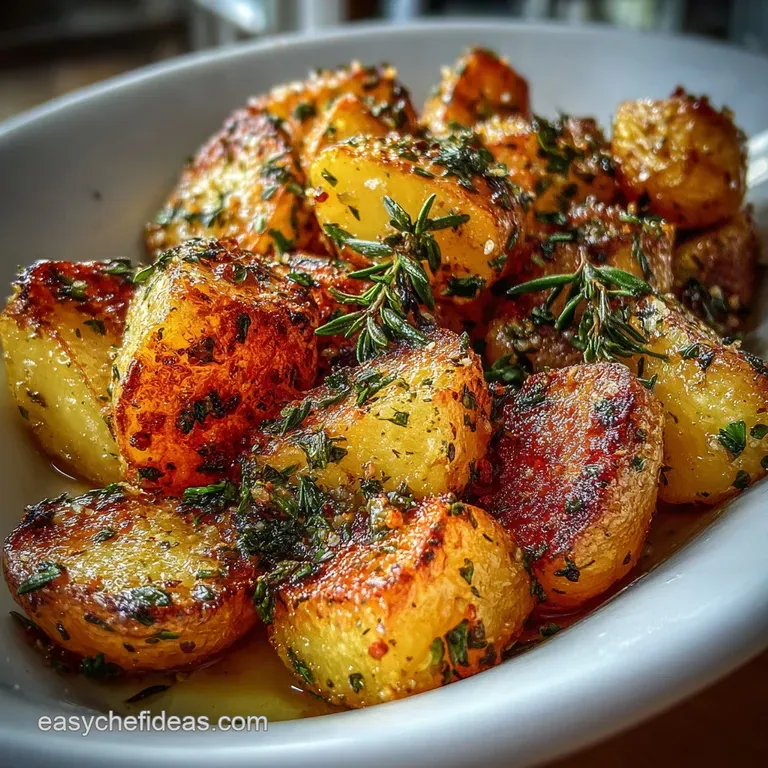
- Prep the spuds. Peel 3 lbs Yukon Gold potatoes and cut into roughly 1.5 inch chunks. Note: Uniform sizes ensure they all finish at the same time.
- Boil the water. Bring 2 liters water to a boil in a large pot with 1 tbsp sea salt and 1/2 tsp baking soda.
- Par boil. Add potatoes and cook for 8-10 minutes until the outsides are soft but the centers still have a bite.
- Drain and dry. Drain into a colander and let them sit for 2 minutes until the visible steam disappears.
- Rough them up. Return potatoes to the pot and shake vigorously until a thick layer of starchy paste forms on the edges.
- Infuse the oil. While potatoes dry, heat 1/3 cup olive oil in a small skillet with minced garlic and rosemary until fragrant but not browned.
- Coat the potatoes. Pour the infused oil (straining out the solids for now) over the potatoes in a bowl and toss with 1 tsp kosher salt and 1/2 tsp pepper.
- Initial Roast. Spread on a baking sheet and roast at 400°F for 20 minutes until the bottoms are deep golden and sizzle.
- The Flip. Use a spatula to turn the potatoes over, ensuring every side gets time against the hot metal.
- The Fragrant Finish. Add the reserved garlic and rosemary bits to the tray and roast for another 20-25 minutes until they reach a dark, amber shatter crisp.
Fixing Common Roasting Failures
We’ve all had those days where the potatoes just refuse to cooperate. Usually, it comes down to moisture management or overcrowding. If you crowd the pan, the steam escaping from the potatoes can't evaporate, so they end up boiling in their own juices instead of roasting.
Why Your Potatoes Stay Soft
If your potatoes are tender but pale and soft, you likely didn't "rough them up" enough or the oven temperature wasn't consistent. Without those frayed edges, there’s no place for the oil to create that crust.
Also, ensure your oven is fully preheated don't trust the little beep; give it an extra 10 minutes.
| Problem | Root Cause | Solution |
|---|---|---|
| Soggy centers | Potatoes were overboiled | Reduce par boil time to 8 mins; ensure they are dry before oiling. |
| Burnt garlic | Garlic added too early | Strain garlic from oil, roast potatoes, then add garlic in final 10 mins. |
| Sticking to pan | Not enough oil or pan too cold | Preheat the baking sheet with the oil before adding the potatoes. |
Common Mistakes Checklist
- ✓ Never skip the baking soda; it is the fundamental "why" behind the texture.
- ✓ Don't overcrowd the tray; use two pans if needed to allow airflow.
- ✓ Let the potatoes steam dry after boiling; moisture is the enemy of the crunch.
- ✓ Use a metal spatula to flip so you don't tear that precious crust off the pan.
- ✓ Always use fresh herbs; dried ones can become acrid and bitter at 400 degrees.
Creative Flavor and Diet Swaps
While the garlic and rosemary combo is a classic that nourishes the spirit, you can easily adapt this for different global cuisines. I once tried this with smoked paprika and cumin for a "patatas bravas" vibe, and it was a massive hit at our neighborhood block party.
- The "Parmesan" Crust: Toss the par boiled potatoes in 1/4 cup grated Parmesan cheese along with the oil for a salty, umami rich layer.
- The Smoky Heat Variation: Swap rosemary for 1 tsp smoked paprika and 1/2 tsp cayenne pepper for a bold, vibrant kick.
- The Truffle Touch: Replace 1 tbsp of olive oil with truffle oil at the very end of roasting for a luxurious, earthy finish.
| Original Ingredient | Substitute | Why It Works |
|---|---|---|
| Olive Oil (1/3 cup) | Duck Fat (1/3 cup) | Higher smoke point and intensely savory flavor. Note: Not vegan. |
| Fresh Rosemary | Fresh Thyme | Similar woody profile but slightly more floral and subtle. |
| Sea Salt | Garlic Salt | Doubles down on the garlic flavor throughout the potato. |
If you’re looking for a creamier side to pair with these, you might enjoy the texture of How to Make recipe. It’s a great way to use up any leftover potatoes from the bag while offering a different sensory experience.
Preserving and Refreshing Your Leftovers
Leftover potatoes can be tricky. In the fridge, the starch undergoes a process called retrogradation, which makes them firm and a bit waxy. But don't throw them out! They are the secret weapon for the best breakfast hash you've ever had.
- Storage: Keep in an airtight container in the fridge for up to 4 days.
- Freezing: You can freeze roasted potatoes for up to 3 months. Freeze them in a single layer on a tray first, then transfer to a bag to prevent sticking.
- Reheating: Never use the microwave it turns them into rubber. Instead, pop them back in a 400°F oven or an air fryer for 5-8 minutes until the sizzle returns.
- Zero Waste: Use the potato peels! Toss them with a little oil and salt and bake them at the same time for 10 minutes to make "kitchen chips."
Community Favorites to Serve Alongside
These Garlic and herb roast potatoes recipe stars are incredibly versatile. They have enough personality to stand on their own but play well with rich, saucy main dishes.
I love serving them during the holidays when the table is crowded and we need something that everyone, from the kids to the grandparents, will reach for twice.
They pair beautifully with a rich, umami heavy gravy. If you want something that feels truly decadent, try serving them with a Silky Smooth Homemade recipe. The way the velvety gravy fills the cracks in the shatter crisp potato skin is nothing short of a culinary hug.
To really round out the meal, think about contrast. These potatoes are rich and salty, so a bright, acidic green salad or some lemon zested roasted carrots can balance the plate. It's all about creating a meal that nourishes the body and brings the community together through shared, vibrant flavors.
Trust me, once you master this 400 degree method, you'll be the designated potato maker for every event!
Recipe FAQs
How do you roast potatoes with garlic and herbs?
Parboil, rough up, and infuse the oil first. Cut potatoes into uniform chunks, parboil them in water seasoned with salt and baking soda until the edges soften, then drain thoroughly and shake vigorously to create a starchy "fuzz." Toss these with oil infused with minced garlic and rosemary, then roast
at 400°F until deeply golden.
How long does it take for potatoes to cook in the oven at 400 degrees?
Expect a total of 40 to 45 minutes of oven time. The total cook time includes an initial 20-minute roast to set the base, followed by flipping, and then another 20-25 minutes until they achieve a deep amber color and shatter crisp texture.
When to add herbs to roast potatoes?
Add the fresh herbs about halfway through or towards the end of the roasting time. If added at the beginning, the delicate rosemary will burn before the potatoes are cooked through; infuse your oil with the garlic first, then add the herbs in the last 15 minutes for maximum fragrance.
Should you roast potatoes at 400 or 425?
Stick with 400°F for this recipe for balanced texture. While 425°F promotes faster crisping, 400°F provides the necessary time for the internal starch to fully fluff up without scorching the garlic or drying out the potato completely.
Is it true you must use a dark metal baking sheet for crispy results?
No, this is a common misconception, but dark metal is highly recommended. Dark, heavy metal conducts and retains heat better than glass or light aluminum, which helps create the immediate sizzle needed to form the initial crust upon contact.
Why are my roasted potatoes soggy instead of crispy?
Sogginess almost always results from excess surface moisture. You must let the drained potatoes steam dry for several minutes after par boiling, and you must aggressively shake them to create the starchy texture that absorbs the oil rather than just steaming in the tray.
What is the purpose of adding baking soda to the boiling water?
The baking soda chemically weakens the pectin in the potato’s outer layer. This allows the exterior to break down into a thick, starchy slurry during boiling, which then dehydrates in the oven to form the hallmark shatter crisp crust; this technique is vital for that perfect texture contrast found in the Crispy Smashed Potatoes recipe.
Crispy Garlic Herb Roast Potatoes
Ingredients:
Instructions:
Nutrition Facts:
| Calories | 285 kcal |
|---|---|
| Protein | 4.7 g |
| Fat | 12.2 g |
| Carbs | 41.6 g |
| Fiber | 4.9 g |
| Sugar | 1.4 g |
| Sodium | 388 mg |
