Crispy Comfort Proper Canned Tuna Croquettes the Spanish Béchamel Way
- Elevating Budget Bites: The Secret to Perfect Canned Tuna Croquettes
- Sourcing Success: The Essential Shopping List
- The Culinary Stages of Croquette Perfection
- Step-by-Step: Mastering the Assembly of Canned Tuna Croquettes
- Troubleshooting and Expert Chef Tips
- Presentation and Pairing Pointers
- Recipe FAQs
- 📝 Recipe Card
Elevating Budget Bites: The Secret to Perfect Canned Tuna Croquettes
The humble can of tuna, often relegated to lunchtime salads or simple sandwiches, holds immense culinary potential. When treated with the respect it deserves, this pantry staple transforms into one of Spain’s most beloved tapas: the croqueta .
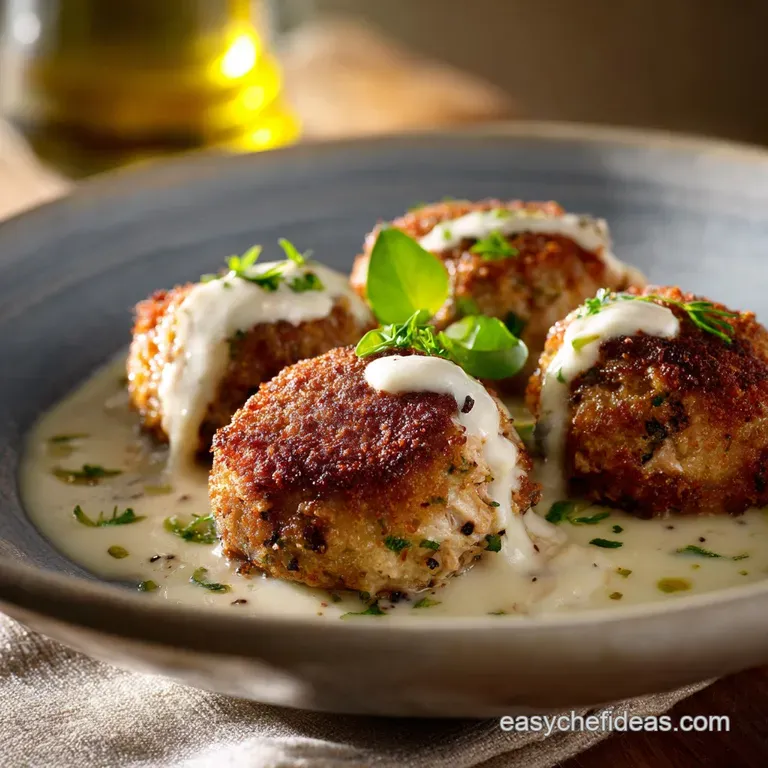
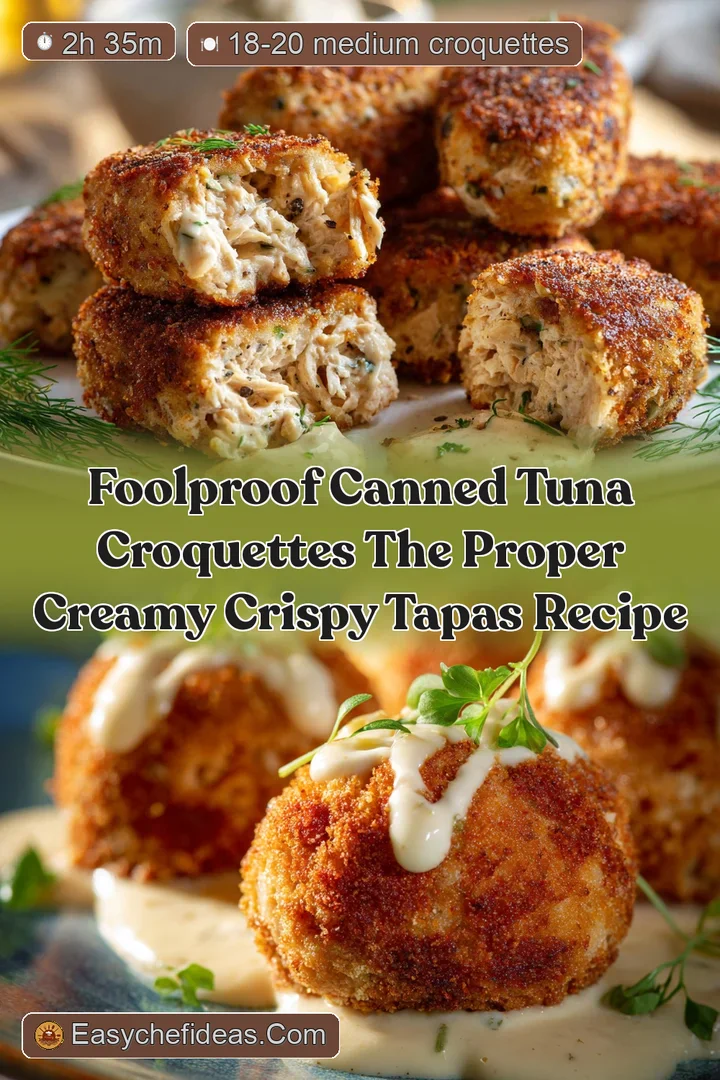
These aren't the dry, flavorless fish patties of old; we are aiming for true elegance. Mastering the art of Canned Tuna Croquettes means achieving a flawless contrast: a shatteringly crisp exterior yielding to a molten, rich, and intensely savory center.
This recipe offers one of the best and most sophisticated Easy Tuna Recipes you will ever try, marrying inexpensive ingredients with expert technique to create a truly luxurious bite.
Why Béchamel is the Backbone of Authentic Croquetas
Authentic Spanish croquetas rely entirely on a very specific preparation of béchamel, known often as a ragú base. Unlike the thin béchamel used for lasagna or cream sauces, the mixture for croquettes must be exceptionally thick so thick, in fact, that it pulls away cleanly from the sides of the pan and holds its shape instantly.
This foundational cream base, constructed from butter, flour (the roux), and whole milk, provides the essential richness and creamy mouthfeel. It acts as the binder, allowing us to create perfect little cylinders of filling that melt when fried.
This high fat, sturdy base is the defining factor that differentiates these glorious spheres from basic canned tuna patties no egg; the béchamel itself provides all the necessary structure and creamy texture.
Tapas Tradition Meets Pantry Staple
Croquettes are a quintessential example of cocina de aprovechamiento —cuisine based on making the most of leftovers. Historically, they were a way to stretch leftover meats or fish from the Sunday roast.
Substituting those premium scraps with a simple Tuna Can Recipe makes this dish universally accessible. This approach proves that sophisticated flavor doesn't require a high price tag.
With this canned tuna croquettes recipe easy to follow, you can bring the lively, convivial spirit of a Spanish tapas bar right into your home, transforming a basic ingredient into a dish worthy of celebration.
Crispy vs. Soggy: Mastering the Perfect Crust
The success of a croquette rests entirely on its coating. A properly executed crust ensures that the creamy filling remains sealed inside and that the final product is light, golden, and deeply crunchy never soggy or greasy.
To guarantee this golden armour, we must employ the classic three stage breading process: dredging in flour, coating in egg wash, and finally, pressing firmly into panko breadcrumbs.
The panko is non-negotiable here; its jagged, large structure prevents excessive oil absorption and provides a superior, airy crunch compared to standard breadcrumbs.
Sourcing Success: The Essential Shopping List
While the ingredient list is straightforward, focusing on quality, especially the canned fish, will elevate the final flavour. Preparation is key, and having your mise en place ready is half the battle.
Choosing the Best Tinned Fish for Flavor
When preparing this dish, the choice of tinned fish makes a significant difference. While water packed tuna is certainly an option for those focusing on a canned tuna patties healthy variation, tuna packed in olive oil offers a far richer depth of flavour.
If you opt for the olive oil variety, make sure to drain it thoroughly; excess moisture is the enemy of a sturdy béchamel. You will need the equivalent of two standard 6-ounce cans (340 grams) for the required ratio of fish to béchamel.
Kitchen Gear That Makes Croquette Prep Easy
Accuracy in temperature and preparation is crucial for croquettes. You’ll need a few specific items to ensure smooth execution. A heavy bottomed saucepan is necessary for developing the roux evenly without burning, and a sturdy whisk is vital for incorporating the milk smoothly, preventing any lumps.
Most importantly, a deep fry thermometer is essential for maintaining the oil temperature precisely, which dictates the crunchiness and oil absorption of the final product. Finally, drain your cooked croquettes on a wire rack, not paper towels; the air circulation prevents steam from building up and making the beautiful crust soggy.
Achieving the Triple Dip Coating System
Beyond the main filling ingredients, your shopping list must include three distinct components for the breading station: all-purpose flour for the first dust, two large eggs lightly whisked for the binder, and 1 1/2 cups of Panko breadcrumbs for the ultimate crispy exterior.
Having these ready in three separate, shallow trays streamlines the assembly process entirely.
The Culinary Stages of Croquette Perfection
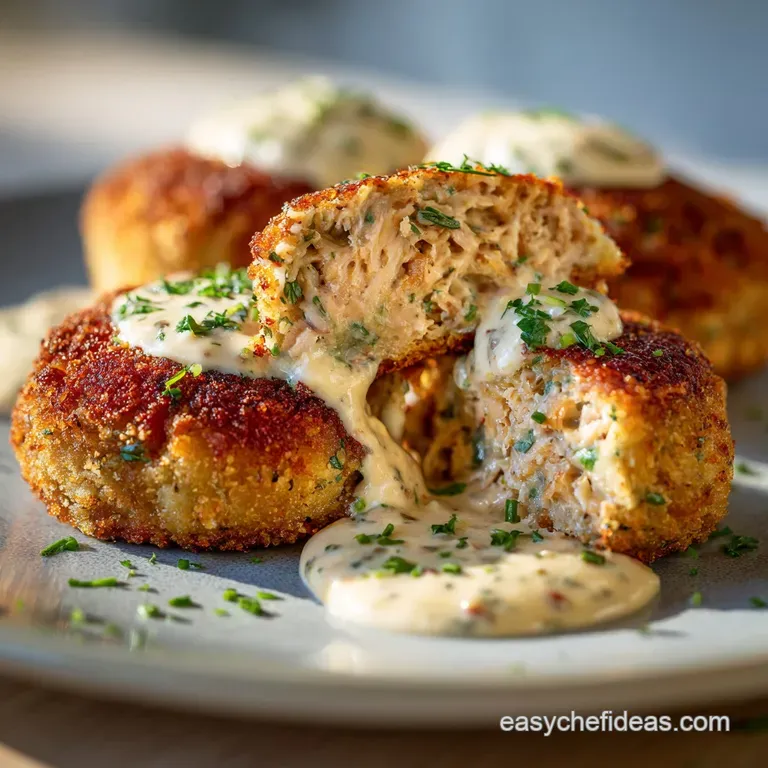
Crafting perfect Canned Tuna Croquettes is a medium difficulty task that relies on patience and precision, particularly during the cooking of the béchamel and the mandatory chilling period. Active preparation, which includes making the base and shaping, takes about 20 minutes.
However, the true secret lies in the refrigeration. The mixture must chill for a minimum of two hours and ideally overnight until it is firm enough to be shaped without falling apart. The total cooking time for frying in batches is about 15– 20 minutes.
Do not try to rush this process; skipping the chilling step guarantees a leaky, disastrous mess in the fryer.
Related Recipes Worth Trying
- Classic Crunchy Tuna Salad The Best Recipe for Proper Sandwiches — Forget mushy fillings This creamy crunchy and easy tuna salad uses fresh acid for brightness Learn the trick for the perfect chunky homemade tuna salad mixture
- Proper Pub Lunch Tuna Salad Recipe The Ultimate Creamy Crunchy Filling — Stop making watery sandwiches This creamy tuna salad recipe inspired by robust pub lunches uses lemon and gherkins for sharp flavour and satisfying crunch...
- Crispy Tuna Melt Patties The Foolproof Recipe for Gooey Comfort — Transform classic Tuna Melts into perfectly fried Crispy Tuna Melt Patties Get that gorgeous gooey cheese centre and a maxcrunch Panko crust Essential...
step-by-step: Mastering the Assembly of Canned Tuna Croquettes
Creating the Silky Tuna Base (The Roux Stage)
The process begins by gently melting 4 tablespoons (55 grams) of unsalted butter in your heavy bottomed pan. Add the 1/4 cup (30 grams) of finely minced yellow onion and sauté until completely translucent about three to four minutes but do not let it brown.
Sprinkle in the 1/3 cup (45 grams) of all-purpose flour to create the roux, stirring constantly for one minute to cook out the raw flour taste. The next step is critical: gradually pour in the 2 cups (500 ml) of cold whole milk, whisking vigorously the entire time. The temperature shock helps prevent lumps.
Continue to cook this sauce over medium low heat for eight to ten minutes, stirring constantly with a wooden spoon until it achieves an extremely thick consistency, pulling away from the sides of the pan. Season generously with salt, pepper, and the essential dash of grated nutmeg.
Folding in the Flavor: Adding the Tuna and Zest
Once the béchamel has reached the correct thickness, remove the pan immediately from the heat. This is where the tuna, parsley, and citrus zest join the party. Ensure the 340 grams of canned tuna is thoroughly drained and lightly broken up.
Fold in the tuna, 2 tablespoons of chopped fresh parsley, and 1 teaspoon of fresh lemon zest until the mixture is fully incorporated and uniform in texture.
The Critical Chilling Period for Structure
Immediately transfer the hot, creamy tuna mixture to a shallow dish, spreading it out to about one inch (2.5 cm) deep to encourage quick cooling. To prevent a tough skin from forming which would ruin the croquette's smooth interior press a sheet of cling film directly onto the surface of the mixture.
Refrigerate for at least two hours, or better yet, leave it overnight. This chilling process is non-negotiable, as it is what allows you to handle and shape the filling later.
From Paste to Perfect Log: Handling the Chilled Dough
Once the mixture is rock solid, it’s time to shape the croquettes. Using two dessert spoons, or lightly oiled hands, scoop out approximately 1.5 tablespoon portions. Gently roll them into the traditional cylindrical log shape, aiming for a length of about 2 inches (5 cm).
If the mixture is still too soft to handle, return it to the fridge for another 30 minutes.
Deep Fry vs. Air Fry: Achieving Golden, Even Color
Set up your breading station with the flour, egg, and Panko. Dredge each shaped log thoroughly in flour, shaking off the excess, then dip fully into the egg wash, allowing the excess to drain.
Finally, roll and press the croquette firmly into the Panko breadcrumbs, ensuring every surface is completely coated and sealed. For the classic outcome, heat a neutral oil to 350°F (175°C) and fry in small batches for 2– 3 minutes until deep golden.
Alternatively, for a lighter take, you can achieve delicious results with the Tuna Croquettes Air Fryer method. To make canned tuna patties air fryer style, simply spray the breaded croquettes lightly with cooking oil and bake at 400°F (200°C) for 8– 10 minutes, flipping halfway, until they achieve that desired crisp, golden brown finish.
Troubleshooting and Expert Chef Tips
Achieving perfect croquettes is simple, provided you adhere strictly to temperature and technique. If your croquettes are splitting open during frying, the most common culprits are either insufficient chilling time, or a hole in the Panko coating allowing the filling to leak out.
To prevent this, press the Panko firmly into the surface. For added insurance, try the "double chill" trick: place the fully breaded croquettes back into the freezer for 15 minutes just before frying. This hardens the exterior and virtually guarantees they will remain intact in the hot oil.
Presentation and Pairing Pointers
Keeping Your Frying Oil at the Optimal Temperature
The biggest mistake home cooks make when frying is letting the oil temperature drop too low. If the oil falls below 340°F (170°C), the croquettes will begin to absorb the fat rather than crisping immediately, resulting in a greasy product.
Conversely, oil too hot (above 360°F or 180°C) will burn the crust before the dense center has a chance to warm through. Use your thermometer diligently, and never overcrowd the pot; fry only 3 to 4 pieces at a time to keep the temperature stable.
Freezing and Reheating Croquettes Safely
Croquettes are an excellent candidate for make-ahead meal prep. You can freeze them immediately after the breading stage. Arrange the un-fried, breaded croquettes on a baking sheet and freeze until solid, then transfer them to an airtight container or freezer bag. They can be stored for up to three months.
When ready to cook, do not thaw; fry them directly from frozen, adding about two minutes to the cooking time, or air fry them as normal.
Customizing the Filling: Herb and Spice Swaps
While the tuna and lemon zest combination is fantastic, the base béchamel is highly versatile. For variation, consider adding a pinch of smoked paprika for depth, or substituting the parsley with chopped dill or chives.
If you want to move away from fish, the exact same technique can be used to make premium Spanish ham croquettes by folding in finely diced Serrano ham and a small amount of Manchego cheese instead of tuna.
The Best Sauces and Sides for Croquetas
Croquettes should always be served piping hot, straight off the wire rack, with a light seasoning of fine sea salt. They pair beautifully with a sharp element to cut through the richness.
A simple homemade garlic and lemon aioli is the classic choice, or for a quicker solution, mix some good quality mayonnaise with a dash of Sriracha for heat. Pair them with a simple green salad dressed with a sharp sherry vinegar vinaigrette.
To truly embrace the tapas experience, serve alongside a dry, cold Fino Sherry or a crisp Spanish white wine like Albariño.
Understanding the Macro Breakdown (Dietary Notes)
It’s important to note that due to the required buttery béchamel base and the frying process, these croquettes are naturally higher in fat and carbohydrates than simpler preparations like canned tuna patties healthy variants.
However, they deliver a satisfying amount of protein (roughly 22 grams per four croquettes) thanks to the tuna and whole milk, making them a very hearty appetizer. They are an indulgent treat meant to be enjoyed for their creamy texture and fantastic flavour.
Recipe FAQs
Why are my Canned Tuna Croquettes leaking in the oil? They're splitting open like a burst dam!
Ah, the age-old problem! Croquettes splitting is usually down to two main culprits: the filling wasn't chilled long enough, or the breading wasn't sealed properly. The béchamel base must be rock solid before shaping ideally, leave it overnight.
Also, make sure your three step breading (flour, egg, Panko) is a complete, firm "armour plating" to lock that creamy filling inside during the frying process.
Does it really matter what kind of canned tuna I use? Tins are tins, aren't they?
Not quite! While the recipe is budget friendly, the quality of the tuna makes a big difference to the final flavour. If you can stretch to it, good quality tuna packed in olive oil tends to offer a richer, less dry texture than tuna packed in brine or water.
Crucially, whichever you choose, drain the fish thoroughly before mixing it into the béchamel to avoid introducing excess moisture.
My béchamel sauce came out lumpy. Is there a simple trick to achieving that proper, silky smooth texture?
Lumps are the bane of every béchamel maker! The best chef's trick is to use cold or room temperature milk when you pour it into the hot roux (the butter and flour mixture). The temperature shock helps prevent the flour granules from clumping up, making it easy peasy to whisk into a glossy, lump free sauce.
Whisk continuously and cook it slowly for a good 8 10 minutes until it's thick enough to hold a wooden spoon upright.
I’m trying to be good can I bake or air fry these instead of deep frying?
Absolutely! If you want the crunch without the deep fried fuss, the air fryer is your best mate here. After breading, place the croquettes in the air fryer basket and give them a generous, even spritz of cooking oil spray don't skimp, as this is what creates the golden colour.
Air fry them at 400°F (200°C) for about 8 to 10 minutes, flipping them halfway through until they have a beautiful, cracking crunch.
Can I make these ahead of time? What’s the best way to store or freeze them for future use?
These are perfect for batch cooking and making ahead! Once shaped and fully breaded, the croquettes can be stored raw in an airtight container in the fridge for up to three days. For longer storage, freeze them raw on a baking sheet until solid, then transfer them to a freezer bag; they will keep happily for up to three months.
You can fry them directly from frozen just add a couple of extra minutes to the cooking time.
Crispy Canned Tuna Croquettes Recipe

Ingredients:
Instructions:
Nutrition Facts:
| Calories | 461 kcal |
|---|---|
| Protein | 6.3 g |
| Fat | 18.4 g |
| Carbs | 17.1 g |
| Fiber | 1.9 g |
| Sodium | 2983 mg |
